Diode Laser vs IPL vs Alexandrite: Which Hair Removal Technology Should Your Clinic Choose? (2026)
Hair RemovalChoosing between diode laser, IPL, and alexandrite laser is the single most consequential equipment decision for any aesthetic clinic or medspa entering the hair removal market. Each technology occupies a distinct position on the efficacy–cost–versatility spectrum, and the wrong choice can mean $10,000+ in sunk cost, limited clientele, or treatment outcomes that fail to retain patients.
This comparison breaks down all three technologies across 12 objective dimensions — from wavelength physics to per-session revenue — and maps each to the specific Winkonlaser machine that delivers it. No marketing fluff. Just engineering data and clinical economics.
| Dimension | Diode Laser (808nm) | Alexandrite Laser (755nm) | IPL (500–1200nm) |
|---|---|---|---|
| Wavelength | 808nm (single); 755+808+940+1064nm (multi-wavelength systems) | 755nm; some systems add 1064nm Nd:YAG | Broadband 500–1200nm (filtered, non-coherent light) |
| Light Source | Semiconductor laser diode (coherent, monochromatic) | Alexandrite crystal (coherent, monochromatic) | Xenon flash lamp (incoherent, polychromatic) |
| Skin Type Range | Fitzpatrick I–VI (all skin types, especially III–VI) | Fitzpatrick I–III (light skin only; risk of burns on dark skin) | Fitzpatrick I–IV (limited on dark skin; low contrast = low efficacy) |
| Hair Color Efficacy | Dark hair: excellent. Light/fine hair: good with multi-wavelength | Dark hair: excellent. Light/fine hair: best in class | Dark hair only; ineffective on blonde, red, gray hair |
| Pain Level | Low–moderate (advanced contact cooling + TEC) | Moderate–high (higher melanin absorption = more discomfort) | Low–moderate (lower peak power per pulse) |
| Treatment Speed | Very fast (up to 20Hz, large spot: 12×15mm or larger) | Fast (up to 10Hz, typical spot 12–18mm) | Slow (lower repetition rate, smaller effective area, requires gel) |
| Sessions Required | 4–6 sessions for 80–90% reduction | 4–6 sessions for 80–90% reduction | 6–10 sessions for 60–80% reduction |
| Lifespan | 100 million shots (diode bars, rated) | ~5–10 million shots (flashlamp + crystal wear) | ~50,000–300,000 shots per handpiece (replaceable) |
| Machine Price Range | $4,000–$15,000 (professional); $500–$2,000 (consumer) | $8,000–$20,000 (professional only) | $1,500–$6,000 (professional); $200–$800 (at-home) |
| Maintenance Cost | Low (diode bars last years; no consumable lamps) | Moderate (flashlamp replacement ~$500–1,000/1-2 years) | Moderate–high (handpiece replacement every 50K–300K shots) |
| ROI Timeline | 6–10 months (high throughput, low consumables) | 8–14 months (higher machine cost, narrower client base) | 4–8 months (low machine cost, but lower per-session price) |
| Best For | High-volume clinics, diverse clientele, all skin types | Premium clinics, light-skin clientele, fine/light hair cases | Startups on a budget, low-volume clinics, beauty salons |
1. Technology Deep Dive: How Each System Works
1.1 Diode Laser (808nm / Multi-Wavelength)
Physics of Diode Laser Hair Removal
A diode laser uses semiconductor junctions to emit coherent, monochromatic light at 808nm (near-infrared). This wavelength sits in the "optical window" of melanin absorption — deep enough to reach the hair bulge and dermal papilla (2–4mm into the dermis), but with less epidermal melanin interference than shorter wavelengths.
- 808nm single-wavelength: Gold standard for dark hair on Fitzpatrick I–IV. Proven efficacy across 30+ years of clinical literature.
- Multi-wavelength systems (755+808+940+1064nm): Combine four diode bars at different wavelengths into one handpiece. 755nm targets fine/light hair and superficial follicles; 940nm targets deep-rooted follicles; 1064nm is safe for dark skin (Fitzpatrick V–VI) due to minimal melanin absorption.
- Non-crystal diode technology: Eliminates the traditional Nd:YAG crystal, using direct diode emission for higher electro-optical efficiency (30–40% vs 3–10% for lamp-pumped systems).
Clinical data: A 2019 meta-analysis of 13 RCTs (n=1,247) found diode laser achieved 71–84% hair reduction after 3 sessions and 82–91% after 6 sessions, with the lowest adverse event rate (2.1%) among all laser modalities for hair removal. The 808nm wavelength penetrates to a depth of approximately 3.5mm, matching the anatomical location of hair follicle stem cells.
Key advantage for clinics: One diode machine can treat all Fitzpatrick skin types (I–VI), meaning zero customer rejection due to skin tone. No other single-wavelength technology can make this claim.
1.2 Alexandrite Laser (755nm)
Physics of Alexandrite Laser Hair Removal
An alexandrite laser uses a chromium-doped chrysoberyl crystal (Cr³⁺:BeAl₂O₄) as the gain medium, pumped by a xenon flashlamp to emit coherent light at 755nm. At 755nm, melanin absorption is approximately 2.5× higher than at 808nm (diode) and 5× higher than at 1064nm (Nd:YAG).
- Highest melanin absorption coefficient among all hair removal wavelengths — this makes it the most effective for fine, light-colored hair that other lasers miss.
- Shorter wavelength = shallower penetration (~2mm) — excellent for superficial follicles (upper lip, chin, arms), less effective for deep terminal hair (male beard, pubic area).
- Significant risk on Fitzpatrick IV–VI: High epidermal melanin absorption can cause burns, post-inflammatory hyperpigmentation (PIH), and hypopigmentation. Requires an experienced operator and conservative fluence settings on tanned or olive skin.
- Dual-wavelength systems (755nm + 1064nm): Add an Nd:YAG handpiece or combine wavelengths in one handpiece to extend the treatable skin type range to Fitzpatrick IV–V.
Clinical data: Alexandrite at 755nm achieves the fastest onset of hair reduction — statistically significant results are often visible after 1–2 sessions. However, the applicable patient population is restricted: Fitzpatrick I–III represents approximately 35–40% of the global population (and a smaller percentage in Asian, Middle Eastern, and Latin American markets).
Key advantage for clinics: If your clientele is predominantly Fitzpatrick I–III with fine/light hair concerns, alexandrite delivers the fastest and most dramatic results. For clinics in Scandinavia, Northern Europe, or serving a predominantly Caucasian population, this is often the preferred first-line device.
1.3 IPL (Intense Pulsed Light, 500–1200nm)
Physics of IPL Hair Removal
IPL is not a laser. It uses a xenon flash lamp to emit a broad spectrum of incoherent, polychromatic light (500–1200nm), filtered through cut-off filters to remove shorter, more dangerous wavelengths (e.g., below 590nm, 640nm, or 690nm depending on skin type).
- Polychromatic = less selective: Unlike lasers, which deliver a single wavelength tuned to a specific chromophore (melanin), IPL delivers a band of wavelengths that interact with multiple chromophores simultaneously (melanin, hemoglobin, water). This makes IPL more versatile for skin treatments (pigmentation, vascular lesions) but less efficient for pure hair removal.
- Lower peak fluence: Typical IPL fluence is 10–25 J/cm² vs 30–60+ J/cm² for diode/alexandrite. Lower fluence = more sessions needed for the same endpoint.
- Handpiece-limited lifespan: IPL handpieces degrade with each pulse; replacement is required every 50,000–300,000 shots at a cost of $500–$2,000 per handpiece.
- At-home explosion: The consumer IPL market has grown at 19.8% CAGR, driven by $200–$800 handheld devices. Professional IPL competes directly with this trend.
Clinical data: A 2020 systematic review found IPL achieved 50–75% hair reduction after 6–10 sessions, with high variability depending on device quality, operator technique, and patient skin/hair contrast. Long-term efficacy is inferior to laser for terminal hair, though IPL can be effective for maintenance and fine hair reduction in lighter skin types.
Key advantage for clinics: The lowest entry cost and multi-application capability (hair removal + skin rejuvenation + vascular lesions in one platform). Suitable for beauty salons and clinics that want a single machine covering multiple treatment categories, even if it's not the best at any single one.
2. Head-to-Head Clinical Comparison
2.1 Hair Removal Efficacy by Skin Type
| Fitzpatrick Type | Skin Description | Diode (808nm) | Alexandrite (755nm) | IPL (500–1200nm) |
|---|---|---|---|---|
| I | Pale white, always burns | ⭐⭐⭐⭐⭐ | ⭐⭐⭐⭐⭐ | ⭐⭐⭐⭐ |
| II | White, usually burns | ⭐⭐⭐⭐⭐ | ⭐⭐⭐⭐⭐ | ⭐⭐⭐⭐ |
| III | Light olive, sometimes burns | ⭐⭐⭐⭐⭐ | ⭐⭐⭐⭐ | ⭐⭐⭐ |
| IV | Olive/Mediterranean, rarely burns | ⭐⭐⭐⭐⭐ | ⭐⭐ (risk) | ⭐⭐ |
| V | Brown/Dark brown | ⭐⭐⭐⭐ | ❌ unsafe | ❌ ineffective |
| VI | Deeply pigmented dark brown/black | ⭐⭐⭐⭐ | ❌ unsafe | ❌ ineffective |
2.2 Treatment Economics: Sessions, Pricing & Revenue
| Metric | Diode | Alexandrite | IPL |
|---|---|---|---|
| Avg sessions per patient (full clearance) | 4–6 | 4–6 | 6–10 |
| Interval between sessions | 4–6 weeks | 4–6 weeks | 4–8 weeks |
| Avg session price (full body, US market) | $250–500 | $300–600 | $100–250 |
| Revenue per patient (full course) | $1,000–3,000 | $1,200–3,600 | $600–2,500 |
| Patients per day (8-hour day) | 12–16 | 10–14 | 8–12 |
| Daily revenue capacity | $3,000–8,000 | $3,000–8,400 | $800–3,000 |
| Time to recover machine cost | 6–10 months | 8–14 months | 4–8 months |
2.3 Safety & Side Effect Profile
Diode laser has the lowest adverse event rate (2.1%) due to moderate melanin absorption at 808nm and advanced TEC contact cooling (sapphire window at 0–5°C) that protects the epidermis during treatment. Common side effects: transient erythema (1–24 hours), mild perifollicular edema. Rare: crusting, PIH (0.5–1% on Fitzpatrick IV–VI at conservative settings).
Alexandrite laser has the highest adverse event rate (4–8%) due to intense melanin absorption at 755nm. Without aggressive epidermal cooling, Fitzpatrick III+ patients risk burns (even with cooling, Fitzpatrick IV is borderline). Common side effects: moderate erythema (24–48 hours), perifollicular edema, transient hyperpigmentation. Rare: blistering, scarring, permanent hypopigmentation.
IPL has a moderate adverse event rate (3–5%) but the nature of adverse events is less severe — typically mild erythema and superficial burns from incorrect filter selection. The variability in IPL device quality (pulse uniformity, filter cutoff precision) means safety is more operator- and device-dependent than for lasers.
3. B2B Procurement Guide: What to Check Before Buying
3.1 Critical Specs to Verify
3.2 Certification & Regulatory Requirements
For B2B import/distribution, verify the following based on your target market:
- US market: FDA 510(k) clearance (Class II medical device). Check the FDA registration number against the FDA database. "FDA registered" ≠ "FDA cleared" — registration is a facility listing; clearance requires clinical data review.
- EU market: CE mark under MDR 2017/745 (medical device) or CE under applicable directives. MDR compliance is stricter than the previous MDD and requires clinical evaluation reports.
- Other markets: ISO 13485 (medical device QMS), ISO 9001 (general QMS), CB Scheme (IEC 60601-1 electrical safety). Country-specific registrations (e.g., ANVISA Brazil, TGA Australia, PMDA Japan).
4. Winkonlaser Products for Each Technology
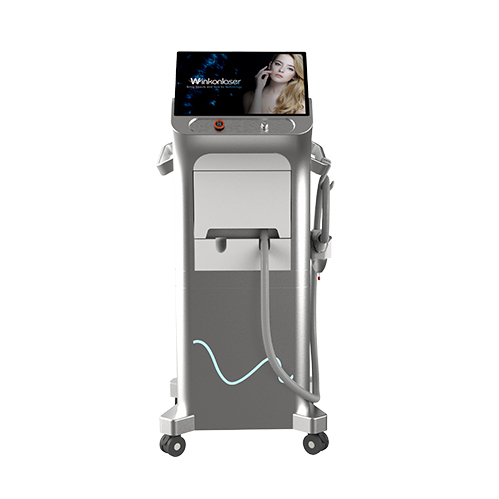
Winkonlaser manufactures professional aesthetic equipment across all three technology categories. Below are the specific models that represent each technology, with direct product page links for detailed specifications and pricing inquiries.
AresLite DM60 — 3000W Non-Crystal Diode Laser with AI Dynamic Spot Size
- Technology: 808nm non-crystal diode bar, 3000W peak power, 4 wavelength modes
- Spot sizes: 1 handle, 4 interchangeable spot sizes — 6mm (circle), 12×12mm, 12×24mm, 12×36mm — covering all body areas with quick-swap mechanism
- Frequency: 1–20Hz adjustable; handles up to 16 patients/day
- Cooling: DCS 5-in-1 cooling system (semiconductor + compressor + air + water + TEC), sapphire contact tip (−45°C to 5°C)
- Lifespan: 100 million shots rated laser bar lifespan
- Certification: FDA 510(k) K241860, CE, ISO 13485
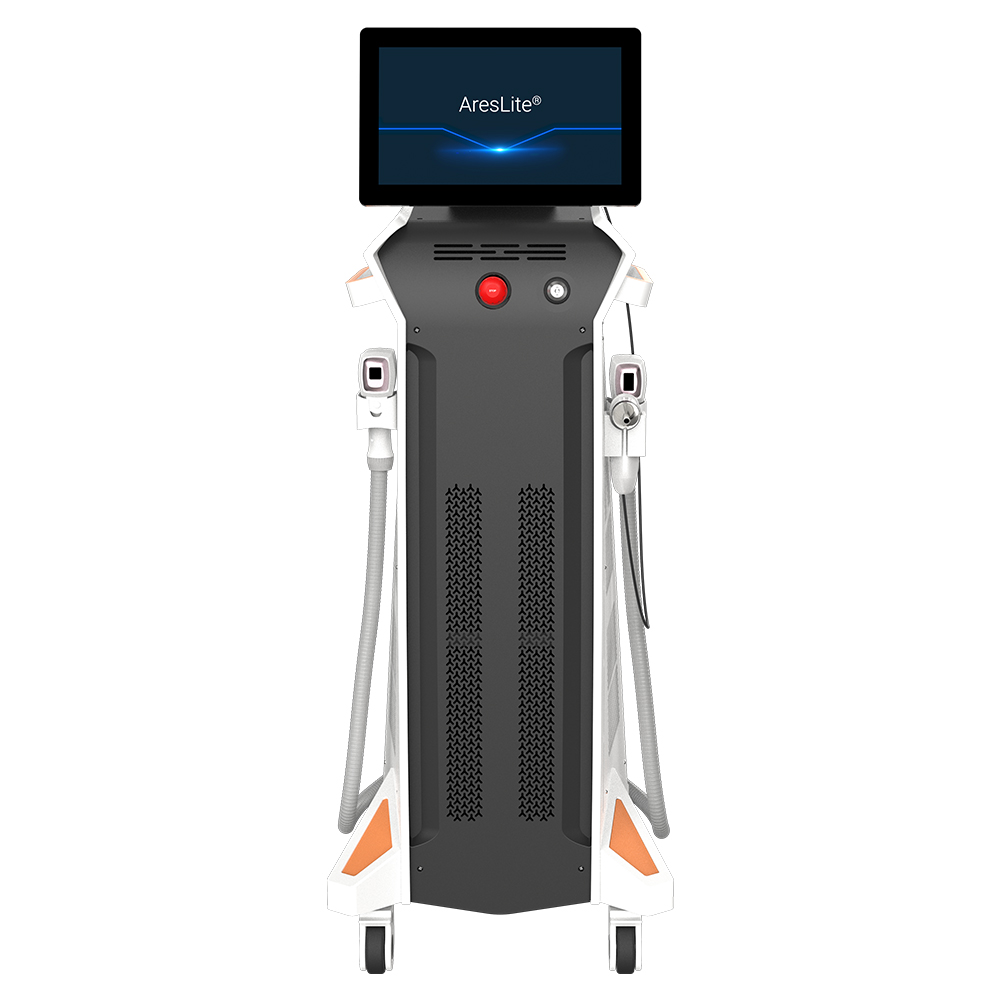
AresLite DM40P — 2000W Non-Crystal Diode Laser with Handle Screen
- Technology: 4-wavelength non-crystal diode (755+808+940+1064nm), 2000W
- Handle-integrated touch screen: Adjust parameters without returning to the main console — saves ~15 seconds per patient interaction
- Frequency: 1–20Hz, 2 handles with fixed spot sizes (12×12mm + 12×24mm)
- Cooling: DCS 5-in-1 cooling system (semiconductor + compressor + air + water + TEC), sapphire window (−45°C to 5°C)
- Best for: Clinics entering the laser hair removal market, or as a second room device alongside the DM60
- Certification: FDA 510(k) K241860, CE, ISO 13485

CL300 — Professional Dual-Wavelength Alexandrite Laser (755nm + 1064nm)
- Technology: Alexandrite 755nm + Nd:YAG 1064nm dual-wavelength platform — covers Fitzpatrick I–V
- 755nm mode: Highest melanin absorption; best for fine/light hair on Fitzpatrick I–III
- 1064nm mode: Safe for darker skin types (Fitzpatrick IV–V), deep follicular targeting
- Spot size: 3/12/16/18mm (standard); 6/10/24mm (optional) — widest configuration range in its class
- Cooling: Air cooling system
- Certification: FDA, CE, ISO 13485
1.jpg)
ML600 — 5-in-1 IPL, RF, Nd:YAG, Diode & SHR Platform
- Technology: 5 functions in 1 chassis — IPL (400–1200nm with cut-off filters), RF (1MHz), Nd:YAG 1064nm Q-switched, Diode 808nm, SHR (Super Hair Removal)
- IPL mode: Interchangeable filter heads for hair removal (640nm+), skin rejuvenation (560nm+), vascular (590nm+), acne (420nm+)
- Pulse width: 1–400ms adjustable (wider range than most IPL competitors)
- Best for: Clinics and salons wanting one machine for hair removal + skin treatments + tattoo removal (basic); entry-level price point with multi-application ROI
- Multi-cooling: Air + water + semiconductor + sapphire contact — 4-layer thermal management
5. Final Verdict: Which Technology Should You Choose?
Decision Matrix by Clinic Profile
| Your Clinic Profile | Best Technology | Recommended Machine | Rationale |
|---|---|---|---|
| High-volume clinic, diverse skin types | Diode Laser | AresLite DM60 | Treats Fitzpatrick I–VI, highest throughput, lowest consumables cost, fastest ROI at scale |
| Premium clinic, predominantly Caucasian clientele | Alexandrite Laser | CL300 | Fastest results on Fitzpatrick I–III, premium positioning justifies higher per-session pricing |
| Startup clinic / budget-constrained | Diode (Value) | AresLite DM40P | Lower upfront cost than DM60 while retaining core diode efficacy; handle screen is a productivity bonus |
| Beauty salon wanting multi-service capability | IPL / Multifunction | ML600 | Single device covers hair removal + skin rejuvenation + tattoo removal; lower per-session revenue but diversified service menu |
| Dark skin specialist (Fitzpatrick IV–VI) | Diode Laser | AresLite DM60 | 808nm diode is the safest and most effective laser for dark skin; 1064nm Nd:YAG is an acceptable alternative but slower |
| Asian / Middle Eastern market clinic | Diode Laser | AresLite DM60 | Fitzpatrick III–V dominant demographics = diode is the only safe and effective option; alexandrite limited to Fitzpatrick I–III |
6. Frequently Asked Questions
Yes — for professional hair removal, diode laser (808nm) outperforms IPL across every objective metric: efficacy (71–84% vs 50–75% hair reduction), treatment speed per body area, number of sessions required (4–6 vs 6–10), and patient comfort. Diode's single coherent wavelength delivers concentrated energy to the melanin target; IPL's broadband light spreads energy across the entire spectrum, requiring more sessions at lower per-session efficacy. However, IPL has a lower machine cost and multi-application flexibility (skin rejuvenation, vascular treatment in one device). For a dedicated hair removal business, diode is the correct choice. For a beauty salon adding hair removal to an existing service menu, IPL can be a pragmatic entry point.
No — alexandrite laser at 755nm should not be used on Fitzpatrick IV–VI skin. The high melanin absorption at 755nm means the epidermis in darker skin types absorbs too much energy, creating a significant burn risk even at conservative settings. If your clinic serves Fitzpatrick IV–VI patients, choose a diode laser (808nm) or an Nd:YAG laser (1064nm). The Winkonlaser CL300 Alexandrite does include a 1064nm Nd:YAG handpiece, which partially extends its range to Fitzpatrick IV–V, but the 755nm mode should be restricted to Fitzpatrick I–III only.
Diode laser typically requires 4–6 sessions (spaced 4–6 weeks apart) for 80–90% permanent hair reduction. In comparison, IPL typically requires 6–10 sessions for 60–80% reduction. The difference arises because diode laser delivers monochromatic 808nm light at higher fluence (30–60 J/cm²) directly to the melanin target, destroying a higher percentage of follicles per session. IPL's broadband light at lower fluence (10–25 J/cm²) treats follicles less efficiently. Over a full treatment course, a diode patient spends ~$1,000–3,000 and completes treatment in 4–8 months; an IPL patient spends $600–2,500 but takes 6–15 months with more maintenance sessions.
Diode laser: Longest lifespan. Quality diode bars (COHERENT, DILAS, Jenoptik) last 50–100 million shots. At 1,000 shots per patient session, 8 patients/day, that's 8+ years of operation with zero consumable costs (only annual cooling system maintenance). Alexandrite laser: 5–10 million shots before crystal degradation and flashlamp replacement. Flashlamp replacement costs $500–$1,000 every 1–2 years in moderate use. IPL: Shortest per-handpiece lifespan. Handpieces last 50,000–300,000 shots (replace every 3–12 months in busy clinics) at $500–$2,000 per replacement. Over a 5-year period, IPL total cost of ownership often exceeds diode due to cumulative handpiece replacements.
In terms of pure ROI speed, IPL has the shortest path (4–8 months) due to the lowest machine cost ($1,500–$6,000). However, in terms of cumulative 3-year profit, diode laser wins decisively: higher per-session pricing, faster treatment times (more patients per day), near-zero consumable costs, and broader treatable patient population (zero skin-type rejections). A DM60 at $8,000 generates ~$72,000–192,000 in annual revenue at 8–16 patients/day and $250–500/session. After year 1, virtually all revenue beyond electricity and labor is profit. An IPL machine at $3,000 generates ~$19,200–72,000/year with 6–10 sessions per patient at $100–250/session, minus handpiece replacements ($500–$2,000/year). The crossover point where diode cumulative profit exceeds IPL cumulative profit is approximately month 10–12.