CO2 Fractional Laser vs RF Microneedling: Ablative Power or Gentle Remodeling — Which Skin Resurfacing Technology Fits Your Patients? (2026)
Skin ResurfacingCO2 Fractional Laser and RF Microneedling sit at opposite ends of the skin resurfacing spectrum. CO2 fractional is ablative — it vaporizes microscopic columns of skin, triggering total tissue regeneration from the basement membrane up. The results are dramatic, but the downtime is real. RF Microneedling is minimally invasive — it creates micro-channels with insulated needles and delivers RF energy into the dermis without removing the epidermis. The results are gradual, but the downtime is minimal.
This comparison analyzes both technologies across 12 dimensions: mechanism of action, downtime profiles, clinical indications, treatment economics, and Winkonlaser product specifications.
| Dimension | CO2 Fractional Laser (10,600nm) | RF Microneedling |
|---|---|---|
| Energy Type | Ablative laser — 10,600nm infrared vaporizes tissue water instantly (photothermal ablation) | Bipolar RF (1–2MHz) — electromagnetic current delivered through insulated microneedles; non-ablative thermal coagulation |
| Tissue Effect | Ablates micro-columns of epidermis + dermis (MTZs); removes tissue, triggers full regeneration | Coagulates dermis around needle tips; epidermis remains intact (insulated needles bypass surface) |
| Treatment Depth | Epidermis + papillary dermis + reticular dermis (up to 1.5mm in high-power mode); depth is laser energy-dependent | 0.2–7.0mm (mechanical needle depth); RF thermal zone extends 1–2mm around each needle tip |
| Invasiveness | Ablative — epidermis is vaporized in treatment zones; open micro-wounds requiring wound care | Minimally invasive — needles penetrate but epidermis heals within 24h; no open wounds |
| Pain Level | Moderate–high during treatment; topical + injectable anesthetic required; post-procedure burning sensation (12–24h) | Low–moderate with topical lidocaine; virtually painless during RF delivery; mild soreness post-treatment |
| Downtime | 5–10 days — erythema, oozing (days 1–2), crusting (days 3–5), peeling (days 5–7), post-treatment redness (2–4 weeks) | 1–2 days — pinpoint bleeding (resolves in minutes), erythema + micro-crusts (24–48h), no peeling |
| Sessions Required | 1–2 sessions for significant improvement (aggressive single-session is common); interval 3–6 months | 3–4 sessions, 4 weeks apart; each session builds cumulative collagen remodeling |
| Best Indications | Deep acne scars (boxcar, rolling), surgical scars, deep wrinkles (perioral, periorbital), severe photodamage, skin laxity, actinic keratosis | Mild–moderate acne scars, fine wrinkles, skin texture, large pores, stretch marks, skin laxity (mild), periorbital fine lines |
| Contraindications | Active acne, keloid tendency, Fitzpatrick V–VI (high PIH risk), recent isotretinoin use (<6 months), active infection | Active acne/infection, keloid tendency, anticoagulant therapy, pregnancy, metal allergy |
| Machine Price Range | $6,000–$18,000 (professional fractional CO2); $3,000–$8,000 (basic) | $4,000–$15,000; consumable needle tips $20–60 per patient |
| Per-Session Revenue | $800–$2,500 (full face); $1,500–$4,000 (face + neck) | $400–$1,200 (full face); $600–$1,800 (face + neck) |
| ROI Timeline | 4–8 months — high per-session price + low consumables; limited by longer appointment slots (60–90 min incl. anesthetic) | 6–10 months — lower per-session but repeat visits × 3–4 build cumulative revenue; 30–45 min slots |
1. Mechanism of Action: Ablation vs Coagulation
1.1 CO2 Fractional: Vaporizing Skin to Trigger Regeneration
How Fractional CO2 Creates New Skin
A CO2 laser emits at 10,600nm (far infrared), which is strongly absorbed by water — the primary chromophore in skin (skin is ~70% water). When the beam strikes tissue, intracellular water absorbs the energy and vaporizes instantly, creating a Microscopic Treatment Zone (MTZ) — a column of ablated tissue surrounded by a thin rim of coagulated tissue.
- Fractional pattern: Instead of ablating 100% of the skin surface (traditional "fully ablative" CO2), fractional CO2 vaporizes only a fraction — typically 5–40% of the surface — leaving islands of untreated skin between MTZs. These islands serve as reservoirs of healthy keratinocytes and fibroblasts that rapidly migrate into the wound and accelerate healing.
- Three-zone tissue effect: (1) Ablation zone — vaporized tissue column; (2) Coagulation zone — thermally denatured collagen rim (50–100μm) that contracts immediately, providing visible tightening; (3) Reversible thermal damage zone — heat-shocked but viable tissue that triggers the regenerative cascade.
- Neocollagenesis timeline: Collagen remodeling begins at week 2, peaks at months 3–6, and continues for up to 12 months. This is why CO2 results keep improving long after the skin surface has healed.
- USA RF tube advantage: Winkonlaser FC300 uses a USA-made RF-excited CO2 laser tube (vs Chinese DC glass tubes). RF tubes deliver more stable output, longer lifespan (3–5 years vs 1–2 years), and faster pulse rise times — critical for consistent MTZ depth across the treatment area.
Clinical data: A 2019 meta-analysis of 10 RCTs comparing fractional CO2 vs other modalities for atrophic acne scars found CO2 achieved 53–69% improvement in scar appearance after 1–2 sessions, compared to 41% for RF Microneedling after 3–4 sessions (Goodman & Baron scale). However, CO2 had significantly longer downtime (mean 6.3 days vs 1.5 days), higher pain scores (6.8 vs 3.1 on VAS), and higher PIH incidence (18% vs 3% in Fitzpatrick III–IV).
1.2 RF Microneedling: Coagulation Without Ablation
How RF Microneedling Remodels from the Inside
RF Microneedling combines two synergistic mechanisms: (1) Mechanical micro-injury from needle penetration triggers the wound-healing cascade (platelet activation → PDGF, TGF-β release → fibroblast recruitment). (2) RF thermal energy delivered at the needle tip creates controlled coagulation zones (55–65°C) around each penetration point, denaturing collagen and stimulating neocollagenesis.
- Insulated needle advantage: Gold-plated insulated needles emit RF only from the exposed tip (0.1–0.3mm), protecting the epidermis from thermal damage. This is why RF Microneedling can safely treat Fitzpatrick IV–V skin with significantly lower PIH risk than any ablative laser.
- Depth precision: Motorized depth control (0.2–7.0mm) with ±0.1mm accuracy allows treating thin periorbital skin (0.5–1.5mm) differently from thick cheek skin (2.5–4.0mm) in the same session — impossible with CO2 where depth is controlled by energy, not a mechanical stop.
- Dual-frequency systems: 2.2MHz for deeper fractional coagulation (scar bases, deep dermis); 700KHz for shallower conductive heating (fine lines, pores, superficial texture).
- Cumulative effect: Unlike CO2's "one big hit," RF Microneedling builds results incrementally. Each of 3–4 sessions adds a layer of new collagen, with final results visible 3–4 months after the last session.
2. Downtime Profile: The Deciding Factor for Most Patients
CO2 Fractional Recovery Timeline
Day 1–2: Oozing, weeping, moderate-severe erythema. Must apply occlusive ointment. Socially unacceptable.
Day 3–5: Crusting and bronzing of skin. Tight, dry sensation. Can go out with makeup (not recommended). Begin gentle cleanser.
Day 5–7: Peeling and sloughing. Pink new skin revealed underneath. Socially acceptable with light makeup.
Week 2–4: Post-treatment erythema (pink/red, not inflamed). Sunscreen mandatory. Makeup covers completely.
Month 1–3: Results emerging. Collagen remodeling in progress. Erythema resolved.
RF Microneedling Recovery Timeline
Day 1 (immediate): Pinpoint bleeding (resolves in 10–20 min). Moderate erythema. Can return to work with mineral makeup.
Day 1–2: Mild erythema + micro-crusts at needle entry points. Socially acceptable.
Day 3–5: Micro-crusts shed invisibly. Skin looks slightly "roughened" then smooth. Normal skincare resumed.
Week 1–2: "RF glow" appears — early collagen contraction gives immediate subtle tightening. No visible signs of treatment.
Month 2–4: Cumulative results from 3–4 sessions. Progressive improvement in texture and firmness.
3. Clinical Indications Matrix
| Clinical Concern | CO2 Fractional | RF Microneedling | Best Choice |
|---|---|---|---|
| Deep boxcar / rolling acne scars | ★★★ Best | ★★ Good | CO2 — ablate and regenerate scar base |
| Mild–moderate acne scars | ★★ Good | ★★★ Best | RF Microneedling — adequate with less downtime |
| Deep perioral / periorbital wrinkles | ★★★ Best | ★★ Good | CO2 — dramatic resurfacing |
| Fine wrinkles, early photoaging | ★★ Good | ★★★ Best | RF Microneedling — effective without CO2's recovery burden |
| Surgical / traumatic scars | ★★★ Best | ★★ Good | CO2 — one aggressive session often sufficient |
| Skin laxity (mild–moderate) | ★★★ Best | ★★ Good | CO2 — immediate collagen contraction + long-term remodeling |
| Large pores / rough texture | ★★ Good | ★★★ Best | RF Microneedling — 3–4 sessions smooth texture progressively |
| Stretch marks (striae) | ★★ Good | ★★★ Best | RF Microneedling — depth targeting to the dermal撕裂 plane |
| Actinic keratosis / sun damage | ★★★ Best | — Not indicated | CO2 — medical indication; ablates pre-cancerous lesions |
| Fitzpatrick V–VI skin | ✕ Contraindicated | ★★★ Best | RF Microneedling only — insulated needles with minimal PIH risk |
| Periorbital / thin skin treatment | ✕ High risk | ★★★ Best | RF Microneedling — 0.5mm precise depth; CO2 too aggressive for eyelid |
4. Winkonlaser Products
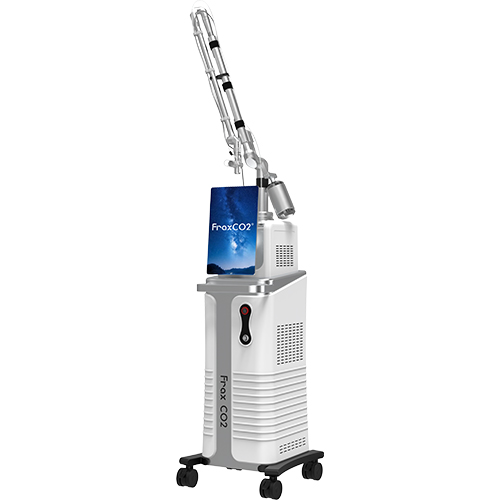
FC300 — Professional 3-in-1 Fractional CO2 Laser with USA RF Tube
- Technology: 10,600nm fractional CO2 laser with USA-made RF-excited laser tube — stable output, 3–5 year tube lifespan, fast pulse rise time for consistent MTZ depth
- 3-in-1 platform: Fractional mode (skin resurfacing) + CW (continuous wave for lesion excision) + Super Pulse (high peak power for deep scar treatment)
- Power: 70W / 100W — high-power options for aggressive single-pass deep scar treatment and rapid large-area coverage
- Scan pattern: Adjustable fractional density (5–40% coverage); spot pitch and scan shape adjustable for different anatomical areas
- Downtime: 5–10 days; 1–2 sessions for significant results; results visible from week 2, peak at months 3–6
- Best for: Dermatology clinics and medical aesthetic centers treating deep acne scars, severe wrinkles, and photodamage; clinics comfortable managing post-ablative wound care
- Certification: FDA, CE, ISO 13485
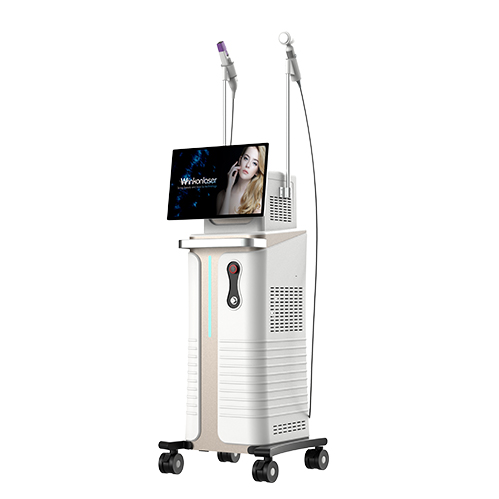
TM80 — Precision Dual-Frequency Gold RF Microneedling System
- Technology: Dual-frequency RF — 2.2MHz (insulated, deep fractional coagulation) + 700KHz (non-insulated, conductive surface heating)
- Depth range: 0.2–7.0mm motorized with ±0.1mm precision — safe for periorbital skin and effective for deep scar revision
- Needle array: 25 gold-plated insulated microneedles; RFID-authenticated single-use sterile cartridges
- Intelligent vacuum sensing: Real-time tissue resistance detection adjusts RF output — prevents over-treatment on thin skin
- 13 cartridge configurations: Different needle patterns for specific indications (scar, wrinkle, texture, stretch mark)
- Downtime: 1–2 days; 3–4 sessions at 4-week intervals; cumulative results peak at 3–4 months post final session
- Best for: Clinics prioritizing minimal patient downtime; safe for Fitzpatrick IV–VI; repeat-visit revenue model builds patient loyalty
- Certification: FDA, CE, ISO 13485
5. Final Verdict: CO2, RF Microneedling, or Both?
Decision Matrix by Clinic Profile
| Your Clinic Profile | Best Technology | Recommended Machine | Rationale |
|---|---|---|---|
| Dermatology clinic, scar revision specialist | Both | FC300 + TM80 | CO2 for deep/boxcar scars in patients who can handle downtime; RFMN for mild scars and patients who cannot; combined covers 100% of scar patients |
| Medical spa, premium clientele, anti-aging focus | CO2 Fractional | FC300 | "Laser resurfacing" is the most recognized and marketed skin renewal procedure; premium pricing ($1,500–2,500/session) with dramatic before/after photos; 1–2 sessions = simple treatment plan |
| High-volume clinic, diverse skin types (Fitzpatrick III–VI) | RF Microneedling | TM80 | Safe for all Fitzpatrick types; CO2 is contraindicated on Fitzpatrick V–VI; RFMN's broader patient eligibility = larger addressable market |
| Startup clinic, limited capital | RF Microneedling | TM80 | Broader indication range with lower risk profile; 3–4 session model builds predictable recurring revenue; no post-ablative wound care complication management required |
| Asian / Middle Eastern market clinic | RF Microneedling | TM80 | Fitzpatrick III–V dominant demographics = high PIH risk with CO2 (up to 40% in Fitzpatrick IV); RFMN with insulated needles has PIH rate of 3–8% in same populations |
6. Frequently Asked Questions
CO2 fractional laser produces superior results for deep boxcar and rolling acne scars — clinical studies show 53–69% improvement after 1–2 sessions vs 47–68% for RF Microneedling after 3–4 sessions. CO2's ablative mechanism physically removes the scar depression, and the subsequent tissue regeneration fills the defect from the bottom up. However, CO2 requires 5–10 days of downtime and has an 18% PIH risk in Fitzpatrick III–IV (vs 3% for RF Microneedling). For mild–moderate scars, RF Microneedling is often the better clinical choice because the improvement difference is small (69% vs 68% in some studies) while the recovery burden is dramatically lower. For icepick scars, neither technology is ideal — TCA CROSS (chemical reconstruction) is the gold standard, followed by either CO2 or RFMN for overall texture blending.
5–10 days for the acute healing phase, with the first 2–3 days being the most socially difficult (oozing, weeping, significant erythema). Most patients schedule treatment on a Thursday and return to work the following Monday (10–11 days later). Important caveat: post-treatment erythema (pinkness) persists for 2–4 weeks. This is not "downtime" — it is concealed with makeup and not painful — but patients must be informed. The full timeline: Days 1–2 = must stay home; Days 3–5 = can go out but look "healing"; Days 5–7 = new pink skin, socially acceptable with makeup; Week 2–4 = pinkness fading gradually; Month 1–3 = results developing.
No — CO2 fractional is contraindicated on Fitzpatrick V–VI and high-risk on Fitzpatrick IV. The reason is the same physics that makes CO2 effective: the 10,600nm wavelength is absorbed by tissue water, which is universal across all skin types. But the wound-healing response in melanin-rich skin involves hyperactive melanocytes at the wound edge, which can produce post-inflammatory hyperpigmentation (PIH) that may take 6–12 months to resolve — or may become permanent. PIH rates in Fitzpatrick IV with CO2 are 18–40% depending on energy settings. RF Microneedling with insulated needles has a PIH rate of 3–8% in the same population because the epidermis is protected. For Fitzpatrick V–VI patients needing skin resurfacing, RF Microneedling is the only safe energy-based option.
Roughly, yes — in terms of final clinical outcome for scar improvement. One aggressive fractional CO2 session produces 53–69% scar improvement. Three RF Microneedling sessions produce 47–68% improvement. The numbers overlap, which is why the choice often comes down to the patient's downtime tolerance, not the technology's ceiling. However, there are nuances: CO2's single-session result includes immediate collagen contraction (visible tightening on day 1) plus long-term remodeling. RFMN's result builds gradually and peaks at 3–4 months after the final session. Patients who want dramatic improvement and can plan downtime should choose CO2. Patients who prefer gradual improvement without disrupting their life should choose RFMN.
CO2 laser tubes come in two fundamentally different technologies: DC glass tubes (Chinese-manufactured, direct current excitation) and RF metal-ceramic tubes (USA/German-manufactured, radiofrequency excitation). RF tubes (like the one in Winkonlaser FC300) offer three critical advantages: (1) 3–5 year lifespan vs 1–2 years for DC tubes — the RF excitation doesn't degrade the electrodes as DC does. (2) Stable power output — DC tubes lose 10–20% of their output in the first 6 months; RF tubes maintain consistent output for their rated lifespan. (3) Faster pulse rise time — RF tubes reach peak power in microseconds, creating cleaner MTZs with less thermal spread into surrounding tissue. For a clinic, the RF tube means fewer tube replacements, more consistent treatment results, and lower long-term maintenance cost despite a higher initial purchase price.