


Fractional CO2 or Picosecond Laser: Which Fits Your Resurfacing and Scar Program?
Table of Contents
Short answer: fractional CO2 is the stronger choice for deep acne scars and wrinkles because it thermally remodels tissue, while picosecond wins for tattoo ink and pigment because its ultra-short pulses shatter color with less downtime. Choose by the conditions that fill your appointment book, not by which spec sheet is louder.
When a clinic is deciding which energy device to add next, the conversation usually lands on two names: fractional CO2 and picosecond. Both are sold under the skin rejuvenation label, but they work through different physics, different downtime, and different patient problems. I have seen clinics buy the device with the louder marketing pitch and then spend months forcing it onto a service list it was never designed for.
What Does Each Laser Actually Do?
Short answer: fractional CO2 uses a 10600 nm infrared beam to heat and remodel tissue, while picosecond uses 532 nm, 755 nm, and 1064 nm pulses to shatter pigment without the same heat.
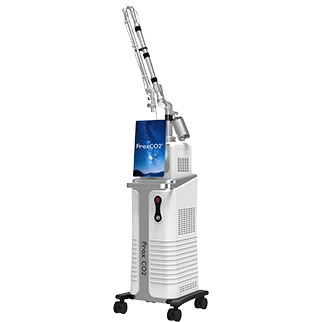
A fractional CO2 laser emits infrared light at 10600 nm that water in the skin absorbs. The beam creates microscopic columns of thermal injury, and those columns drive collagen remodeling while resurfacing scars, deep wrinkles, and rough texture. The fractional part matters: instead of treating the whole surface like a full ablative resurfacing, it leaves small islands of untreated skin between the columns, which shortens healing. That is why this category stays the reference point for acne scarring and deeper skin repair. See the Winkonlaser fractional CO2 line.
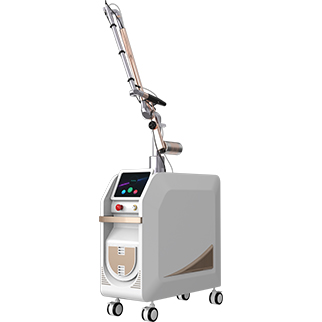
A picosecond laser works from the opposite direction. It delivers energy in trillionths of a second, so a pigment particle breaks apart from a photomechanical effect instead of slow heating. The common wavelengths are 532 nm, 755 nm, and 1064 nm, and the right one depends on the target color and the patient’s skin type. That speed makes picosecond the stronger tool for tattoo ink, sun spots, and stubborn pigmentation. See the Winkonlaser picosecond options.
Which Laser Is Better for Acne Scars and Deep Resurfacing?
Short answer: fractional CO2, because it changes tissue texture and depth, not just color.
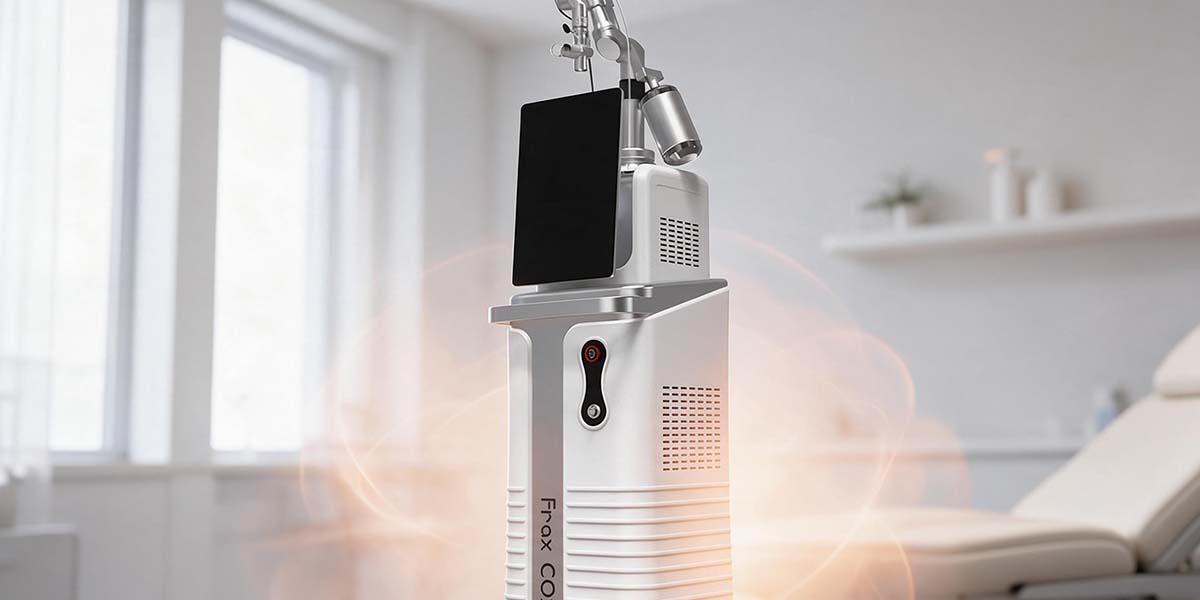
Fractional CO2 changes tissue texture. I have handled cases where a picosecond device would not have produced the same dermal remodeling because it does not reach the same ablative depth. When a patient comes in with boxcar or rolling acne scars, the clinic usually needs that depth to see a real change.
The trade-off is recovery. Fractional CO2 can leave the skin red and peeling for several days, and deeper settings stretch that further. A clinic has to schedule around the downtime and set honest expectations about how many sessions a patient needs before the result shows. This is not a lunchtime treatment, and pricing it like one will destroy the schedule.
Which Laser Is Better for Tattoo and Pigment Removal?
Short answer: picosecond, because its short pulses target color while sparing more of the surrounding skin.
Picosecond earns its place when the problem is color. Tattoo ink, melasma, and post-inflammatory hyperpigmentation respond well because the pulse is fast and selective. The shorter pulse usually means less downtime, so a clinic can book it into a busier day with quicker patient turnover.
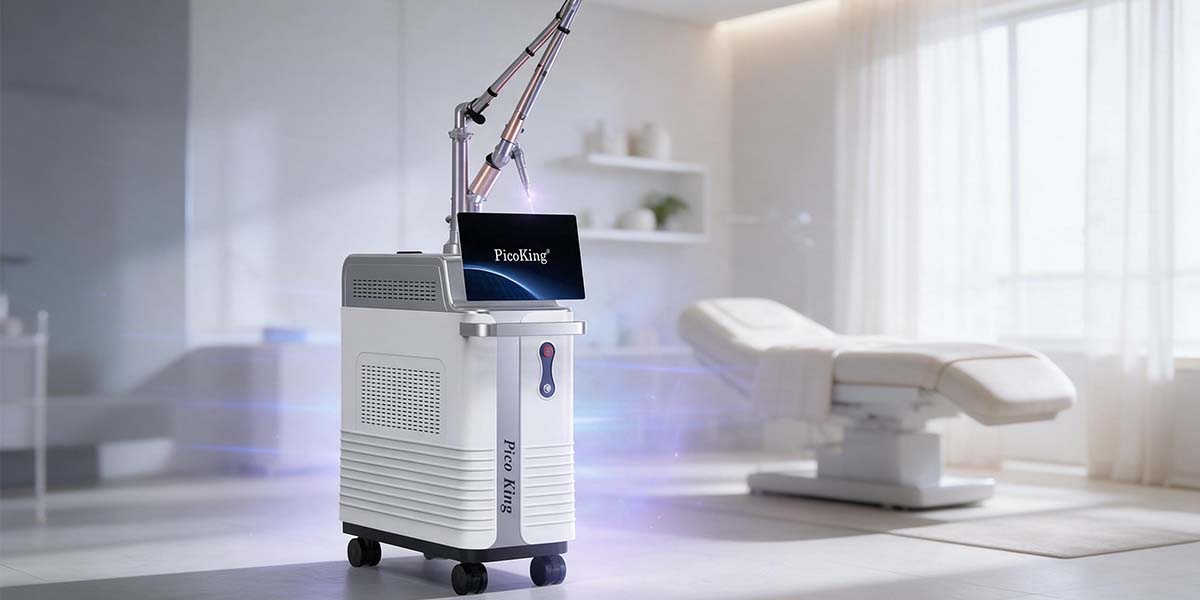
The honest limit is that picosecond is not a substitute for deep tissue tightening. It improves tone and pigment, but it does not lift or remodel the way ablative fractional CO2 does. A clinic that expects one device to cover everything usually ends up with a machine that does several things moderately instead of one thing well.
How Do Downtime and Skin Type Change the Choice?
Short answer: fractional CO2 carries more recovery and a higher pigmentation risk on darker skin; picosecond is usually gentler, but neither is suitable for every patient.
Patient selection decides the machine as much as the technology does. Fractional CO2 carries more recovery and a higher risk of post-inflammatory hyperpigmentation on darker skin types when the settings are too aggressive. Picosecond is often gentler on those skin types, but it is still not suitable for every patient. Pregnancy, active infection in the treatment area, and certain photosensitizing medications are contraindications for both, so screening is not optional.
Neither category is a do-everything device. A clinic should match the equipment to the conditions it treats most often rather than forcing one machine into a role it cannot fill. That is the difference between a device that gets booked and one that gathers dust.
How Much Do They Cost, and Which Fits My Service Mix?
Short answer: there is no fixed price, because configuration, handpieces, and support change the number. Treat pricing as Contact for pricing and decide by utilization.
I do not quote a hard machine price here because configuration, handpieces, and support change the final number. Treat pricing as Contact for pricing until a supplier gives you a written quote. The larger operating question is utilization, because a device only pays for itself when the clinic already has the patient demand to keep it booked.
Think about service mix instead. A med spa doing tattoo removal and pigment work will book a picosecond faster. A dermatology-focused clinic treating acne scars and deep wrinkles will use fractional CO2 more often. Maintenance is a separate line item, and the fractional CO2 tube and handpiece-lens schedule is something I cover in the operating-cost guide.
For picosecond pricing specifics, see the tattoo removal machine cost breakdown.
Quick Comparison
| Factor | Fractional CO2 | Picosecond |
|---|---|---|
| Primary target | Deep acne scars, wrinkles, texture | Tattoo ink, melasma, sun spots |
| Wavelength | 10600 nm | 532 nm, 755 nm, 1064 nm |
| Mechanism | Thermal remodeling | Photomechanical shattering |
| Downtime | Higher | Lower |
| Certification | CE MDD + ISO 13485 | CE MDD + ISO 13485 |
How Do I Decide for My Clinic?
Short answer: list your top revenue conditions, then match the laser to the top two or three.
-
List the conditions that make up most of your revenue.
-
Mark the top two or three by patient volume.
-
If they are scars and texture, lean fractional CO2.
-
If they are pigment and tattoos, lean picosecond.
-
If you do both, stage the purchase rather than stretching one budget across two half-used machines.
FAQ
Q: Is fractional CO2 or picosecond better for acne scars?
A: Fractional CO2 is usually the stronger choice for depressed acne scars because it remodels tissue. Picosecond can help with redness and pigment around scars but does not resurface depth the same way.
Q: Which laser has more downtime?
A: Fractional CO2 has more downtime. Patients can stay red and peeling for several days. Picosecond treatments usually heal faster, though settings and the treated condition still matter.
Q: Can a picosecond laser remove tattoos?
A: Yes. Picosecond laser is one of the standard tools for tattoo removal because its short pulses shatter ink particles with less surrounding heat.
Q: Is fractional CO2 suitable for darker skin?
A: It can be used, but aggressive settings raise the risk of post-inflammatory hyperpigmentation. Conservative settings, cooling, and a careful patch test matter more for darker skin types.
Q: Can one machine do both resurfacing and pigment?
A: Some platforms combine technologies, but fractional CO2 and picosecond lasers are fundamentally different. Buying one expecting it to replace the other usually leads to compromise.
Q: How much do these machines cost?
A: Prices vary by configuration, power, handpieces, and support. Use Contact for pricing and ask for a written quote that includes shipping, installation, and warranty terms.
Get a Configured Quote for Your Patient Mix
Still deciding which energy device fits your clinic? Winkonlaser was founded in Beijing in 2012, exports to 120+ countries, and backs its machines with a two-year warranty on the main unit and handpiece. Get a configured quote for the fractional CO2 and picosecond options, and I will walk through the trade-offs for your patient mix. Contact Winkonlaser.