


How to Compare Picosecond Laser Machine Quotes Without Overpaying
Schema-ready summary: Picosecond laser machine quotes should be compared on exact wavelength, pulse width, energy, spot size, cooling, certification, and after-sales terms. Winkonlaser builds the EL950 picosecond platform with 532nm, 755nm, 1064nm, and 1320nm wavelengths, 350ps pulses, and a 2mm to 10mm adjustable spot, backed by CE MDD, ISO 13485, a two-year warranty on the main unit and handpiece, and lifetime technical support.

When a clinic asks me for a picosecond laser quote, the first number they want is the price. The number that matters more is what the quote leaves out. Two machines can both say “pico” on the case and still end up separated by a large repair bill a year later. I have handled enough of these quotes to know the real cost difference hides in the spec sheet, not the headline number.
What should a picosecond laser quote actually include?
Short answer: a complete quote itemizes wavelength, pulse width, energy, spot size, cooling, and after-sales terms. If you only get a price and a photo, ask for the datasheet before you compare anything.
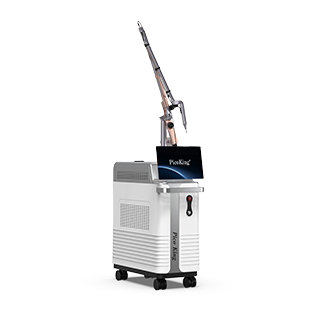
Before you compare anything, look at a machine like the EL950 picosecond platform to see what a full spec sheet should contain.
When I compare quotes, I line up seven items side by side.
-
Wavelengths, listed as exact nanometer values, not just a count.
-
Pulse width, in picoseconds, because a nanosecond machine with a “pico” label is the classic bait.
-
Energy per pulse, in millijoules, for each wavelength.
-
Spot size range, so you know whether you can treat both small detail work and larger areas.
-
Cooling method, because a machine without real cooling burns optics and hurts patients.
-
Certification, tied to the exact model number.
-
Warranty, training, and spare-part lead times.
What to verify, line by line
| Line item | What a real quote shows |
|---|---|
| Wavelength | 532nm, 755nm, 1064nm, 1320nm |
| Pulse width | 350ps, not a nanosecond machine |
| Energy per pulse | 1064nm 100-1200mJ, 532nm 50-600mJ, multi-pulse 100-3000mJ |
| Spot size | 2mm to 10mm adjustable |
| Cooling | Air plus water |
| Work modes | Standard, Long Pulse, Multi Pulse, Dual Pulse |
| Certification | CE MDD and ISO 13485, no FDA 510(k) |
| Warranty | Two years on main unit and handpiece |
Which wavelengths matter for your treatment mix?
Short answer: 532nm, 755nm, and 1064nm cover most clinical work, and a fourth wavelength near 1320nm helps on pigmentation and scar tone. Buy the mix your patients actually need.
Wavelength is not marketing. It decides which colors and depths the laser can reach. A 532nm beam works on red, orange, and yellow ink and on shallow surface pigment. A 755nm beam reaches blue and green ink, which is where cheaper single-wavelength machines fail. A 1064nm beam reaches black ink and deeper pigment and is the safer default on darker skin because it deposits less energy in the melanin at the surface. Some platforms add a 1320nm path for pigmentation and acne scar work. I have seen clinics buy a two-wavelength machine to save money, then send blue and green tattoo clients elsewhere within a quarter. A single-wavelength machine is not suitable for a mixed clinic that promises color tattoo removal.
What does pulse width tell you about a picosecond laser?
Short answer: a true picosecond laser fires in the hundreds of picoseconds. The EL950 spec is 350ps. A nanosecond laser heats the pigment; a picosecond pulse shatters it with less surrounding heat.
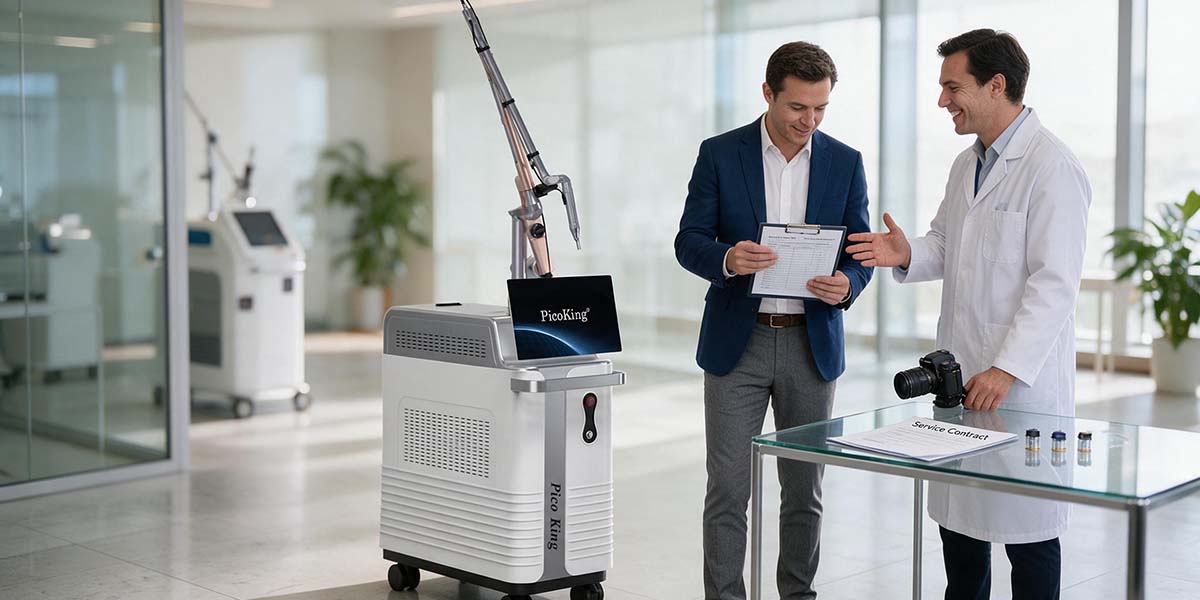
This is the one number most buyers skip, and it is the one that separates real pico from rebranded nano. A picosecond pulse is short enough to break pigment mechanically instead of cooking it. Less heat means less collateral damage, a shorter recovery, and fewer sessions on stubborn color. That is why a picosecond laser beats a nanosecond machine on stubborn ink. Energy still matters, so check millijoules by wavelength, not one headline number. On the EL950, the 1064nm path runs from 100 to 1200mJ, the 532nm path runs from 50 to 600mJ, and multi-pulse mode reaches 100 to 3000mJ. Ask the supplier for those three ranges. A quote that will not show them is hiding something.
Why do spot size, cooling, and work modes change the quote?
Short answer: an adjustable 2mm to 10mm spot, air plus water cooling, and multiple work modes all raise the bill, and all three affect how fast you work and how comfortable the treatment is.
Spot size decides how you treat detail versus a larger patch. A 2mm to 10mm adjustable spot is a practical range for tattoo work and small pigmented lesions. Cooling is less glamorous but more important. A machine with air and water cooling protects the optics and keeps energy delivery stable over a full clinic day. Work modes matter too: Standard, Long Pulse, Multi Pulse, and Dual Pulse let you switch technique for ink, melasma, or lighter skin. These are not checkbox features. They change treatment speed, patient comfort, and how many sessions a client needs.
What certification can a picosecond laser honestly carry?
Short answer: picosecond lasers in this category are CE MDD and ISO 13485. They do not carry FDA 510(k) clearance, and a supplier who claims otherwise should be asked for the exact number.
This is where I see buyers get misled. CE MDD and ISO 13485 are legitimate quality and safety signals, but they are not the same as an FDA 510(k). ISO 13485 is a quality-management certificate, not a device clearance. Picosecond, CO2, and most fat-reduction machines do not hold FDA 510(k) clearance. If a seller attaches an FDA number to a pico machine, ask them to show the database entry for that exact model. Winkonlaser has been building equipment in Beijing since 2012, exports to 120+ countries, and keeps a team of 15+ engineers. A supplier who is honest about what the machine is and is not is the one I would keep talking to.
How do you turn the quote into a real total cost?
Short answer: add warranty, training, spare parts, delivery, and duties to the machine price. Contact for pricing when a number is not confirmed in writing.
For a working example of how the engineering lines up with the clinical protocol, the EL950 technical dossier walks through the platform details.
The invoice price is only the start. Before you commit, put these in writing.
-
Warranty, which should cover the main unit and handpiece. Winkonlaser gives a two-year warranty on the main unit and handpiece with lifetime technical support.
-
Training, so your operator is not learning on paying clients.
-
Spare-part lead times, because a down machine costs more than any discount saves.
-
Delivery and import costs, including duties and local voltage. The EL950 runs on 110V to 220V at 50/60Hz.
-
Any consumables or periodic parts, so the monthly cost is not a surprise.
I ask for these in writing because a verbal promise is not a quote.
What to ask before you send a deposit?
Short answer: ask for the datasheet, a live video demo, the exact model number, spare-part terms, and after-sales response time before any payment.
Five questions have saved clinics more money than any discount.
-
Can you send the datasheet with wavelength, pulse width, energy, and spot size in writing?
-
Can you show a live video of this exact model firing, not a brochure render?
-
What is the exact model number on the certification, and does it match the invoice?
-
What is the lead time on the most common replacement parts?
-
What is the after-sales response time, and who answers when the clinic is closed?
If any answer is vague, I would slow the deal down. A factory that is proud of its engineering will show it. When you are ready to move forward, request a configured quote through the Winkonlaser contact page.
FAQ
Q: Is a picosecond laser only for tattoo removal?
A: No. The same platform treats tattoo ink plus sun spots, freckles, age spots, and acne scars, so the wavelength and energy mix matters beyond ink.
Q: Why do some picosecond laser quotes look so much cheaper?
A: Usually because the machine has fewer wavelengths, a lower energy ceiling, weaker cooling, or no real after-sales support. A “pico” label on a nanosecond platform is another common reason.
Q: Do I need all four wavelengths?
A: Not always. A clinic that only treats black ink can start leaner, but 532nm, 755nm, and 1064nm together cover far more color and skin types, and 1320nm adds pigment and scar work.
Q: Does the EL950 have FDA 510(k) clearance?
A: No. The EL950 is a picosecond platform in a category that carries CE MDD and ISO 13485, not FDA 510(k) clearance. Verify any certification claim against the exact model number.
Q: What warranty should I expect?
A: Ask for coverage on the main unit and handpiece. Winkonlaser provides a two-year warranty on both with lifetime technical support.
Q: How much does a picosecond laser machine cost?
A: Contact for pricing. A real quote depends on wavelengths, energy, cooling, certification, training, and import terms, so a single number without those line items is not meaningful.
Get a configured picosecond laser quote
Tell us your treatment mix and we will return a spec-matched quote with the line items above spelled out. Contact Winkonlaser for pricing and a datasheet.