


Picosecond Laser Tattoo Removal Machine Cost: What You’ll Actually Pay in 2026
Table of Contents
A clinic-grade picosecond laser tattoo removal machine runs from about $2,000 to $12,000 in 2026, and a serious flagship sits between $5,000 and $8,190 factory-direct. That last range is exactly where our EL950 (PicoKing) lands. I’ve watched buyers overpay by 40 percent because they compared wattage stickers instead of the three things that actually erase ink.
The short answer on price
If you want a number, here it is. A real, clinic-grade picosecond laser tattoo removal machine in 2026 runs from roughly $2,000 to $12,000, depending on wavelengths, peak power, and whether you buy from a factory or a reseller. The sweet spot for a working clinic is $5,000 to $8,190, which is the factory-direct range of our EL950.
Below about $2,000 you are usually looking at a rebranded nanosecond machine with a “pico” sticker on the case. I have watched clinics buy those, run them for two months, and call us because the ink barely faded. It is one of the most common mistakes I see.
Why picosecond machines cost what they cost
The entire value of a picosecond laser is in the pulse. It fires light in trillionths of a second. A nanosecond laser heats the ink particle; a picosecond laser shatters it mechanically. Less heat means less pain, fewer sessions, and better results on stubborn colors like blue and green.
Producing that pulse is expensive for three reasons.
First, the optics have to survive brutal peak power. Cheap crystals and coatings burn out fast, and a burned optic is a dead machine.
Second, wavelength coverage costs money. A real picosecond machine runs at 1064nm for dark ink, 532nm for red and orange, and often 755nm for blue and green. Each wavelength is a separate optical path, and every extra path raises the bill.
Third, certification is not free. FDA clearance, Medical CE, and ISO 13485 audits add real cost. A machine that skipped these is cheaper for a reason, and you find out why later.
The three price bands
I’d split the market into three honest bands rather than pretend every machine is the same.
Entry, $2,000 to $4,500. Usually single or dual wavelength, lower energy. These clear dark black ink on light skin fine. They struggle with red, blue, and green, and they are weak on pigmentation. Fine as a second machine or a starter for a low-volume salon. Expect maybe 8 to 12 sessions on a stubborn black tattoo instead of the 5 to 7 a good machine manages.
Mid-range, $4,500 to $6,500. Multi-wavelength, higher energy, better spot size control. You get the extra wavelengths and enough energy for daily volume without paying the flagship premium. This is where most serious clinics land.
Flagship, $6,500 to $8,190 and up. Full wavelength coverage at 1064nm, 532nm, and 755nm, high peak power, adjustable spot sizes, proper cooling, and a handpiece that will not die after a year. If you treat color and pigmentation every day, this is where the math works in your favor. The EL950 sits here.
What actually drives the price
When two suppliers quote wildly different prices for what looks like the same machine, here is what you are really paying for.
Wavelength count is the biggest driver. A 1064nm-only machine is cheap. Add 532nm and the price jumps. Add 755nm and it jumps again. If you plan to remove colored tattoos or treat pigmentation, you need the extra wavelengths and you will pay for them.
Peak power matters more than the wattage number on the listing. A 2000W machine with weak peak power will not clear stubborn ink. I have been in this industry since 2012, and we ship to over 90 countries, and the single most misled buyers are the ones who bought the biggest wattage sticker.
Cooling and handpiece durability are the silent cost. A handpiece that overheats mid-session slows you down and dies early. A cheap machine’s real cost shows up in month eight, not month one.
Where buyers overpay
The most common way to overpay is buying a full package of accessories you will never use. You do not need the deluxe cart, the branded goggles, or the software upgrade. You need the wavelengths, the energy, and the warranty.
The second way is buying from a trading company instead of the factory. The factory-direct price on a flagship is the range above. Add 30 to 50 percent when you buy through a reseller.
The third is ignoring replacement cost. Picosecond machines are low-consumable compared to IPL, but you still want to know what a replacement handpiece costs before you buy, not after.
How to compare suppliers honestly
Ask these five questions in writing before you pay anyone.
-
Which wavelengths does the machine actually emit? Get the list, not the marketing page.
-
What is the peak power, not just the wattage?
-
Which certifications are in hand? Ask for the certificate numbers, not the logos.
-
What does a replacement handpiece cost, and what is the warranty on it?
-
Can I run a test patch on a real tattoo, or at least on ink-soaked paper?
A supplier who dodges questions two and four is hiding something. I have watched this play out enough times to say that with confidence.
.jpg)
Where the EL950 fits
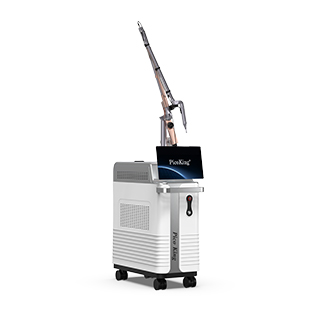
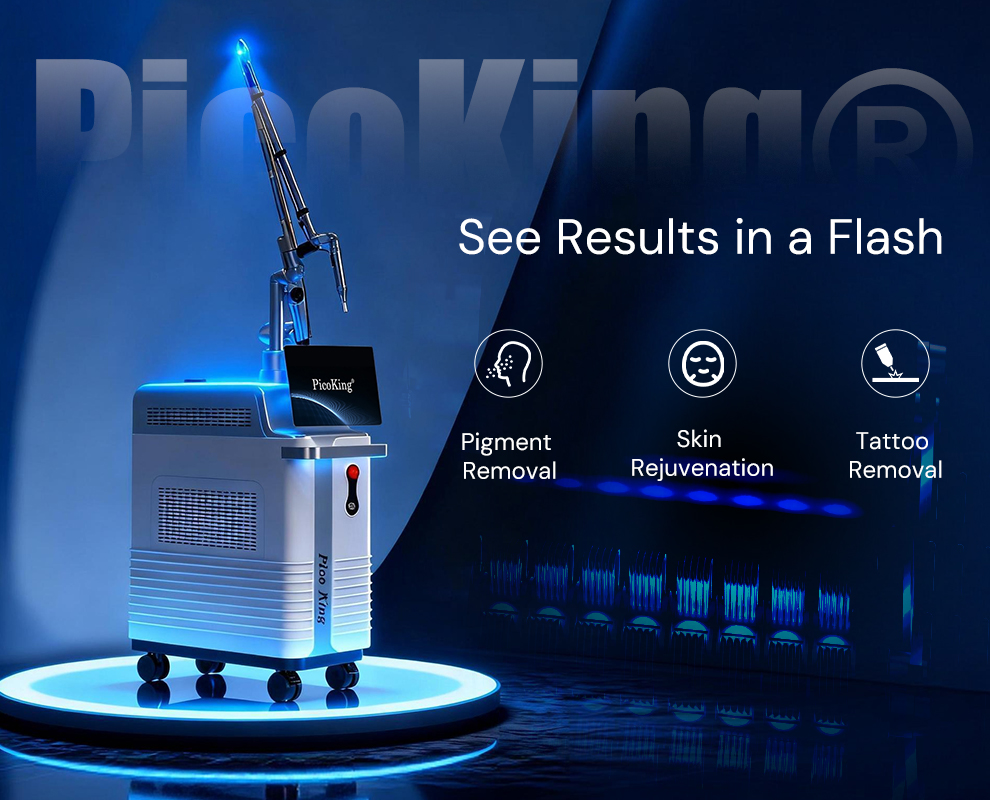
Our flagship is the EL950, which we call PicoKing. You can see the full specs on the EL950 product page.
It sits at the top of the range for a reason: three wavelengths at 1064nm, 532nm, and 755nm, high peak power, adjustable spot sizes, and a handpiece built to survive daily clinic use. It is the machine we point people to when they say they want one unit that handles tattoos, pigmentation, and skin tone.
How fast a machine pays for itself
A picosecond tattoo removal session runs $150 to $400 per visit at most clinics, and a typical tattoo needs 5 to 8 sessions. One client is worth roughly $750 to $3,200 over their course. A $7,000 machine pays for itself after 3 to 6 full clients, before you count the pigmentation work that rides on the same unit. This is why wavelength coverage matters more than the sticker price: a machine that also treats pigmentation and skin tone brings in revenue a tattoo-only unit never sees.
FAQ
Q: How much does a picosecond laser tattoo removal machine cost?
A: Clinic-grade machines run roughly $2,000 to $12,000. A serious flagship like the EL950 is $5,000 to $8,190 factory-direct.
Q: Is picosecond really better than nanosecond for tattoos?
A: Yes, for most inks. The shorter pulse shatters ink mechanically instead of heating it, so stubborn colors clear faster and with less pain. See the science breakdown in our pico laser technology deep dive.
Q: Do I need 755nm?
A: Only if you remove blue and green ink or treat pigmentation. For black and red ink, 1064nm and 532nm cover most of it.
Q: Why is there such a big price gap between suppliers?
A: Wavelength count, peak power, certifications, and whether you are buying from a factory or a reseller. Resellers typically add 30 to 50 percent.
Q: What are the hidden costs?
A: Replacement handpieces, shipping and duty, and the cheap-machine problem of early failure. Ask about all three before you buy.
Q: Who should not use a picosecond laser?
A: Treatment is contraindicated for pregnant clients, people with pacemakers, active infections in the treated area, or a history of keloid scarring. It is not recommended for very dark skin tones on high settings without a patch test.
The honest bottom line
A picosecond laser tattoo removal machine is a real investment, and the $5,000 to $8,190 range is where a working clinic should be looking. Buy on wavelengths, peak power, and certification, not on wattage stickers. Spend a little extra on a unit that does both tattoos and pigmentation, because that second revenue stream is what actually pays the machine off. If you want to see how the EL950 compares against ND:YAG, read our showdown or get a quote.