


Should Your Clinic Buy From a Local Distributor or a Chinese Factory?
Table of Contents
When a clinic or med spa starts shopping for a laser hair removal, HIFU, or RF microneedling machine, the first question is often not “which technology” but “who do I buy from.” A local distributor feels safe because there is someone nearby to call. A Chinese factory feels cheaper because the same machine can be quoted for thousands less. Both instincts are partly right, and both can lead to a bad purchase if they are followed without a written checklist.
I have handled this from the supplier side for years. Winkonlaser was founded in Beijing in 2012, exports to more than 120 countries, and keeps more than 15 engineers on staff, so I see both channels every week. Some clinics buy from us directly and run the machine for years without trouble. Others are far better off paying a local distributor to hold stock, handle import, and send a technician. This article lays out the trade-off so you can decide with your own numbers instead of a sales story.
The short version: choose a local distributor when you need fast on-site service, local compliance help, and you can accept a higher price for that safety. Choose a factory order when you have the time, the technical comfort, and the cash-flow buffer to manage import, spare parts, and remote support yourself. If you try to get distributor-level service at factory-level pricing, you will usually end up with neither.

When a Local Distributor Is Worth the Markup
A distributor is not just a reseller adding cost. A good one carries stock, handles customs and certification paperwork, keeps spare handpieces and consumables locally, and sends a technician when a machine stops mid-schedule. That last point is the one clinic owners undervalue. A laser that is down for two weeks costs more in lost bookings than the margin the distributor added.
The markup is easiest to justify when the equipment is revenue-critical. If hair removal is your main service and you run a full booking calendar, downtime is expensive. Paying 20 to 40 percent more for a local warranty response can be cheaper than waiting for a courier from another country. The same logic applies when the clinic is in a market with strict local rules, because a distributor who has already imported the same model can often provide the registration or local compliance documents you need.
There is a real limit to this logic. A local distributor does not automatically mean good service. Some distributors import the machine, sell it, and then disappear. Others use non-genuine replacement parts or delay warranty work. You still need to verify the distributor the same way you would verify a factory. Ask for a local service technician, a written response-time promise, and the names of two or three clinics they already support. If they cannot name a technician, the markup is not buying service; it is buying a story.
When a Factory Order Makes Sense
Factory direct works when you are comfortable taking over the parts of the purchase that a distributor normally handles. That means import, customs classification, payment risk, spare parts, and remote troubleshooting. If you are a clinic owner who already has a broker and a biomedical technician, the lower unit cost can be real and worth it.
The savings usually come from removing one or two layers of margin and from ordering spare parts and consumables on the same production schedule. On a mid-range diode laser, factory pricing can be several thousand dollars below the landed distributor price, but that savings shrinks once you add freight, duty, local certification, and the value of your own time. Calculate the landed cost, not the FOB sticker.
Factory direct also makes more sense for an OEM or private-label project, where the clinic or brand needs a specific configuration, logo, or treatment protocol rather than a stock model. That is the kind of purchase where talking to the production team early saves rework later. You can read how Winkonlaser handles that work on the OEM/ODM service page.
The trade-off is not only about money. A factory order asks you to become the project manager for the import. You will chase the freight forwarder, confirm the customs classification, arrange a receiving inspection, and keep the spare parts you might need on hand. That work is manageable if one person in the clinic owns it, but it rarely works when it is treated as an afterthought on top of a full patient schedule.
What “Factory Direct” Should Actually Look Like
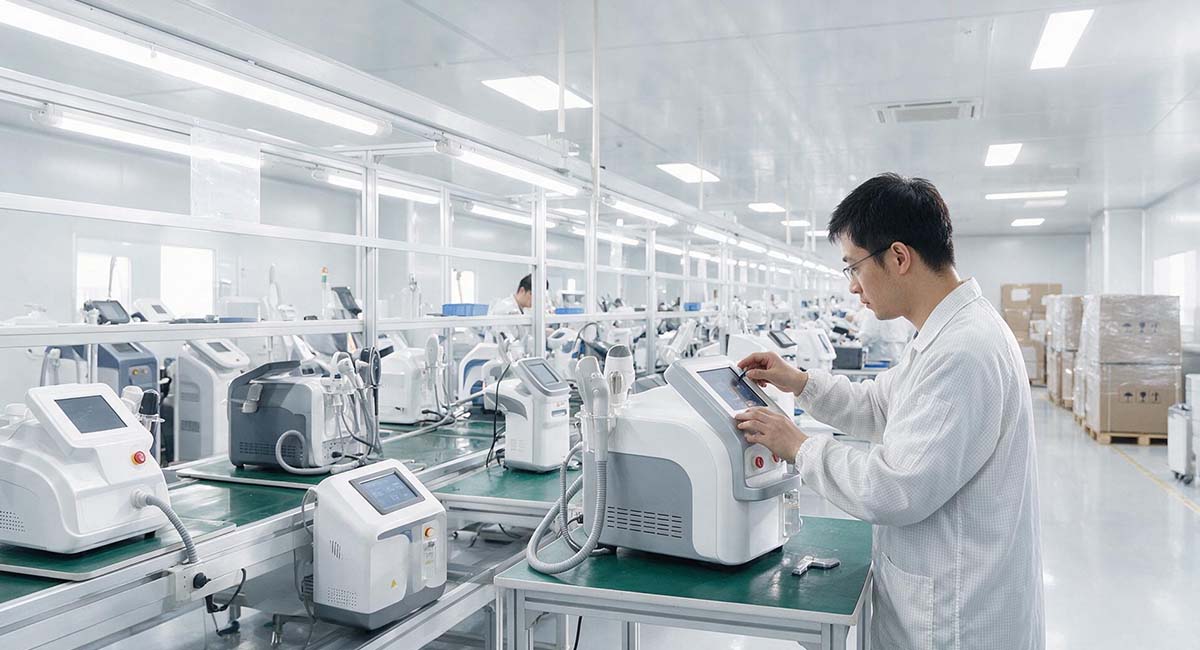
The phrase “factory direct” is used so loosely that it has almost stopped meaning anything. A real factory should be able to show you the production floor on a live video call, send a business license that matches the company name and address, and explain where the major components come from. A trading company that calls itself a factory will usually deflect when you ask to see production.
I have seen buyers accept a branded website and an agent’s word as proof of a factory, then discover later that the seller had no production line and no spare parts inventory. The test is simple. Ask for a video walkthrough of the assembly and test area. Ask who owns the injection molds, the laser source sourcing, and the software. If the answer is vague, treat the seller as a trader, not a factory. Use the supplier verification checklist before you pay.
The Five Checks Before You Send Money to Any Supplier
No matter which channel you choose, the same five checks protect the deposit.
First, confirm the legal entity. The company name on the invoice, the business license, and the bank account beneficiary must match. If a different name appears at the payment step, stop and ask why. A mismatch is the most common warning sign in a supplier scam.
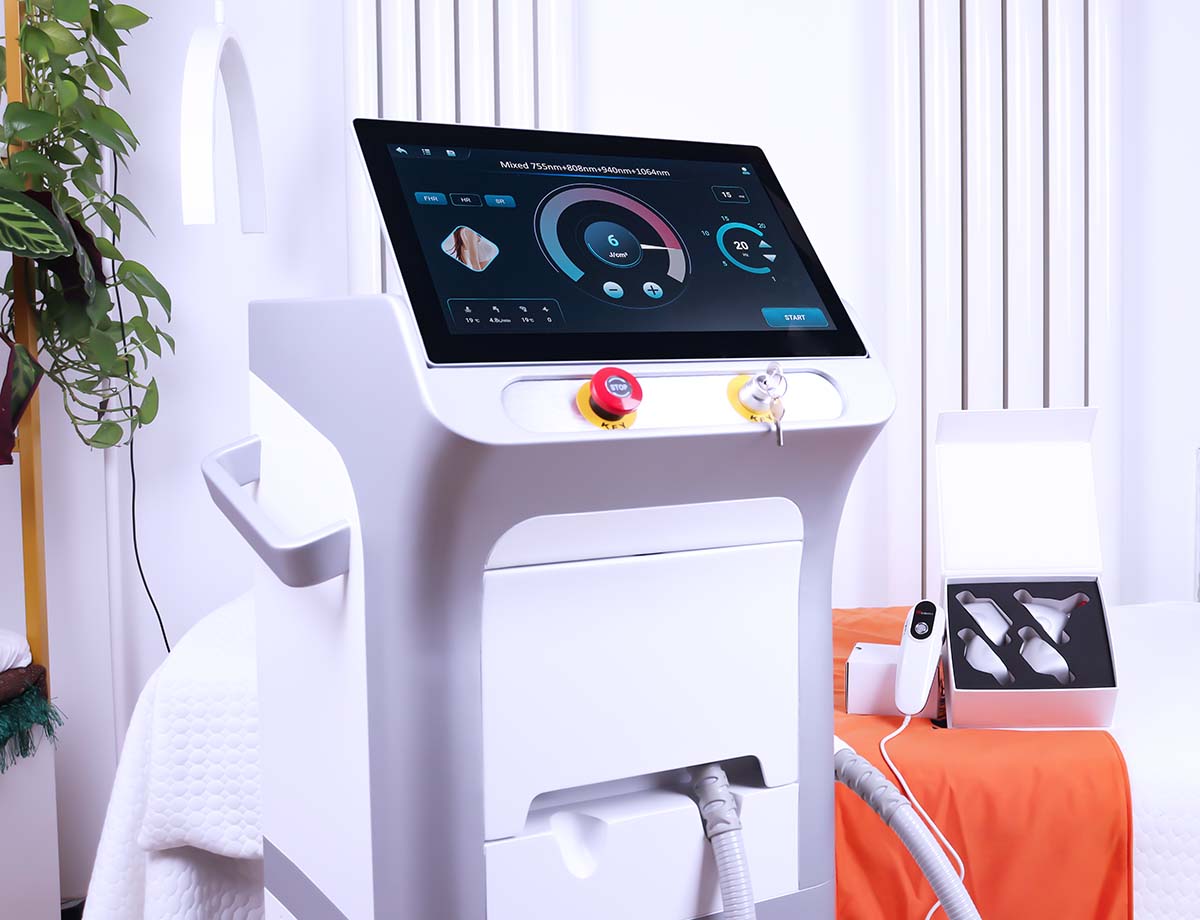
Second, get a written specification sheet with real units. A diode laser should state the wavelength in nanometers, such as 755nm, 808nm, and 1064nm, along with optical power, spot size, cooling method, and the shot rating on the handpiece. A HIFU machine should state the treatment depth range in millimeters. If a number is missing or described only as “high power,” ask for it in writing.
Third, confirm the certification boundary for the exact model. Only the Winkonlaser DM60 and DM40P diode hair removal machines are described as FDA 510(k) cleared under K241860. Picosecond, CO2, and fat-reduction machines are CE MDD plus ISO 13485 only. If a seller attaches FDA clearance to a different category, that is a red flag. You can walk through the check step by step in the FDA 510(k) verification guide.
Fourth, fix the warranty and spare parts terms before the order. Winkonlaser states a two-year warranty on the main unit and handpiece with lifetime technical support, but the buyer should still write down response time, who pays shipping on a warranty part, and the price of consumables. A cheap machine becomes expensive if the handpieces and filters are marked up later.
Fifth, protect the payment. Use a bank transfer to the verified company account, avoid paying a personal account, and stage the balance against a video inspection or a pre-shipment test. If the supplier resists a normal trade process, walk away.
Certification and Warranty Terms to Lock In
Certification is where a distributor can add the most value and where a factory buyer can make the biggest mistake. A machine that is legal in the factory’s home market is not automatically legal in yours. Confirm whether the model needs a local device registration, an electrical safety certificate, or a specific wavelength approval for your country.
Do not let a sales person collapse “ISO 13485” into “FDA cleared.” ISO 13485 is a quality management certification. It is not a device clearance. The FDA 510(k) clearance under K241860 is specific to the DM60 and DM40P diode laser hair removal systems, and it should not be claimed for picosecond, CO2, or body contouring machines. If your market requires FDA clearance and you are not buying one of those two models, ask the supplier to show the actual device listing before you rely on it.
For warranty, put the details in the purchase order, not a chat message. Write down the coverage period, the excluded parts, the response time, whether remote support is included, and who owns the freight on a replacement. A two-year warranty on the main unit and handpiece is a useful baseline, but the exact terms depend on the model and the market.
What This Decision Does Not Change
Buying from a local distributor does not remove the need to read the specification. Buying from a factory does not remove the need for local service planning. Either channel still requires operator training, a test patch protocol, and a realistic maintenance schedule. A laser is a medical aesthetic device, not a plug-and-play appliance, so the clinical safety work is the same on both paths.
There are also cases where neither channel is the right first step. If the clinic does not yet have a treatment volume that justifies the machine, or if the operator has not been trained on the technology, the better move is to delay the purchase and buy the training or the service plan first. A machine that sits unused is more expensive than a markup.
The clinical screening rules are the same no matter who ships the machine. A trained operator should still assess each client and perform a test spot, especially on darker skin or over tattoos. Screen for contraindications such as pregnancy, open wounds, active infection in the treatment area, recent sun exposure, and any medical history that needs a physician review. No purchase channel removes that step.
FAQ
Q: Should a clinic buy a laser from a local distributor or directly from a Chinese factory?
A: It depends on your service and import capability. Choose a local distributor when downtime is expensive and you need nearby service and compliance help. Choose a factory order when you can manage import, spare parts, and remote support and you want the lower unit cost or a private-label configuration.
Q: How much can a clinic save by buying factory direct?
A: The FOB price can be several thousand dollars below a landed distributor price, but freight, duty, local certification, and your own time reduce the gap. Always compare the landed cost and the service terms, not just the factory quote.
Q: How do I know a Chinese supplier is a real factory?
A: Ask for a live video walkthrough of the production and test area, a business license that matches the company name and address, and a clear explanation of where the major components come from. Then run the full supplier verification checklist before any deposit.
Q: Does a local distributor guarantee better service?
A: Not automatically. Verify the distributor the same way you would a factory: ask for a named local technician, a written response-time promise, and references from clinics they currently support.
Q: What certifications should I ask for on a laser machine?
A: Match the claim to the exact model. ISO 13485 is a quality management certification, not a device clearance. Only the Winkonlaser DM60 and DM40P diode hair removal systems are described as FDA 510(k) cleared under K241860. Other categories are CE MDD plus ISO 13485.
Q: What is the safest way to pay a factory order?
A: Pay the verified company bank account, never a personal account, and stage the balance against a video inspection or pre-shipment test. A mismatch between the invoice name and the bank beneficiary is a warning sign.
Get a Direct or OEM Quote for Your Clinic
If you are deciding between a distributor and a factory order, start by writing down your landed cost, your downtime tolerance, and who will handle service in your market. Shortlist suppliers that can pass the five checks and show the certification boundary for the exact model you are ordering.
Review the Winkonlaser supplier verification checklist, compare models in the laser hair removal buying guide, and then contact Winkonlaser with your market and service needs for a direct or OEM quote.