


What to Buy First: Diode Laser Setup for a Small Clinic
Table of Contents
When a small clinic or new med spa starts asking suppliers for a diode laser, the conversation usually jumps straight to power and price. I understand why. A 2000W number sounds larger than a 1200W number, and a low quote feels safer than a big investment. The problem is that the first machine has to carry the treatment menu, the client mix, and the clinic’s reputation at the same time. If you choose the wrong configuration to save a little money up front, you usually spend more on a second machine or lose the clients who need a broader skin-type range. In my experience, the clinics that avoid a re-buy are the ones that start with a wider wavelength set and a cooling system they can actually explain.
This guide is written for the buyer who is trying to decide what to order first. I will keep the recommendation practical: start with a multi-wavelength diode laser when hair removal is a primary service, choose at least 808nm plus 1064nm, and treat a single-wavelength 808nm or an IPL machine as a secondary or low-volume option. Then I will list the five checks to make before you pay the deposit.
Winkonlaser has built diode laser systems since the company was founded in Beijing in 2012, and it now exports to more than 120 countries with a team of more than 15 engineers. I bring that up not as decoration, but because the same brand can still offer several different configurations. The point of this article is to help you pick the first one that fits.
.jpg)
Start With the Wavelengths That Match Your Patients
For a small clinic that expects a broad range of skin types, a dual-wavelength diode with 808nm plus 1064nm is the practical minimum. The 808nm wavelength is the workhorse for most Fitzpatrick I to IV patients. It has strong melanin absorption and works well on the arms, legs, bikini line, and face. The 1064nm wavelength penetrates deeper and is the safer option for Fitzpatrick V and VI skin, because it reduces the risk of excessive melanin absorption at the surface.
Adding 755nm improves fine and light-hair work, and adding 940nm gives another treatment option, but those are secondary. The important gap to close is 1064nm coverage for darker skin. A clinic that advertises laser hair removal but buys only a single 808nm wavelength will turn away or undertreat part of its market.
Do not make a single-wavelength 808nm machine the primary first purchase if hair removal is your core revenue. Reserve that machine, or an IPL platform, for a beauty salon that is adding hair removal to a broader service menu and mostly serves lighter skin.
Check the Real Optical Power, Not the Sticker
The first number on a sales sheet can be misleading. Some machines advertise a high electrical input or rated power while delivering far less energy to the skin. Ask for the peak optical power measured at the handpiece aperture, and compare machines on that basis.
For a starter clinic, a machine in the 1200W to 2000W optical range is usually enough for routine treatment. A 3000W platform is a stronger long-term choice for high volume or a clinic that wants the fastest sessions from day one, but power alone does not make a configuration good. Cooling, spot size, and handpiece control matter just as much.
Make Sure You Have at Least Three Spot Configurations
A single fixed spot limits the treatment menu more than most new buyers expect. Small spots handle the upper lip, fingers, and precision areas. Large spots handle the back, legs, and high-volume days. A machine with only one spot size will make every treatment slower or less precise.
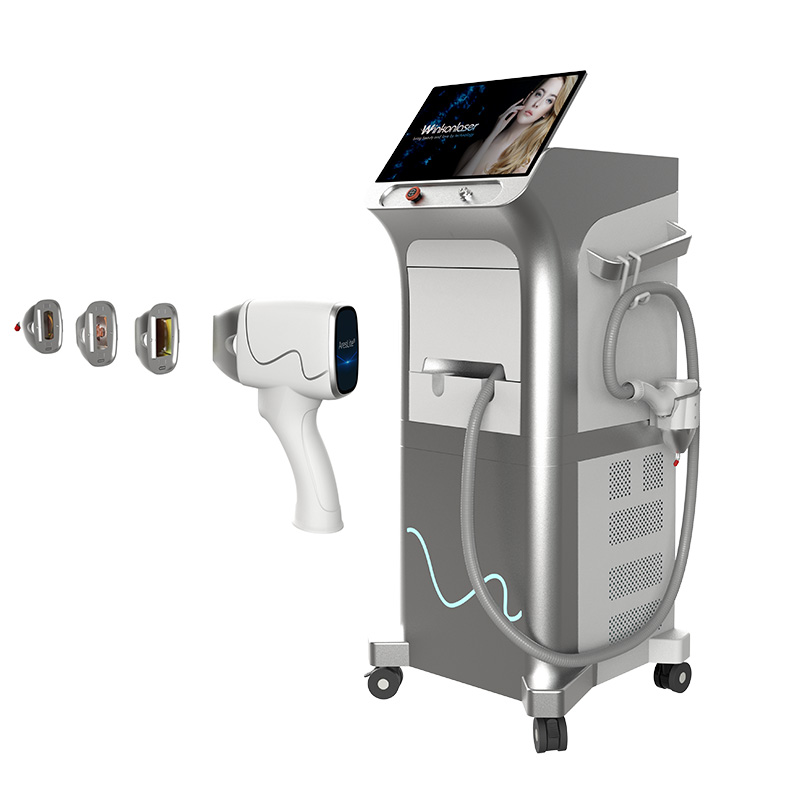
Look for a system that offers at least three spot configurations. The Winkonlaser DM40P, for example, comes with two fixed spot-size handles at 12mm by 12mm and 12mm by 24mm. The DM60 moves to four interchangeable spots. That difference matters when your schedule mixes fine-line work with large treatment areas. I have seen clinics buy a single fixed-spot machine because it was cheaper, then watch the treatment room back up on full-leg days.

Choose Strong Cooling Before You Push the Power
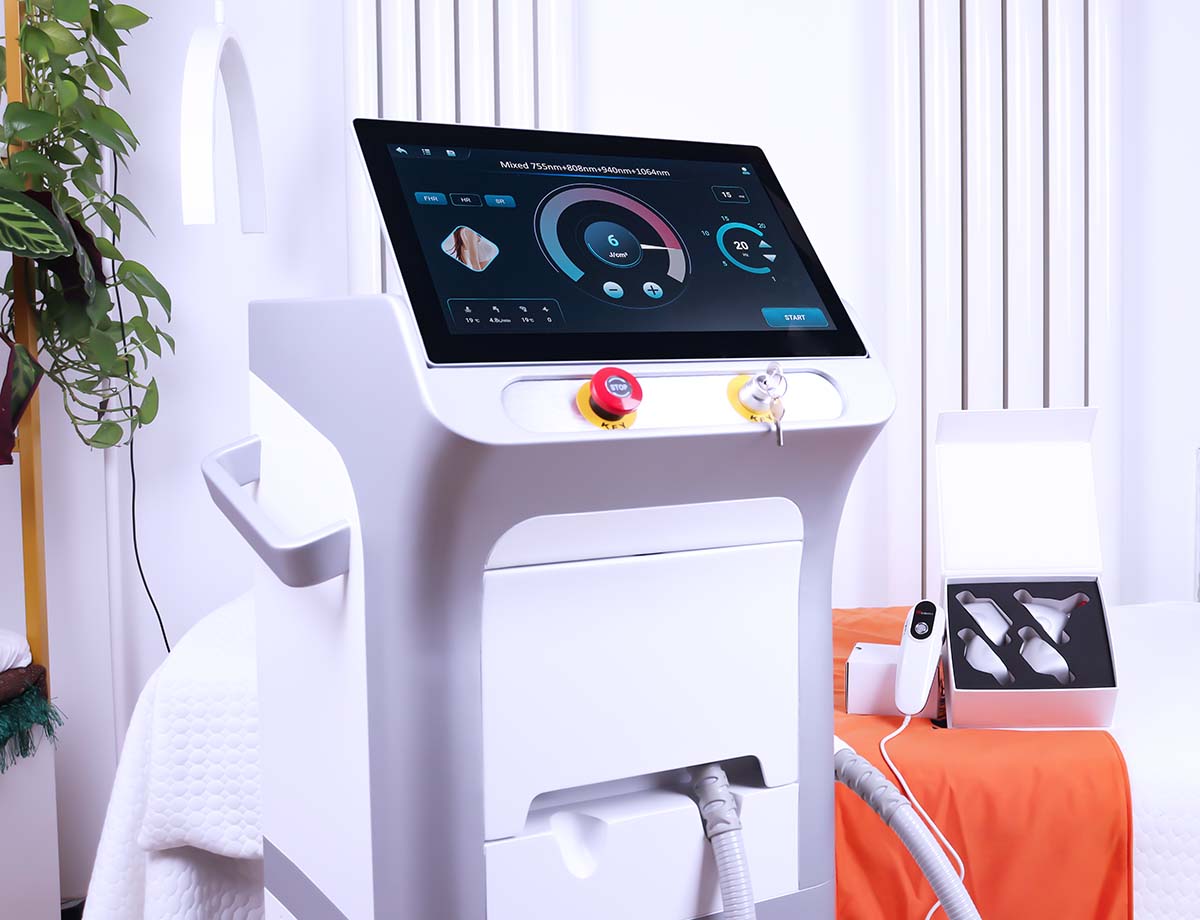
Cooling is not an accessory. It is the part that allows a clinic to treat darker skin at higher fluence without as much pain or burn risk. A multi-mode system such as the DCS 5-in-1 cooling used on the Winkonlaser DM40P and DM60 combines contact cooling with air cooling. A single TEC cooling system is more limited, especially on Fitzpatrick V and VI clients.
Before you buy, ask the supplier to explain the cooling cycle, not just list it as a feature. If the answer is vague, ask for a demonstration video or a treatment protocol that shows how the operator controls skin temperature during the pass.
Confirm RFID Handpieces and a Known Shot Count
RFID authentication protects the machine from third-party or refurbished handpieces. It also makes the consumable cost predictable, because the clinic knows the rated shots and when a handpiece needs replacement. Without authentication, a lower-quality or unauthorized handpiece can reduce the output and change the treatment result.
The shot count is an estimate, not a guarantee of years. Usage patterns, power settings, and maintenance all affect real lifespan. A 100M shot bar on the Winkonlaser DM60 is a useful capacity signal, but it does not mean the handpiece will run forever without service. Confirm the replacement price and the service interval before you commit.
Verify Warranty, Local Service, and Certification
Ask for at least two years of warranty on the laser bar and power supply, and identify the nearest authorized service center before purchase. Winkonlaser states a two-year warranty on the main unit and handpiece with lifetime technical support, but you should still confirm the exact terms for your market and the model you are ordering.
On certification, keep the FDA boundary clear. Only the Winkonlaser DM60 and DM40P diode laser hair removal systems are described as FDA 510(k) cleared under K241860. Do not attach that clearance to an IPL machine, a multifunction platform, or another model. When a seller makes an FDA claim, ask for the exact 510(k) number and the specific model listed under it.
Which Models Fit the Recommendation
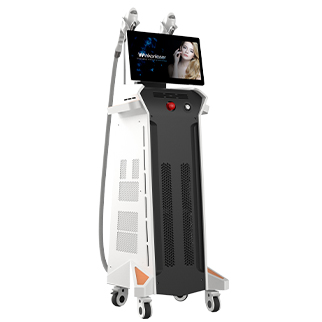
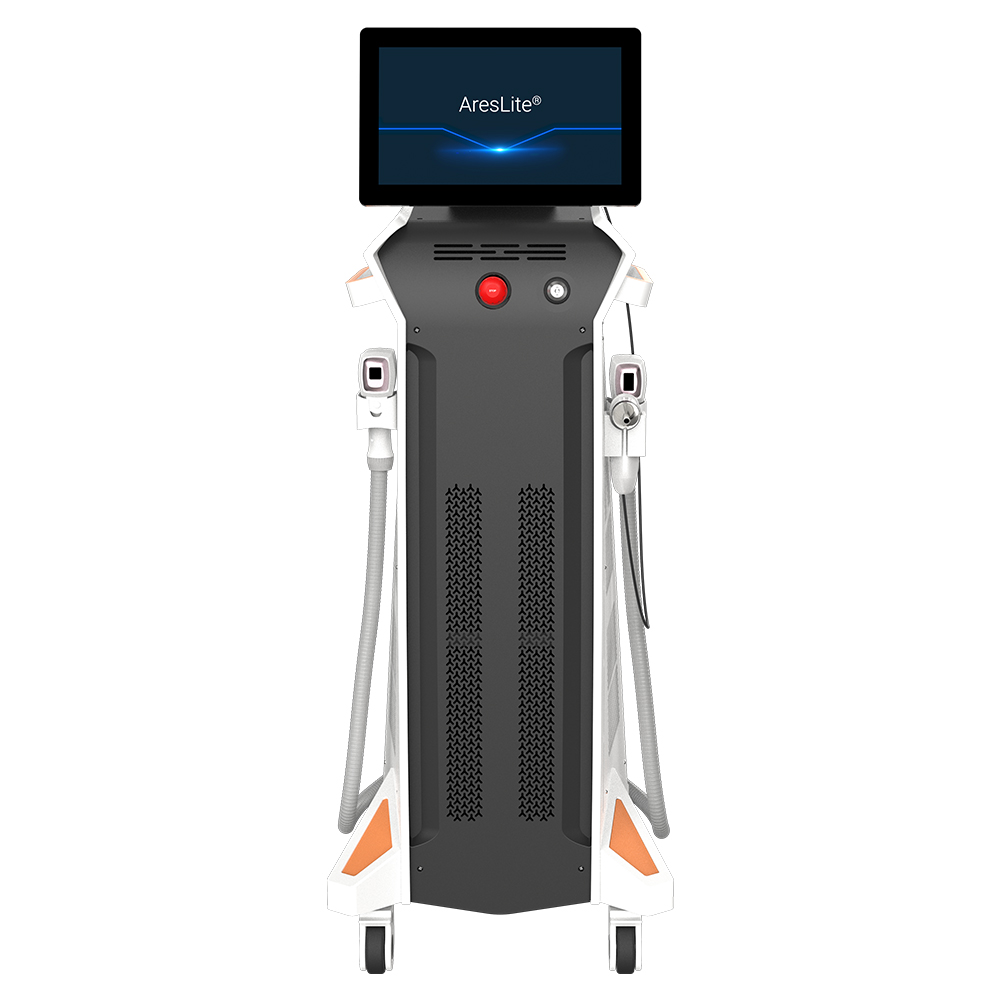
The DM40P is built around 755nm, 808nm, 940nm, and 1064nm wavelengths, with two fixed spots and DCS 5-in-1 cooling. It works as a budget-constrained starter or a second-room option. The DM60 is the 3000W, four-spot, 100M shot platform for a clinic that can afford the flagship configuration from day one. The ML600 is a 5-in-1 IPL, RF, Nd:YAG, diode, and SHR system. It is a practical multifunction entry point for a beauty salon, but it is not the first machine I would recommend for a dedicated laser hair removal practice.
You can compare those two diode models side by side in the Winkonlaser DM40P vs DM60 guide, and check the full specification checklist in the laser hair removal buying guide.
What This Setup Does Not Solve
A diode laser is not a universal answer for every skin type or every treatment. A trained operator should still assess the client and perform a test spot, especially on darker skin or over tattoos, recent sun exposure, active infection, or areas with unusual pigmentation. Screen for contraindications such as open wounds, active infection in the treatment area, recent sunburn, pregnancy, and any medical history that requires a physician assessment. This configuration is not suitable for every client, and no machine setup replaces clinical judgment.
It is also not a shortcut to revenue. A good first configuration reduces the risk of re-buying, but the clinic still needs protocols, consumables, operator training, and a realistic service schedule. Buy the configuration as a foundation, then build the operating plan around it.
FAQ
Q: What first diode laser configuration should a small clinic buy?
A: If hair removal is a primary service and the clinic may treat a broad skin-type range, choose a multi-wavelength diode with at least 808nm plus 1064nm, and ideally 755nm, 808nm, 940nm, and 1064nm. Budget about $5,000 to $7,000 FOB and verify optical power, spot configurations, cooling, RFID handpieces, warranty, and local service.
Q: Is a single-wavelength 808nm diode enough to start?
A: It can be enough for a beauty salon with mostly Fitzpatrick I to III clients and low volume, but it is limited for a dedicated hair removal clinic. Without 1064nm, darker skin types are more difficult to treat safely and effectively.
Q: Why do wavelength and spot size matter for a first machine?
A: 808nm covers most lighter skin, while 1064nm extends treatment to darker skin. Multiple spot sizes let the clinic treat precision areas and large areas without slowing down the schedule or losing precision.
Q: How much should a quality first diode laser cost?
A: A realistic starter range is about $5,000 to $7,000 FOB. Cheaper machines can work, but confirm the optical power, cooling, spot options, and handpiece authentication before accepting the lower price.
Q: Which Winkonlaser models fit the recommendation?
A: The DM40P is a 2000W, four-wavelength starter with two fixed spots and DCS 5-in-1 cooling. The DM60 is the 3000W, four-spot platform with a 100M shot bar. Only the DM60 and DM40P are described as FDA 510(k) cleared under K241860.
Q: Should a clinic buy a multifunction IPL platform instead?
A: Only when hair removal is secondary and the client base is mostly lighter skin. The ML600 multifunction platform can be practical for a beauty salon, but a dedicated laser hair removal practice should start with a multi-wavelength diode.
Get a First Diode Laser Matched to Your Clinic
If you are choosing a first diode laser for a small clinic, start with the treatment mix rather than the wattage. Decide whether hair removal is a primary or secondary service, then shortlist machines with at least 808nm plus 1064nm, several spot sizes, strong cooling, and a clear service plan.
Review the DM60 and DM40P specifications in the laser hair removal buying guide, then contact Winkonlaser with your target market and treatment volume for a configured quote.