


Which Tattoo Removal Laser Should Your Clinic Buy? We Ranked 10 Machines From $2,500 to Six Figures
Table of Contents
Tattoo removal is the one category in aesthetics where the price of a machine tells you almost nothing about what it can do. The same 1064nm wavelength that powers a six-figure US flagship also ships in a $2,500 portable machine, and on a spec sheet the two look nearly identical: same wavelength, similar energy. The differences that actually decide whether a clinic clears ink or burns through sessions, the pulse width, the beam profile, and a 755nm line for blue and green, are the ones most buyers never compare.
I have been in this industry since 2012, building and exporting these lasers to more than 120 countries, and in my experience the clinics that succeed at tattoo removal buy for the ink their clients actually walk in with, not for the machine with the biggest logo. I have seen clinics clear more ink on a $9,000 four-wavelength machine than the clinic next door running a six-figure platform, simply because the wavelength matched the colors in the chairs. This ranking scores ten machines on six criteria, weighted by what actually clears ink and earns money, and our own machines are scored with the same weights as the brands we compete against. The weights are published below, so you can see exactly what moved every machine up or down.
How We Ranked: Six Criteria, Weighted
Every machine below scored 1-10 on six criteria, then we weighted the scores by what matters most for a clinic that wants tattoos gone and clients returning:
1. Wavelength coverage (20%). Tattoo ink is a color problem before it is a power problem. 1064nm clears black and dark ink and is the safest wavelength on dark skin. 532nm clears red, orange, and yellow. 755nm clears blue, green, and purple, and those are the colors cheap machines routinely fail on. A laser with 755nm in the mix scores higher, because blue and green are the most common “we cannot remove this” tattoos.
2. Pulse width and technology (20%). This is the picosecond-versus-nanosecond question. A picosecond laser (350-750ps) shatters ink photomechanically, like a rock through glass, with far less heat left in the skin. A nanosecond laser (5-20ns) heats the ink and surrounding tissue, which works but carries more scarring risk on darker skin and takes more sessions. Modern clinics should be buying picosecond wherever the budget allows.
3. Energy and power (15%). The millijoule output at 1064nm is the honest spec. A serious machine delivers 100-1200mJ; a toy delivers a fraction of that and needs more passes. The power supply wattage, from 2500W up to 5000W, tells you how fast the laser recharges between shots.
4. Spot size and speed (10%). A larger adjustable spot clears a sleeve faster and cuts per-session time, which is revenue. Look for a 2-10mm adjustable spot.
5. Value (20%). This is the widest price spread in aesthetics, roughly $2,500 to six figures for the same wavelength. We scored price divided by what the machine can actually clear, not price divided by the logo.
6. Certification and service (15%). CE MDD (93/42/EEC), ISO 13485, and FDA clearance for the US market are not stickers. They mean the machine was tested and the factory audited. Equally important: warranty length, spare parts availability, and whether the manufacturer answers support calls after the sale.
The 2026 Top 10 Ranking
Scores are out of 10, weighted as above. Here is the full table, then each machine in detail:
| Rank | Machine | Type | Wavelength | Score |
|---|---|---|---|---|
| 1 | PicoSure (Cynosure) | Alexandrite picosecond | 755nm | 9.4 |
| 2 | PicoWay (Syneron-Candela) | Picosecond, 3 wavelengths | 1064/532/785nm | 9.2 |
| 3 | EL950 PicoKing II (Winkonlaser) | Picosecond, 4 wavelengths | 532/755/1064/1320nm | 8.9 |
| 4 | PiQo4 (Lumenis) | Pico + nano, 4 wavelengths | 1064/532/585/650nm | 8.6 |
| 5 | Enlighten III (Cutera) | Dual pulse, 4 wavelengths | 1064/532/670/785nm | 8.4 |
| 6 | Discovery Pico (Quanta) | Picosecond, 4 wavelengths | 1064/532/694/755nm | 8.1 |
| 7 | EL900 PicoKing (Winkonlaser) | Picosecond, 4 wavelengths | 532/755/1064/1320nm | 7.9 |
| 8 | Revlite SI (Cynosure) | Q-switched nanosecond Nd:YAG | 1064/532nm | 7.6 |
| 9 | Astanza Trinity | Q-switched nanosecond Nd:YAG | 1064/532nm | 7.3 |
| 10 | EL500 (Winkonlaser) | Picosecond portable, 4 wavelengths | 532/755/1064/1320nm | 7.0 |
#1 PicoSure (Cynosure)
Score 9.4 | Alexandrite 755nm, 750ps | The blue-and-green ink standard
PicoSure was the first FDA-cleared picosecond laser and remains the reference machine for stubborn blue and green ink. Its 755nm alexandrite wavelength is absorbed strongly by those cool-color pigments, and its focus lens array concentrates energy so hard-to-remove colors respond faster than they do on most 1064nm-first platforms. When a clinic has a sleeve full of blue and green it cannot shift, PicoSure is the machine it usually brings in.
Who it is for: high-volume clinics that treat difficult colors and want the brand clients recognize. Who it is not for: a new clinic, because the price sits well into six figures and the platform is 755nm-first, which means black ink and dark skin still want a 1064nm companion. It is also a single-wavelength platform, so a full-color clinic usually needs a second laser.
#2 PicoWay (Syneron-Candela)
Score 9.2 | 1064/532/785nm, picosecond | The most versatile clinical platform
PicoWay is the all-rounder. It pairs 1064nm for black ink and dark skin with 532nm for red and orange, plus a 785nm line aimed at recalcitrant tattoos that resist the other two. Its Resolve handpiece extends the same platform into skin rejuvenation, which lets a clinic sell more than just tattoo removal from one machine. The 450ps-class pulse width clears ink with minimal heat.
Its trade-offs are price and the premium service network: it is a serious capital outlay, and support outside its home regions depends on local distributors. For a clinic that wants one machine to cover the full color wheel plus rejuvenation, it is the benchmark.
#3 EL950 PicoKing II (Winkonlaser)
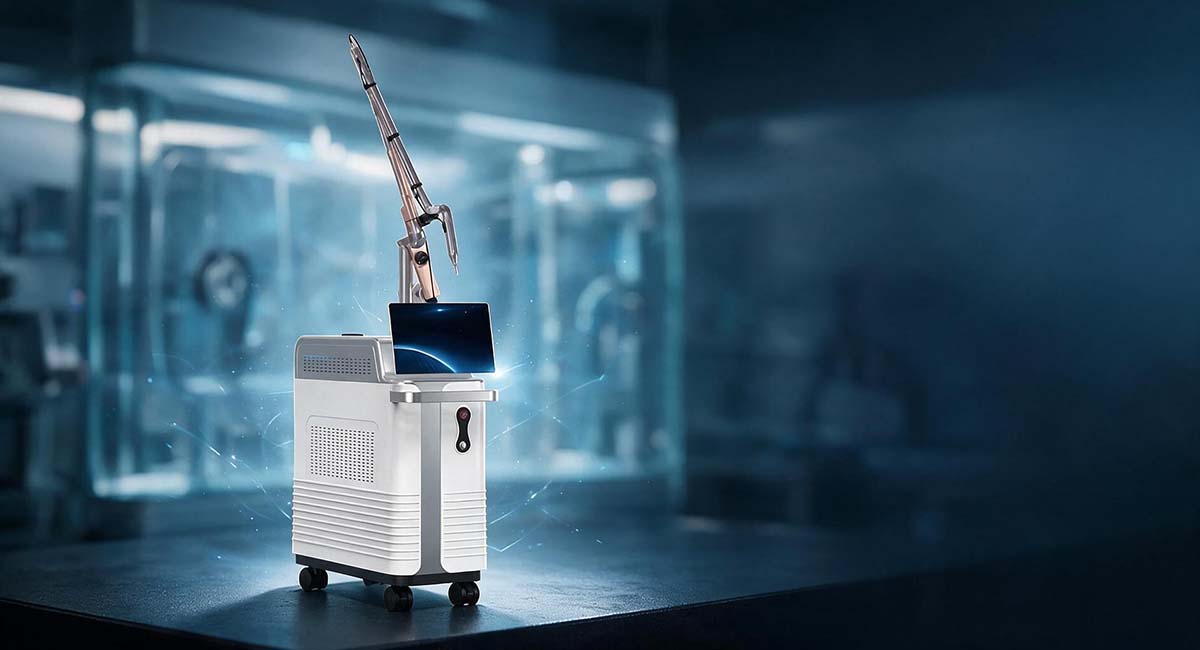
Score 8.9 | 532/755/1064/1320nm, 350ps, 5000W | The value flagship
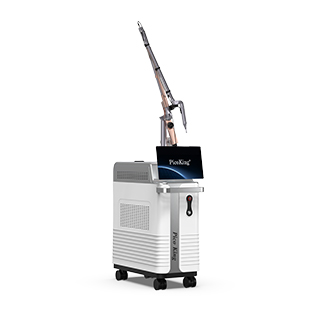
The EL950 is our flagship, and it lands at #3 on the criteria that matter, not on brand recognition. It runs four wavelengths, 532/755/1064/1320nm, through a 5000W supply, with a 350ps pulse width that puts it squarely in modern picosecond territory. It delivers 100-1200mJ at 1064nm and up to 600mJ at 532nm, with four working modes (Standard, Long, Multi, Dual Pulse) so an operator can match the pulse to the ink and the skin type. The Korean-imported laser arm is the same component class used in far pricier platforms.
The story here is value: a clinic gets genuine four-wavelength picosecond treatment at $9,900-$14,600, a fraction of what the two machines above cost, with the factory only a message away. The honest limitation is certification geography: the EL950 carries CE MDD and ISO 13485 documentation, not US FDA clearance, so clinics that require FDA-cleared equipment for insurance or regulation should weigh that before buying. For the rest of the world it is the strongest per-dollar picosecond platform on this list. See the EL950 product page for the full specification.
#4 PiQo4 (Lumenis)
Score 8.6 | 1064/532/585/650nm, pico + nano | The four-wavelength hybrid
PiQo4 offers both nanosecond and picosecond pulse durations in one platform, plus four wavelengths (1064/532/585/650nm). That flexibility lets an operator switch energy delivery to match the ink, and the 585nm and 650nm lines are aimed at color ranges most dual-wavelength machines ignore.
It is a strong clinical tool with Lumenis documentation and service behind it, at a price in the upper premium bracket. Its score dips on value only because the EL950 delivers comparable four-wavelength picosecond capability for a fraction of the price.
#5 Enlighten III (Cutera)
Score 8.4 | 1064/532/670/785nm, dual pulse | The dual-duration contender
Enlighten III offers four wavelengths (1064/532/670/785nm) and dual nanosecond-plus-picosecond pulse durations, with Cutera reputation and US service network behind it. It is a legitimate, well-supported choice for US clinics that want multi-wavelength flexibility and FDA-cleared status in one chassis.
It loses points on value and on geography in reverse: it is built and priced for the US market, which makes it a premium-priced option for clinics outside North America who can get the same wavelength coverage for far less.
#6 Discovery Pico (Quanta)
Score 8.1 | 1064/532/694/755nm, picosecond | The European multi-wavelength workhorse
Discovery Pico is Quanta picosecond platform, offering four wavelengths including a 694nm ruby line for stubborn pigment. It has a strong following in Europe, where Quanta service network is deep, and it is a well-built machine with solid documentation.
Its score reflects the classic European-brand trade-off: excellent engineering at a premium price, with thinner support once you leave its core markets. If you are buying in Europe and want a multi-wavelength picosecond platform with local service, it is worth shortlisting.
#7 EL900 PicoKing (Winkonlaser)
Score 7.9 | 532/755/1064/1320nm, 3000W | The mid-budget four-wavelength option
The EL900 is the mid-budget sibling of the EL950: the same four-wavelength coverage (532/755/1064/1320nm) on a 3000W supply, aimed at clinics that want full-color capability without the flagship power. The 755nm line makes it genuinely effective on blue and green ink, and the 1320nm wavelength adds skin-rejuvenation work on top of tattoo removal.
It is the natural step up from a portable for a clinic building a tattoo removal service that wants one machine to handle every color. It carries the same CE MDD and ISO 13485 documentation as the EL950, and at roughly $9,200 it undercuts the premium brands by an order of magnitude. See the EL900 product page for specifications.
#8 Revlite SI (Cynosure)
Score 7.6 | Q-switched Nd:YAG 1064/532nm, nanosecond | The reliable nanosecond veteran
Revlite SI is a Q-switched nanosecond Nd:YAG that has been a clinic staple for years. It clears black ink and red reliably, is simple to operate, and has Cynosure service network behind it. For clinics that mostly see black tattoos and want a proven, durable machine, it still does the job.
Its score reflects that it is nanosecond, not picosecond: it takes more sessions on stubborn colors and carries more heat into dark skin, which raises the scarring risk on Fitzpatrick IV-VI. It is also premium-priced for a single-wavelength nanosecond platform, which is hard to justify in 2026 when picosecond machines cost less.
#9 Astanza Trinity
Score 7.3 | Q-switched Nd:YAG 1064/532nm, nanosecond | The tattoo-specialist brand
Astanza built its whole business on tattoo removal, and the Trinity is a Q-switched nanosecond Nd:YAG tuned for that job. The brand understands the tattoo market deeply, and its training and support for tattoo studios are a genuine strength.
The machine itself is nanosecond technology, so it sits behind the picosecond leaders on speed and dark-skin safety. It is the right call for a dedicated tattoo studio that values a specialist vendor and mostly treats black ink, but a clinic building a broader aesthetic menu will outgrow it.
#10 EL500 (Winkonlaser)
Score 7.0 | 532/755/1064/1320nm, 2500W portable | The entry four-wavelength portable
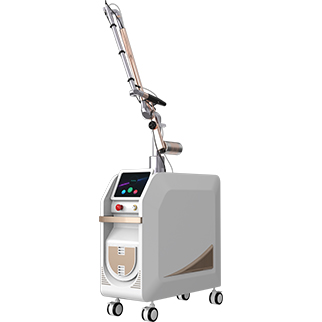
The EL500 is our portable four-wavelength machine: 532/755/1064/1320nm on a 2500W supply, built for a single room or a mobile operator. It is the cheapest way to get genuine 755nm blue-and-green capability without buying a full-size floor unit, and its high-quality internal lenses keep beam quality honest at its power level.
It is not the EL950, and we do not pretend it is: lower power means slower sessions on large pieces, and it is built for volume-light clinics. What it offers is a real picosecond platform with full color coverage at a portable price, which is exactly what a starting tattoo removal service needs before the caseload justifies an upgrade. See the EL500 product page for details.
Honorable Mentions: EL400 and LG002B
Two more machines sit just outside the top 10 because they fill narrow niches.
The EL400 is our most affordable portable, with the same 532/755/1064/1320nm four-wavelength coverage at a $2,500 entry price. It is the budget answer for a clinic that wants to test tattoo removal as a service before committing serious capital. It runs at 1-10Hz, so it is slower than the EL500, but the wavelength coverage means it will actually clear color, which is more than most budget machines can say. See the EL400 product page for details.
The LG002B is a portable Q-switched Nd:YAG (1064/532/1320nm), not a picosecond machine. It is the right tool for freckle and pigment work plus basic black-ink tattoo removal at the lowest price point in the lineup. If your menu is mostly pigmentation with occasional black-ink tattoos, it does the job for a fraction of even the EL400. See the LG002B product page for details.
How to Choose: Match the Laser to Your Clients’ Ink
A ranking gives you a shortlist, not an answer. Here is the decision path we walk every buyer through:
Step 1: Count the colors you actually see. If your clients bring black ink and dark skin, 1064nm is your anchor. If they bring blue and green, you need 755nm. If it is a mix, buy a multi-wavelength platform once instead of a second laser later.
Step 2: Decide picosecond or nanosecond. For new equipment in 2026, buy picosecond if the budget allows. It clears faster and is safer on dark skin. Nanosecond still works, but you will do more sessions per client.
Step 3: Budget for the whole cost. A $2,500 portable clears ink slowly; a six-figure flagship clears it fast but must fill a heavy schedule to pay back. For most clinics the smart money is the middle: a multi-wavelength picosecond platform in the $9,000-$15,000 range that clears every color without a five-year payback.
Step 4: Check what happens when it breaks. Ask for the warranty terms, the spare parts price list, and the support response time in writing. A laser that cannot get a replacement handpiece in a week is a liability no matter what it cost.
Step 5: Verify the certification. Ask to see the actual CE certificate number and check it against the issuing body. CE MDD certificates are verifiable through the Notified Body, and a manufacturer that will not hand over the certificate is a red flag at any price. See our certifications page for how we publish ours.
Safety and Contraindications
Tattoo removal is a medical procedure, and a responsible ranking has to say this plainly.
-
Pregnant or breastfeeding women (no safety data exists)
-
People with active infection, eczema, or open wounds in the treatment area
-
People taking photosensitizing medication, including certain antibiotics and isotretinoin (Accutane)
-
Skin that has been recently tanned or has an active sunburn in the treatment area
-
People with a history of keloid scarring or photosensitivity disorders
Always perform a patch test on a small, hidden area 24-48 hours before the first full treatment, especially on Fitzpatrick IV-VI skin, and use appropriate eye protection for both operator and client. Picosecond lasers reduce the heat load on skin but do not eliminate the need for careful parameter selection on darker skin. A supplier that will not give you protocol guidance is a red flag at any price.
FAQ
Q: What is the best tattoo removal machine in 2026?
A: For difficult blue and green ink, the Cynosure PicoSure is the reference machine. For the most versatile single platform, the PicoWay. For the best balance of full-color coverage, picosecond speed, and value, the EL950 PicoKing II is the strongest pick on this list.
Q: Picosecond or nanosecond, which removes tattoos better?
A: Picosecond is the modern standard. It shatters ink photomechanically with less heat, so it clears faster and is safer on darker skin. Nanosecond still works on black ink but takes more sessions and carries more scarring risk. We break the difference down in our picosecond vs nanosecond comparison.
Q: What wavelength removes blue and green tattoo ink?
A: 755nm is the wavelength that clears blue, green, and purple ink, and it is the wavelength most cheap machines leave out. If your clients bring blue and green tattoos, make sure the laser has 755nm in the mix.
Q: What wavelength removes black tattoo ink?
A: 1064nm is the workhorse for black and dark ink, and it is also the safest wavelength on dark skin because it penetrates deep without heating the melanin in the upper skin.
Q: How much does a tattoo removal machine cost?
A: The range is the widest in aesthetics. Entry portables start around $2,500, mid-range multi-wavelength picosecond platforms sit around $9,000-$15,000, and premium US flagships run into six figures. Our EL950 is listed at $9,900-$14,600. The full picture is in our tattoo removal machine cost guide.
Q: Is a Chinese tattoo removal laser as good as PicoSure or PicoWay?
A: The gap is narrower than the price gap. The core components, laser arms, and lenses come from the same global supply chain. What separates factories is quality control, documentation, and after-sales support. That is why we publish our CE MDD and ISO 13485 certification and answer support directly, backed by a factory that has exported to 120+ countries since 2012. Compare the spec sheet and the service commitment, not just the logo.
Q: How many sessions does tattoo removal take?
A: Most tattoos need 4-8 sessions spaced 4-8 weeks apart, because the body clears the shattered ink gradually through the lymphatic system. Black fades fastest, and blue and green need the most sessions. A picosecond laser typically reduces the session count versus nanosecond.
Q: What should I check before buying a tattoo removal laser?
A: Five things: the actual wavelengths (does it include 755nm for blue and green?), the pulse width (picosecond or nanosecond?), the energy output at 1064nm, the certification paperwork you can verify, and the spare parts and service terms. A full walkthrough is in our tattoo removal machine buying guide.
Q: Can one laser do both tattoo removal and skin rejuvenation?
A: Yes, if it has the right wavelengths. A 1320nm line or a dedicated rejuvenation handpiece turns a tattoo removal platform into a pigmentation and skin-tightening tool, which lets a clinic sell more services from one machine. The EL950 and EL900 both carry a 1320nm line for exactly this reason.
The Bottom Line
The best tattoo removal laser for your clinic is the one that matches the ink colors your clients actually bring, not the one with the most famous logo. The premium US flagships earn their place for clinics that fill heavy schedules and treat difficult colors. The mid-range multi-wavelength picosecond platforms earn theirs for everyone else.
We built this ranking the way we build machines: on measurable criteria, with our own products held to the same standard as the competition. If you want to see how the EL950 or EL900 fits your clinic numbers, contact our team and we will walk the session math with you, no pressure, no script.