


Which Fractional CO2 Laser Should Your Clinic Buy? We Ranked 10 Machines on Results, Downtime and ROI
Table of Contents
Fractional CO2 is the hardest-working machine in a skin clinic, and the easiest one to overpay for. A factory-direct system and a six-figure medical laser sit side by side on a supplier’s comparison chart, both described as “fractional CO2 resurfacing,” and the price gap between them is wider than the cost of most of your other equipment combined. I have been building aesthetic lasers since 2012, and our machines run in clinics across 120 countries. The question I get asked most often about CO2 never changes: which machine actually earns back its price.
This ranking is not a list of the most famous brand names. It scores machines on what decides whether your clinic makes money: clinical track record, the precision of the fractional delivery, how many conditions one machine can treat, the downtime your clients will accept, and how fast the purchase pays for itself. I will tell you the strengths and the honest weaknesses of every machine on the list, including the two we make.
How We Ranked These Machines: Six Criteria
Every machine is scored on six dimensions, each weighted by how much it matters to a clinic’s bottom line:
1. Clinical track record (20%) — Is the technology backed by decades of use and published literature, or by a brochure?
2. Fractional precision and control (20%) — How fine is the spot spacing, how many scan patterns are available, and can you switch between fractional, full-ablative and hybrid delivery?
3. Treatment versatility (15%) — How many conditions can one machine treat: acne scars, wrinkles, surgical scars, pigmentation, and even vaginal rejuvenation?
4. Downtime and recovery (15%) — How long is the client red and peeling, and how much does that limit who will book?
5. Operating cost and consumables (20%) — What does each session cost you in tips, tubes, gas and maintenance?
6. Purchase ROI (10%) — Can the machine price be recovered in a realistic number of treatment courses?
A machine that scores 9.4 out of 10 is not “the best for everyone.” It is the best for a specific kind of clinic, and I will say which kind under each entry.
The Ranking
#1 — Lumenis UltraPulse (USA) — 9.4/10
UltraPulse is the machine the rest of the category is measured against. It uses short, high-energy pulses to ablate tissue precisely, which is why it has been the reference standard for deep resurfacing and severe scar revision for more than two decades, with FDA clearance and a deep library of published clinical work behind it.
What it does well: the UltraPulse delivery lets a skilled operator go deep on atrophic acne scars and deep rhytides that gentler fractional machines cannot reach. When a dermatology department wants one CO2 platform for the hardest cases, this is usually the shortlist.
The honest downside: it is a six-figure purchase that belongs in a surgical setting, not a day-spa room. Deep ablative settings mean real downtime, and staff need genuine training. If your clinic does not already run medical-grade resurfacing cases, the payment will sit heavy. Best for hospital dermatology departments and high-volume surgical aesthetics practices.
#2 — Lumenis AcuPulse (USA) — 8.9/10
AcuPulse is the more flexible Lumenis platform, offering fractional and full-field modes plus a range of delivery tips, which makes it a general-purpose CO2 workhorse rather than a deep-resurfacing specialist. It carries FDA clearance and the Lumenis service network.
What it does well: you get most of the Lumenis engineering at a lower entry point than UltraPulse, with enough mode flexibility to cover resurfacing, scar treatment and mild tissue tightening on one device.
The honest downside: it is still a premium-priced machine with proprietary consumables, and the brand name is part of what you are paying for. Best for established aesthetic clinics that want a proven name and can absorb the per-session cost.
#3 — Candela CO2RE (USA) — 8.7/10
Candela’s CO2RE is a fractional CO2 platform built around interchangeable scanning modes, so a single system can run light, medium and deep fractional treatments as well as full-field ablation. It is FDA-cleared and widely used in North America.
What it does well: the mode range is genuinely useful for a clinic that wants to titrate depth from “lunchtime” light resurfacing up to deeper scar work without buying a second machine. The brand and clinical support are strong.
The honest downside: it is a high-ticket purchase and you pay a brand premium. Consumables and handpiece maintenance add to the per-session cost. Best for mid-to-large practices in North America that value the Candela name and support network.
#4 — Winkonlaser FC300 FraxCo2 — 8.5/10
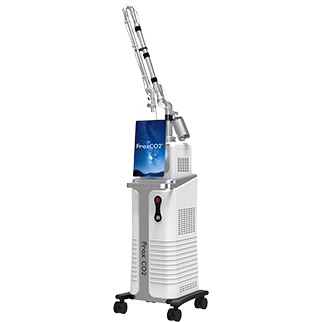
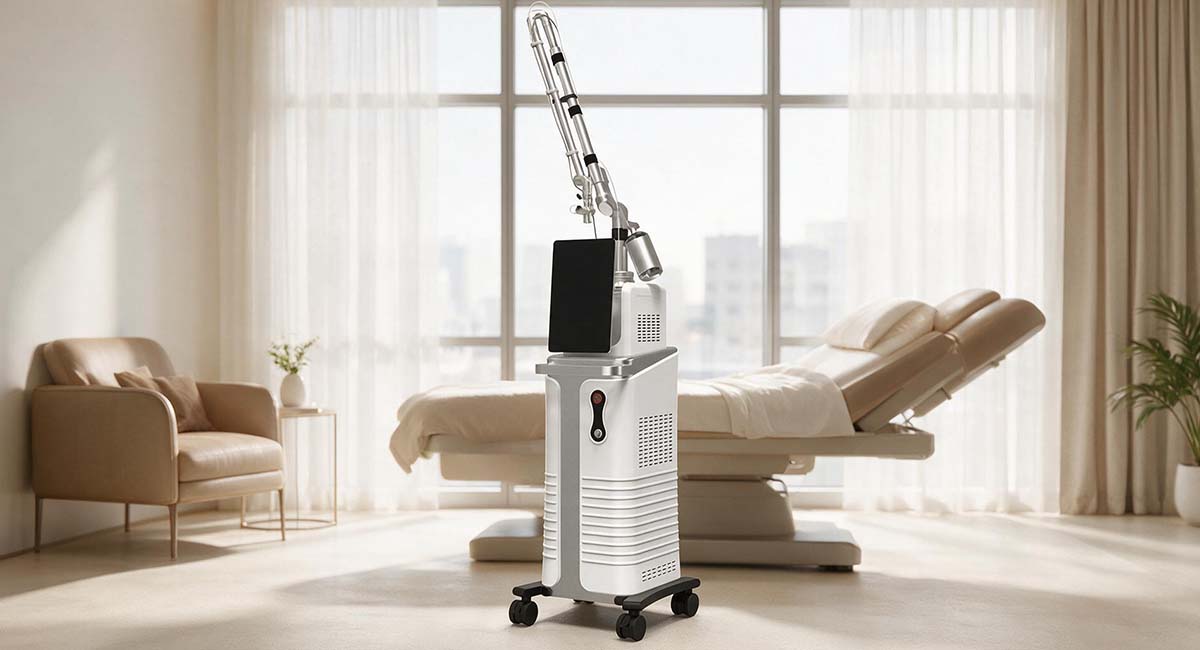
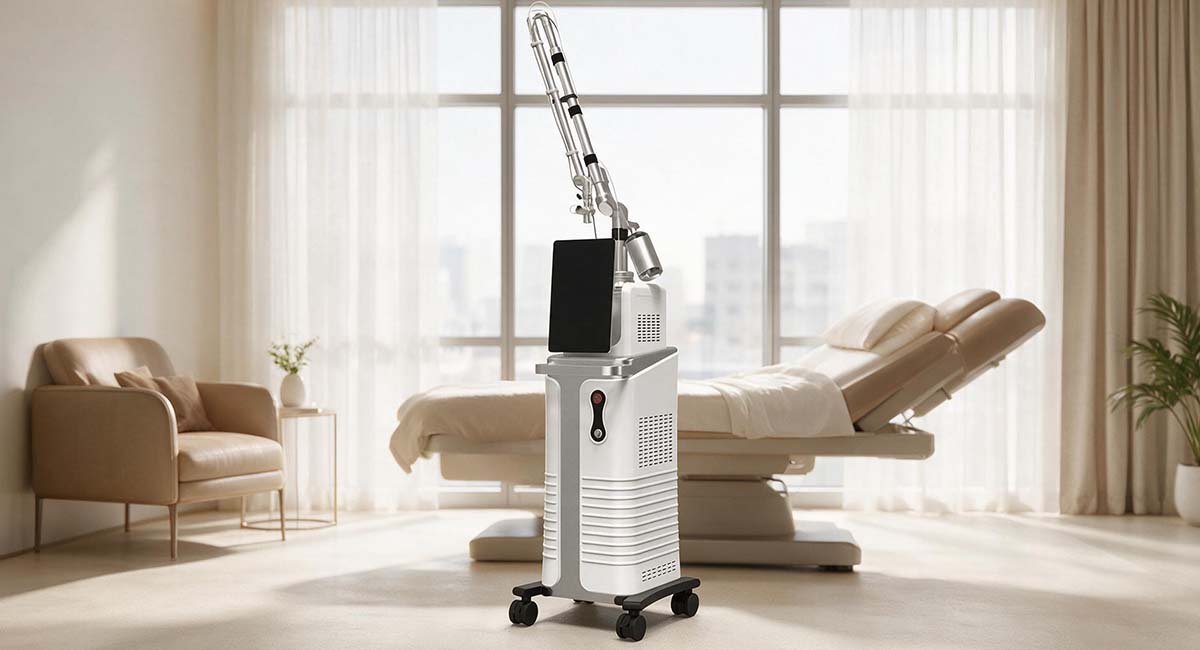
This is our flagship CO2, and I will be direct about both what it gets right and where it gives ground. The FC300 is a 3-in-1 system that switches between fractional, full-field ablative and hybrid scanning, built around a 100W 10600nm tube sourced from Coherent in the USA, the same reference tube technology the premium brands rely on. It ships with a smart scan head that covers resurfacing, a cutter, and a vaginal probe, with spot spacing adjustable from 0.1mm to 2.6mm, scan sizes up to 20x20mm, and seven scan shapes.
What it does well: it delivers the core clinical capability of the premium fractional CO2 platforms — precise microbeam ablation, three modes, and multi-zone treatment — at factory-direct pricing that sits far below the six-figure medical lasers. There are no proprietary consumables to keep buying, and the USA Coherent tube gives stable output over a long service life. Because it is sold factory-direct, you are not paying distributor markup.
The honest downside: the Winkonlaser name does not yet carry Lumenis-level brand recognition, so you sell on results and pricing rather than on a name your clients already know. It is CE MDD and ISO 13485 certified rather than FDA-cleared, which matters if your market or financing requires a US clearance. Best for clinics and salons that want genuine fractional CO2 capability with a fast payback and can live without a household brand name.
#5 — DEKA SmartXide DOT/TRIO (Italy) — 8.4/10
DEKA’s SmartXide line, with its DOT and TRIO scanning platforms, is the strongest European name in fractional CO2, built in Italy by the El.En group and known for the Smart Stack pulse technology that stacks micro-pulses to control ablation depth.
What it does well: the DOT scanning is a genuine point of differentiation, giving fine control over microbeam density, and the Italian build quality is well regarded across Europe. It carries both CE and FDA clearances.
The honest downside: the price is mid-to-high and service outside Europe can be less responsive. Best for European-market clinics and practices that want a proven fractional platform with a strong regional support network.
#6 — Lutronic eCO2 Plus (Korea) — 8.3/10
Lutronic’s eCO2 Plus is a Korean-built fractional CO2 platform known for its dynamic scan control and a good balance of clinical capability against price, which is why it is common across Asia.
What it does well: it delivers solid fractional resurfacing and scar treatment at a more accessible price than the US premium brands, with dependable build quality and a strong presence in Asian markets.
The honest downside: brand recognition is thinner in Western markets, and the clinical literature behind it is more limited than the US category leaders. Best for clinics in Asia, or budget-conscious practices that want a mid-tier CO2 with genuine fractional control.
#7 — Cynosure SmartSkin (USA) — 8.1/10
SmartSkin is Cynosure’s fractional CO2 platform, focused on skin resurfacing and scar improvement with a simplified, user-friendly interface, backed by FDA clearance and Cynosure’s established clinical reputation.
What it does well: it is a straightforward, reliable fractional resurfacing tool that is easy to train staff on, and it carries the Cynosure name and support.
The honest downside: it is positioned as a resurfacing-focused device rather than a deep multi-mode platform, so deep scar revision is not its strength, and the price sits in the premium tier. Best for practices that want a trusted name for everyday resurfacing rather than the hardest cases.
#8 — Quanta YouLaser MT (Italy) — 7.9/10
Quanta System’s YouLaser MT is an Italian multi-mode CO2 platform that offers fractional, full-field and surgical modes on a single device, positioned as a value alternative to the bigger European and US names.
What it does well: it packs multi-mode flexibility into a more accessible price point than the category leaders, with solid Italian engineering.
The honest downside: the brand is less recognized than DEKA or Lumenis, and clinical literature and regional support vary by market. Best for clinics that want multi-mode CO2 capability without the top-tier brand premium.
#9 — Alma Pixel CO2 (Israel) — 7.7/10
Alma’s Pixel CO2 is an Israeli fractional CO2 platform best known for its pixelated microbeam delivery, used mainly for light-to-medium resurfacing and skin rejuvenation, with FDA clearance and Alma’s global brand reach.
What it does well: the pixelated delivery is gentle and predictable, with relatively short downtime for a fractional CO2, and the Alma name is widely recognized.
The honest downside: it is oriented toward lighter resurfacing rather than deep scar ablation, so a clinic needing serious scar revision will still need a deeper machine. Best for practices focused on skin rejuvenation and lighter resurfacing treatments.
#10 — Winkonlaser FC100 FraxCo2 — 7.4/10
The FC100 is our entry-level CO2, built on the same 10600nm platform and the same USA Coherent tube technology as the FC300, with 50W to 70W output and an articulated arm delivery driven by a German motor and a Korean guide arm. It runs the same three modes — fractional, full ablative and hybrid — at a lower power ceiling.
What it does well: it is the most affordable way to add real fractional CO2 to a new clinic or salon, with the same tube technology as the flagship and no proprietary consumables. It is a sensible first CO2 for a practice that is still proving its resurfacing demand.
The honest downside: the lower power ceiling means deep scar revision is not its strength, and like the FC300 it carries CE MDD and ISO 13485 certification rather than FDA clearance, with a brand name you sell on rather than one that sells itself. Best for new clinics and salons entering CO2 at a budget, or adding a second room.
All 10 at a Glance
| Rank | Machine | Power | Modes | Delivery | Consumables | Best for |
|---|---|---|---|---|---|---|
| 1 | Lumenis UltraPulse | High-energy ultra-pulse | Fractional + full field | Handpiece | Yes | Deep resurfacing, severe scars |
| 2 | Lumenis AcuPulse | Multi-mode | Fractional + full field | Handpiece + tips | Yes | General-purpose CO2 |
| 3 | Candela CO2RE | Multi-mode | Fractional + full field | Scanning | Yes | Titrated-depth resurfacing |
| 4 | Winkonlaser FC300 | 100W 10600nm | Fractional + ablative + hybrid | Smart scan head | No | Fast-ROI fractional CO2 |
| 5 | DEKA SmartXide | DOT/TRIO | Fractional + full field | DOT scanner | Yes | European fractional work |
| 6 | Lutronic eCO2 Plus | Multi-mode | Fractional | Dynamic scanner | Yes | Asian-market clinics |
| 7 | Cynosure SmartSkin | Multi-mode | Fractional | Handpiece | Yes | Everyday resurfacing |
| 8 | Quanta YouLaser MT | Multi-mode | Fractional + full + surgical | Handpiece | Yes | Value multi-mode CO2 |
| 9 | Alma Pixel CO2 | Pixelated | Fractional | Pixel handpiece | Yes | Light resurfacing |
| 10 | Winkonlaser FC100 | 50W/70W 10600nm | Fractional + ablative + hybrid | Articulated arm | No | Entry-level CO2 |
How Fractional CO2 Actually Works
If you take one thing from this ranking, take this: “fractional CO2” is not a single treatment. It is a delivery method, and the same machine can be tuned to very different jobs.
A CO2 laser emits at 10600nm, far longer than the 755nm of an Alexandrite or the 1064nm of an Nd:YAG. That wavelength is absorbed almost entirely by water in the skin, which is what makes CO2 the workhorse for resurfacing: it vaporizes the top layer of skin and heats the deeper layers to stimulate collagen. The 10600nm wavelength is also why eye protection and a smoke evacuator are non-negotiable.
Fractional vs full-field. A fractional machine splits the beam into thousands of tiny microbeams, leaving islands of untreated skin between them, so healing is much faster than full-field ablation. Full-field (or fully ablative) removes the entire surface layer for a deeper, more aggressive result with longer downtime. A hybrid mode mixes the two. A good platform lets you move between all three, because a light fractional “lunchtime” resurfacing and a deep ablative scar revision are different procedures with different downtime and different price tags.
Why the tube matters. The laser tube is the heart of the machine, and it is where budget machines cut corners. Premium and factory-direct systems alike tend to specify tubes from established suppliers like Coherent, because a stable, long-life tube means consistent energy output session after session. When a supplier cannot tell you who makes the tube, that is a red flag.
The scanner is where precision lives. Spot spacing (how far apart the microbeams are), scan size, and the number of scan patterns determine how uniformly the energy is delivered and how much control you have over depth and density. Tighter spacing with adjustable scan shapes means you can treat delicate zones — around the eyes, along the jawline — without the hot spots that cause uneven healing.
Three Buying Mistakes I See Repeatedly
Mistake 1: buying on wattage alone. A spec sheet can say 100W and still deliver uneven, inconsistent energy if the tube and scanner are poor. I have watched clinics pick the highest wattage number on a comparison chart and end up with a machine that under-delivers on deep scars and overheats on light work. Ask who makes the tube, what the spot spacing range is, and for a demo on your own skin model before you trust the brochure.
Mistake 2: ignoring downtime and training. Deep ablative settings bring real recovery — redness, peeling, sometimes weeks of it — and clients will not book a treatment they dread. I have seen practices buy an aggressive machine and then run it only on light settings because their staff are not trained for deeper work. Buy the machine that matches the downtime your clients actually accept, not the one with the highest theoretical ceiling.
Mistake 3: assuming every CO2 has the same clearance. A US FDA clearance is a specific regulatory claim, and not every CO2 platform carries one. Some excellent machines hold CE MDD and ISO 13485 certification instead, which is a legitimate medical-device standard for most of the world. Verify what a machine actually holds before you repeat a supplier’s claim to your clients, and check what your local market or financing requires.
Which Machine Should You Buy?
Your answer depends on one number: how many resurfacing and scar cases you can realistically book each week.
-
Fewer than 5 CO2 cases a week — do not buy a six-figure machine. A factory-direct fractional CO2 like the FC300 or the entry-level FC100 keeps your payback short while you build demand, and there are no proprietary consumables eating your margin.
-
5 to 15 cases a week — a multi-mode platform with a recognized name or a strong scanner makes sense. Now consumables and per-session cost matter, so model them before you commit.
-
15+ cases a week, established resurfacing practice — the premium names (UltraPulse, AcuPulse, CO2RE) justify their price because your volume covers the consumables and the brand pulls clients.
The machines we build are for the first two tiers: clinics that want the clinical capability of the premium CO2 platforms at factory-direct pricing, without the six-figure commitment and without ongoing consumable costs.
One limitation I want to be upfront about: no CO2 machine removes deep scarring in a single pass, and every platform on this list works best as a planned course with realistic client expectations rather than as a one-time miracle. The machine is only as good as the protocol and the hands running it.
Frequently Asked Questions
Q: What is the best fractional CO2 laser machine for a new clinic?
A: A multi-mode fractional CO2 with no proprietary consumables, so you can run unlimited sessions while you build a resurfacing client base. The FC300 fits this: three modes, a 100W 10600nm Coherent tube, and no ongoing tip or gas costs beyond standard maintenance.
Q: How much does a fractional CO2 laser machine cost?
A: The range is extreme, from roughly $5,000 to $15,000 for factory-direct systems up to well into six figures for premium medical brands. The price you pay should track the volume you can book and the depth of treatment you actually perform, not the brand’s marketing budget.
Q: Is fractional CO2 better than full ablative CO2?
A: They are different tools. Fractional leaves islands of untreated skin, so healing is faster and downtime is shorter, which suits lighter resurfacing and moderate scars. Full ablative goes deeper for severe scars and deep wrinkles but brings weeks of recovery. A hybrid platform lets you choose per patient.
Q: How long is the downtime after fractional CO2?
A: It depends on depth. A light fractional treatment can leave redness for a few days; a deep ablative treatment can mean peeling and redness for one to three weeks. The exact recovery is set by the settings and the treated area, which is why depth control matters more than wattage.
Q: Can one CO2 machine treat both scars and wrinkles?
A: Yes, if it has adjustable depth and multiple modes. Acne scars, surgical scars, wrinkles, pigmentation and skin laxity all respond to CO2, and a vaginal probe extends the same platform to vaginal rejuvenation. A single multi-mode machine can cover all of these; a single-mode machine cannot.
Q: Do I need a US FDA-cleared CO2 machine?
A: Only if your local market, insurer or financing partner requires US clearance specifically. Many markets accept CE MDD and ISO 13485 certification, which is a recognized medical-device standard. Verify what your jurisdiction requires before you rule out a machine on clearance alone.
Q: Are fractional CO2 lasers safe?
A: A properly certified machine used by trained staff is safe for most people, but CO2 is contraindicated for pregnancy, active skin infection in the treatment area, certain autoimmune conditions, and recent isotretinoin use. A proper consultation and a Fitzpatrick skin-type assessment screen for these before any session.
Q: What is the ROI of a fractional CO2 machine?
A: A factory-direct system in the $5,000 to $15,000 range can be paid back in a modest number of treatment courses, because per-session cost is low with no proprietary consumables. A six-figure premium machine needs consistent high volume to cover handpiece costs and the upfront price.
Sources
-
Lumenis — UltraPulse and AcuPulse fractional CO2 platform documentation.
-
Candela — CO2RE fractional CO2 system product information.
-
DEKA (El.En group) — SmartXide DOT/TRIO scanning platform literature.
-
Lutronic — eCO2 Plus fractional CO2 technical literature.
-
Cynosure — SmartSkin fractional CO2 product information.
-
Quanta System — YouLaser MT multi-mode CO2 literature.
-
Alma Lasers — Pixel CO2 product information.
-
Winkonlaser — FC300 and FC100 FraxCo2 specifications (verified on winkonlaser.com).
Related Reading
If you are comparing CO2 machines and want straight answers on specifications or pricing, contact us. I would rather you buy the right machine for your clinic than the wrong one quickly.