


What a HIFU Machine Quote Should Say About Cartridges
Table of Contents
Schema-ready summary: The cheapest HIFU machine is not the one with the lowest console price. It is the one whose quote itemizes cartridge focal depths, shots per cartridge, replacement cost, warranty, training, and freight, because those line items decide the real cost after the first cartridges are used.
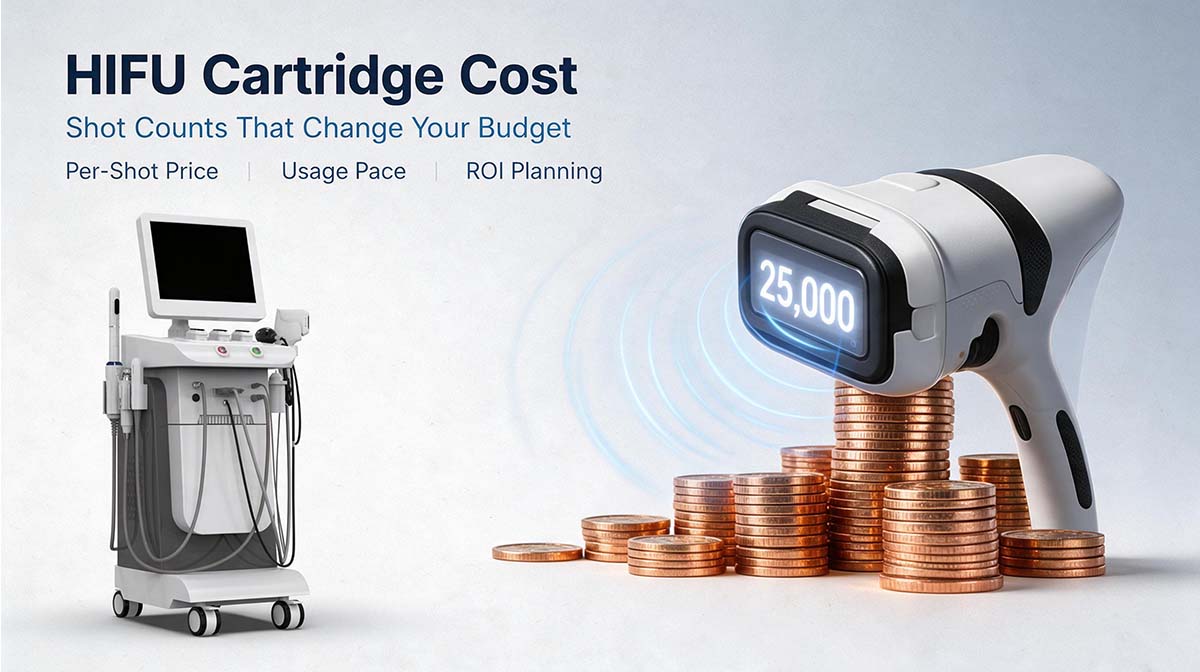
HIFU machine quotes look simple until you ask which cartridge comes with the machine and how many shots it holds. A clinic can buy the least expensive HIFU platform and still spend more over a year because the cartridge, not the console, is the recurring cost. I have handled enough HIFU comparisons to know that the real price hides in focal depth, shot count, and the replacement terms that are missing from the first email.
What should a HIFU machine quote itemize?
Short answer: a complete HIFU quote lists cartridge focal depths, shots per cartridge, frequency, energy range, power, handles, voltage, warranty, and support. A price with a photo is not enough to compare.
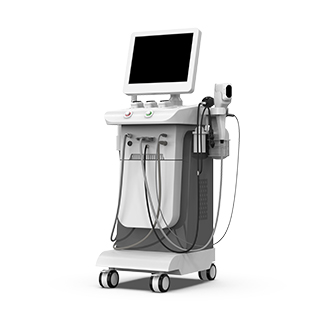
I line up the same fields for every HIFU machine so a lower price does not simply mean a cheaper cartridge or no replacement terms. The Winkonlaser HU700 is a useful reference because its product page states the numbers instead of hiding them.
| Line item | What the HU700 specification shows |
|---|---|
| Focal depths | 1.5, 3.0, 4.5, 6.0, 8.0, 10.0, 13.0, 16.0mm |
| Frequency | 4MHz |
| Energy range | 0.2-2J |
| Power | 800W |
| Handles | 3 kinds |
| Shot count | 25,000 for 3D, 100,000 for 4D, 10,000 for 5D |
| Voltage | 110-220V, 50/60Hz |
| Certification | CE MDD and ISO 13485, not FDA clearance |
Which cartridge depths matter for the treatments you sell?
Short answer: cartridge depth controls the tissue plane the ultrasound reaches. The HU700 spans 1.5mm to 16mm, so a clinic can move from delicate eye work to deeper body treatment with different cartridges.
Depth is not a marketing label. A shallow cartridge is aimed at the surface layer and is used for delicate areas, while deeper cartridges are aimed at thicker tissue and body areas. The HU700 lists 1.5, 3.0, 4.5, 6.0, 8.0, 10.0, 13.0, and 16.0mm. That range matters because a clinic that wants both face and body work needs more than one depth. If a quote shows a single cartridge or omits the millimeter values, the machine will not cover the treatments you plan to sell. For the honest limits of what HIFU can do to fat, this explanation separates depth from a weight-loss claim.
Why does shot count change the real cost?
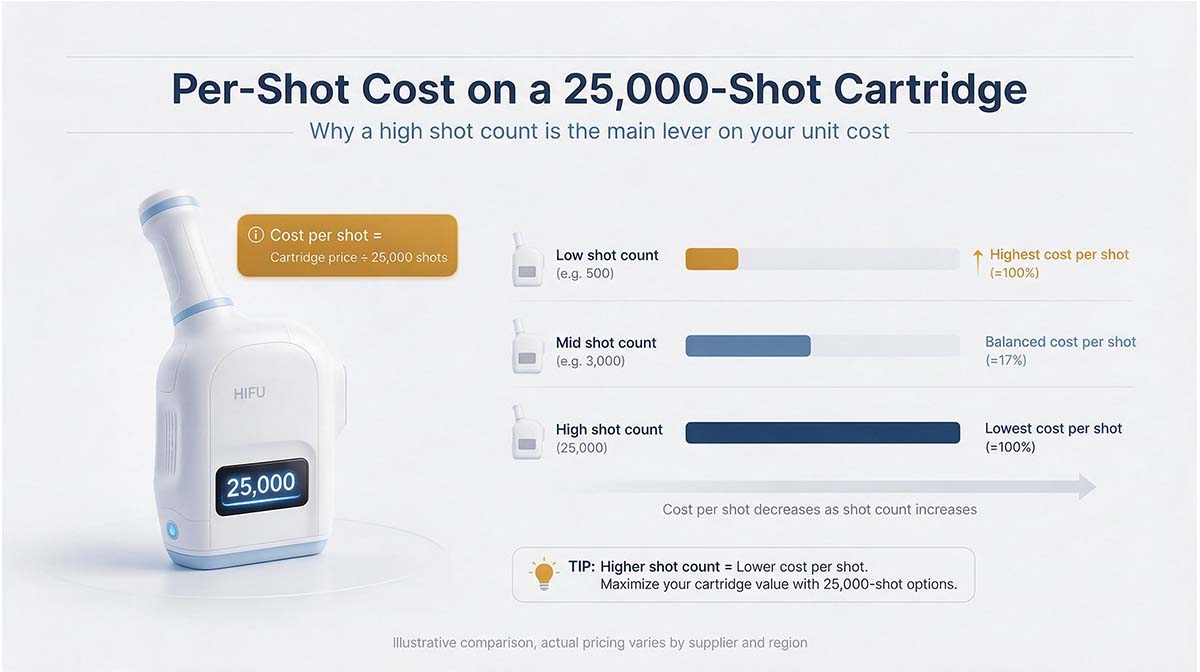
Short answer: every HIFU cartridge has a finite shot count. On the HU700, the 3D cartridge is rated for 25,000 shots, the 4D cartridge for 100,000 shots, and the 5D cartridge for 10,000 shots. When those shots are used, the clinic buys another cartridge.
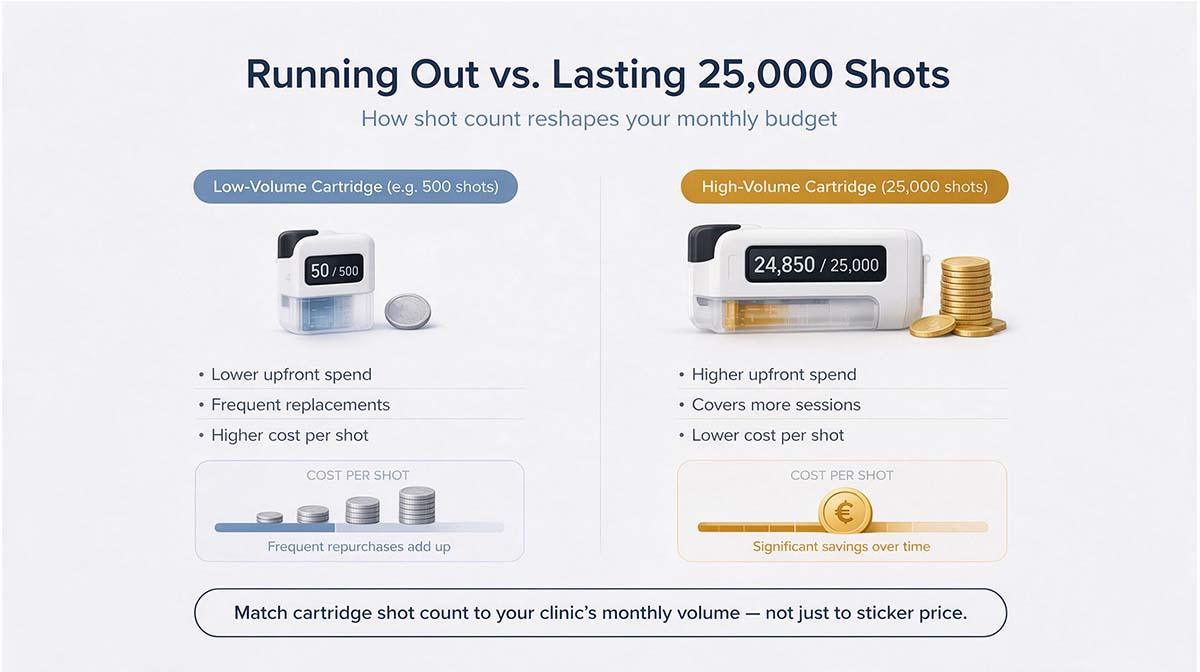
This is where a cheap machine becomes expensive. If the quote does not state shots per cartridge, you cannot calculate cost per shot. A machine that is cheap up front but ships with a 10,000-shot cartridge and an expensive replacement will cost more per treatment than a platform with a 100,000-shot cartridge. I ask suppliers to put the shot rating and the replacement price on the same line. If they will not, the total cost of ownership is not yet known.
What do frequency, energy, and power tell you?
Short answer: the HU700 runs at 4MHz with an energy range of 0.2-2J and 800W power. Those numbers matter, but they only make sense alongside the cartridge depth and treatment plan.
Buyers sometimes chase the highest wattage and forget that HIFU works by focusing energy at a set depth. The HU700 lists 4MHz, a 0.2-2J energy range, and 800W power, and the product page says it can emit 11 focused ultrasound waves at once. That multi-line feature is about treatment speed and coverage, not about making every patient suitable for the highest energy setting. The operator still needs the right depth and a clear screening process. Frequency and energy are specs to verify, not proof that one setting fits every client.
Which consumables and support should be in the quote?
Short answer: add cartridge replacement price and lead time, handpiece warranty, training, voltage conversion, and realistic service response to the machine price.
The console is only the first layer. Before I compare two HIFU systems, I add the same recurring costs to each one. Cartridge replacement is the largest item, so I ask for the price and shipping lead time. Handpiece coverage should be in writing. Training may be online or on-site. Voltage may need a local transformer. Service response needs a number of hours or days, not the word “lifetime.” Winkonlaser was founded in Beijing in 2012, exports to 120+ countries, and keeps 15+ engineers on the product and support side, with a two-year warranty on the main unit and handpiece plus lifetime technical support. If you are importing the machine, this certification guide explains the paperwork before you compare prices.
What should you ask before you buy?
Short answer: request the exact cartridge depths, shots per cartridge, replacement price, warranty text, training schedule, and total landed cost before any deposit.
I keep the final check short. Ask which cartridge depths are included. Ask the shot rating for each cartridge. Ask the replacement price and lead time. Ask what the warranty covers on the main unit and handpiece. Ask who delivers training and how quickly service responds. Ask for the landed cost, including freight and duty. If the supplier will not put those items in writing, the discount is probably not worth the risk. This buying checklist covers the same questions from the machine side.
FAQ
Q: How many shots does a HIFU cartridge have?
A: On the HU700, the 3D cartridge is rated for 25,000 shots, the 4D cartridge for 100,000 shots, and the 5D cartridge for 10,000 shots. Always confirm the rating for the exact cartridge in the quote.
Q: What is the largest recurring HIFU cost?
A: Usually cartridge replacement. The console price is paid once, but cartridges are consumed and replaced, so shot count and replacement price determine the long-term cost.
Q: Does a HIFU machine have FDA 510(k) clearance?
A: No. HIFU machines are verified under CE MDD and ISO 13485 in this line, not FDA clearance. Check any certification claim against the exact model number.
Q: Is HIFU a weight-loss machine?
A: No. It is a skin tightening and body contouring treatment and is not suitable for significant weight loss. Pregnant patients, people with active infections in the treatment area, and some patients with implanted devices should not be treated without professional screening.
Q: What warranty should a HIFU clinic expect?
A: Ask for two-year coverage on the main unit and handpiece with lifetime technical support, plus cartridge replacement terms in writing.
Q: Why do two HIFU machine quotes look so different?
A: Usually because one omits deeper cartridge depths, offers a lower shot count, hides a high cartridge replacement price, or leaves training and freight out of the quote.
Get a HIFU quote that includes the recurring costs
Before you compare another HIFU machine, ask each supplier for the cartridge depths, shot ratings, and replacement terms in writing. If you want the HU700 configured with your required cartridges, voltage, training, and destination terms, contact Winkonlaser for pricing.