



What HIFU Actually Does to Fat, and How Long the Result Lasts
Table of Contents
If you offer body contouring, you have probably noticed a gap between how HIFU is marketed and how it is explained. Suppliers describe it as non-invasive fat reduction, but clients keep coming back with a more direct question: does HIFU actually dissolve fat, and how long will the result stay?
The honest answer is more useful than the headline. Body HIFU can destroy a portion of the fat cells in the treated layer, the visible change takes two to three months to develop, and the destroyed fat cells are cleared from the body permanently. The cells that remain can still grow, which is why the result lasts only as long as the client’s weight stays stable.
This guide is written for clinics, med spas, and distributors evaluating a HIFU machine. I will keep the focus on the buying decision, because the fat question is not just clinical. It changes how you set client expectations, choose cartridge depths, and price a package.
Winkonlaser has built HIFU hardware since the company was founded in Beijing in 2012, and it now exports to 120+ countries. I bring that up here because a supplier’s track record matters when the treatment timeline is measured in months, not minutes.
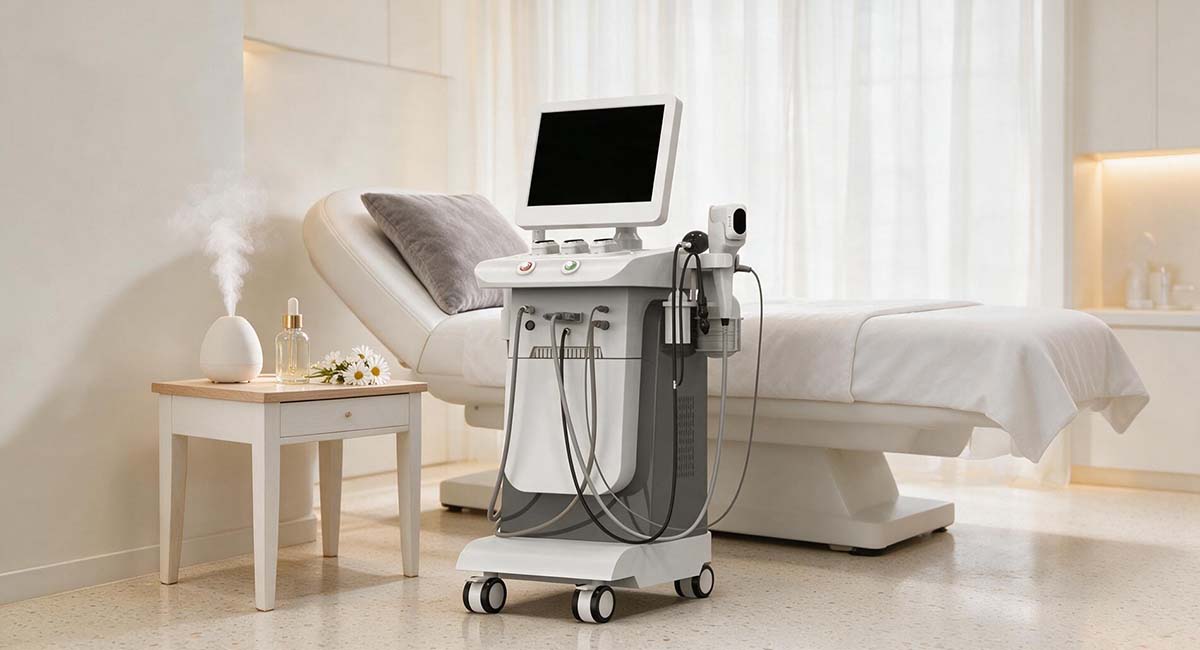
What “Dissolve Fat” Really Means
Fat cells are not melted into liquid and flushed out in one session. That is a common misreading of the marketing language. What actually happens is thermal damage.
High-intensity focused ultrasound concentrates energy at a chosen depth under the skin. At body depths such as 6.0mm, 8.0mm, 10.0mm, or 13.0mm, the energy heats a small treatment point quickly. The fat cells in that focal zone are disrupted enough that the body treats them as damaged tissue.
Over the following weeks, the lymphatic system clears the destroyed cells and their contents. The fat layer in the treated area becomes thinner, but the reduction is gradual. This is why a client cannot walk out of a session and see the final contour change immediately.
Where the Energy Goes
The depth matters more than the machine’s brand name. A HIFU system works at multiple depths, and each depth targets a different layer.
For the face and neck, the usual depths are 1.5mm, 3.0mm, and 4.5mm. These reach the dermis and the SMAS layer, the connective tissue surgeons work with in a facelift. At those depths, HIFU mainly stimulates collagen rather than removing large amounts of fat.
For the body, the relevant depths start around 6.0mm and go deeper. A machine with 8.0mm, 10.0mm, and 13.0mm cartridges can reach subcutaneous fat in the abdomen, flanks, and thighs. This is the range that makes the fat-reduction claim real.
I have seen clinics buy a face-focused HIFU and then try to use it for body fat. The result is usually disappointing, not because HIFU does not work, but because the cartridges do not reach the fat layer the client wants treated. When you evaluate a machine, check the actual cartridge depths before you believe the sales sheet.
The Fat Timeline
Body HIFU is a slow process for a reason. The treatment creates the damage, but the body needs time to clear it.
In the first few days, a client may notice mild redness, warmth, or tenderness in the treated area. Those reactions are usually short-lived. The contour change does not appear that quickly.
Most of the visible fat reduction shows up between two and three months after treatment. Some clients see the clearest change at the three-month mark, after the lymphatic clearance and tissue remodeling have had time to run their course. This is a critical point for sales conversations: if you promise a dramatic change at two weeks, the client will be back at the front desk asking why nothing happened.
The number of sessions also matters. Body contouring often needs one to three sessions, depending on the area, the thickness of the fat layer, and the energy settings. A single session can help a localized pocket, but a larger area usually needs more than one pass over time.
How Long Body Results Last
This is where the wording matters. The destroyed fat cells do not regenerate. Once the body clears them, they are gone for good. In that specific sense, the reduction is permanent.
That does not mean the result is permanent no matter what the client does. The fat cells that remain in the area can still expand if the client gains weight. A person can regain the visual fullness without growing new fat cells, because the existing cells simply get larger.
That distinction is important for setting expectations. The right message is not “the fat will never come back.” It is “the treated fat cells are removed, but the remaining cells can still store more fat if your weight changes.” A client who keeps their weight stable will usually hold the contour better than one who does not.
How Long Facial Lifting Lasts
The duration story is different for the face. Facial HIFU is primarily a collagen treatment, not a fat-removal treatment.
At 1.5mm, 3.0mm, and 4.5mm, HIFU creates small thermal points that stimulate new collagen. The skin tightens gradually as that collagen forms. Most facial lifting results last roughly 12 to 18 months, with the peak often around three months after treatment.
A follow-up or maintenance session is common. Many clinics schedule a review at three months to see how much tightening has developed and decide whether the client needs another pass. Annual maintenance is a practical way to keep the result from fading.
What HIFU Does Not Do
HIFU is not a weight-loss treatment. A person with a large amount of overall body fat should not be promised that HIFU will reduce their size across the board. The treatment is best for localized pockets of fat, not for changing a person’s overall body weight.
It is also not a substitute for liposuction. Liposuction physically removes a larger volume of fat in one procedure. HIFU destroys a smaller amount of fat non-invasively and lets the body clear it over time. The two treatments have different risks, recovery profiles, and results.
Finally, HIFU does not tighten loose skin over a very large body area the same way it tightens the face. Body HIFU targets the fat layer, while skin tightening on the body usually depends on a different treatment or a combined protocol. Keeping those limits clear helps you avoid overselling.
Machine Specs That Decide the Answer
The same “HIFU” label covers a wide range of hardware, so the answer to the client’s question depends on the machine in your treatment room.
Look first at cartridge depth. A body HIFU needs depths from 6.0mm to at least 13.0mm to reach subcutaneous fat. A machine with only 1.5mm, 3.0mm, and 4.5mm cartridges is a facial system, not a body-fat system.
Next, look at energy and frequency. A platform such as the Winkonlaser HU700 7D HIFU machine operates at 4 MHz with adjustable energy from 0.2J to 2.0J in 0.1J steps. That adjustable range lets the operator match the setting to the treatment depth and the client’s comfort instead of running every area at the same power.
Shot count is a consumable question. The 3D cartridges on that platform hold about 25,000 shots each. A higher shot count per cartridge usually means a lower cost per line over the life of the machine. Before buying, confirm the replacement cartridge price and whether the cartridges are proprietary, because that affects your long-term margin more than the headline machine price.
For a clinic that wants to sell both facial lifting and body contouring from one unit, the four-in-one design matters. The flagship HU700 combines the HIFU stack with an RF microneedle handpiece and a vaginal tightening handpiece, which means the machine is not limited to one revenue stream. You can compare the full lineup and the body depths on the Winkonlaser HIFU machine page, or review the broader machine catalog if you are still deciding between a face-only and a body-capable platform.
Certification Boundaries to Check
The regulatory side is just as important as the depth chart. In this product category, HIFU systems are CE MDD and ISO 13485. ISO 13485 is a quality-management certification, not a device clearance or a registration.
Do not assume that a CE mark or an ISO certificate gives you FDA clearance. If a salesperson tells you a HIFU machine is FDA cleared, ask for the exact 510(k) number and the specific model listed under it. For the Winkonlaser catalog, the FDA 510(k) K241860 clearance belongs to the DM60 and DM40P diode laser hair removal systems, not to the HIFU category.
Keeping that boundary clear protects your import file and your marketing. If a claim looks too broad, ask the supplier to put the certification statement and the model number in writing before you order.
Screening and Safety Limits
Like any energy-based treatment, HIFU is not for everyone. A qualified operator should screen for pregnancy, active infection in the treatment area, open wounds, electronic implants near the area, and impaired skin sensation.
Some areas need particular care. The energy should not be directed at the eye, and the operator should avoid treating over the thyroid or other glands without a clear protocol. A proper treatment manual and training matter as much as the machine itself, because depth selection errors or excessive energy can cause burns or an ineffective session.
If your clinic is new to HIFU, factor training into the purchase. The supplier should provide treatment protocols, not just a machine in a crate.
Pricing and Return on the Machine
The fat question also has a commercial side. Body HIFU usually commands a higher per-session price than facial maintenance, which is why many clinics buy a dual-purpose machine.
In the US market, a full-face HIFU session often sells in the $800 to $1,500 range, while body contouring on the abdomen or flanks can run $800 to $1,500 per session or more for a full package. A clinic that adds body treatments to an existing facial schedule is selling a higher-ticket service without adding a second room.
The machine cost depends on the model and configuration. Entry HIFU systems tend to start in the low thousands of dollars, while a full face-and-body platform costs more. Rather than rely on a single number, request a configured quote for the cartridges, handpieces, and training you actually need.
The key calculation is not the sticker price. It is how many sessions the machine can deliver, what each cartridge costs to replace, and whether the depth range lets you sell both face and body treatments. A machine that can only reach the dermis will leave money on the table if your market is asking for fat reduction.
FAQ
Q: Does HIFU actually dissolve fat?
A: Body HIFU uses focused ultrasound to thermally damage fat cells at depths such as 6.0mm to 13.0mm. The body then clears those cells over several weeks. It does not melt the fat instantly, and it is not the same as liposuction.
Q: How long does body HIFU take to show results?
A: Most of the visible fat reduction appears over two to three months. Mild redness, warmth, or tenderness can occur in the first few days, but the contour change develops as the body clears the treated cells.
Q: How long do the fat-reduction results last?
A: The destroyed fat cells do not regenerate, so the reduction from those cells is permanent. The remaining fat cells can still enlarge with weight gain, so a stable weight helps the client hold the contour.
Q: How long do facial HIFU results last?
A: Facial HIFU results typically last 12 to 18 months, with the peak often around three months. Most clinics review the client at three months and offer annual maintenance.
Q: Is HIFU a weight-loss treatment?
A: No. HIFU is for localized fat pockets and skin tightening. It is not suitable for treating obesity or for replacing a healthy diet and exercise plan.
Q: Which machine specs should a clinic check for body fat reduction?
A: Check cartridge depths from 6.0mm to at least 13.0mm, adjustable energy, and shot count per cartridge. The Winkonlaser HU700 platform reaches those body depths and combines facial, body, and RF microneedle treatments in one unit.
Get a HIFU Setup Matched to the Treatments You Sell
The clearest way to answer the fat question is to know what your machine can reach. Confirm the body depths, the energy range, the cartridge cost, and the certification boundary before you buy, then set client timelines honestly.
If you are comparing HIFU systems for a clinic or distribution business, send Winkonlaser your target market, treatment volume, and the areas you plan to offer. You can review the machine specifications and request a configured quote from the team. If you are still narrowing down which category fits your client list, the HIFU buying guide is a practical next read.


.jpg "Professional 5D HIFU Machine for Sale")