


What Does It Really Cost to Keep a HIFU Machine Running?
Table of Contents
Schema-ready summary: Winkonlaser’s HU700 5D HIFU machine has three handles, 1.5-16.0mm cartridges, 4MHz operation, a 0.2-2J energy range, and cartridge ratings from 10,000 to 100,000 shots, so clinics can budget ownership cost around consumables, service terms, and downtime rather than the machine price alone.
Most clinics price a HIFU machine against treatment revenue and stop there. The purchase price is only the first line: cartridges wear out, handpieces need service, and downtime turns into unsold appointments.
What does HIFU machine maintenance actually include?
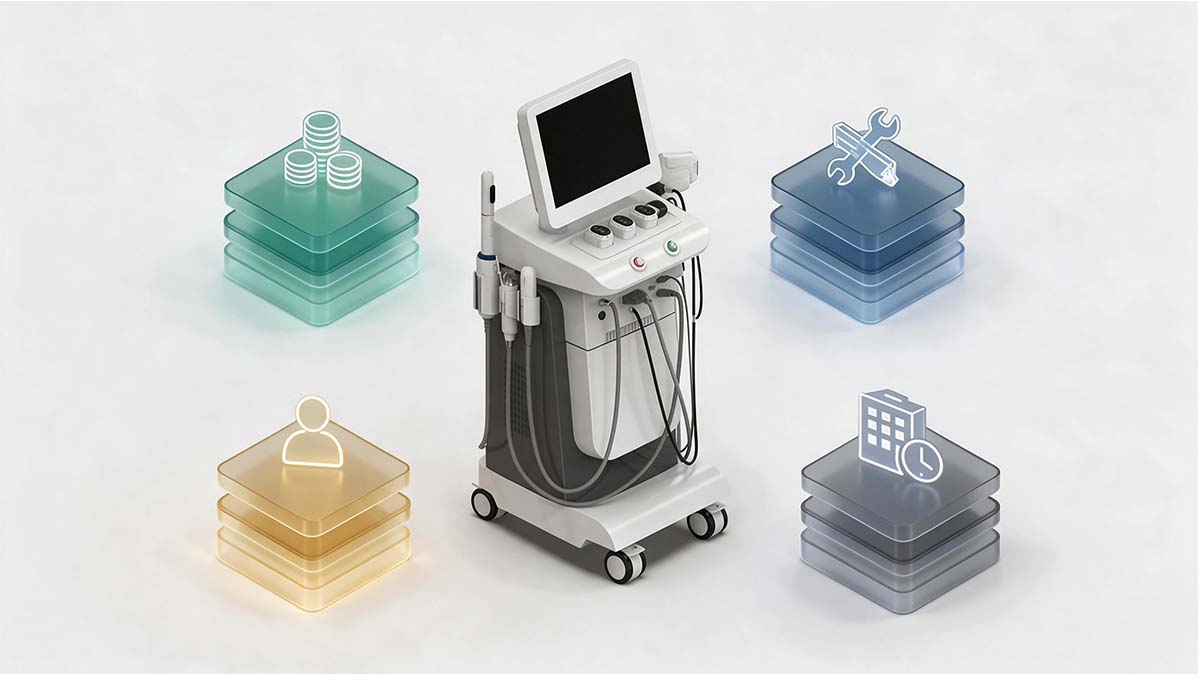
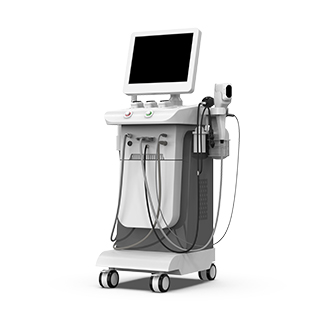
I’ve seen clinics treat a HIFU machine like a one-time furniture purchase and then discover that cartridges and service are recurring costs. A good example to test the list against is the HU700 5D HIFU machine. It has three handles, cartridge depths from 1.5mm to 16.0mm, a 4MHz operating frequency, a 0.2-2J energy range, and an 800W rating. Every handle and cartridge family is another surface that wears and another line you should ask about before signing.
Ask the supplier to split maintenance into these items:
-
Replacement cartridges for every depth you plan to use.
-
Handpiece and cable inspection, repair, and replacement terms.
-
Console inspection, cleaning, and any scheduled firmware or calibration work.
-
Electrical requirements and preparation for your clinic.
-
Operator training and written care instructions.
-
Spare-parts lead time, freight, and remote support.
Why do clinics underestimate HIFU operating costs?
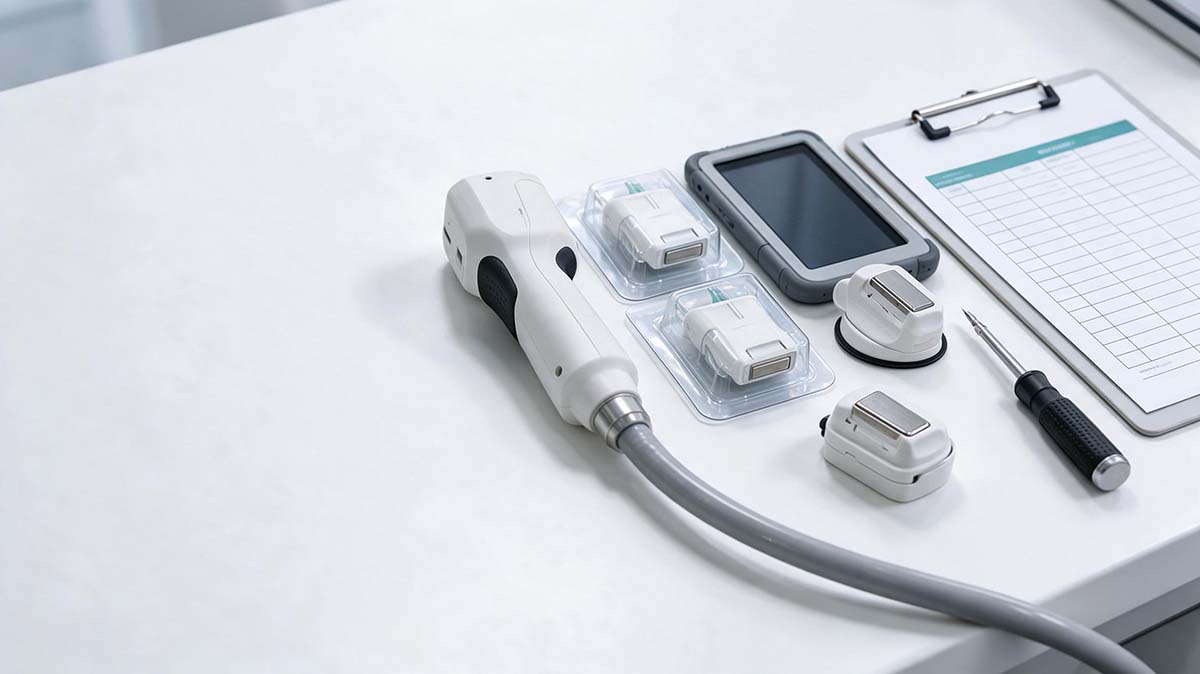
Cartridge life is the largest recurring line for many HIFU operators. The HU700 rates its cartridges at 10,000 shots for 5D, 25,000 shots for 3D, and 100,000 shots for 4D. A multi-line system can emit 11 focused ultrasound waves at once, so confirm whether the counter records an activation or each individual line. That single definition can change your replacement schedule.
As a planning example, if a treatment logs 500 shots, a 10,000-shot 5D cartridge lasts about 20 treatments before replacement. The same example with a 100,000-shot 4D cartridge reaches about 200 treatments. The point is not the exact number; the point is that you need the supplier’s shot count, counting method, and replacement price to turn the rating into a monthly cost. For the full cartridge math, see the HIFU cartridge shot count buying guide.
| Cartridge type | Rated shots | Planning question |
|---|---|---|
| 5D | 10,000 | Will shallow facial treatments use the cartridge quickly? |
| 3D | 25,000 | Which depths and treatments are planned? |
| 4D | 100,000 | Does a higher rating fit a lower-volume service mix? |
How do you build a maintenance budget?
Prices depend on configuration, order volume, destination, and support scope, so use Contact for pricing rather than guessing at a machine figure. You can still build the budget around the line items:
-
Estimate your annual HIFU treatment volume.
-
Confirm shots used per treatment for each cartridge depth.
-
Divide each cartridge rating by the shots used per treatment to find replacement frequency.
-
Add a handpiece and console service reserve.
-
Add training, freight, and a small downtime reserve for unsold appointment slots.
That structure turns a vague quote into a comparison you can audit. The HIFU machine quote guide shows how to request the machine, handpieces, cartridges, warranty, and support as separate lines.
What should a HIFU service plan cover?
Winkonlaser has been building equipment in Beijing since 2012, exports to more than 120 countries, and keeps 15+ engineers on staff. On a HU700, also confirm the delivered voltage because the datasheet lists 110-220V at 50/60Hz. Ask for the written warranty scope for the console, each handpiece, and every cartridge. Do not assume a consumable cartridge has the same coverage as a handpiece; the service plan should say it in writing.
What are the honest limits of HIFU and maintenance?
HIFU stimulates collagen by heating targeted tissue layers. Results are gradual and depend on patient selection, cartridge depth, and operator training. HIFU is not a liposuction alternative and should not be priced that way. On the regulatory side, HIFU machines like the HU700 are CE MDD and ISO 13485 quality-managed; they are not FDA 510(k) cleared. Treat an FDA claim on a HIFU machine as a red flag. The main contraindications include pregnancy, an active skin infection, and metal implants in the treatment area. Those patients are not suitable for routine HIFU without a medical review.
FAQ
Q: What should a HIFU maintenance budget include?
A: Replacement cartridges, handpiece and console service, electrical preparation, training, spare-parts lead time, freight, and a downtime reserve.
Q: How long does a HU700 cartridge last?
A: The rated counts are 10,000 shots for 5D, 25,000 shots for 3D, and 100,000 shots for 4D. Actual life depends on the counting method and shots used per treatment.
Q: Does a HIFU machine need regular service?
A: Yes. Ask the supplier for a written maintenance schedule covering the console, handpieces, cartridges, cleaning, and remote support.
Q: Is the HU700 HIFU machine FDA cleared?
A: No. HIFU machines like the HU700 are CE MDD and ISO 13485 quality-managed, not FDA 510(k) cleared.
Q: What warranty should I ask for?
A: Ask for a two-year warranty on the main unit and handpiece, lifetime technical support, and a written spare-parts lead time. Confirm cartridge coverage separately.
Q: Does maintenance guarantee patient results?
A: No. Results still depend on patient screening, cartridge selection, operator training, and following the manufacturer’s instructions.
Budget the Hidden Line Items
Send your expected annual HIFU volume and ask for a HU700 configuration with cartridge pricing, service terms, warranty scope, and spare-parts lead time listed separately. Contact the team through the contact page to compare the full ownership cost, not just the machine price.