


What to Check Before You Buy an RF Microneedling Machine
Table of Contents
Quick answer: compare needle depth and needle type first, then the RF frequency or frequencies, cartridge lifespan and replacement cost, and whether the machine detects skin contact before firing. The TM80 offers 0.2mm to 7.0mm adjustable depth, dual-frequency 2.2MHz and 700KHz delivery, 1,200-shot cartridges, and 29mmHg vacuum-sensing contact detection.
RF microneedling looks simple in a product photo, but the quotes do not compare cleanly. One machine is priced around needle depth, another around frequency, and a third around cartridge cost. I have seen clinics focus on the wattage or the look of the handpiece and miss the two specs that actually decide what the machine can treat. The useful approach is to read the machine the way a technician reads it: depth first, then energy delivery, then what you will spend every month to keep it running.
This guide covers the checks I use when a clinic is choosing an RF microneedling machine. It starts with the specs that define the treatment menu, then moves to consumables, workflow, support, and the limits you should keep in mind.
What the machine actually needs to do
An RF microneedling machine combines mechanical needles with radiofrequency energy. The needles create controlled micro-injuries, and the RF energy heats the tissue around the needle tip. The result depends on how deep the needles go, whether the needles are insulated or non-insulated, how the energy is delivered, and whether the machine can fire consistently on uneven skin.
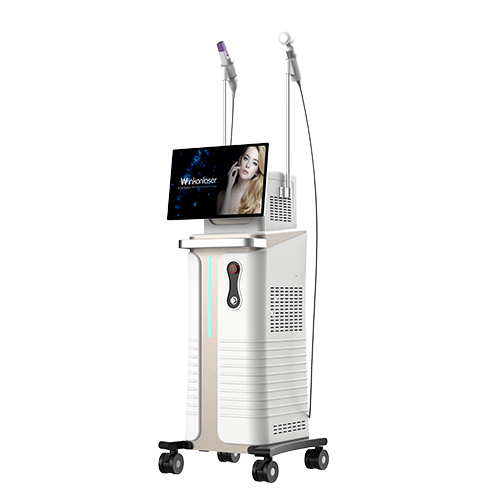
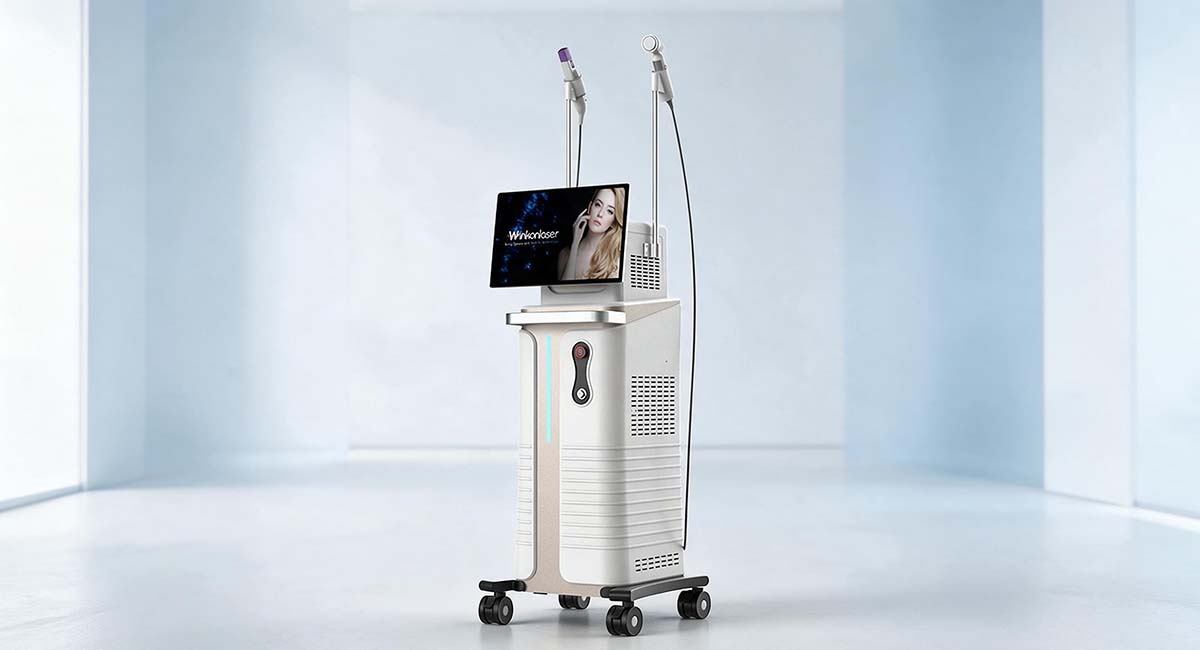
That means the important question is not just “how many watts” or “how many needles”. It is what treatment range the machine can cover safely and what the consumable cost will be once it is in daily use. The TM80 from Winkonlaser is a useful reference because it bundles several of those variables into one device. You can review the full configuration on the dual-frequency vacuum RF microneedling product page.
Needle depth and needle type come first
The first spec I pin down is adjustable needle depth. RF microneedling is used from superficial skin work to deep scar revision, so a fixed shallow machine is not the same purchase as a machine with a wide depth range.
The TM80 has an adjustable penetration depth of 0.2mm to 7.0mm. That range matters because the treatment is not one protocol. Facial work such as fine lines, pore refinement, and light resurfacing usually stays shallower, while body treatments for stretch marks, skin laxity, and deeper scars use the longer depths. A clinic that plans to treat both face and body needs that range, while a practice focused only on light facial work may not need 7.0mm.
The needle type is just as important as the depth. Insulated needles deliver RF energy only at the tip, which protects the epidermis and creates a more targeted thermal zone. Non-insulated needles deliver energy along more of the needle shaft and are used for broader coagulation and texture work. The TM80 supports both insulated and non-insulated cartridges, with a needle diameter of 0.2mm and a needle pitch of 1.5mm to 2.5mm. Ask which needle types a supplier actually stocks before you commit.
Frequency decides the treatment range
After depth, the next spec to compare is radiofrequency frequency. A single-frequency machine can work well for a narrow menu, but it will not move energy the same way at the surface and in the deeper dermis.
The TM80 is a dual-frequency system with 2.2MHz and 700KHz. The 2.2MHz mode targets the epidermis and papillary dermis for glow, pore refinement, and fine lines. The 700KHz mode reaches the reticular dermis for collagen stimulation, deep wrinkles, and acne scar work. The machine detects the needle type and switches frequency accordingly, which removes one manual step from the operator.
You do not need dual frequency if your clinic only wants one protocol. You do need to understand what the frequency choice means when a sales page promises “deep collagen remodeling”. A high wattage number without a clear frequency and depth plan tells you less than a modest power rating with a defined delivery mode. The TM80 lists a maximum RF output of 45W, but the useful detail is that the machine uses constant-power control rather than advertising power alone. For the wider RF machine range, see the RF machine category.
Cartridges are the recurring cost
The machine price is one number. The cartridge spend is another number that repeats for the life of the machine. I treat consumables as part of the quote because a low hardware price can hide a high cost per treatment.
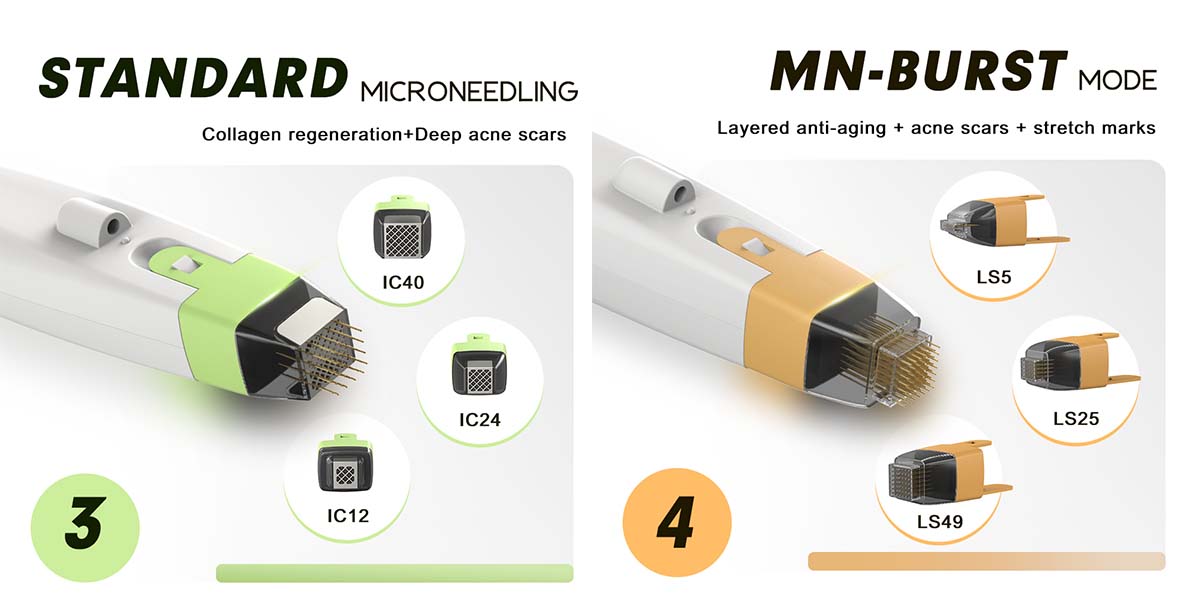
The TM80 ships with a range of color-coded cartridges for different treatments. The set includes a 5-layer MN-Burst mode that penetrates from 0.2mm to 4.5mm in one pulse, professional green cartridges in 25, 49, and 81-pin options for body work, and a non-insulated option for texture and coagulation. The needles use medical-grade 316L stainless steel with a nano-gold coating, and each cartridge is EO sterilized with an RFID encryption chip that the machine recognizes automatically.
The operating number to remember is the cartridge lifespan. TM80 cartridges are rated for 1,200 shots each. That gives you a simple way to estimate cost per treatment once you know the replacement price. Winkonlaser does not publish a fixed replacement price for every market, so request that number in writing as Contact for pricing when you compare quotes.
Vacuum sensing changes how the machine fires
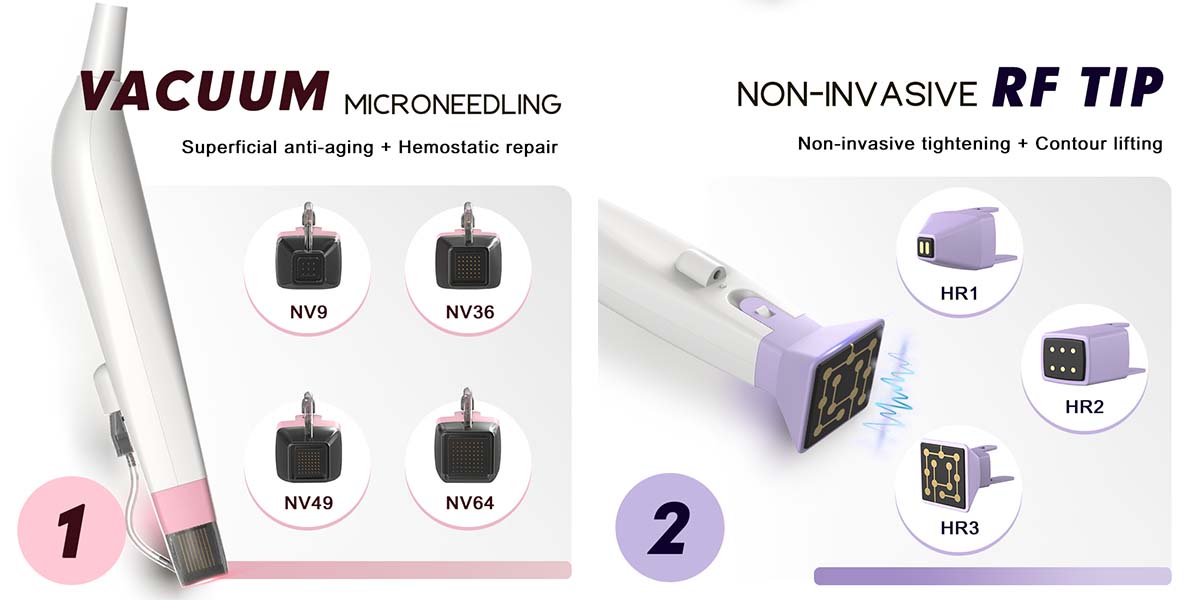
A cheap RF microneedling machine may fire on an empty contact or push unevenly on curved areas. The vacuum system on the TM80 is designed to reduce that problem. It detects skin contact through real-time air pressure changes and only releases energy after the needle tip is coupled to the skin, with a maximum vacuum pressure of 29mmHg.
That matters for two reasons. First, it reduces empty shots, which protects both the patient and your cartridge count. Second, it keeps the needle tip in contact on uneven facial contours, so the energy is more consistent from one area to the next. The machine also includes an ice hammer handle for immediate post-treatment cooling, which helps reduce redness and makes the recovery step part of the same workstation.
The gold RF handpiece is the daily-use tool, so check the weight and balance before you decide. An ergonomic handpiece is not a luxury for a clinic doing back-to-back sessions. It changes operator fatigue and consistency.
Support, training, and the compliance boundary
RF microneedling is a medical aesthetic device, so the after-sales side should be compared the same way as the hardware. Winkonlaser states a two-year warranty on the main unit and handpiece with lifetime technical support. The company was founded in Beijing in 2012, exports to 120+ countries, and has a team of 15+ engineers.
Before you buy, ask how training is delivered, how a cartridge or handpiece issue is diagnosed, and how long spare parts take to reach your market. A supplier that can walk a new operator through the 2.2MHz and 700KHz modes, the cartridge recognition, and the vacuum settings is more useful than a supplier that only sends a manual. For the cost side of the same decision, read What You Are Actually Paying For in an RF Microneedling Machine.
On compliance, keep the model boundary clear. Do not accept a category-level FDA or CE claim as proof for the exact machine you are importing. Request documentation that names the model and your intended market. The Winkonlaser contact team can confirm what evidence is available for the TM80 in your region.
Contraindications and honest limits
No RF microneedling machine is suitable for every client. The treatment is not appropriate for pregnant clients, for people with an active infection or open wound in the treatment area, or for people with an implanted electronic device unless a clinician has cleared them. Do not use the machine on broken or infected skin, and do not rely on it as a substitute for medical diagnosis.
RF microneedling also has recovery and training limits. Results are not instant, and clients need realistic expectations about the number of sessions and the healing time. A machine with a wide depth range is not a reason to treat every client at maximum depth. Operator training and client screening still decide the outcome.
The buying checklist
Use this checklist when you compare machines:
-
Confirm adjustable needle depth and whether the range covers your face and body menu.
-
Ask which needle types are available: insulated, non-insulated, or both.
-
Confirm the frequency or frequencies and what each one is meant to treat.
-
Check cartridge lifespan, replacement cost, sterilization, and recognition method.
-
Ask whether the machine detects skin contact before firing.
-
Check handpiece weight and whether a cooling handpiece is included.
-
Get training, warranty, and spare-part lead times in writing.
-
Confirm the exact model’s compliance documentation for your market.
If a supplier cannot answer those points directly, keep moving. An RF microneedling machine is a long purchase, and the details that matter most show up after the first cartridges have been used.
FAQ
Q: What is the most important spec to compare first?
A: Start with adjustable needle depth and needle type. Those two specs define what the machine can safely treat and how the RF energy is delivered.
Q: Is a dual-frequency RF microneedling machine necessary?
A: Not always. A single-frequency machine can work for a narrow menu. Dual frequency, such as the TM80’s 2.2MHz and 700KHz modes, gives you more range for both superficial skin work and deeper collagen or scar treatment.
Q: How long do RF microneedling cartridges last?
A: It depends on the model. TM80 cartridges are rated for 1,200 shots each and use RFID recognition to help ensure only compatible sterilized tips are used. Replacement pricing should be confirmed in writing.
Q: Does higher RF power mean a better machine?
A: No. A controlled depth, frequency, and skin-contact system matters more than a large wattage number on its own. The TM80 lists 45W maximum RF output and uses constant-power control.
Q: Is RF microneedling suitable for everyone?
A: No. It is not suitable for pregnant clients, people with an active infection or open wound in the treatment area, or people with an implanted electronic device unless a clinician clears them.
Q: What should a quote include before I decide?
A: Hardware, needle types and cartridges, cartridge replacement cost, training, warranty, spare-part lead times, and the exact model’s compliance documentation for your market.
Build your RF microneedling shortlist around the specs that matter
Compare needle depth, frequency, cartridge cost, vacuum sensing, and support before you compare the price. Start with the TM80 product page, then contact Winkonlaser with your treatment menu, order volume, and target market for a configuration-specific quote.