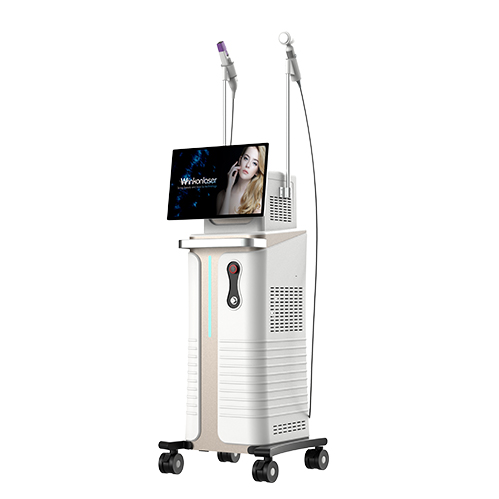



What Are You Actually Paying For in an RF Microneedling Machine?
Table of Contents
You have three RF microneedling quotes on your desk. One looks suspiciously cheap, one sits in the middle, and one costs enough to make you check the numbers twice. The spec sheets look almost the same. So which quote is actually the better deal?
That question is harder than it sounds because RF microneedling machine prices don’t move for one tidy reason. The handpiece matters. So do frequency, needle depth, cartridge quality, vacuum control, treatment speed, training, spare parts, and how quickly the supplier answers when something stops working. Two machines can share the same product photo and still be very different assets.
I have seen buyers compare the bottom-line number first and the total package second. That’s understandable. But in this category, the quote only tells you what the supplier wants you to compare. The spec sheet and service terms tell you what you’re really buying.
Why RF Microneedling Machine Prices Aren’t a Single Number
RF microneedling is not one standardized machine. It’s a treatment platform built around several design choices. Those choices affect the patient experience, the operator’s workflow, and the type of clinic that gets the most value from the device.
A basic unit may offer one radiofrequency mode, fixed or limited needle depth, basic cartridge fitment, and little treatment feedback. A clinical-grade system may use dual-frequency output, insulated and conductive energy delivery, adjustable depth, vacuum stabilization, and a cartridge system designed for repeatable sessions.
None of those differences show up in a single price request such as, “Send me your best RF microneedling machine price.” That request usually produces a low headline number with important exclusions. Ask instead for a configured quotation with the handpiece, cartridges, training, warranty, shipping, and after-sales terms included.
The right question isn’t “What is the cheapest RF microneedling machine?” It’s “What does this specific configuration let my team treat safely, repeatedly, and profitably?”
The Specs That Actually Move Your Quote
Frequency and Energy Delivery
Frequency is one of the first technical differences to check. The TM80, for example, uses a dual-frequency RF system with 2.2MHz insulated energy and 700KHz conductive energy. That combination lets the platform work across different treatment goals and tissue depths instead of forcing one setting to do every job.
Power alone isn’t proof of quality. A supplier can print a large number on a brochure without showing how the energy is delivered, how stable it remains over a session, or how the handpiece manages heat. Ask what frequency the system uses, whether the modes are independently controlled, and what real-time feedback protects the treatment.
Needle Depth and Cartridge Design
Needle depth sets the working range of the device. The TM80 offers adjustable depth from 0.2mm to 7.0mm, which covers superficial skin concerns and deeper remodeling protocols. A machine with a narrow depth range can still have a place, but it limits the services you can add later.
Cartridge quality is just as important. Cheap cartridges can bend, clog, fit poorly, or deliver inconsistent energy. That creates friction for the operator and doubt for the patient. The TM80’s system uses 13 sterile cartridges with intelligent vacuum sensing. That’s a clinical workflow feature, not decoration. Sterile, well-fitting cartridges reduce setup mistakes and make treatment more consistent.
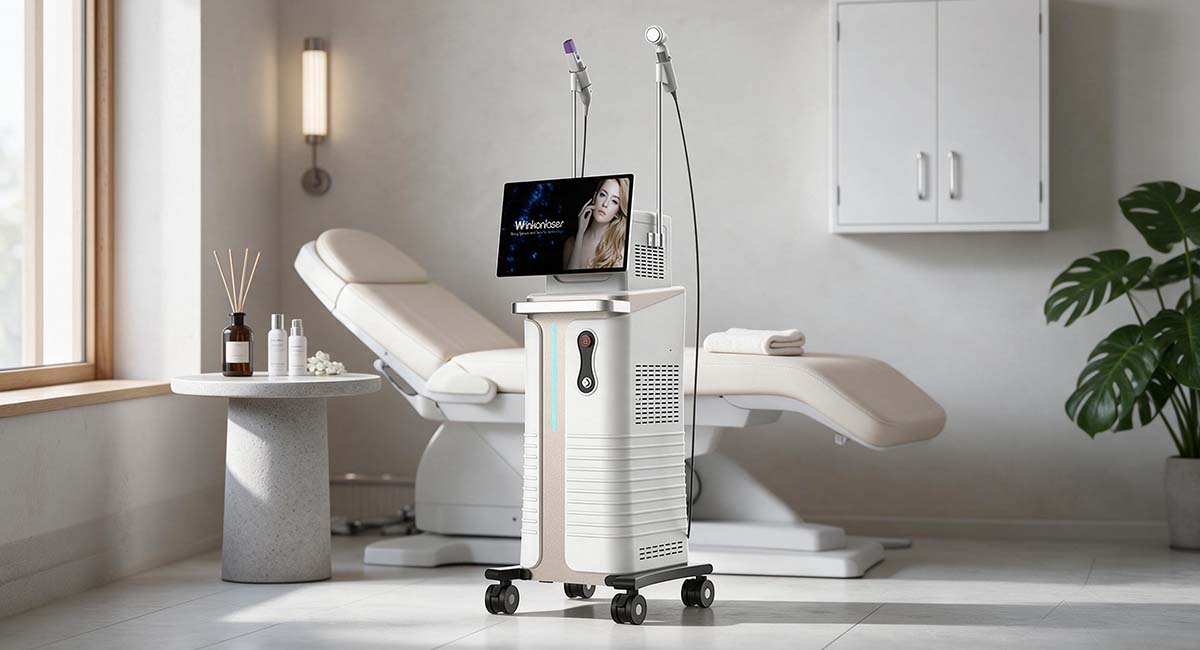
Vacuum and Handpiece Control
Vacuum-assisted RF microneedling helps stabilize the skin before the needles enter. It also improves contact and makes the pass more controlled. For a clinic, that can mean less hand fatigue, fewer repeated passes, and a treatment that’s easier to teach to a new operator.
Check whether the vacuum responds automatically, whether the handpiece feels balanced during a full treatment, and whether the system gives useful feedback when contact changes. A quote that includes the handpiece but not the matching cartridges, tips, or vacuum components is incomplete.
Screen, Software, and Treatment Records
Software rarely looks exciting in a quotation, but it affects daily use. A clear interface helps a new clinician move from training to treatment faster. Preset protocols can reduce variation between operators. Treatment records can support follow-up and internal quality control.
Don’t buy a locked-down system unless you understand what future software access costs. Ask whether updates are included, whether the supplier supports remote troubleshooting, and whether the machine can export treatment data if your clinic needs it.
What a Complete Quote Should Include
A useful quotation should be itemized. If the supplier only sends one total number, request a breakdown before you compare it with anyone else.
| Quote item | Why it matters |
|---|---|
| Main unit | Confirms voltage, configuration, and destination-market requirements |
| Handpiece | One handpiece is not the same as a complete treatment setup |
| Cartridges | Quantity, sterility, compatibility, and replacement cost matter |
| Vacuum system | Affects control, comfort, and treatment consistency |
| Training | Online support is not the same as hands-on clinical onboarding |
| Warranty | Check what is covered, for how long, and where parts ship from |
| Shipping and duties | A low ex-works quote can become an expensive delivered machine |
| After-sales terms | Response time, spare-parts access, and technical support should be written down |
Winkonlaser provides a two-year warranty on the main unit and handpiece, plus lifetime technical support. Those terms should sit beside the equipment price when you compare suppliers. A cheap machine with no practical support path becomes expensive the first time treatment stops.
For a configured RF microneedling quotation, review the TM80 specifications and request pricing here. The machine price is project-specific, so the right approach is to send your treatment menu, expected volume, and destination country rather than asking for a generic number.
Match the Machine to Your Business
New Clinic or Small Med Spa
If RF microneedling is a new service, don’t buy capacity you can’t fill. The priority is a reliable core platform, clear training, and a manageable cartridge plan. You want to learn the treatment, build consistent outcomes, and understand which patients actually book.
Look for adjustable depth, a stable handpiece, simple protocols, and a supplier that helps your team learn the machine. A smaller configuration can be a smart first step if the platform can grow with your service menu.
Established Skin Clinic
An established clinic usually needs throughput, protocol flexibility, and less variation between operators. Dual-frequency delivery, vacuum control, and a broad depth range become more valuable because they support several treatment plans without adding another device.
This buyer should ask for treatment-time estimates, cartridge consumption per case, and a realistic monthly supply forecast. The purchase price matters, but operator time and repeat visits often have a larger effect on profitability.
Distributor or Multi-Site Group
Distributors need more than a good unit price. They need model consistency, documentation, spare-parts support, training material, and a supplier that can answer technical questions after the first order. Ask how the manufacturer handles firmware changes, cartridge batches, warranty claims, and replacement shipments.
Winkonlaser has worked with clinics and distributors since 2012, exports to more than 120 countries, and has 15+ engineers supporting its equipment. For a distributor, that engineering access is part of the product. It reduces the risk that every technical question has to travel through several people before someone can answer it.
Build the Payback Model Before You Choose
Don’t start with the machine price. Start with the service you can realistically deliver.
Write down the number of RF microneedling treatments you expect each week. Then subtract the cost of cartridges, clinician time, room time, consumables, and any marketing needed to bring those patients in. The remaining gross profit per treatment is what pays back the machine.
Use this simple formula:
Payback period = delivered machine cost / weekly gross profit from RF microneedling
The formula isn’t perfect. It doesn’t include taxes, financing, downtime, or seasonal demand. It does force you to compare the quote against the business it has to support. A machine that costs less but takes twice as long per treatment may not be the cheaper option.
In my experience, buyers get a clearer answer when they build three scenarios: conservative, expected, and strong. If the machine only makes sense in the strong scenario, negotiate the configuration or wait. If it works in the conservative case, the investment has room to breathe.
Ask the supplier to quote enough cartridges for your first 90 days, not just enough to demonstrate the machine. Running out of sterile cartridges during a launch is an avoidable problem. You should know the replacement cycle before you sign.
RF Microneedling vs 10600nm CO2: A Different Upgrade
RF microneedling and a 10600nm CO2 laser both address skin texture, scars, and remodeling, but they’re not interchangeable upgrades. A CO2 laser creates controlled ablative injury across the skin surface. RF microneedling delivers energy below the surface through fine needles, with less dependence on surface ablation.
That difference affects downtime, treatment planning, patient selection, and the skill level required from your team. A clinic adding RF microneedling may be trying to offer collagen remodeling with a more comfortable recovery profile. A clinic adding CO2 may be targeting deeper resurfacing or a different case mix.
Don’t let a supplier sell one technology as a universal replacement for the other. Compare the indications your patients actually request, the recovery time they’ll accept, and the protocols your clinicians can deliver consistently.
If you’re still mapping the treatment itself, start with what RF microneedling is and how it works. If you’re deciding whether the clinical results justify the investment, this practical look at RF microneedling outcomes is the better next step.
Maintenance and After-Sales Costs
The purchase quote is only one layer of cost. Cartridges, handpiece maintenance, shipping, calibration, software support, and clinician retraining all sit behind it.
Ask four questions before you buy:
-
Which parts are covered by warranty, and which are considered consumables?
-
How long does a replacement handpiece or cartridge shipment take to reach your country?
-
Who handles technical diagnosis when a treatment error appears?
-
Does the supplier provide written maintenance intervals and error-code guidance?
The TM80 is built for clinical use and supported by Winkonlaser’s two-year main-unit and handpiece warranty and lifetime technical support. That’s the standard to compare against, not just the first invoice.
You should also ask about the cost of normal wear. A handpiece that saves money on day one but needs frequent replacement can erase the advantage. The same applies to cartridges that are cheap per box but waste time through poor fit or inconsistent energy delivery.
For clinics that already run a busy service menu, read why the TM80 was designed around deeper RF microneedling limits. It explains the engineering decisions behind the platform before you compare it with another quote.
Red Flags in an RF Microneedling Quote
The first warning sign is a quote that doesn’t identify the exact model, configuration, handpiece, and cartridge quantity. If the seller can’t name what’s included, you can’t compare it.
The second is a claim that one frequency, one depth, or one cartridge fits every patient and every clinic. RF microneedling requires clinical judgment. A supplier should help you understand the treatment range, not flatten every limitation into a marketing line.
The third is certification confusion. ISO 13485 describes a manufacturer’s quality management system. It isn’t the same as regulatory clearance or registration for a specific device in your market. Ask for the document that applies to the exact model and destination country. Don’t accept a component certificate as proof that the completed machine is cleared for sale where you operate.
The fourth is after-sales support that only exists before payment. Ask for a named contact, service route, warranty document, and spare-parts process. If the answer is a generic promise to reply quickly, get the terms in writing.
Finally, be suspicious of a quote that is dramatically cheaper only after you remove the handpiece, cartridges, training, warranty, or shipping. That isn’t a low price. It’s a smaller purchase presented as a bargain.
Contraindications and Honest Limits
RF microneedling isn’t appropriate for every patient. A clinic should screen for implanted electronic devices such as pacemakers, pregnancy, active infection or inflammation in the treatment area, a history of keloids, recent isotretinoin use, anticoagulant therapy, and recent injectable fillers or other treatments that may affect the skin. People with those conditions are typically contraindicated until a clinician clears them for treatment.
The exact screening protocol should be set by the treating clinician and follow local regulations. Patients with darker skin types, a history of post-inflammatory hyperpigmentation, or complex scarring need a careful assessment before treatment. RF microneedling is not recommended as a do-it-yourself service or as a replacement for medical diagnosis.
The honest limitation is that one machine won’t fix every skin concern. It won’t replace surgery, remove deep volume loss, or guarantee a specific scar outcome. Results depend on patient selection, treatment protocol, device configuration, and operator skill. A realistic supplier should say that before the sale, not after.
This is where a good purchase decision becomes broader than price. You’re buying a clinical tool, a training relationship, and a support system. The cheapest quote can still be the most expensive choice if it forces your team to work around its limits.
Buying Checklist
Before you approve an RF microneedling machine purchase, confirm these items:
-
The exact model, frequency, energy modes, and adjustable needle depth are documented.
-
The quotation includes the handpiece, cartridge quantity, vacuum system, and accessories.
-
Training, warranty, shipping, duties, and after-sales terms are written clearly.
-
Cartridge fit, sterility, availability, and replacement cost are understood.
-
The ROI model works under a conservative treatment-volume estimate.
-
The supplier can explain certifications by model and destination market.
-
Contraindications, treatment limits, and operator requirements are documented.
-
The final delivered price is compared with the complete package, not the headline number.
If any item is missing, ask for an updated quote. A supplier that handles those questions well is giving you useful information before you’ve paid a deposit.
FAQ
Q: Why do RF microneedling machine prices vary so much?
A: Price changes with frequency, energy modes, needle depth, handpiece design, vacuum control, cartridge quantity, software, training, warranty, shipping, and after-sales support. A single headline number isn’t enough to compare systems.
Q: Is a higher RF frequency always better?
A: No. Frequency affects how energy behaves in tissue, but it isn’t a complete measure of quality. Energy stability, needle depth, cartridge fit, vacuum control, and operator skill all affect the treatment.
Q: What needle depth should a clinic look for?
A: That depends on your treatment menu. The TM80 offers 0.2mm to 7.0mm adjustable depth, which supports superficial and deeper protocols. A machine with a narrow range may limit the services you can add later.
Q: How many cartridges should the first order include?
A: Ask for a forecast based on your first 90 days of treatments, not just a demo quantity. Cartridge consumption depends on treatment area, protocol, and patient volume.
Q: Is an RF microneedling machine FDA cleared?
A: Regulatory status depends on the exact device and market. ISO 13485 is a quality-management certification, not the same thing as device clearance or registration. Ask for the applicable document for the model and country where you’ll operate.
Q: Can RF microneedling replace a CO2 laser?
A: Not universally. RF microneedling delivers energy through needles below the surface. A 10600nm CO2 laser creates controlled ablative resurfacing. The right choice depends on the indications, downtime your patients accept, and your clinicians’ protocols.
Q: What should I send a supplier for an accurate quote?
A: Send your country, treatment menu, expected weekly volume, preferred handpiece configuration, cartridge needs, and service requirements. That gives the supplier enough information to quote a complete system.
Compare the Complete Offer, Not Just the Price
RF microneedling can be a strong service for the right clinic. The mistake is treating the purchase like a commodity and comparing one vague number with another. Ask what’s included, what it can treat, what it costs to run, and who supports it after delivery.
Winkonlaser has manufactured aesthetic equipment since 2012, exports to more than 120 countries, and supports customers with 15+ engineers. If you’re comparing RF microneedling quotes, send Winkonlaser your treatment goals and configuration needs. We’ll help you turn the quote into a system you can actually operate.