


What Your Diode Laser Warranty Really Covers, and What It Does Not
Table of Contents
Quick answer: Winkonlaser covers the main unit and the handpiece for two years and provides lifetime technical support. The warranty is not a blanket promise. It typically excludes normal wear items, misuse, unauthorized repairs, and cosmetic damage. Get the coverage, exclusions, support process, and spare-part pricing in writing before you buy.
Most clinic buyers compare the purchase price, then ask about the warranty after the invoice is signed. By then, the support terms are already fixed, and the questions that matter are hard to reopen. I have watched this happen enough times to treat after-sales as part of the price, not as a box to tick after the machine arrives.
The purchase price of a diode laser hair removal machine is only the first number in the ledger. Over three years, you will also pay for consumables, spare parts, training, downtime, and the occasional repair that falls outside warranty. Some of those costs are predictable if you ask the right questions early. The warranty is your best clue to how the supplier expects the machine to perform after the sale. It is a different question from how long the handpiece lasts, which we covered in the guide at Diode Laser Handpiece Lifespan and Replacement Cost.
What is covered by the two-year warranty?
Start with the direct answer. The Winkonlaser warranty covers the main unit and the handpiece for two years. That is the useful detail to check first, because many suppliers quietly shorten the handpiece term. The handpiece is the component that does the daily work, so a two-year term on both parts changes the risk calculation.
I have seen clinics assume every part is protected because the sales page says “warranty” in bold. In practice, coverage is always defined by a written scope. Ask which components are included, which are excluded, and how a claim is handled. The answer should name the main unit, the handpiece, and any modular parts that carry the same term.
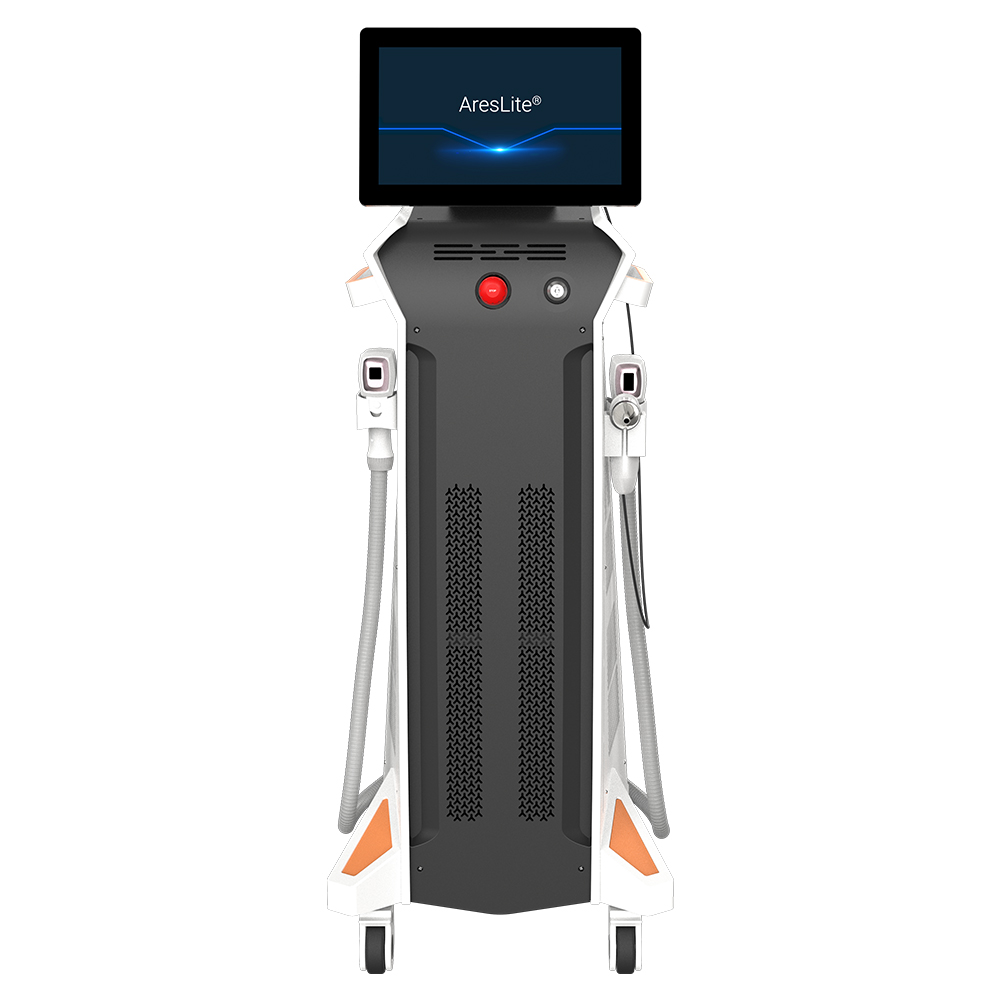
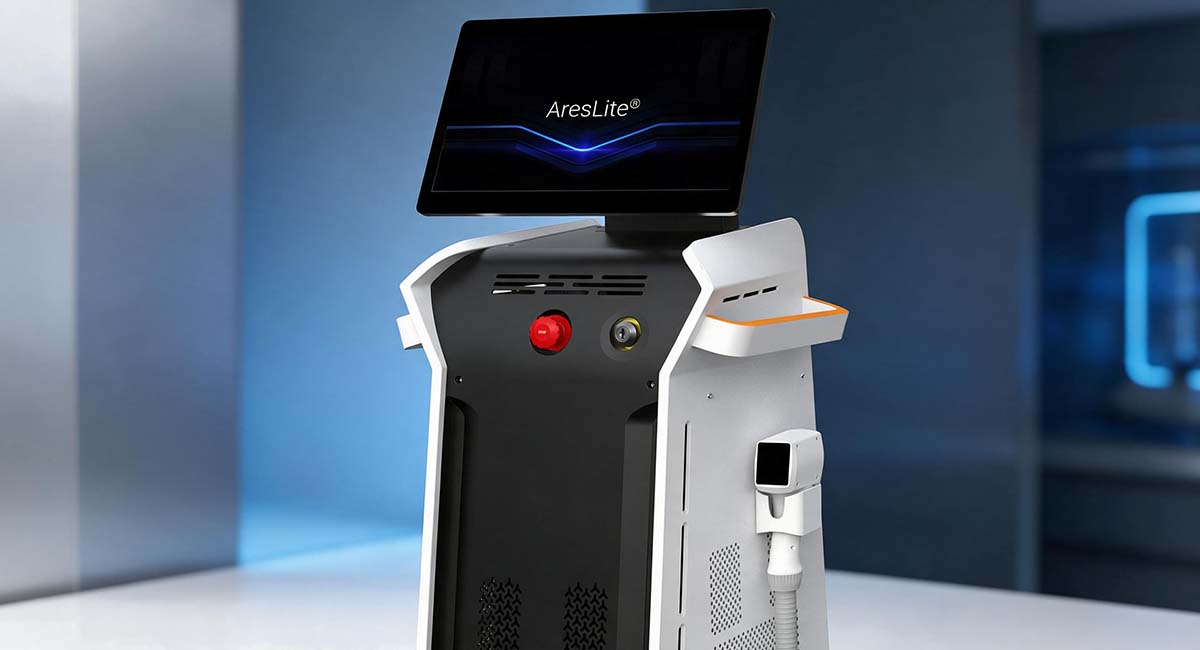
For the AresLite DM60, the relevant engineering is the replaceable diode design. The machine offers wavelengths at 755nm, 808nm, 940nm, and 1064nm, with spot sizes from 6x6mm up to 12x36mm and a frequency range of 1 to 20Hz. You can review the full configuration on the DM60 product page. That matters for support because a replaceable diode usually costs less to restore than a sealed handpiece. You still need to confirm the exact spare-part price for your market, which is why the practical figure is contact for pricing.
What is not covered by the warranty?
The short version: normal wear, consumables, misuse, unauthorized repairs, and damage from poor maintenance. A warranty protects against defects in materials and workmanship. It does not pay for a sapphire tip that has been scratched through normal use, a clogged water filter that was never serviced, or a damaged cable caused by rough handling.
That is not a trick in the fine print. It is how every honest warranty works. The manufacturer is covering the machine it built, not the operating habits around it. If the cooling loop is left dirty and the diode overheats, that is a maintenance problem, not a manufacturing defect.
I always ask buyers to read the exclusions before they read the covered list. The exclusions tell you what the supplier expects you to handle. If a supplier cannot explain what is excluded, treat that as a warning. A clear supplier will list the exclusions the same way Winkonlaser separates the main-unit warranty from the consumables you are expected to replace.
The term “lifetime technical support” also needs a definition. It does not mean free spare parts forever. It means the supplier keeps helping with troubleshooting, usage questions, and guidance after the two-year hardware term ends. Labor and parts outside warranty are normally charged. Get that boundary in writing so you are not surprised later.
Lifetime technical support: what it actually means
Lifetime technical support is a service commitment, not an extended free-repair plan. The practical value is that you keep a direct line to the supplier when an error code appears, when an operator changes technique, or when a replacement part needs to be specified. That matters most in a busy clinic, where an unanswered question can turn into a cancelled afternoon of appointments.
In my experience, support quality shows up in three places. First, the response path: can you reach a technician without waiting days? Second, the documentation: are there clear service steps, error codes, and maintenance schedules? Third, the escalation: what happens when the first answer does not solve the problem? A supplier with 15+ engineers can usually move a fault from a sales question to an engineering review faster than a broker who only forwards messages.
For an overseas buyer, support also depends on time zones, language, and remote access. Ask whether training is delivered online, whether there is a spare-parts list, and whether a video call can be arranged when the machine is down. Those details are more predictive than a logo on a certificate.
What really drives total cost of ownership?
The biggest hidden costs are usually downtime and consumables, not the repair invoice. Here is the direct breakdown I use when I compare machines.
Consumable reserve
Diode lasers have wear items that are meant to be replaced: sapphire tips, filters, and contact windows. Put aside a small monthly amount for them instead of treating each replacement as an emergency. Replacement handpiece and diode-stack pricing varies by model and market, so ask for a written quote rather than trusting an unverified number. The checklist at What to Check Before Your Diode Laser Machine Fails is useful for spotting the maintenance gaps that turn into those surprise costs.
Training and operator turnover
A machine that is easy to use correctly produces fewer client complaints and fewer support tickets. If a new operator starts next month, does the supplier offer repeat training? That is part of the real cost of running the machine, even though it never appears on the initial quote.
Downtime
A diode laser doing full-body sessions can be the busiest device in the clinic. A missed service day costs more than the failed part in many cases. The machine is not suitable for every skin type either: the 755nm wavelength is not appropriate for very dark skin, and laser hair removal is not suitable for pregnant clients, people with active infections in the treatment area, or anyone taking photosensitizing medication. A qualified operator still has to screen every client.
Regulatory risk
If the machine cannot be cleared for your market, the “saving” disappears. Only the DM60 and the DM40P carry FDA 510(k) clearance under K241860. Picosecond, CO2, and fat-reduction machines in the Winkonlaser range do not automatically share that clearance. Confirm the certification applies to the exact model and market before you import, and check the records at Winkonlaser certifications.
How factory support compares with distributor support
There is no universal winner between a factory and a local distributor. The factory usually has deeper technical knowledge and better spare-part access. The distributor often has a shorter physical distance and a local language. Your job is to compare the support path, not the sales pitch.
Winkonlaser was founded in Beijing in 2012 and exports to 120+ countries, which means it has handled the cross-border questions that come with remote support. That does not make it automatically better than a local partner. It does mean the company should be able to answer warranty, shipping, and parts questions directly instead of routing you through several layers.
| Support factor | Factory | Distributor |
|---|---|---|
| Diagnosis depth | Usually strongest for root-cause and engineering questions | Depends on local training and experience |
| Spare-parts access | Direct source, but shipping may take longer | Faster if local stock is held |
| Response distance | Remote support across time zones | Often closer, with local language |
| Freight on warranty claims | Needs to be confirmed in the written terms | Needs to be confirmed in the written terms |
| Best when | You want direct factory support and parts | You need fast local help and a service partner |
Ask the same questions to both options. Who diagnoses a fault first? Is a replacement part shipped from the factory or held locally? Who pays the freight when a warranty claim is accepted? How long does a typical repair take in your country? Write the answers side by side. A distributor can be excellent for fast parts, but you should still confirm that the factory warranty stays valid when the distributor handles the service.
A simple test is to describe a realistic fault before you order: an error code on the handpiece, a cooling alarm, or a damaged cable. The way the seller answers tells you more than the brochure. A confident support team will describe the diagnostic steps, the likely part, and the shipping options. A weak one will change the subject to price or ask you to call back. Run the test with both the factory and the distributor, because support is a process you will use for years, not a one-time promise on a slide.
A service plan that fits a busy clinic
You do not need a complicated maintenance program to protect a diode laser. I would build the plan around five small commitments.
-
Keep the cooling system clean. The DM60 combines compressor, ICE semiconductor, sapphire, water, and air cooling, and every one of those paths needs basic attention. Dirty water or blocked airflow shortens component life.
-
Log usage by shots and sessions. A rated shot count such as the DM60’s 100M shots is a planning number, not a countdown that excuses maintenance. Tracking helps you forecast when wear items will be needed.
-
Keep one spare set of the fast-wearing parts. You do not need to stock a whole spare machine. Know what fails first, what it costs, and how long it takes to arrive.
-
Record the serial number, firmware version, and error codes in one place. When support asks for them, you answer in one message instead of opening the case twice.
-
Schedule a short training refresher after the first month. Operators forget details once the pressure of opening week passes. A short check-in catches bad habits before they become claims.
Questions to ask before you sign
Here is the checklist I would use with any diode laser supplier.
-
Does the two-year warranty cover both the main unit and the handpiece?
-
Which parts are excluded, and which are treated as normal wear?
-
What does lifetime technical support include after the two-year hardware term?
-
What is the response time for a technical question in my time zone?
-
How much does a replacement diode stack or handpiece cost for my market?
-
Are repeat operator training and a written maintenance schedule included?
-
How is a warranty claim started, and who pays freight on an accepted claim?
If any answer is vague, ask again in writing. A supplier that cannot explain its own after-sales process before the sale is unlikely to become clearer after the money moves.
FAQ
Q: Does a two-year diode laser warranty cover the handpiece?
A: Yes. Winkonlaser covers the main unit and the handpiece for two years. Always confirm that the handpiece is named in writing, because some suppliers shorten that term.
Q: What does lifetime technical support include?
A: It covers ongoing troubleshooting, usage guidance, and service help after the two-year hardware warranty ends. Spare parts and labor outside warranty are normally charged.
Q: What is not covered by a diode laser warranty?
A: Normal wear items, consumables such as sapphire tips and filters, misuse, unauthorized repairs, and damage from poor maintenance are usually excluded.
Q: Which Winkonlaser diode machines have FDA 510(k) clearance?
A: The DM60 and DM40P hold FDA 510(k) clearance under K241860. Other categories do not automatically share that clearance.
Q: How much do replacement diode laser parts cost?
A: Contact for pricing. Replacement handpiece, diode stack, and sapphire tip costs vary by model and market, so ask for a written quote before you order.
Q: How can I reduce the total cost of owning a diode laser?
A: Keep the cooling system clean, track usage, reserve a monthly amount for wear items, confirm spare-part pricing, and arrange repeat operator training.
Get your warranty terms in writing before the order
A diode laser is a long purchase, not a one-day buy. The price that matters is what the machine costs you over the years you use it, and the warranty is where the supplier shows whether it expects that long relationship to hold. If you want the coverage, exclusions, support process, and replacement costs for the DM60 in your market, send your clinic volume and treatment mix through the Winkonlaser contact page and ask for the numbers in writing.