


Spider Vein Removal Machine: What Clinics Need to Know Before Buying
Table of Contents
What Are Spider Veins and Telangiectasia?
Spider veins are tiny dilated blood vessels that sit close to the skin surface. They show up as red, purple or blueish lines that branch out like a spider web — usually on the cheeks, around the nose, and on the legs. Telangiectasia is the medical term for the same dilated capillaries, and it gets worse with age, sun exposure, rosacea, hormonal changes and even heavy alcohol use.
The key point for clinic owners: these vessels are almost always harmless, but clients hate them. People cover their faces with makeup, avoid bright lighting, and pay good money to anyone who can make the red lines disappear. On the body, spider veins on thighs and calves are equally common, especially in women.
Treating them is not complicated, but it does require equipment designed for the job. A general IPL or hair removal laser is not the right tool — vascular work needs a wavelength that hemoglobin absorbs strongly, delivered in controlled pulses. If you are newer to this category, our guide to cold plasma skin treatment for clinics covers another under-used add-on service worth comparing.
How Does a Red Blood Vessel Removal Machine Work?
A vascular laser machine works on a simple principle called selective photothermolysis. The laser wavelength is chosen so that hemoglobin inside the blood vessel absorbs the energy far more strongly than the surrounding skin. The absorbed energy heats the blood, the vessel wall collapses, and the body gradually clears away the treated capillary over the following weeks.
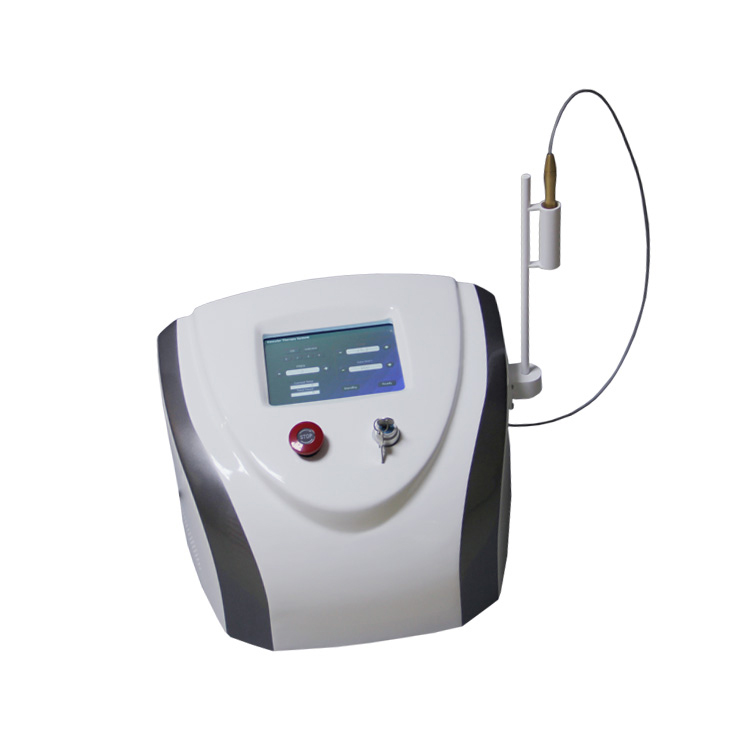
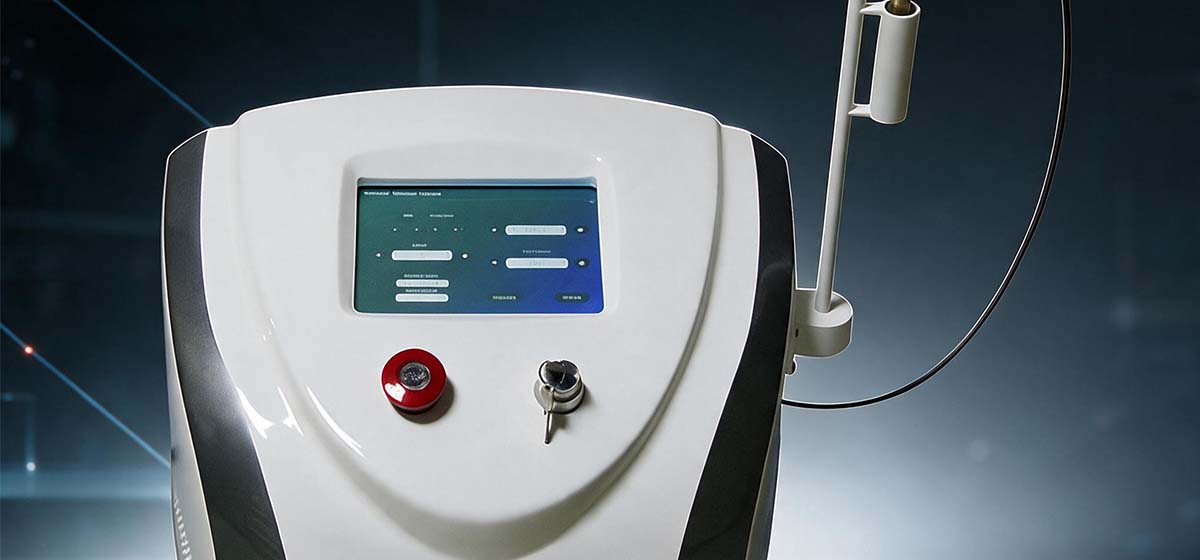
Take the EB90 Red Blood Vessel Removal Machine from Winkonlaser as a practical example. It uses a 980nm diode laser at 30W of power, with a frequency range of 1-20Hz and a pulse width of 1-200ms. The 980nm wavelength sits in the near-infrared range where hemoglobin absorption is strong while melanin absorption stays low, which means it works on a wide range of skin tones with a lower risk of burning or leaving white marks.
The treatment itself is fast. The operator passes the handpiece over the affected area, the laser seals the tiny vessels, and the treated capillaries contract immediately. Most clients describe a mild heat sensation rather than real pain, and there is minimal downtime — usually some temporary redness that fades within hours.
Why 980nm Diode + 13.56MHz RF in One Machine
Here is where the EB90 gets interesting for clinic owners. It is not just a laser. The machine combines the 980nm diode laser with a 13.56MHz radio frequency module, and the two technologies handle different problems.
The 980nm laser targets the blood vessels directly — spider veins, telangiectasia, broken capillaries. The 13.56MHz RF mode, meanwhile, generates an ultra-high frequency electromagnetic oscillation with a fine soft silk electrode (thinner than a hair) that breaks down hemoglobin at one thousandth of a second. That RF mode is what also lets the machine handle small skin protrusions such as milia, warts and fat granules, plus speckles, age spots and sunburn pigmentation.
In practice, that means one machine covers several revenue streams: vascular treatment, small lesion removal, and light pigmentation work. For a small clinic or salon that wants to add a new service without buying three separate devices, that combination is a genuine practical advantage — not a marketing gimmick.
What a Vascular Laser Can and Cannot Treat
Be honest with clients and you build trust that lasts. A red blood vessel removal machine is excellent for:
-
Spider veins on the face, especially cheeks and around the nose
-
Telangiectasia and broken capillaries
-
Redness associated with rosacea (as a management tool, not a cure)
-
Small milia, warts and fat granules (with the RF mode)
-
Light pigmentation such as age spots and sunburn freckles
-
Spider veins on the legs, though leg veins usually need more sessions than facial ones
It is not a solution for everything, and saying so upfront is part of running a professional practice:
-
Large varicose veins need medical evaluation, usually ultrasound-guided treatment — a vascular laser machine is not designed for them
-
Deep or raised vascular lesions may need different wavelengths such as 1064nm or pulsed dye lasers
-
Rosacea is a chronic condition; laser treatment reduces visible redness but does not cure the underlying flushing
A honest limitation paragraph matters more than a brochure of promises. Clients remember the clinic that told them the truth.
What to Check Before Buying a Vascular Laser
If you are comparing spider vein removal machines, work through this checklist before you commit:
| Checklist Item | What to Look For |
|---|---|
| Wavelength and power | Real medical-grade laser (like 980nm) with adequate power — 30W class is a solid working level for vascular and pigmentation work |
| Adjustable frequency and pulse width | Tuning 1-20Hz frequency and 1-200ms pulse width lets you match treatment to skin type and vessel size instead of fighting a fixed setting |
| Dual technology | A combined laser + RF design expands your service menu beyond vascular work alone |
| Safety features | Integrated cooling, indicator beam (like the 635nm aiming beam on the EB90) and CE/FDA-listed components reduce risk for both operator and client |
| Cooling and handpiece quality | A comfortable handpiece means longer treatment sessions without fatigue |
| After-sales support | Check warranty, spare parts availability and whether the supplier trains your staff — the cheapest machine is expensive if it sits broken for a month |
| Certifications and paperwork | For a professional clinic, documentation matters for local licensing and insurance |
Our company has been building aesthetic equipment since 2012 and exports to more than 120 countries. That kind of track record shows up in the details: consistent beam quality, reliable electronics, and support staff who actually answer when a machine needs attention. For a broader view of how to evaluate suppliers, our guide to choosing a Chinese-made laser for beauty salons walks through the criteria we would use ourselves.
Is a Vascular Laser a Smart Add-On for Your Clinic?
Vascular treatment is one of the few services where the demand is visible and the competition is thin. I have watched small salons add a red vessel machine and turn it into a weekly booked-out service within two months, mostly because nobody else in their area offered it. Most beauty salons do not offer it, most medspas treat it only as an afterthought, and clients actively search for it. Adding a red blood vessel removal machine to your room creates a service that neighboring salons cannot easily copy without buying the same equipment.
The economics are straightforward: one machine, multiple services (vascular, lesion removal, pigmentation), each priced per session. The machine pays for itself through repeat treatments, because facial spider veins often need 2-4 sessions and leg veins can need more. Maintenance cost is low — no consumables in the classic sense, just the handpiece and normal servicing.
For pricing details and current availability, contact the Winkonlaser sales team directly. Equipment pricing depends on configuration, shipping destination and current promotions, and we prefer to quote accurately rather than publish numbers that mislead. If you are still mapping out your full equipment plan, our guide to expanding clinic services with a single CO2 laser shows how multi-service machines change the math.
Safety, Contraindications and Limitations
Vascular laser treatment is safe when performed correctly, but it is not for everyone.
-
Pregnant women
-
People with pacemakers or implanted electronic devices
-
Clients with active skin infections or open wounds in the treatment area
-
Anyone with known photosensitivity or a history of keloid scarring
Always perform a patch test on a small area first, and always use proper eye protection.
In my experience, the clinics that succeed with vascular work treat it as a proper service line, not a side experiment: they photograph every case, they set conservative power settings for the first sessions, and they tell clients honestly how many sessions to expect. I have seen operators skip the patch test and pay for it with an unhappy client, so I would rather repeat the safety basics than assume they are obvious.
FAQ
Q: How many sessions do I need to remove spider veins on the face?
A: Most facial spider veins need 2-4 sessions spaced 3-4 weeks apart. Smaller capillaries may clear in one session; larger or deeper vessels take more.
Q: Is spider vein removal with a vascular laser painful?
A: Most clients feel a mild heat or pinprick sensation, not real pain. The 980nm wavelength is well tolerated, and any redness usually fades within a few hours.
Q: Can the EB90 treat spider veins on legs?
A: Yes, the EB90 can treat leg spider veins, but leg vessels are typically larger and deeper, so more sessions are usually needed compared to facial treatment.
Q: What is the difference between a vascular laser and IPL for red veins?
A: IPL emits a broad spectrum and is less precise; a 980nm diode laser delivers a focused wavelength that hemoglobin absorbs strongly, making it more effective and safer for vascular work.
Q: How long do spider vein removal results last?
A: Treated vessels do not come back, but new ones can appear over time due to aging, sun exposure or hormonal changes. Maintenance sessions once or twice a year keep the skin clear.
Q: Does the machine also remove pigmentation?
A: The EB90’s combined laser and RF modes also address age spots, sunburn freckles and small skin protrusions like milia and warts, which makes it a multi-service machine for one room.
Conclusion
Spider veins and telangiectasia are common, visible, and treatable — yet most salons and clinics leave that revenue on the table. A proper red blood vessel removal machine like the EB90 brings a focused 980nm diode laser and a 13.56MHz RF module into one unit, letting you treat vascular issues, small lesions and light pigmentation without a fleet of expensive devices.
Check the machine’s wavelength, power, safety features and the supplier’s real track record before you buy. Done right, vascular treatment becomes a steady, repeat-service revenue line that your competitors have not caught up with yet.
Ready to add spider vein removal to your clinic? Browse the EB90 red blood vessel removal machine or talk to our team for a quote and training plan.