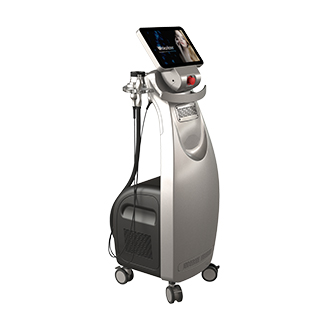



Cavitation Machine Cost: What You’ll Pay 2026
Table of Contents
1. Introduction: What a Cavitation Machine Really Costs
If you run a beauty salon or a med spa, you have probably searched “cavitation machine cost” at least once this year. It is one of the most common first machines clinics buy, and the price range you will find online is genuinely confusing. Some listings sit around $800, others cross $10,000, and every seller claims theirs is the best deal.
Here is the honest version. A decent professional ultrasonic cavitation machine costs between $800 and $4,500, depending on how many functions are packed into it. Single-function units sit at the low end. Multi-handle 5-in-1 systems with vacuum, RF and LED sit at the high end. Brand-name clinical devices from European manufacturers can go above $10,000, but for most salons that money buys reputation more than results.
I have watched this market from the manufacturing side since 2012, and in my experience the machine that makes money for a clinic is not the most expensive one. It is the one matched to the treatments that clinic actually sells. This guide breaks down what you should pay, why prices differ so much, and where you can save without buying a machine you will regret.
2. What Is an Ultrasonic Cavitation Machine?
Ultrasonic cavitation uses low-frequency ultrasound, typically 40KHz, to create microbubbles inside fat tissue. Those bubbles expand and collapse, and the pressure change stresses fat cell membranes until they break down. The released triglycerides are processed and eliminated through the lymphatic system. No needles, no surgery, no downtime.
That is why it became a salon staple. A single cavitation session takes 30 to 60 minutes, clients feel nothing more than warmth and a mild vibration, and they can go back to work immediately.
If you want the deeper science and how the treatment differs from vacuum-based slimming, our guide on what an ultrasonic vacuum cavitation machine is covers the technology in detail.
For the cost discussion that follows, keep one number in mind: 40KHz. It is the standard professional frequency, and any machine that claims cavitation at a lower frequency is cutting a corner you will feel in the results.
3. How Much Does an Ultrasonic Cavitation Machine Cost?
Prices below are realistic market ranges for 2026, based on what wholesalers, distributors and clinics actually pay. They are not Winkonlaser quotes; our pricing depends on configuration and order volume, so contact us for a specific number.
| Machine tier | What you get | Typical price range |
|---|---|---|
| Entry single-function | One 40KHz cavitation handle, basic timer, no extras | $800 – $1,500 |
| Mid-range 2-in-1 / 3-in-1 | Cavitation plus vacuum, sometimes RF | $1,500 – $2,500 |
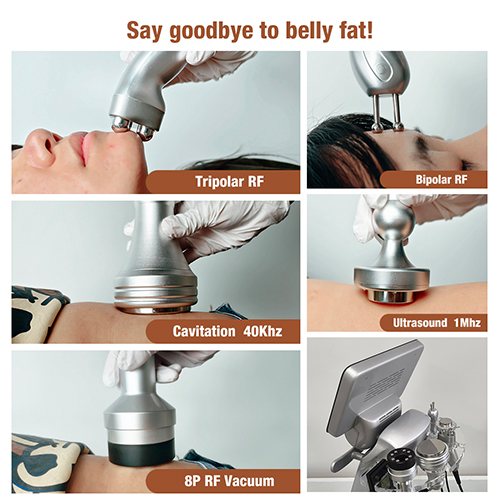
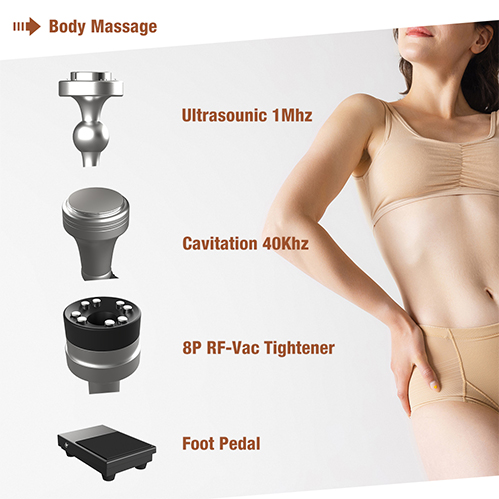
| Professional 5-in-1 | 40KHz cavitation, RF, vacuum, LED phototherapy, face handle | $2,500 – $4,500 |
| Clinical brand devices | European or US brand name, medical-grade certification, service network | $6,000 – $15,000 |
The sweet spot for most salons is the professional 5-in-1 tier. You get the treatments clients actually book: cavitation for fat, RF for tightening, vacuum for cellulite, LED for skin tone. One machine, four billable services.
If you are comparing single machines, expect to pay the low end. If you are equipping a new clinic and want one body machine that does everything, budget for the middle tier and you will not outgrow it in the first two years.
4. What Drives the Price? Specs That Matter
Two machines can both be labeled “cavitation” and differ in price by $2,000. Here is what separates them.
Frequency
Professional cavitation runs at 40KHz. Cheaper units sometimes drop to 28KHz or advertise “adjustable” frequencies that do not hold a stable output. Lower frequency means weaker cavitation effect and slower visible results. This single spec explains most of the price gap between cheap imports and professional units.
Handles and functions
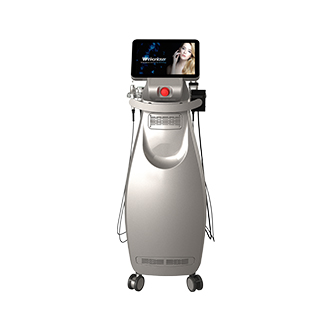
A single-handle machine costs less to build than a 5-in-1 that needs separate generators for RF, vacuum and LED. The 5-in-1 HUR50 from Winkonlaser, for example, combines 40KHz cavitation with a vacuum RF system and LED phototherapy in one unit.
Build quality and duty cycle
Professional machines are designed to run all day, every day. The handpieces use better transducers and the internals are rated for continuous operation. A $900 machine that overheats after three sessions is not cheaper than a $3,000 machine that runs for years.
Certifications and documentation
CE, FDA and ISO 13485 certification cost manufacturers real money in testing and audits. A machine sold with proper documentation is more expensive upfront and dramatically safer to import and use. This matters more in some countries than others, but it always matters for liability.
Brand and support
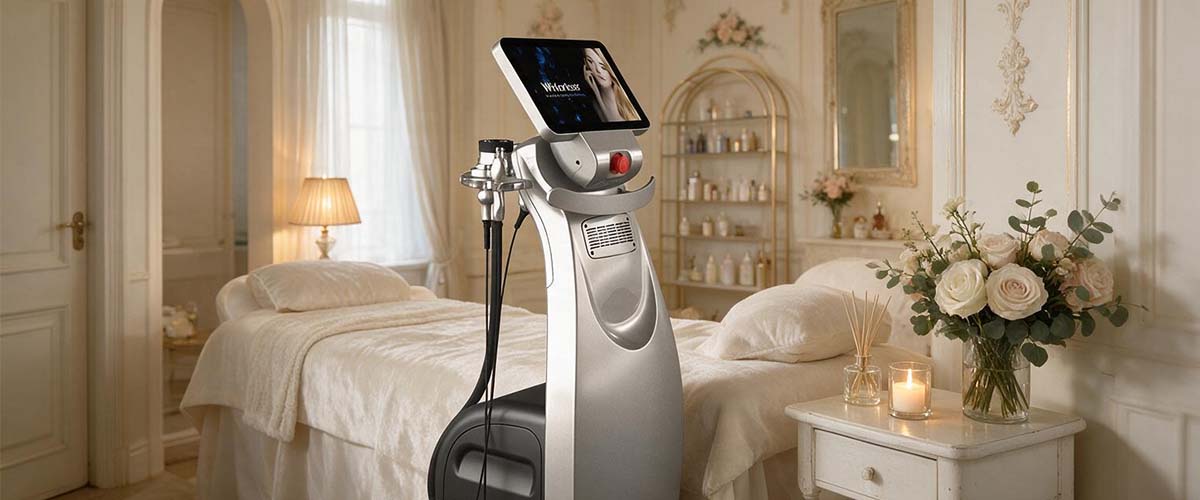
Big clinical brands charge a premium for their name, their training programs and their service network. White-label machines from the same factories cost less because you are not paying for that brand layer. For most salons, a manufacturer-direct machine with responsive support gives the same clinical result for half the price.
5. Cavitation vs. Other Body Contouring Machines: Cost Comparison
Cavitation is not the only non-invasive fat reduction option, and it is not the most expensive one either. Here is how the purchase prices and treatment economics compare.
| Technology | Machine cost | Typical per-session client charge | Best for |
|---|---|---|---|
| Ultrasonic cavitation | $800 – $4,500 | $50 – $150 | Soft, pinchable fat; salon entry point |
| Cryolipolysis | $5,000 – $15,000 | $150 – $400 | Stubborn pockets; premium positioning |
| Laser lipolysis (LLLT) | $1,500 – $5,000 | $80 – $200 | Mild fat + skin laxity; low-level laser at 635nm |
| EMS body sculpting | $3,000 – $10,000 | $100 – $250 | Muscle building, not fat reduction |
We have covered the other three in depth. If you are weighing cryo, our cryolipolysis machine cost guide walks through what you will actually pay in 2026.
For laser-based fat reduction, see our breakdown of whether lipolaser really works and what results to expect.
And for a full view of the body sculpting category, our professional body sculpting machines guide compares all the main technologies on one page.
The short version: cavitation is the cheapest machine to buy and the easiest to sell as an add-on treatment, which is why it is usually the first body contouring machine a new salon buys.
6. Hidden Costs the Price Tag Doesn’t Show
The purchase price is not the full cost. Ask these questions before you commit.
Shipping and customs
Large machines ship by sea freight. Depending on your country, import duties and local certification requirements can add 10-30% on top of the invoice. Get a landed cost quote, not an ex-works price.
Handpiece lifespan
Transducers wear out. A professional handpiece typically handles thousands of sessions, but replacement handpieces cost money and cheap machines sometimes stop selling spares after a model change. Confirm spare parts availability before buying.
Training
Your staff needs to learn protocols, contraindication screening and client communication. Some brands include training, some sell it, some offer nothing. Factor in the time either way.
Warranty reality
A 1-year warranty means little if the supplier is unreachable. Check the response time, the replacement policy and whether the warranty covers shipping both ways.
None of these are reasons to avoid cavitation. They are reasons to buy from a supplier that answers emails, because the machine is only as good as the support behind it.
7. How to Get the Best Price Without Getting Burned
In my experience, clinics overpay in one of two directions: they buy the cheapest listing on Alibaba and get a machine that dies in months, or they pay a 3x brand premium for the same factory hardware. Both mistakes are avoidable.
Ask for a live video test
A real supplier will show the machine running, demonstrate the handpiece output and share unedited client videos. If they only send glossy renders, walk away.
Request the certification files
CE declaration, FDA registration number or ISO 13485 certificate. Not screenshots of a logo, the actual documents. A manufacturer that has them will share them without hesitation.
Check the factory, not just the brand
Many “US brands” and “German technology” machines are made in China by the same factories that sell white-label units. There is nothing wrong with that, but you should know whether you are paying for hardware or for a logo. Manufacturers like Winkonlaser export directly to 120 countries and can put your brand on the machine through OEM/ODM: contact us.
Negotiate the bundle
Extra handpieces, a trolley, shipping terms and training sessions are all negotiable when you buy direct from a manufacturer. The published price is a starting point, not a ceiling.
Ask about the return policy
A serious supplier offers a reasonable inspection window. If there is no return path at all, the risk is on you.
8. Is a Cavitation Machine Worth It? ROI for Clinics
Cavitation machines have the fastest payback of any body contouring equipment I have seen in the salon market. Here is the math.
Say you charge $80 per session, a typical mid-market price. A 5-in-1 machine at $3,000 needs 38 sessions to cover itself. A busy salon runs 5 to 8 body treatments a day, many of them cavitation, so the machine typically pays for itself within 4 to 8 weeks.
Compare that to a cryolipolysis machine at $10,000. It needs 60 to 70 sessions at $150 before breaking even, and cryo has slower appointment throughput because each cycle takes an hour.
Cavitation also drives repeat business. Clients need a course of 6 to 10 sessions, which locks in bookings for weeks and creates natural upsell opportunities for RF and vacuum treatments on the same machine.
One honest caveat: the ROI math only works if you have foot traffic. A machine does not create clients. If your salon is new and quiet, the payback will stretch, so budget accordingly.
9. Limitations: What Cavitation Can’t Do
I sell these machines, and I will still tell you the limitations, because clients who understand them become repeat customers, and clients who feel misled do not come back.
Cavitation does not remove visceral fat. The ultrasound works on subcutaneous fat that you can pinch. The fat wrapped around your organs is out of reach, and no machine changes that.
It is not a weight loss tool. A client who wants to drop 20 kg will be disappointed. Cavitation reshapes specific areas; it does not make the scale move dramatically.
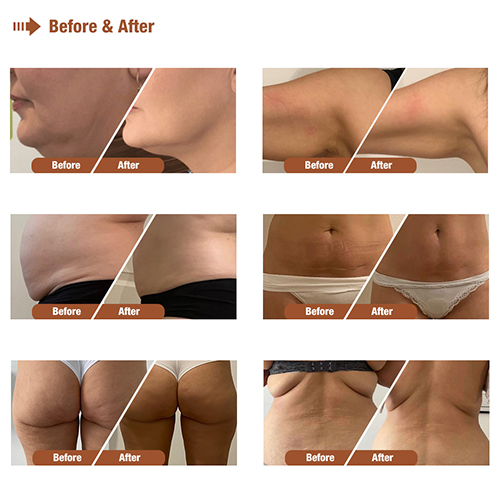
Results need time and consistency. Most clients see visible change after 3 to 4 sessions, with full results after 6 to 10, and the outcome depends on diet and activity. A client who treats once and keeps eating at a surplus will not see lasting change.
Skin laxity is only partially addressed. The vacuum and RF handles help tighten skin, but clients with significant loose skin after major weight loss need a different treatment plan, often surgical.
None of this means cavitation is weak. It means it is a body contouring tool with a defined job, and it does that job well when you set expectations honestly.
10. Who Should Not Use Cavitation
Cavitation is non-invasive, but it is not for everyone. Professional protocols require screening before treatment.
Clients with diabetes, autoimmune conditions or a recent surgery in the treatment area should get medical clearance first. If you are unsure about a client’s history, refer them to a doctor before the first session.
This is not optional paperwork. Screening clients properly protects them, protects your license and keeps your liability low. Machines without proper contraindication guidance are a red flag in a supplier, because it tells you they do not think about how their equipment is actually used.
11. FAQ
Q: How much does an ultrasonic cavitation machine cost?
A: $800 to $4,500 for professional salon machines, depending on functions. Single-function units are at the low end, 5-in-1 systems with RF, vacuum and LED at the high end. Clinical brand devices can exceed $10,000.
Q: Is a cheap cavitation machine worth it?
A: Only if it runs at 40KHz, has a stable transducer and comes with certification documents. A $900 machine with weak output costs more in the long run than a reliable $3,000 unit that lasts for years.
Q: How many sessions does cavitation need for visible results?
A: Most clients see change after 3 to 4 sessions and full results after 6 to 10, combined with diet and activity. One session will not transform anything.
Q: Does cavitation really burn fat?
A: It breaks down fat cell membranes through ultrasound pressure waves, and the body then processes and eliminates the released fat. It is fat reduction, not burning, and it works on subcutaneous fat only.
Q: Can I use a cavitation machine at home?
A: Consumer handheld devices exist but run at lower power, so results are slower and weaker. Professional machines with 40KHz output and multiple handles are built for clinics, not home use.
Q: What is the difference between 40KHz and other frequencies?
A: 40KHz is the professional standard for body cavitation. Lower frequencies produce a weaker effect, and higher frequencies are typically used for other applications such as facial treatments.
12. Conclusion
An ultrasonic cavitation machine is the most affordable entry point into body contouring, and for most salons the professional 5-in-1 tier is the right buy. Target $2,500 to $4,500, demand 40KHz output and real certification documents, and buy direct from a manufacturer so you control the price and the support.
If you want a specific quote for a 5-in-1 cavitation machine, our team will send you the landed cost and the certification files: contact Winkonlaser.
Or browse our full range of body slimming and contouring machines to compare options before you decide.
The right machine pays for itself in weeks. The wrong one costs you clients. Choose with the checklist above and you will know which one you are buying.