


What Should Clinics Monitor After CO2 Laser Resurfacing?
Quick answer: fractional CO2 laser side effects range from expected redness, swelling, and peeling to less common but serious problems such as infection, burns, scarring, and persistent pigment change. The clinic should separate routine recovery from warning signs and document every patient’s course.
I have seen clinics focus on the resurfacing result while giving patients a vague recovery instruction such as “keep it moist.” The treatment may look controlled in the room, but the first week at home determines whether the skin barrier heals smoothly or develops avoidable irritation.
Fractional CO2 laser creates controlled zones of injury in the skin. That is why it can improve texture, scars, and photoaging, and also why it produces visible downtime. A clinic needs a protocol that covers preparation, immediate care, wound management, infection surveillance, and follow-up.
This guide is for clinic owners, physicians, nurses, and trained operators using professional CO2 systems. It does not replace medical supervision, local regulations, or the device manual.
Which reactions are expected after fractional CO2 laser treatment?
Short answer: redness, warmth, swelling, tightness, mild oozing, and visible microcrusts or peeling are common during the early healing phase. The intensity should match the treatment depth and the patient’s skin response.
A fractional CO2 platform commonly uses a wavelength around 10,600nm. The fractional pattern leaves untreated skin between microscopic treatment columns, which supports healing, but it does not make the procedure risk free.
Redness can last longer than patients expect. Mild swelling is common in the first few days. As healing progresses, the skin may look dry, bronzed, or flaky. Patients should not pull the peeling skin or use aggressive exfoliation.
The clinic should describe the normal range for the planned depth and area. A patient treated around the eyes, mouth, or neck may have different swelling and sensitivity from a patient treated on a smaller area of the cheek.
What should the clinic do before the patient leaves?
Short answer: inspect the treated area, confirm a written recovery plan, review warning signs, and make it easy for the patient to send a follow-up photo.
I have handled clinic workflows where the physician gave precise instructions and the patient then received a generic printed sheet that contradicted them. The handoff between clinician and front desk needs one standard.
Use a discharge process:
-
Record the area and device settings.
-
Inspect the immediate response.
-
Explain expected redness, swelling, and peeling.
-
Give written wound care instructions.
-
Explain what products are allowed.
-
Review infection and burn warning signs.
-
Provide a contact route for photos.
-
Schedule a follow-up window.
-
Confirm when the patient can return to work and exercise.
-
Record which team member provided the instructions.
The patient should know what is normal, what is uncertain, and when to call. A brief photo review can identify a problem early, but it should not replace an in-person visit when the clinic’s protocol requires one.
How should the treatment area be managed during early recovery?
Short answer: support the skin barrier with a simple clinic-approved routine, avoid trauma and strong products, manage heat and friction, and keep the area clean.
Cleansing
Use a gentle method approved by the clinic. Avoid scrubbing, washcloths, exfoliating acids, retinoids, and fragrance-heavy products until the skin has recovered.
Moisturizing
The clinic may recommend a bland ointment, cream, or dressing based on the treatment depth and local practice. Patients should use a thin, consistent layer rather than mixing several products.
Heat and exercise
Hot showers, saunas, steam, intense exercise, and friction can increase redness and swelling. The exact restriction period should match the depth and area treated.
Makeup and skin care
Do not allow makeup on open or crusted skin. The clinic should state when makeup can resume and which products are appropriate. Strong anti-aging ingredients should wait until the clinician confirms the barrier has recovered.
Sleep and clothing
Loose clothing and clean bedding reduce friction. A patient treated on the face may need to avoid sleeping directly on the area. A patient treated on the body should avoid tight straps or waistbands over the treated zone.
Which side effects need urgent review?
Short answer: fever, spreading redness, pus, severe pain, worsening swelling, blistering, open wounds, or a dark or necrotic-looking area need prompt clinical assessment.
| Observation | Typical meaning | Clinic action |
|---|---|---|
| Mild redness and warmth | Expected early response | Review care and cooling |
| Swelling for a few days | Common inflammatory response | Raise the area when appropriate and monitor |
| Dryness and flaking | Expected healing stage | Protect the barrier |
| Small crusts | Common superficial healing | Do not pick |
| Increasing pain | Not routine | Arrange clinical review |
| Spreading redness or heat | Possible infection or inflammation | Escalate promptly |
| Pus or foul discharge | Possible infection | Direct patient to medical care |
| Fever or feeling unwell | Needs medical assessment | Do not manage with chat alone |
| Worsening blistering | Possible burn or injury | Clinical review and incident record |
| Raised or spreading scar change | Needs assessment | Review technique and healing history |
The table is a triage tool. It does not tell a non-clinician to diagnose an infection.
How should infection and acne flare-ups be handled?
Short answer: suspected infection needs clinical assessment. An acne flare-up should be documented and managed without blaming the patient or adding random products.
Fractional CO2 laser creates a temporary wound surface. The patient should avoid touching the area, shared towels, dirty pillows, swimming, and other sources of contamination. The clinic should provide clear wound care and not assume the patient understands basic barrier protection.

Acne-prone patients can experience a flare after treatment, especially if occlusive products are used heavily. The clinic should review the routine and use a lighter approach when appropriate. A pustular eruption can also be a sign of infection, so the distinction needs clinical judgment.
If a patient reports increasing redness, pain, swelling, or discharge, collect the timeline, treatment settings, products used, and photos. Arrange review by the appropriate clinician and follow the clinic’s adverse event process.
How should pigment change and scarring risk be monitored?
Short answer: compare the treated area with surrounding skin at every follow-up. Persistent dark or light patches, texture change, and raised scars should be assessed before another treatment.
Post-inflammatory hyperpigmentation is a recognized risk after laser resurfacing, especially in patients with darker skin or recent sun exposure. Hypopigmentation can also occur. The clinic should not promise that every pigment change will resolve quickly.
Scarring risk rises with excessive depth, overlapping treatment, poor cooling, infection, delayed healing, or a patient history of keloids or poor healing. The operator should be able to explain why a specific setting was chosen and how the treatment pattern was controlled.
For patients with Fitzpatrick IV to VI skin, conservative planning and a clear pigment follow-up are particularly important. The clinic should not treat every patient as a candidate for an aggressive resurfacing protocol.
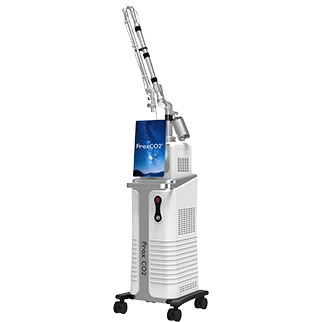
The FraxCO2 FC100 platform is a professional CO2 fractional system, but the device must be paired with proper training, skin assessment, and conservative treatment boundaries.
When is the next treatment appropriate?
Short answer: after the skin has healed, pigment and texture have been reviewed, and the treatment plan has been reassessed. A calendar interval is not enough.
The next session should be planned after the clinic confirms the skin barrier has recovered, erythema is settling, and there is no active infection or unresolved pigment change. The interval also depends on the area, depth, patient goals, and the previous response.
Patients often ask whether a stronger treatment will produce faster results. The better question is whether the current treatment produced the expected response without compromising the skin barrier. More aggressive treatment is not automatically better.
Before planning another session, review the record, compare photographs when available, and document why the next setting is appropriate.
How do device settings and technique affect side effects?
Short answer: the wavelength is only one part of the treatment. The fractional pattern, density, depth, energy, passes, cooling, and operator technique influence the injury pattern and recovery.
CO2 laser systems vary in how they control pulse delivery, scan pattern, spot size, and depth. A clinic needs repeatable settings and a treatment record, not just a power number.
Overlapping passes can concentrate injury. Inconsistent hand speed can create uneven depth. Poor cooling or a damaged handpiece can change the skin response. The operator should stop and review the protocol when the clinical endpoint does not match the expected pattern.
For maintenance planning, see the fractional CO2 laser maintenance and operating cost guide. Service access and handpiece condition are part of patient safety, not only cost control.
For a treatment comparison, review CO2 laser versus RF microneedling. The two technologies create different injury patterns and downtime, so the clinic should match the device to the service model rather than treating one as a universal replacement.
What should the clinic document?
Short answer: document the skin assessment, device settings, treatment area, immediate response, aftercare advice, follow-up, and any adverse event.
At minimum, record:
-
Fitzpatrick skin type and relevant history
-
Treatment area and indication
-
Device and handpiece
-
Wavelength and fractional settings
-
Energy, density, depth, passes, and cooling
-
Immediate clinical endpoint
-
Products and dressings used
-
Written instructions provided
-
Follow-up date and contact channel
-
Photos when consent and policy allow
-
Any reported symptom and clinical response
-
Whether the next treatment was approved or delayed
If multiple clinicians treat patients, the record should use the same fields. A free-text note that says “usual settings” does not support review.
How can better follow-up improve outcomes and retention?
Short answer: structured follow-up catches problems earlier, gives patients confidence, and creates a better basis for the next treatment.
A patient who understands the expected healing stages is less likely to panic when the skin begins to peel. A patient who knows which symptoms need urgent review is more likely to seek help early.
The clinic can use a simple follow-up message at the point when symptoms are most likely to be reported. The response should be documented, not left in a personal phone.
Aftercare also supports realistic expectations. CO2 resurfacing can improve texture and scars, but it does not guarantee perfect skin or a permanent result. Patients should understand that maintenance, sun protection, and future treatments may be part of the plan.
Contraindications and preparation
Contraindications vary by device and local medical policy. Active infection, an open wound in the treatment area, recent sun exposure, pregnancy, photosensitizing medication, active dermatitis, poor healing, keloid history, or unrealistic expectations may require delay or clinical review.
The clinic should check the patient’s medication history and recent skincare. Pretreatment products such as retinoids or acids may need to be stopped according to the medical protocol. A test spot can be useful when the risk of pigment change is significant.
Winkonlaser was founded in 2012 and exports equipment to 120+ countries. That experience should support device training, service, and a clear understanding of what the system can and cannot do. No laser is safe merely because it has a fractional handpiece.
FAQ
Q: How long does redness last after fractional CO2 laser?
A: Redness varies with treatment depth, area, skin type, and aftercare. Some patients settle quickly, while others remain pink for weeks. A persistent or worsening reaction should be reviewed.
Q: Is peeling normal after CO2 laser?
A: Dryness and flaking can be part of healing. Patients should not pull or exfoliate the skin, and the clinic should confirm when normal cleansing can resume.
Q: Can patients exercise after CO2 laser?
A: Intense exercise can increase heat, swelling, friction, and sweating. The clinic should give guidance based on the area and depth treated.
Q: What are the signs of infection?
A: Spreading redness, increasing pain, warmth, pus, fever, or feeling unwell need prompt medical review. The patient should contact the clinic or seek urgent care when appropriate.
Q: Can CO2 laser cause hyperpigmentation?
A: Yes, post-inflammatory hyperpigmentation is a recognized risk. Darker skin, recent sun exposure, inflammation, and aggressive treatment can increase the risk.
Q: When can makeup be used?
A: Makeup should not be applied to open or crusted skin. The clinic should specify when it is safe based on the actual healing response.
Q: How many CO2 laser sessions are needed?
A: The number depends on the indication, depth, area, and response. A treatment plan should be reassessed after each session rather than promised as a fixed number for every patient.
Q: Who should not have CO2 laser treatment?
A: Patients with active infection, open skin, recent sun exposure, pregnancy, photosensitizing medication, significant healing problems, or a keloid history may need review. The device manual and medical protocol determine final contraindications.
A practical safety standard
Do not hand patients a long recovery sheet and assume the work is finished. Use a written protocol, review the early response, and document complications with the clinical lead.
If you need help matching a professional CO2 platform to your clinic’s treatment menu, read the fractional CO2 laser quote checklist and then contact Winkonlaser to discuss device configuration, training, service, and aftercare support.