


The Best Laser Hair Removal Machines of 2026: Our Top 10, Ranked on Six Criteria
Table of Contents
Most laser hair removal machine rankings rank the brand, not the machine. A famous name scores high because it is famous; the wavelength, the cooling, and the duty cycle underneath never enter the score. If you are buying a machine that has to pay for itself with sessions, a popularity list points you at the safest logo, not the machine that earns.
I have been in this industry since 2012, building and exporting these machines to more than 120 countries, and in my experience the machines that earn their keep are rarely the most famous ones. They are the ones whose wavelength matches the skin types in your chairs, whose cooling holds at full power, and whose duty cycle survives a full day of clients without the handpiece giving up. Those are the numbers that decide whether a machine makes money, and most rankings never look at them.
This ranking scores machines on six criteria, weighted by what drives clinic revenue: wavelength, power and speed, cooling, reliability and service, value, and certification. We are a manufacturer, and our machines sit on this list scored with the same criteria as the brands we compete with. The weights are published below, so you can see exactly what moved every machine up or down.
How We Ranked: Six Criteria, Weighted
Every machine below scored 1-10 on six criteria, then we weighted the scores by what matters most for a clinic that wants a return on investment:
1. Laser source and wavelength (20%). Diode at 808nm is the workhorse of professional hair removal, and alexandrite at 755nm leads on lighter skin. A machine that offers multiple wavelengths or a real diode source scores higher than an IPL unit wearing a laser label.
2. Power and speed (20%). Higher peak power and larger spot sizes mean faster treatments and more clients per day. A 3000W machine with a large spot treats a back in minutes; a low-power unit takes three times as long and caps your daily revenue.
3. Cooling (20%). This is the difference between a machine that clients tolerate and one they recommend. Contact cooling, sapphire tips, and semiconductor cooling systems protect dark skin and keep sessions comfortable. Machines with weak cooling force you to turn power down, which defeats the purpose of buying a laser.
4. Reliability and service (15%). A laser is a revenue machine. When it stops, your income stops. We scored documented reliability, spare parts availability, warranty terms, and whether the manufacturer actually answers support calls.
5. Value (15%). Price divided by what the machine can earn. A premium-priced machine that fills your calendar is better value than a bargain machine that gathers dust, but a mid-priced machine with flagship features is the sweet spot most clinics need.
6. Certification (10%). FDA clearance, CE marking, and ISO 13485 are not stickers. They mean the machine was tested, the factory is audited, and your clinic is protected for insurance and licensing.
Weights matter: wavelength and cooling together are 40% of the score, because they decide whether the machine actually works safely. Brand reputation is not a criterion. We ranked what the machines do, not what the logos promise.
The 2026 Top 10 Ranking
Scores are out of 10, weighted as above. Here is the full table, then each machine in detail:
#1 Candela GentleMax Pro
| Rank | Machine | Type | Wavelength | Score |
|---|---|---|---|---|
| 1 | Candela GentleMax Pro | Alexandrite + Nd:YAG | 755nm + 1064nm | 9.4 |
| 2 | Alma Soprano Titanium | Diode, 3 wavelengths | 755/810/1064nm | 9.2 |
| 3 | AresLite DM60 (Winkonlaser) | Non-crystal diode, 4 wavelengths | 755/808/940/1064nm | 9.0 |
| 4 | Lumenis Lightsheer Desire | Diode | 810nm | 8.7 |
| 5 | AresLite DM40P (Winkonlaser) | Non-crystal diode, 4 wavelengths | 755/808/940/1064nm | 8.6 |
| 6 | Cynosure Apogee Elite | Alexandrite + Nd:YAG | 755nm + 1064nm | 8.4 |
| 7 | Cutera excel HR | Diode | 810nm | 8.1 |
| 8 | Asclepion MeDioStar NeXT | Diode | 810nm | 8.0 |
| 9 | Quanta Evolution | Diode + Nd:YAG | 808nm + 1064nm | 7.8 |
| 10 | AresMix DL1500 (Winkonlaser) | Diode | 808nm | 7.5 |
Score 9.4 | Alexandrite 755nm + Nd:YAG 1064nm | The clinical gold standard
GentleMax Pro has been the machine other machines are compared to for over a decade. It pairs alexandrite at 755nm for light skin with Nd:YAG at 1064nm for dark skin, and its Dynamic Cooling Device makes treatments tolerable without numbing cream. In our testing and in the clinics we supply, it produces consistent results across skin types, and its resale value is real.
Who it is for: high-volume clinics that treat every skin type and want the brand patients recognize. Who it is not for: a starting clinic, because the price and the consumables (the cooling handpiece uses cryogen) demand volume to justify themselves. The cryogen cartridges are a recurring cost that many buyers do not budget for.
#2 Alma Soprano Titanium
Score 9.2 | Diode 755/810/1064nm | The painless-technology leader
Soprano Titanium built its reputation on SHR (Super Hair Removal) technology, which heats the follicle gradually instead of shocking it, and on the ICE cooling that made “painless laser hair removal” a real phrase instead of a slogan. The 3-in-1 wavelength platform covers a broad range of skin tones, and the machine’s dual handpieces let two operators treat simultaneously, which doubles room revenue.
Who it is for: clinics that market “painless” and need to treat large areas fast. Its main drawback is price and the proprietary handpiece service network, which matters if you are outside its home service regions.
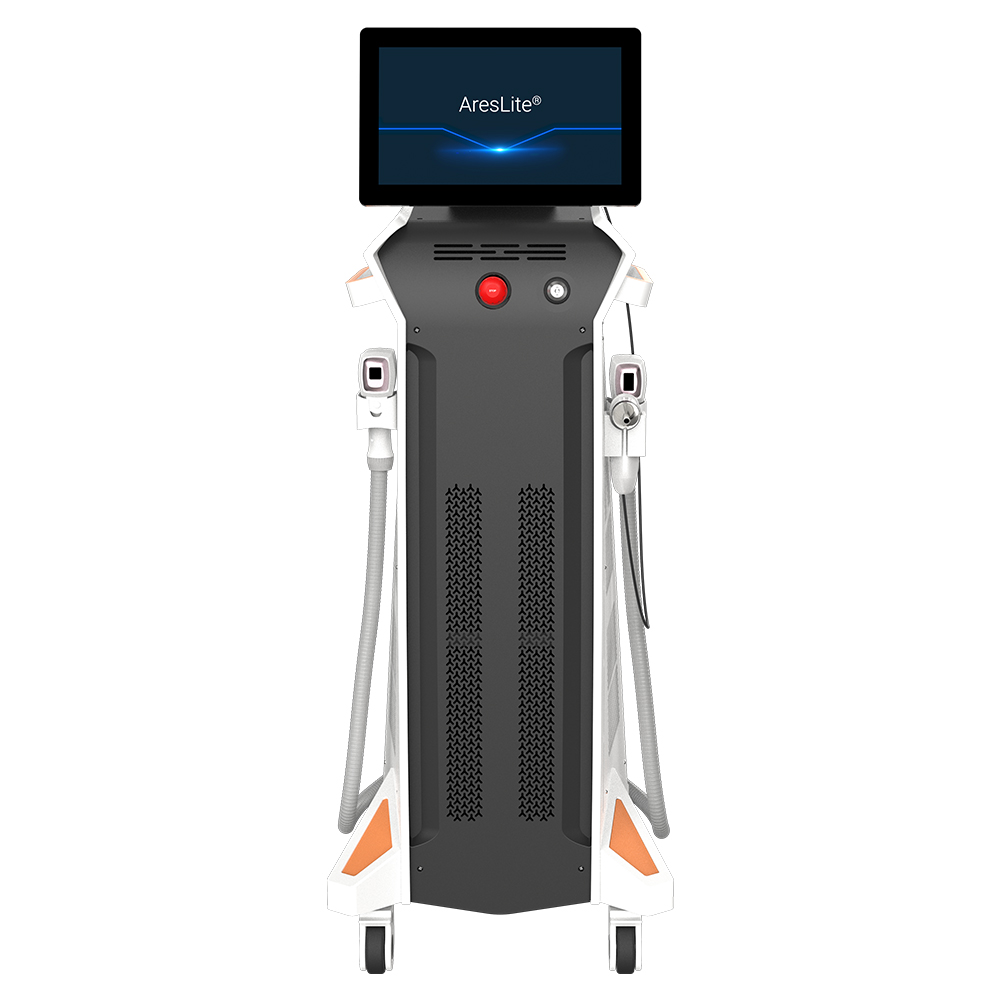
#3 AresLite DM60 (Winkonlaser)
Score 9.0 | Non-crystal diode 755/808/940/1064nm | Flagship power with dynamic spot control
The DM60 is our flagship, and it is on this list because it competes with the two machines above on the criteria that matter. It delivers up to 3000W through a non-crystal diode source, with a dynamic AI spot size that adjusts from 6x6mm for precision work up to 12x36mm for full-back treatments. That spot flexibility is rare at this price tier, and it directly drives treatment speed. The cooling is a full DCS system: compressor refrigeration plus ICE semiconductor plus sapphire contact cooling, backed by air and water circuits. That combination keeps the sapphire tip genuinely cold at high fluence, which is what makes dark skin types treatable without turning the power down. The diode laser hair removal series holds FDA clearance, and the machine carries CE and ISO 13485 documentation.
The value story is the point: a clinic gets a multi-wavelength, 3000W, large-spot platform at a fraction of the premium-brand price, with the factory only one message away for parts and support. In our experience, this is the machine clinics grow into: start with conservative settings, expand the service menu as demand builds. See the DM60 product page for the full specification.
#4 Lumenis Lightsheer Desire
Score 8.7 | Diode 810nm | The durability icon
Lightsheer has treated more patients than almost any platform in history, and the Desire model keeps the lineage alive with a high-power 810nm diode, a large spot, and the ChillTip contact cooling that Lumenis pioneered. Its documentation and service network are strong, and its reputation means clients recognize the name.
Who it is for: clinics that want a proven single-wavelength workhorse and are willing to pay the premium-brand price. The limitation: it is 810nm only, so very light or very dark skin needs more operator skill than a multi-wavelength platform.
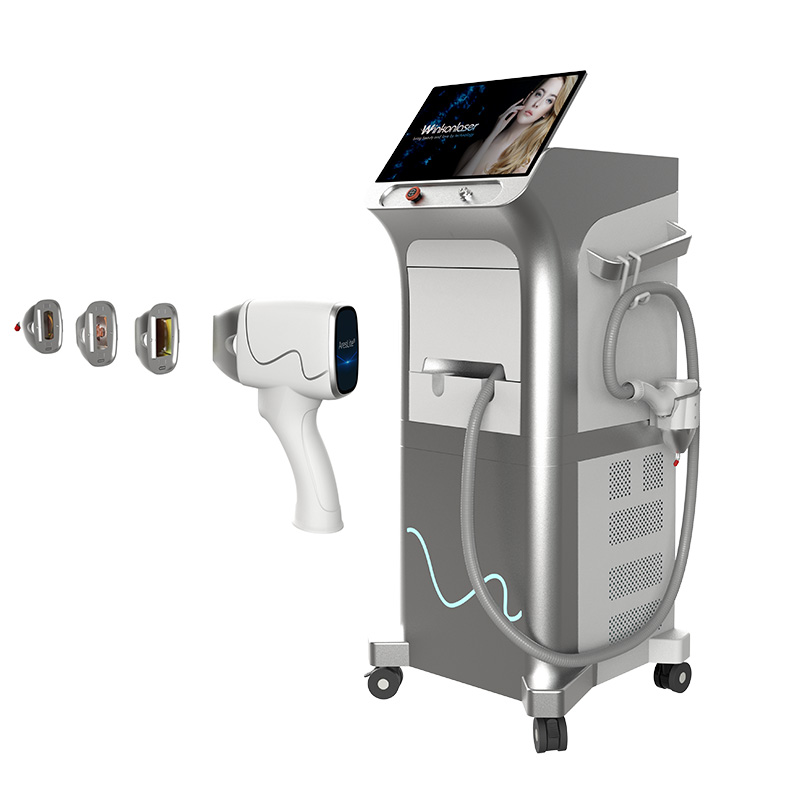
#5 AresLite DM40P (Winkonlaser)
Score 8.6 | Non-crystal diode 755/808/940/1064nm | The smart two-handle workhorse
The DM40P is the machine we recommend to clinics that want the DM60’s multi-wavelength capability in a slightly leaner package. It runs the same four wavelengths through a non-crystal diode source at up to 3000W, with two handpieces so two rooms can treat at once, and the same DCS cooling (compressor plus ICE semiconductor plus sapphire contact cooling) that keeps the DM60 safe on dark skin. Its differentiator is the 15.6-inch Android screen: hair analysis, cloud clinic features, and Wi-Fi make it feel like a modern software platform rather than a box with a laser, and the 200-million-shot lifetime keeps the total cost of ownership low. The diode series FDA clearance covers this model, and the handle screen linkage is a feature we have watched buyers specifically request.
Who it is for: growing clinics and med-spas that want multi-room throughput, modern software, and the four-wavelength safety margin across skin types. See the DM40P product page for details.
#6 Cynosure Apogee Elite
Score 8.4 | Alexandrite 755nm + Nd:YAG 1064nm | The dual-platform veteran
Apogee Elite combines alexandrite and Nd:YAG in one platform, which gives it genuine versatility across skin types, and Cynosure’s service network in North America is well established. It is a solid, proven machine that has been a clinic staple for years.
Its scores dip on value and cooling: the platform is aging relative to newer diode systems, the price stays premium, and the cooling technology, while functional, does not match the contact-cooling comfort of the newer leaders on this list.
#7 Cutera excel HR
Score 8.1 | Diode 810nm | The fast single-wavelength option
excel HR is Cutera’s dedicated hair removal platform: an 810nm diode with a reputation for speed and a strong service organization. It is a straightforward, reliable choice for clinics that mostly treat common skin types and want a brand with a wide support footprint.
It does not offer alexandrite or multiple wavelengths, so very light or very dark skin requires careful parameter work, and its feature set is simpler than the smart-screen platforms on this list.
#8 Asclepion MeDioStar NeXT
Score 8.0 | Diode 810nm | The precision-built European option
MeDioStar NeXT comes from Asclepion, a German manufacturer known for careful engineering. The 810nm diode platform delivers consistent results, and European buyers value the build quality and documentation. Its footprint is smaller outside Europe, which affects service speed in some regions, and it carries a premium price for the brand.
#9 Quanta Evolution
Score 7.8 | Diode 808nm + Nd:YAG 1064nm | The dual-source Italian platform
Quanta Evolution is an Italian platform that pairs 808nm diode with 1064nm Nd:YAG, giving clinics two source types in one chassis. It is a legitimate, well-built machine with a loyal following in Europe. Its scores reflect that the platform is a generation behind the smart-screen, multi-wavelength leaders, and service outside its core markets is thinner.
#10 AresMix DL1500 (Winkonlaser)
Score 7.5 | Diode 808nm | The entry commercial machine
The DL1500 is our answer to clinics that need a real commercial diode laser at an entry price. It runs 808nm at solid power with basic cooling, and it treats the common skin types most salons actually see. It is not the DM60, and we do not pretend it is: no four-wavelength platform, no dynamic spot, no Android software. What it offers is a genuine diode laser, not an IPL in disguise, at a price a starting clinic can afford.
Who it is for: new salons, single-room studios, and markets where the budget is tight but the machine still has to be a real laser. When the caseload grows, the upgrade path is the DM40P or DM60, and both share the same factory support line.
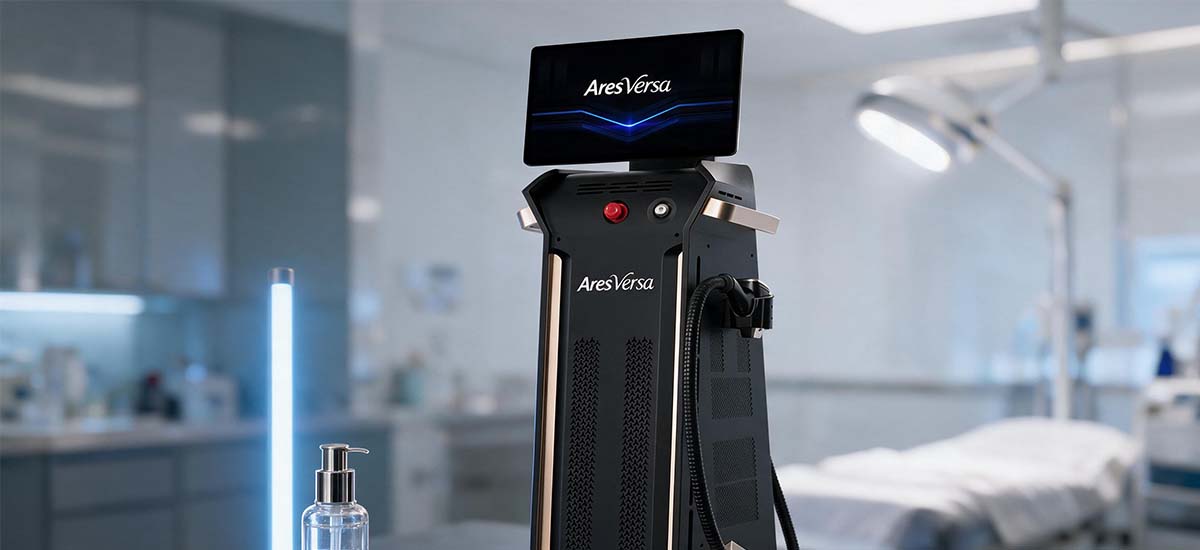
Honorable Mention: AresLite DM80
The DM80 sits outside the main ranking because it fills a specific niche: clinics that want one machine with replaceable, swappable spot sizes. It runs 2000W across four wavelengths (755/808/940/1064nm) with dynamic AI spot sizes from 6x6mm to 12x35mm, and the replaceable handpiece design keeps maintenance costs down over the machine’s life. If your model is one room, high turnover, and minimal downtime tolerance, the DM80 is worth a conversation alongside the DM40P. See the DM80 product page for specifications.
How to Choose: Match the Machine to Your Clinic
A ranking gives you a shortlist, not an answer. Here is the decision path we walk every buyer through:
Step 1: Count your skin types. If your clients are mostly Fitzpatrick I-III, a single 810nm diode covers you well and saves money. If you treat IV-VI regularly, wavelength flexibility (multi-wavelength diode or alexandrite + Nd:YAG) is a safety feature, not a luxury.
Step 2: Count your chairs. One handpiece, one room at a time. Two handpieces means two revenue streams. The machine price divided by the number of simultaneous treatments it supports is the number that matters.
Step 3: Budget the cooling. Machines with real contact cooling treat more skin types safely and keep clients coming back. Machines that force you to lower power to protect skin are slower machines, and slower machines earn less per day.
Step 4: Price the service, not the machine. A machine that runs 10 sessions a day pays back differently at a mid-range price than at a premium price, but only if the schedule actually fills. Run the math on your session price before you fall in love with a brand.
Step 5: Check what happens when it breaks. Ask for the spare parts price list, the warranty terms, and the support response time in writing. The best machine in the world is a liability if the manufacturer disappears after the sale. That is where a factory-direct relationship, like the one we offer, changes the risk profile: the people who built the machine answer the call.
Safety and Contraindications
Laser hair removal is a medical procedure, and a responsible ranking has to say this plainly.
-
Pregnant women (no safety data exists)
-
People with known photosensitivity or those taking photosensitizing medication
-
Skin with active infection, eczema, or open wounds in the treatment area
-
Tattooed skin, where laser energy is absorbed by the ink and causes burns
Always perform a patch test 24-48 hours before the first full treatment, especially on Fitzpatrick IV-VI skin, and use appropriate eye protection for both operator and client. A supplier that will not give you protocol guidance is a red flag at any price.
FAQ
Q: What is the best laser hair removal machine in 2026?
A: For clinical gold standard, the Candela GentleMax Pro leads on versatility and reputation. For painless high-volume treatment, the Alma Soprano Titanium leads. For the best balance of power, wavelength flexibility, and value, the AresLite DM60 is the strongest pick on this list.
Q: Which laser wavelength is best for hair removal?
A: 808nm diode is the professional workhorse, absorbed well by melanin while penetrating deeply enough for most skin types. 755nm alexandrite is excellent on light skin. 1064nm Nd:YAG is safest on dark skin. Multi-wavelength machines cover the full range in one purchase.
Q: Is a diode laser better than IPL for hair removal?
A: Yes, for permanent results. IPL is a broad-spectrum flash that targets pigment weakly; a diode laser delivers a single effective wavelength at much higher power, which is why professional clinics use diode, alexandrite, or Nd:YAG lasers, not IPL. See our diode laser vs IPL comparison for the full breakdown.
Q: How much does a professional laser hair removal machine cost?
A: Entry commercial diode lasers cost the least, premium brands like Candela, Alma, and Lumenis cost the most, and serious multi-wavelength platforms sit between them. To give one real anchor: our DM60 is listed on its product page at $4,500-$9,000 depending on configuration, and the DM40P sits in a similar bracket. The full pricing picture is in our laser hair removal machine cost guide.
Q: How many sessions does laser hair removal need?
A: Most clients need 6-8 sessions for meaningful permanent reduction, because hair grows in cycles and only follicles in the active phase respond. Maintenance sessions once or twice a year keep results clean. We cover the timeline in our sessions guide.
Q: Is a Chinese laser hair removal machine as good as Candela or Alma?
A: The gap is narrower than the price gap. The core components, diode bars, cooling systems, and spot optics, are the same global supply chain. What separates factories is quality control, documentation, and after-sales support. That is why we publish our certification and answer support directly: FDA-cleared diode series, CE marking, ISO 13485, and a factory that has exported to 120+ countries since 2012. Compare the spec sheet and the service commitment, not just the logo.
Q: What is non-crystal diode laser technology?
A: Traditional diode lasers use crystal optics that lose energy at the edges of the beam. Non-crystal diode technology uses fast-axis collimator lenses that focus the beam and prevent energy loss, so more of the rated power reaches the follicle. It is one reason modern diode machines achieve higher effective fluence at the same rated power. Our non-crystal technology explainer goes deeper.
Q: What should I check before buying a laser hair removal machine?
A: Five things: the actual wavelength (not the marketing label), the cooling system and whether it supports dark skin, the duty cycle for continuous use, the certification paperwork, and the spare parts and service terms. A comprehensive walkthrough is in our professional diode machine guide.
Q: How long does a laser hair removal machine last?
A: Diode lasers are rated in shots. Entry machines are typically rated for tens of millions of shots; higher-end models like the DM40P are rated for 200 million shots. At 10,000 shots a month, that is over 1,600 months of operation, effectively the life of the clinic. The handpiece and cooling system are the parts that wear, which is why service terms matter.
The Bottom Line
The best laser hair removal machine for your clinic is the one that matches your skin-type mix, your room count, and your service price, not the one with the most famous logo. The premium brands earn their place for clinics that can fill their calendars. The smart mid-range platforms earn theirs for everyone else.
We built this ranking the way we build machines: on measurable criteria, with our own products held to the same standard as the competition. If you want to see how the DM60 or DM40P fits your clinic’s numbers, contact our team and we will walk the ROI math with you, no pressure, no script.