


Fractional CO2 Laser Cost: 2026 Price Guide
Table of Contents
Why CO2 Laser Prices Look Insane at First
A fractional CO2 laser is a 10,600nm medical laser that fires a grid of microscopic columns into the skin. Those columns vaporize a tiny fraction of tissue and leave healthy skin between them, which is how the skin heals fast. That is the “fractional” part.
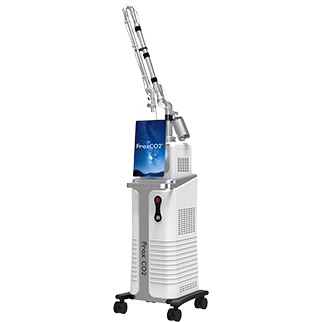
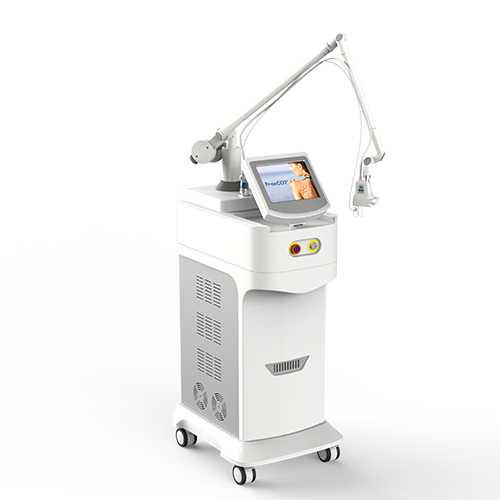
The machine itself is simpler than people think: a laser tube, a power supply, a delivery arm, a scanner, and a cooling system. Five main parts.
The price difference comes down to which versions of those five parts a factory decided to use.
I have watched a Guangzhou trading company sell a “100W CO2 medical laser” for $3,000 by stuffing a $200 industrial cutting tube into a plastic shell. It cuts metal in factories. It will not resurface skin safely. Both machines say “CO2 laser” on the label.
So when you see $3,000 next to $15,000, you are not looking at markup. You are looking at two different machines wearing the same name.

The Real Price Ranges in 2026
I would break the market into three bands, and I have seen clinics buy in every one of them.
Under $5,000: you are buying a problem. This is the industrial-tube territory. The laser source was built to cut acrylic, not skin. Energy output drifts, the beam profile is uneven, and the tube dies in months. You will spend more on returns and angry clients than you saved. I have watched this happen more times than I can count.
$5,000 to $15,000: the real range. This is where a medical-grade CO2 tube, a proper articulated arm, and a working cooling system actually live. Most established clinics and med spas land here, and it is the band I would point buyers toward if they want the machine to still work two years from now.
A single-session fee for a fractional CO2 treatment can run from $50 for a light pass up to $1,500 for deep resurfacing. In some markets, like Russia, a session prices between 15,000 and 50,000 rubles with a profit margin up to 70%. That math is why clinics that bought the right machine pay it off in months, not years.
What Drives the Price Up (or Down)
Five things. When a quote looks cheap, one of these is being cut.
The laser tube. A medical CO2 tube costs far more than an industrial one. The tube is the heart of the machine, and it is the part that determines whether your beam is stable enough to treat skin safely. This is the biggest single line item.
The articulated arm. The arm that carries the beam from the tube to the skin matters more than it looks. A domestic Chinese arm runs around $300. A Korean arm, after import tax and shipping, lands near $1,500. The arm affects beam alignment, which affects treatment consistency. When a quote undercuts the market, the arm is usually the first thing downgraded.
The cooling system. CO2 tubes run hot. A proper cooling system uses copper and pumps, around $400 in parts for a solid build. Skip it, and your tube dies early.
Spot density and scanning modes. Cheaper machines have fewer scan modes and coarser fractional patterns. A good fractional platform lets you switch between fractional, ablative, and hybrid modes. More modes, more engineering, more money.
Certification and support. An FDA-cleared or CE-marked machine with real after-sales support costs more than a grey-market box with no warranty. You are paying for the 72-hour burn-in test and a warehouse of spare parts, not a PDF certificate.
I have had a client tell me flat out that my price was $2,000 higher than another Beijing factory. Fair. The difference was the Korean arm, the cooling system, and the fact that I actually pay engineers to burn-test every machine before it ships. The cheap machine usually costs more by month six.
Hidden Costs Nobody Quotes Up Front
The sticker price is not what the machine costs you.
The tube is a consumable that wears out. By the time a quality tube dies, a busy clinic will have made around $500,000 off it, so a few thousand for a replacement is not the crisis people imagine. But you should know it is coming.
Then there is training. A CO2 laser in untrained hands is a liability, and a $2,000 motherboard is a real repair bill if an operator pushes the machine wrong. Budget for training the same way you budget for the machine.
Spare parts matter more than most buyers realize. A factory that keeps parts in a warehouse near you means downtime measured in days, not weeks. That is part of what you pay for.
How Much Should You Actually Spend?
I would answer with a question: what is the machine for?
If you are opening a salon that will do a handful of resurfacing treatments a month, you do not need the $15,000 top-end build. A solid machine in the $8,000 to $12,000 range will pay for itself and then some.
If you are a dermatology clinic running acne scar revision and deep resurfacing daily, buy the better tube and the better arm. Downtime there is expensive. A $1,000-plus acne scar case can cover your premium in a few weeks.
The mistake I see most often is not overspending or underspending. It is buying on sticker price alone, without asking which tube, which arm, and which cooling system are inside. Those three answers tell you more than the number on the invoice.
What I Would Avoid
Do not buy the cheapest quote and expect it to behave like the expensive one. It will not.
Do not trust a supplier who will not tell you the tube type, the arm source, or the cooling design. If they cannot answer those three questions, they are selling you a label, not a machine.
And do not assume more watts means better. A 100W industrial tube is not twice as good as a 50W medical tube. It is a different tool built for a different job, and it is not safe on skin.
The honest limitation is this: a CO2 laser does not fix the wrong diagnosis. It removes scar tissue, wrinkles, and pigmentation by resurfacing skin. It does not treat deep fat, and it will not make a poor candidate a good one. Buy the machine for what it does, not what the brochure promises.
Final Word
The price of a fractional CO2 laser is the sum of five parts, and every cheap quote cuts one of them. Know the tube, the arm, and the cooling system, and the price starts to make sense.
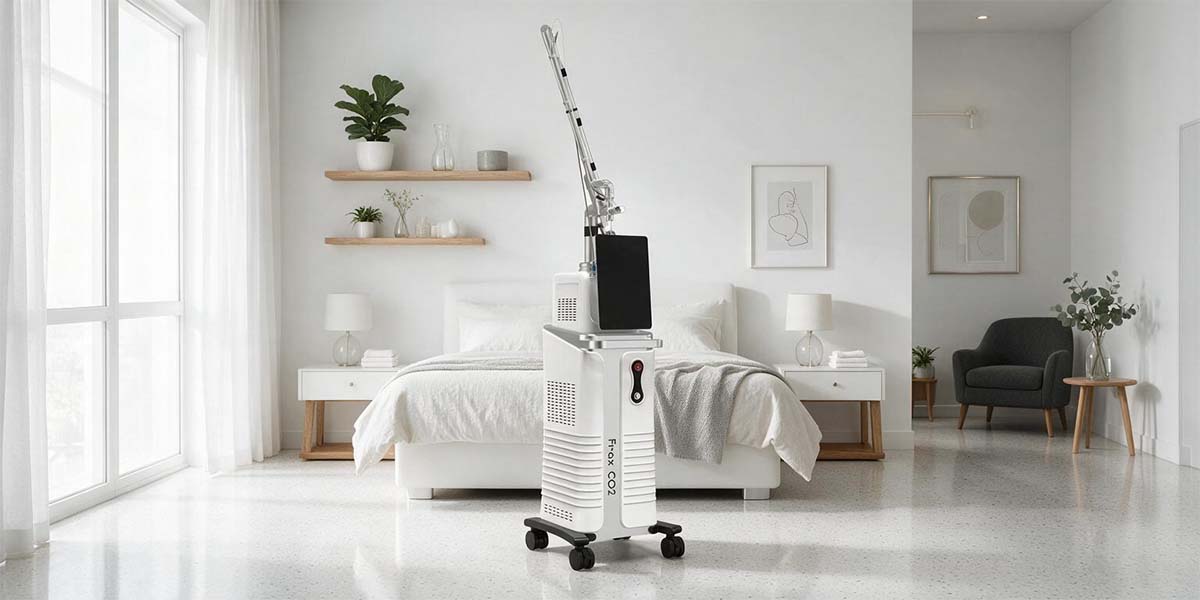
We have built the Fraxco2 FC100 around a 50W and 70W medical-grade 10600nm system with fractional, ablative, and hybrid modes, and we publish our component choices instead of hiding them. If you want to see the exact breakdown for your clinic, get in touch and I will walk you through it honestly.
If you want the full teardown of why a 100W machine is not automatically better, read our deep dive.
For a plain-English look at what a fractional CO2 laser actually does, start with this explainer.
Not sure which machine in that $5,000 to $15,000 range to pick? See our 【2026 fractional CO2 laser ranking】, where we score ten machines on results, downtime and ROI.
FAQ
Q: How much does a fractional CO2 laser machine cost?
A: A realistic medical-grade fractional CO2 laser runs between $5,000 and $15,000. Machines under $5,000 are usually built around industrial cutting tubes and are not safe or reliable for skin resurfacing.
Q: Why are some CO2 lasers $3,000 and others $15,000?
A: The price is set by the laser tube, the articulated arm, the cooling system, the scanning modes, and the certification. Cheap machines cut corners on one or more of these, most often the tube and the arm.
Q: Is a 100W CO2 laser better than a 50W one?
A: Not necessarily. A 100W industrial tube is designed to cut material, not treat skin safely. A 50W medical-grade tube with stable output is usually the better clinical choice. Wattage alone is not a quality signal.
Q: How much does a CO2 laser tube replacement cost?
A: A replacement medical tube is typically a few thousand dollars. In a busy clinic, the machine will have earned hundreds of thousands before the tube needs replacing, so the replacement is a minor operating cost.
Q: What can I charge per CO2 laser treatment?
A: Pricing varies by market. A light fractional pass can run $50, while deep resurfacing can reach $1,500. Some markets price sessions between 15,000 and 50,000 rubles with margins up to 70%.
Q: How do I avoid overpaying for a CO2 laser?
A: Ask three questions before comparing prices: what tube type is inside, where is the articulated arm sourced, and how is the machine cooled. A supplier who will not answer these is hiding something, regardless of the price.
Q: Is a fractional CO2 laser safe for everyone?
A: No. It is contraindicated for active skin infections, keloid-prone patients, pregnancy, and patients on isotretinoin. A reputable supplier will tell you this up front.
If you are comparing CO2 lasers and want a straight answer on what each price actually includes, contact us and we will tell you which tube, arm, and cooling system you are getting, line by line.