


A Clinic’s EMS Sculpt ROI Worksheet
Body contouring equipment quotes often end with a machine price, but the purchase decision actually starts with how many sellable sessions that machine can produce in a week. A clinic does not make money when the EMS sculpt system arrives. It makes money when packages are sold, delivered, and repeated often enough to cover the landed cost, training, spare parts, and the hours the room is occupied. I have handled enough equipment comparisons to know that the break-even calculation is the part most buyers leave until after the invoice is signed.
What should an EMS sculpt ROI calculation include?
Short answer: the ROI model needs the landed machine cost, sessions per day, package size, package price, cost per session, and expected repeat rate. A price with a wattage claim is not a business plan.
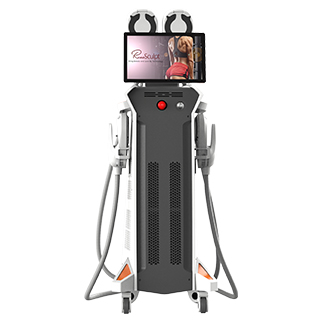
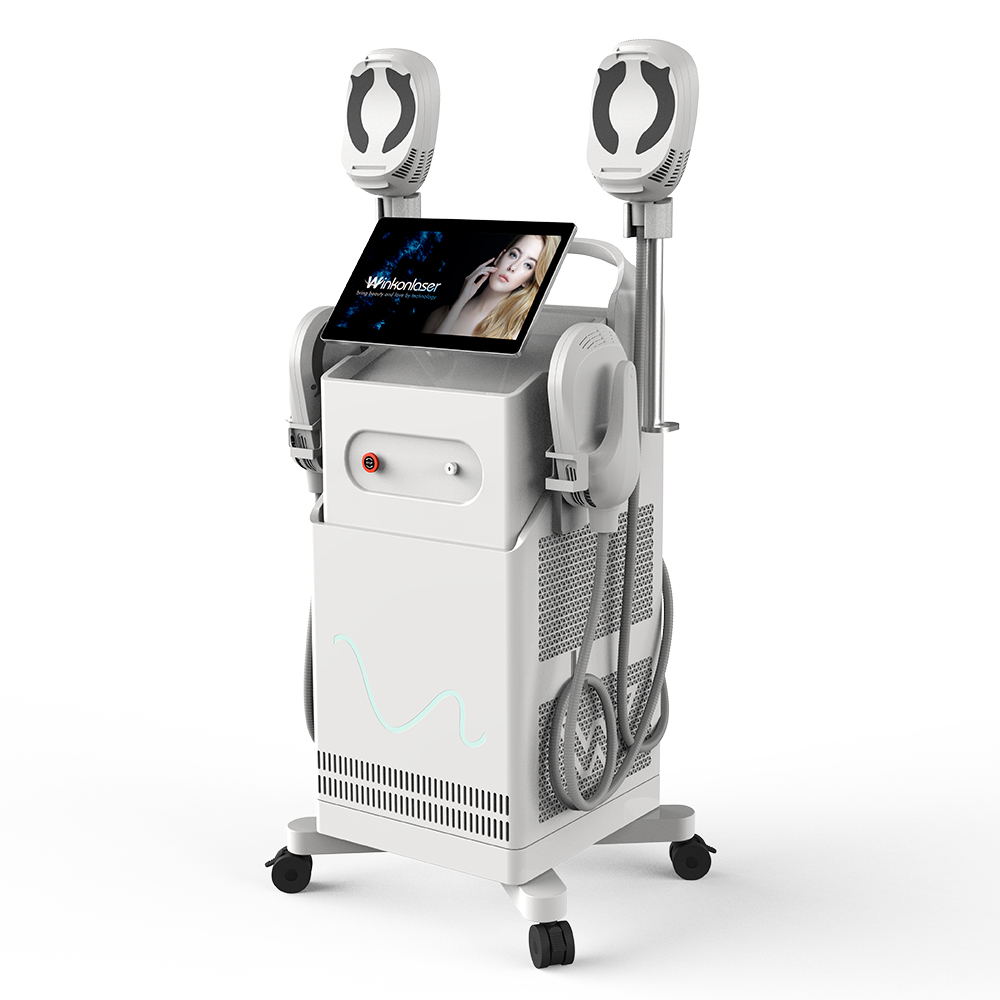
The first useful version is simple. Divide the landed machine cost by the net contribution from one package. If the supplier will not give you a complete landed price, you cannot finish the model. The Winkonlaser machine price should be written as Contact for pricing because it changes with destination, handles, voltage, training, and freight. What should not change is the set of figures you compare: 15T peak magnetic flux density, 5000W power, a 1-135Hz treatment range, four body handles, and an EMS chair on the FE60 product page.
What makes the FE60 a useful ROI reference?
Short answer: the FE60 combines HIEMT, EMS, and RF in one platform, lists 15T, 5000W, a 1-135Hz range, and four body handles with an EMS chair, so a clinic can model multiple treatment stations or two clients at once instead of comparing only a brand badge.

The hardware figures matter because they affect how the room is staffed. The FE60 product page describes four body handles plus an EMS chair and a 30-minute treatment model. A clinic can schedule back-to-back clients or use more than one treatment position in a room, which changes how many packages the same machine can support. The 110-220V, 50/60Hz rating also matters for import planning. None of those numbers proves an income figure by itself. They simply let you build a realistic session schedule instead of guessing.
The regulatory part needs a separate line. The FE60 holds FDA 510(k) clearance K253790 as a Class II powered muscle stimulator for muscle conditioning under product code NGX. That clearance covers the muscle conditioning intended use. It does not turn fat reduction, RF skin tightening, or cryolipolysis into FDA cleared claims. Use the K253790 record when you discuss the FE60, and keep every other benefit in its own regulatory lane. The clearance guide explains how to say that accurately.
How many packages do you need to break even?
Short answer: use this formula. Packages to break even equals landed machine cost divided by net contribution per package. A 30-minute session with four handles is the capacity input; it does not create revenue until a package is sold.
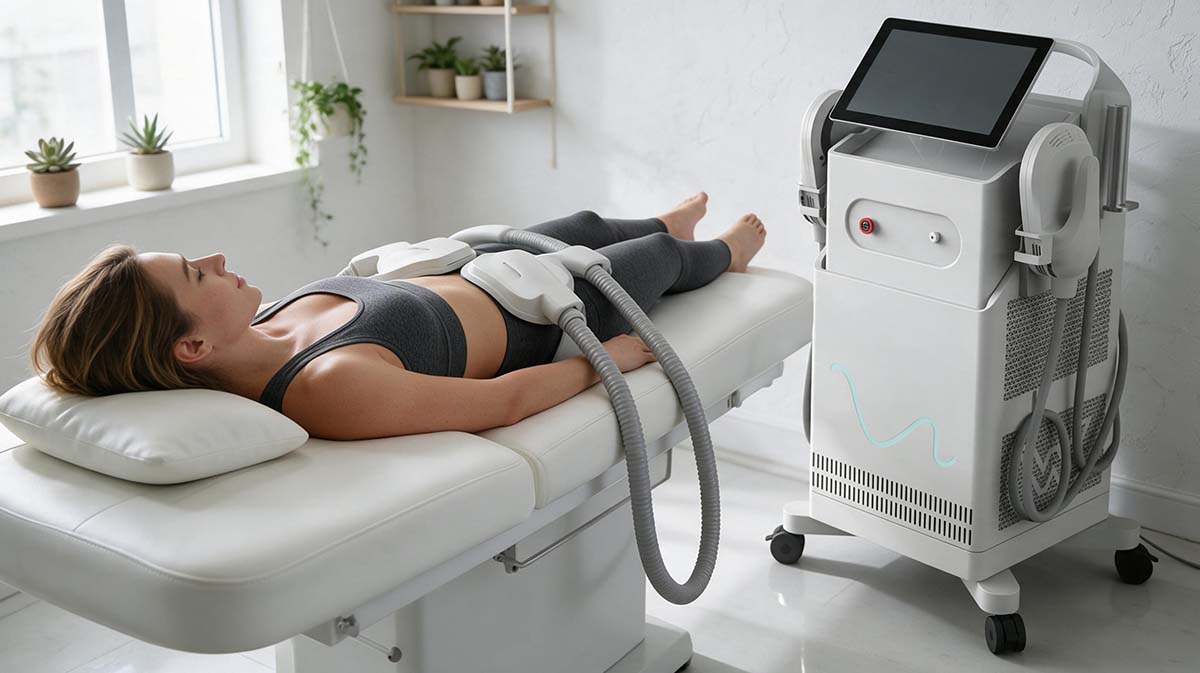
I build the worksheet in three rows. Row one is the machine and setup cost: landed price, freight, duty, installation, and training. Row two is package contribution: package price minus the direct cost of delivering every session, including staff time, room overhead, power, and disposables. Row three is repeat demand: how many completed packages one client is likely to buy in a year.
| ROI input | What to confirm |
|---|---|
| Machine and setup cost | Landed price, freight, duty, installation, and training in writing |
| Package contribution | Local package price minus direct cost of every session |
| Session capacity | 30-minute slots, number of handles, room staffing, and turnaround time |
| Repeat demand | How many packages one client is likely to complete in a year |
An example keeps the arithmetic clear. If your complete machine and setup cost is 20,000 local units and each package contributes 1,000 units after direct costs, you need 20 packages to reach break-even. If the same machine can deliver four 30-minute sessions a day and each package contains four sessions, one daily slot becomes one completed package. At five selling days a week, that is about five packages a week before repeat bookings are counted. The numbers here are model inputs, not a Winkonlaser quote. Replace them with your written landed price and your local package pricing.
The four-handle configuration matters at this step. It changes whether you are filling one appointment slot or two, and that changes how quickly the machine can return its cost. A clinic should model both a conservative schedule and a busy schedule. If neither version breaks even within the owner’s acceptable payback window, the problem is usually price, utilization, or package design, not the machine’s wattage.
Which costs do clinics leave out?
Short answer: freight, import duty, voltage conversion, training, spare handles, the EMS chair, room staffing, and repeat-client acquisition are the costs most clinics leave out of a body contouring ROI model.
The machine price is the visible line. The rest arrives after the deposit. Freight and customs vary by destination. Training may be online or on-site. Spare handles and lead times decide how long a busy schedule stays busy after a failure. Room staffing can be larger than power and supplies because a 30-minute treatment still needs intake, positioning, cleaning, and rebooking around it. I have seen clinics count only the session and forget the half hour of room time around it.
Winkonlaser was founded in Beijing in 2012, exports to 120+ countries, and keeps 15+ engineers on the product and support side. The warranty is two years on the main unit and handpiece with lifetime technical support. Those facts help with service risk, but they do not remove freight, duty, training, or staff cost from the break-even formula. The cost guide separates what is included in a machine quote from what the clinic spends locally.
How do you price packages without overpromising?
Short answer: price muscle conditioning packages around a clear course of sessions, measurable progress photos or measurements, and a repeat program. Do not build the package price on fat-loss percentages or a claim that K253790 clears fat reduction.
The FE60 is cleared for powered muscle stimulation and muscle conditioning, so the safest package language stays with that intended use. A course can include an initial assessment, several 30-minute sessions, a progress check, and a repeat recommendation. The product page may describe additional HIEMT and RF features, but those claims belong outside the K253790 clearance. If your market allows fat reduction or skin tightening language, the evidence and local regulatory basis need to be checked separately.
Pricing should also include the client’s total time commitment. If a course requires several visits, the clinic is selling adherence as much as the device. A package that is too cheap fills the schedule but may not cover staffing. A package that is too expensive can make utilization collapse. The safest model is to set the package price from local demand, then confirm that contribution per package creates an acceptable break-even point with the machine’s actual session capacity.
What should you ask before you buy?
Short answer: request the exact model, landed price, K253790 documentation, handle and chair configuration, spare-part lead times, warranty text, training schedule, and session protocol in writing before any deposit.
I keep the final checklist short. Confirm the exact FE60 model and configuration. Confirm the FDA 510(k) number is K253790 and the product code is NGX for the model you are buying. Confirm the landed cost includes freight, duty, voltage, training, and spare handles. Confirm the warranty covers the main unit and handpiece for two years. Confirm how many sessions the supplier’s protocol requires and what repeat treatment plan is appropriate. If any answer is missing from the written quote, ask for it before payment. For the broader category comparison, the buying guide covers the same decision from the model side.
FAQ
Q: How much does an EMS sculpt machine cost?
A: Contact for pricing. The landed cost depends on the model, handles, EMS chair, voltage, training, freight, and destination, so a price without those written line items is not useful.
Q: How many EMS sculpt packages does a clinic need to break even?
A: Divide the landed machine and setup cost by the net contribution from one package. Use your local package price and direct session costs; the result is not a fixed number.
Q: Does K253790 make the FE60 FDA cleared for fat reduction?
A: No. K253790 covers the FE60 as a Class II powered muscle stimulator for muscle conditioning under product code NGX. It does not cover fat reduction, cryolipolysis, or other added features.
Q: How many handles does the FE60 have?
A: The product page lists four body handles plus an EMS chair. Confirm the exact handle count, chair, spare parts, and lead times in the written quote.
Q: Is EMS sculpt a weight-loss treatment?
A: No. It is a muscle conditioning platform. It is not suitable for significant weight loss or for replacing diet, exercise, or medical care, and it requires appropriate client screening.
Q: What warranty should a clinic expect?
A: Ask for two years on the main unit and handpiece with lifetime technical support, plus written lead times for spare handles and the EMS chair.
Get a break-even model with the FE60 configuration
Before you compare another EMS sculpt system, put the landed cost, session capacity, and package contribution into your worksheet. If you want the FE60 configured with your required handles, EMS chair, voltage, training, and destination terms, contact Winkonlaser for pricing.