


What Clinics Should Tell Patients After Diode Laser Treatment
Table of Contents
-
What should patients expect during the first 24 to 48 hours?
-
How should patients care for their skin during the first week?
-
How should a clinic respond to pigment change or a suspected burn?
Quick answer: most patients can return to normal activity after diode laser hair removal, but the clinic still needs a clear plan for cooling, gentle skin care, sun protection, follow-up, and urgent warning signs. Aftercare is part of treatment safety, not an optional handout.
I have seen clinics spend a lot of time selecting a diode laser, then give patients verbal instructions that are incomplete or inconsistent between staff members. The treatment room may be well equipped, but the recovery experience depends on what the patient understands after leaving.

A good aftercare protocol does three things. It tells the patient what is normal, gives simple steps for the first week, and makes it easy to report a reaction that is outside the expected range. It also protects the clinic by creating a consistent record of advice, follow-up, and escalation.
This guide is for clinic owners, nurses, therapists, and operators using professional diode laser systems such as the AresLite DM60. It does not replace local medical direction, licensing rules, device training, or a clinician’s judgment.
What should patients expect during the first 24 to 48 hours?
Short answer: mild redness, warmth, slight swelling around the follicles, and tenderness are common in the treated area. The skin should begin to settle within a few hours to a few days, depending on the area, skin type, and treatment intensity.
Patients often notice small red bumps around the hair follicles. This is sometimes called perifollicular edema. It reflects a local response around the follicle and is not the same as a burn. Mild sensitivity in the treated area can also occur.
The clinic should explain that the hair will not disappear immediately in every case. Some hair may look shorter or appear to grow over the next week. Shedding often begins later as treated hair moves through its cycle. The exact timing varies by body area and individual hair growth.
It is equally important to explain what is not expected. Increasing pain, spreading redness, blistering, open skin, fever, or pus are not routine aftercare events. The patient needs a clear route to report these symptoms rather than waiting for the next scheduled appointment.
What should the clinic do before the patient leaves?
Short answer: inspect the skin, cool the area as needed, review the written instructions, confirm the follow-up route, and document the advice. The patient should leave knowing who to contact and what to send if a concern develops.
I have handled treatment workflows where the operator gave good care in the room but the front desk gave different advice at checkout. Standardizing the final conversation prevents that gap.
Use a short discharge checklist:
-
Inspect the treated area under good lighting.
-
Remove residual gel or product with a gentle method approved by the clinic.
-
Continue appropriate cooling if the skin is warm.
-
Review expected reactions and red flags.
-
Confirm skin care, heat exposure, and sun protection instructions.
-
Record the device, handpiece, settings, treatment area, and skin response.
-
Give the patient a written aftercare card or digital copy.
-
Tell the patient how to send a photo and whom to contact.
-
Schedule or explain the follow-up process.
If the clinic uses a cooling device, the operator should follow the manufacturer’s instructions. Direct ice application can irritate some patients, especially when left in place for too long. A wrapped cool pack and a limited application time are usually easier to control than an ice cube held against the skin.
How should patients care for their skin during the first week?
Short answer: keep the routine simple. Use a gentle cleanser, a bland moisturizer, broad-spectrum sunscreen, and avoid unnecessary heat or harsh products until the skin is calm.
Cleansing and moisturizing
Patients should avoid scrubs, strong exfoliants, high-strength retinoids, and products that sting or burn. A gentle cleanser and fragrance-free moisturizer are easier to tolerate. If the clinic recommends a specific post-treatment product, the patient should use that product rather than mixing several new items.
Heat exposure
Hot showers, saunas, steam rooms, and intense exercise can increase warmth and flushing in the treated area. A clinic may ask patients to avoid these for a short period, often 24 to 48 hours, especially after a stronger treatment. The exact instruction should match the clinic’s protocol and the skin response.
Sun protection
Sun exposure can worsen pigment changes after any laser treatment. Patients should use broad-spectrum sunscreen and cover the treated area when outdoors. Sun protection matters most for exposed areas such as the face, neck, arms, and legs.
Hair removal between sessions
Patients should not wax, pluck, or use epilators on the treated area. These methods remove the hair root and can interfere with the treatment plan. If hair needs to be managed between sessions, the clinic should specify whether gentle shaving is acceptable and when.
Makeup and topical products
The clinic should give area-specific advice. A patient treated on the face may need to wait before applying makeup, while a patient treated on the legs may not. Mineral makeup and gentle products are often easier to tolerate, but the clinic’s own protocol takes priority.
Which reactions are normal and which need urgent review?
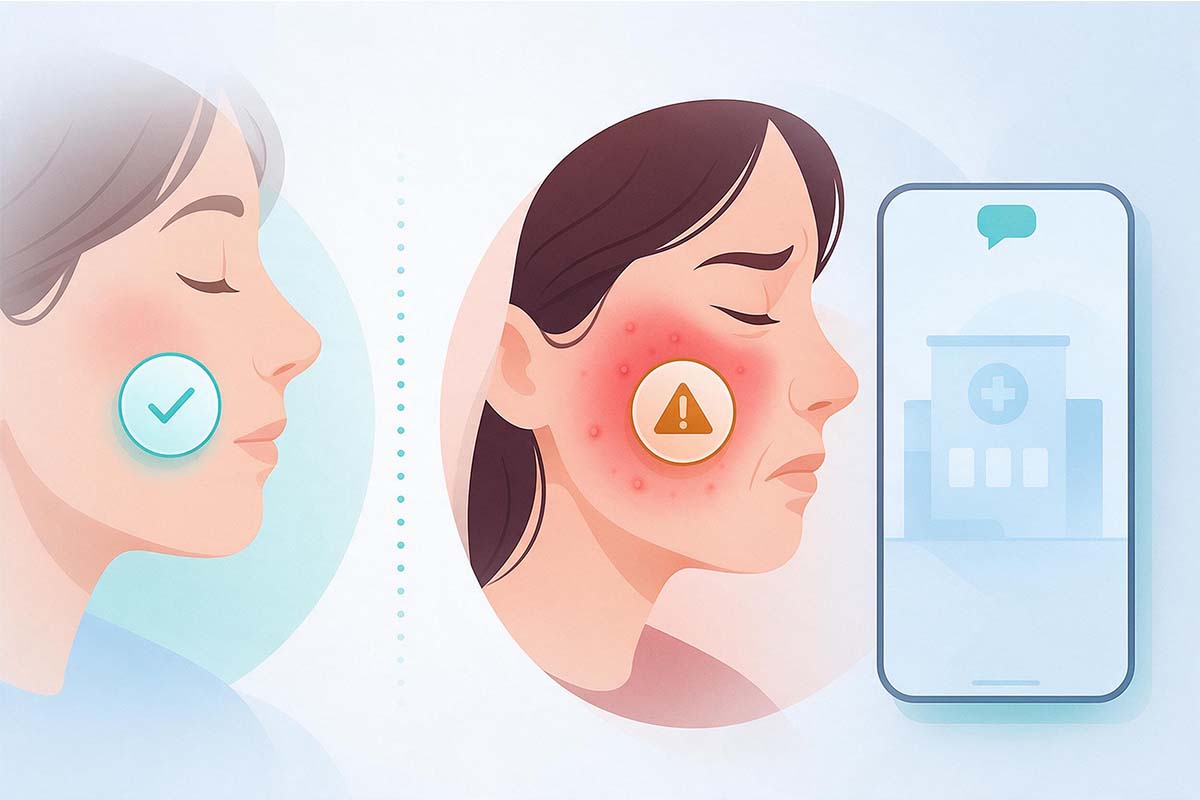
Short answer: mild redness, follicular bumps, tenderness, and temporary warmth are usually expected. Blistering, severe pain, spreading redness, open skin, fever, pus, or a reaction that keeps worsening needs prompt clinical review.
| Observation | Common interpretation | Clinic action |
|---|---|---|
| Mild redness for a few hours | Expected heat response | Cool gently and review aftercare |
| Small red bumps around follicles | Common follicular response | Avoid irritation and monitor |
| Mild tenderness | Expected short-term sensitivity | Use a gentle routine and avoid heat |
| Hair shedding after one to three weeks | Normal treatment response | Explain the hair growth cycle |
| Blistering or crusting | Possible epidermal injury | Escalate for clinical review |
| Severe or increasing pain | Not a routine response | Assess urgently and document |
| Spreading redness, warmth, or pus | Possible infection or significant inflammation | Direct the patient to urgent clinical care |
| Fever or feeling unwell | Needs medical assessment | Do not manage through messaging alone |
| Increasing pigment change | Needs assessment | Review sun protection and treatment history |
The table is a communication aid, not a diagnosis. A clinic should define who can assess a photo and when the patient must be seen in person.
How should a clinic respond to pigment change or a suspected burn?
Short answer: stop further treatment in the area, assess the skin, document the timeline and settings, and follow the clinic’s adverse event process. The patient should not be told to apply a random mixture of products from social media.
If a patient reports a blister, crust, severe pain, or a color change that is spreading, the clinic should treat it as a clinical concern. Take a clear photo with consent, obtain the treatment details, ask about sun exposure and product use, and arrange review by the appropriate clinician.
For darker skin, pigment change can be especially concerning because the contrast between affected and surrounding skin may be more visible. The clinic should avoid blaming the patient before reviewing the treatment settings, cooling, test patch, recent sun exposure, and product history.
The device record matters here. If the clinic cannot show which wavelength, fluence, pulse duration, spot size, and cooling method were used, it becomes harder to understand what happened and how to adjust future treatment.
When should the next treatment be scheduled?
Short answer: the interval depends on the body area, hair growth cycle, skin response, and clinic protocol. Many clinics review the patient after several weeks rather than booking every patient into the same fixed interval.
A diode laser targets pigment in the hair follicle, and hair grows in cycles. Treatment works best when active growth hairs are present. The next session should be planned around the expected cycle for the area, not simply around the clinic’s calendar.
Patients should understand that a treatment plan is an estimate. Hormonal changes, medication, hair color, skin type, and previous hair removal can affect the response. The clinic should assess shedding, regrowth, and skin tolerance before deciding whether to continue with the same approach.
For a broader explanation of session planning, see how many sessions diode laser hair removal may require. That article should be used as planning context, not as a fixed prescription for every patient.
What changes for Fitzpatrick IV to VI skin?
Short answer: the aftercare principles remain similar, but the margin for error is smaller. Clinics need conservative treatment planning, clear pigment monitoring, and more attention to recent sun exposure and post-treatment irritation.
Patients with Fitzpatrick IV to VI skin have more epidermal melanin. The target is still the hair follicle, but the surrounding skin can absorb more energy. This makes wavelength choice, cooling, fluence control, and operator technique more important.
After treatment, the clinic should inspect the area carefully and give the patient a specific way to report color change. It should not assume that every dark spot is normal. A new dark patch, a light patch, or a defined area of crusting should be assessed.
Sun protection is essential, but it is not the only factor. The patient should also avoid harsh exfoliation, scratching, and picking at the skin. If the clinic treated a test patch, the follow-up should include a comparison with the surrounding skin.
For device selection, read the guide to diode laser specifications for Fitzpatrick IV to VI skin. It explains why wavelength coverage and cooling matter before a clinic buys a system.
How do device controls and cooling affect recovery?
Short answer: the device cannot replace technique, but good controls and stable cooling make a consistent protocol easier to follow. A clinic needs repeatable settings, clear handpiece information, and service support when performance changes.
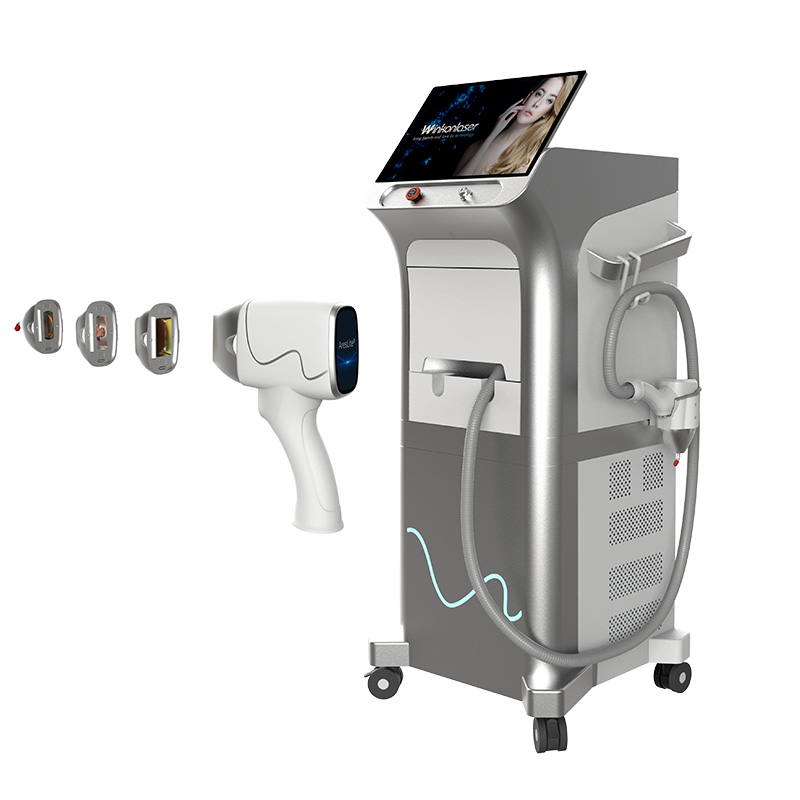
Professional diode platforms commonly use wavelengths such as 755nm, 808nm, and 1064nm. Each wavelength has a different role. A clinic serving a diverse patient population needs the option to select an appropriate wavelength rather than forcing every patient into one setting.
The handpiece and cooling system also matter. Weak or inconsistent cooling changes the skin response and the operator’s ability to work comfortably. If the handpiece is damaged, the spot size is inconsistent, or the cooling performance changes, the clinic should stop and follow service guidance.
This is one reason I prefer to review the diode laser spec sheet with the aftercare protocol in mind. A machine may look strong on paper, but the clinic still needs adjustable settings, reliable cooling, and documentation that supports consistent treatment.
Winkonlaser was founded in 2012 and exports equipment to 120+ countries. That experience is useful only when it supports operator training, service access, and realistic treatment boundaries. No device should be presented as risk free.
What belongs on a patient aftercare card?
Short answer: use short instructions that a patient can follow without remembering a long conversation. The card should explain expected effects, what to avoid, when to call, and how to send a follow-up photo.
The card should include:
-
The treatment area and date
-
A simple description of expected redness, bumps, or tenderness
-
Gentle cleansing and moisturizing advice
-
Heat and exercise guidance
-
Sun protection instructions
-
Restrictions on waxing, plucking, and harsh products
-
The clinic’s contact channel
-
Warning signs that need urgent review
-
The follow-up date or review window
Avoid giving every patient a long list of restrictions with no explanation. A patient is more likely to follow a short protocol that connects each instruction to a clear reason.
Contraindications and precautions
Contraindications vary by device, market, and clinical policy, but a clinic should not treat an area with an active infection or open wound without clinical review. Recent sun exposure, photosensitizing medication, pregnancy, a history of poor healing, or a personal history of keloid scarring may also require review before treatment. The device manual, medical director, and local rules define the final contraindications.
How should the clinic document follow-up?
Short answer: record the baseline, the treatment, the patient instructions, and every follow-up contact. Documentation protects the patient and helps the clinic improve its protocol.
At minimum, the record should include the treatment date, area, skin type, hair type, device, handpiece, wavelength, settings, cooling method, test patch result, immediate skin response, and aftercare advice. If the patient sends a photo, record when it was received, what was observed, who reviewed it, and what the patient was told.
Use a consistent follow-up window. Some clinics send a message the next day, others review at one week. The important point is that the patient knows when contact will happen and how to raise a concern sooner.
A well-run clinic also reviews patterns. If several patients report the same level of redness or discomfort, the team should review settings, cooling, and staff technique. If one clinician has more adverse events than another, that is a training issue to investigate, not a reason to blame the patient.
How can better aftercare support retention and referrals?
Short answer: patients judge the whole treatment experience, not only the laser session. Clear aftercare reduces anxiety, makes complications easier to catch, and gives the clinic a reason to follow up.
A patient who receives a clear card, a realistic explanation, and a simple follow-up channel is more likely to trust the clinic when the hair does not fall out on the first day or when a red bump appears. That trust supports repeat visits and referrals.
Aftercare also improves the quality of the clinic’s data. When patients report reactions promptly, the team can compare device performance, settings, and outcomes. This is more useful than collecting testimonials only from patients who had an easy recovery.
For clinics expanding their service menu, aftercare should be treated as part of the customer journey. The laser is only one part. The consultation, informed consent, treatment record, follow-up, and escalation process determine whether the service is repeatable.
FAQ
Q: Is redness after diode laser hair removal normal?
A: Mild redness and warmth can be normal for a short period. Spreading redness, severe pain, blistering, or a reaction that gets worse should be reviewed by the clinic.
Q: Can patients shower after treatment?
A: Many clinics allow a short, lukewarm shower if the skin is not irritated. Hot showers, saunas, and long baths are usually avoided for a short period according to the clinic’s protocol.
Q: When does hair shedding start?
A: Shedding often becomes noticeable after one to three weeks, but the timing varies by body area, hair growth cycle, and treatment response. The patient should not pull or pick at the hair.
Q: Should patients use ice directly after laser treatment?
A: A wrapped cool pack is generally easier to control than direct ice. The clinic should give a specific time limit and check the skin rather than leaving the patient to improvise.
Q: Can patients exercise after diode laser hair removal?
A: Gentle activity is often acceptable, but intense exercise that causes friction, sweating, or heat may be limited for a short period. The clinic should account for the area treated and the skin response.
Q: What should a patient do if the skin blisters?
A: The patient should contact the clinic promptly, avoid picking or applying random products, and arrange clinical assessment. Blistering is not a routine aftercare response.
Q: Does better aftercare replace a good device?
A: No. Aftercare cannot fix poor wavelength selection, unstable cooling, or incorrect technique. Device quality, operator skill, patient screening, and aftercare all need to work together.
Q: Who should not be treated without clinical review?
A: Patients with an active infection, open wound, recent sun exposure, pregnancy, photosensitizing medication, or a history of poor healing or keloid risk may need review before treatment. The clinic’s medical protocol and local rules determine what is suitable.
A practical clinic standard
Aftercare should not depend on which receptionist is working or whether the patient remembers a verbal explanation. Build a written standard, train every team member on it, and review adverse events with the clinical lead.
Building a safer laser hair removal workflow?
Start with the free Winkonlaser contact page if you need help matching a diode platform to your treatment menu, service workflow, and market. We can discuss the device configuration, cooling system, training questions, and aftercare support you need before you add another laser service.