


Before Your Diode Laser Goes Down, Check These Five Things
Table of Contents
Most clinic owners don’t think about their laser hair removal machine until the handpiece stops firing in the middle of a full afternoon. By then, the cost isn’t just the repair. It’s the rescheduled appointments, the blocked treatment rooms, and the front desk trying to explain why the machine that worked earlier in the week is suddenly unavailable.
In my experience, the clinics that keep their calendars full are usually not the ones with the highest-power machine. They’re the ones who checked the right things before buying and then planned for maintenance instead of treating it as an afterthought.
Why Downtime Hurts More Than the Repair Bill
An 808nm diode laser can be the busiest device in a med-spa. A missed service day on a machine that normally runs several treatments an hour can cost more than the replacement part itself.
The real risk is not only financial. It’s also the treatment gap. Laser hair removal works best when sessions are spaced consistently. If you cancel a client for a week, you don’t just lose that appointment. You also push back the next session and make it harder to keep results on track.
That’s why the questions below matter before you commit to a machine.
Check the Cooling System, Not Just the Power Number
Power is easy to compare. Cooling is where a lot of cheap machines fail.
Continuous operation produces heat. If the cooling system can’t keep up, the machine throttles, the handpiece becomes uncomfortable, or the device shuts down to protect itself. A machine that runs for ten minutes and then stops is not a bargain at any price.
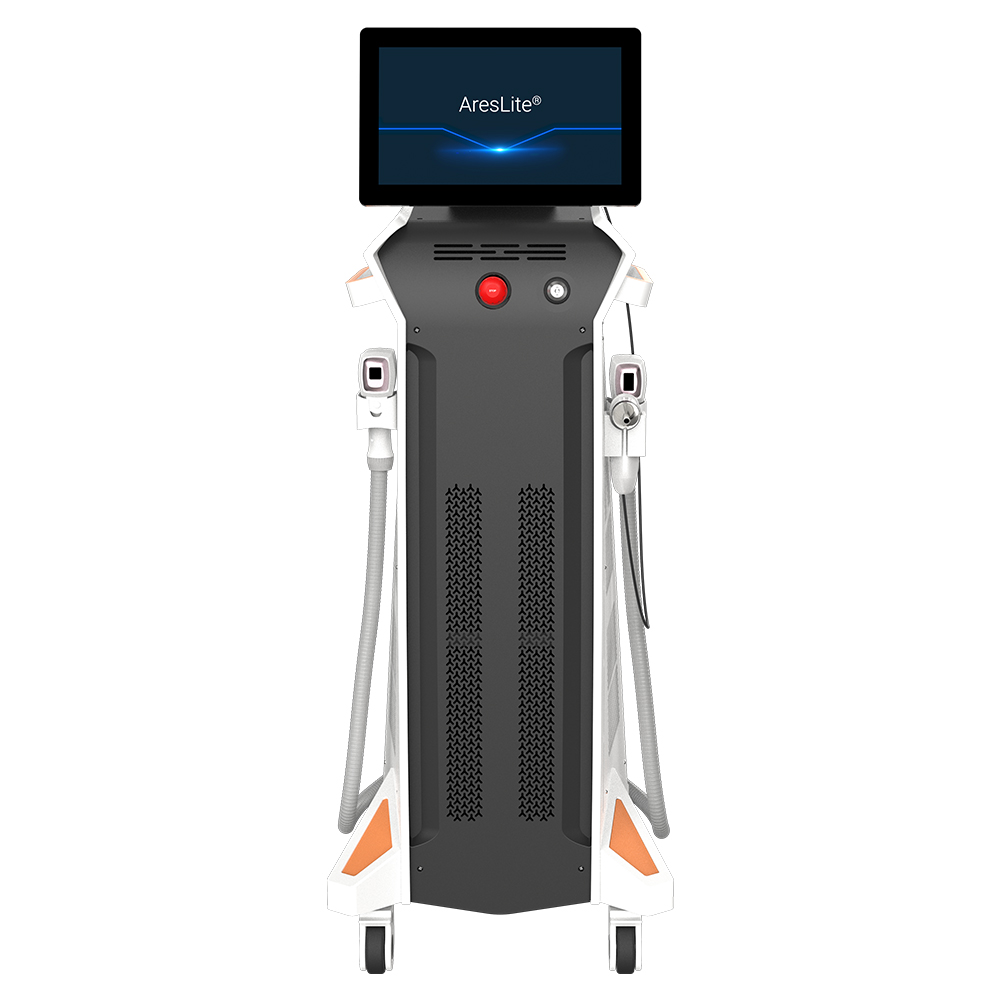
Look for a design that separates the heat path from the handpiece contact area. The AresLite DM60 uses a 5-in-1 cooling approach combining compressor, ICE semiconductor, sapphire, water, and air. That matters when you’re treating back-to-back clients on a full-body area. Read the diode laser cooling guide for what separates a continuous-duty system from a machine that stalls under load.
Ask the supplier how long the machine can run continuously at full output. Then ask what happens when the cooling system needs service.
Match Spot Size and Duty Cycle to Your Booking Pattern
Spot size changes how fast you work. A 12x24mm spot covers more skin than a 12x12mm spot, so large areas take less time. But speed only helps if the machine can sustain it.
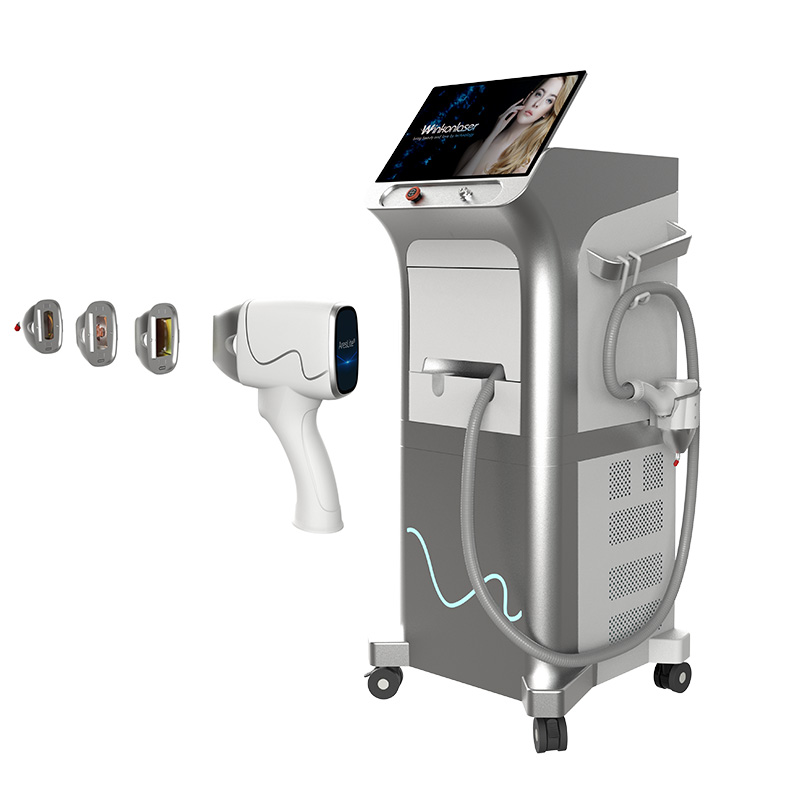
The AresLite DM60 has four magnetic quick-swap spot heads: 6x6mm, 12x12mm, 12x24mm, and 12x36mm. The small head is useful for delicate areas, while the large head speeds up legs and back. For a smaller clinic, the DM40P with two fixed handles may be enough. Compare the full laser hair removal machine range before you settle on a model.
I’ve seen clinics buy a machine based on its largest spot size, then discover their operator can’t use it comfortably for a full shift. Handle weight matters. A lighter handpiece reduces fatigue and keeps treatment speed consistent from the first client to the last.
Confirm Which Parts Can Be Replaced Locally
Every laser has wear items. Ask before you buy which parts fail most often, whether they are modular, and how quickly they can be replaced.
Modular internal design matters more than a long feature list. If a board or handle fails, you want the part swapped quickly, not the entire machine shipped back overseas.
Confirm whether the supplier provides training, troubleshooting, and spare parts guidance. A two-year warranty on the main unit and handpiece is only useful if the support process is clear.
Verify the Machine Is Built for Your Market
This is not a cosmetic box in a warehouse. It’s a medical aesthetic device that delivers energy to skin.
For the United States, ask for a specific FDA 510(k) number and check it yourself. The AresLite DM60 and DM40P diode systems hold FDA 510(k) clearance under K241860. For the EU and other regulated markets, ask for the Medical CE certificate number and verify it with the Notified Body. Winkonlaser publishes its certification records so buyers can check them independently.
Do not assume a certificate covers every model. A picosecond, CO2, or fat-reduction machine carries different regulatory status. Cross-check the manufacturer name, device name, and model number against the certificate before ordering.
Laser hair removal is not suitable for pregnant clients, people with active infections in the treatment area, or anyone taking photosensitizing medication. A qualified operator should screen clients before each session. No machine choice removes that clinical responsibility.
Plan for the Worst Day, Not the Average Day
One reliable machine is better than two machines you can’t trust. But capacity planning still matters.
Map your busiest day. Estimate how many full-body and small-area sessions you expect, then ask whether the machine’s spot sizes, cooling, and duty cycle can support that schedule without a forced pause.
If you’re opening a new clinic, don’t choose the most expensive system by default. Choose the system that can run through your real booking pattern and be serviced in your market.
What the Right Choice Looks Like
Winkonlaser has been building medical aesthetic equipment in Beijing since 2012 and exports to 120+ countries. That does not make a machine automatically right for you. It does mean the supplier should be able to answer questions about cooling, spare parts, warranty, and certification without hesitation.
The best diode laser for your clinic is the one that fits your patient mix, your treatment volume, and your service setup. Before you buy, compare more than the wattage. Compare what happens on the day the machine is pushed hard.
FAQ
Q: What is a duty cycle on a laser hair removal machine?
A: It’s the amount of time a machine can run continuously at a given output without overheating or shutting down. A high-duty-cycle machine is better for back-to-back clients.
Q: Why does cooling matter more than power?
A: Without reliable cooling, high power becomes unusable during a full treatment day. The machine may throttle, shut down, or feel uncomfortable to clients.
Q: Which Winkonlaser diode machines have FDA 510(k) clearance?
A: The AresLite DM60 and DM40P hold FDA 510(k) clearance under K241860. Other device categories do not automatically share that clearance.
Q: Is a 12x36mm spot always faster?
A: It speeds up large areas, but it’s not the only factor. Duty cycle, cooling, and operator comfort also affect how many clients you can treat in a day.
Q: How can I reduce unexpected machine downtime?
A: Check cooling, replace wear parts on schedule, keep the handpiece clean, follow the supplier’s maintenance guide, and confirm spare parts availability before you buy.
Match the Machine to Your Busiest Day
A diode laser purchase works when the cooling, duty cycle, spot sizes, spare parts, and service setup all fit the schedule you actually run. Before you compare another power number, ask what happens when the machine is pushed for a full afternoon.
Winkonlaser has manufactured aesthetic equipment since 2012, exports to more than 120 countries, and supports clinics with 15+ engineers. If you’re comparing diode laser systems, send Winkonlaser your treatment volume and market requirements. We’ll help you match the configuration to the way your clinic books.