


What Is an Alexandrite Laser? 755nm Explained
1. The Short Answer
An alexandrite laser is a hair removal and pigment laser that fires a single, specific wavelength: 755 nanometers. That number carries the whole story. Light at 755nm gets absorbed aggressively by melanin — the pigment in hair, skin, and tattoo ink — which is why alexandrite has a reputation as the fast, aggressive option for stubborn hair and dark ink.
If you run a clinic and a client asks why one machine handles light hair better than another, the answer almost always comes back to 755nm. It’s not a brand name. It’s a wavelength. Get that, and you get alexandrite.
2. What an Alexandrite Laser Actually Is
“Alexandrite” is the name of the crystal inside the laser. It’s a chrysoberyl gemstone doped with chromium. Pump energy into the crystal and it emits light at exactly 755nm. That’s the whole definition — a solid-state laser built around a crystal that naturally produces 755nm.
For a clinic owner, the gemstone is beside the point. What matters is what 755nm does to tissue. Every wavelength of light gets absorbed by different things in the skin. 755nm is absorbed very strongly by melanin, so it heats hair follicles and pigment cells while passing through most of the surrounding tissue. That selectivity is what makes the wavelength useful — and it’s also what makes it risky on the wrong skin, which we’ll get to.
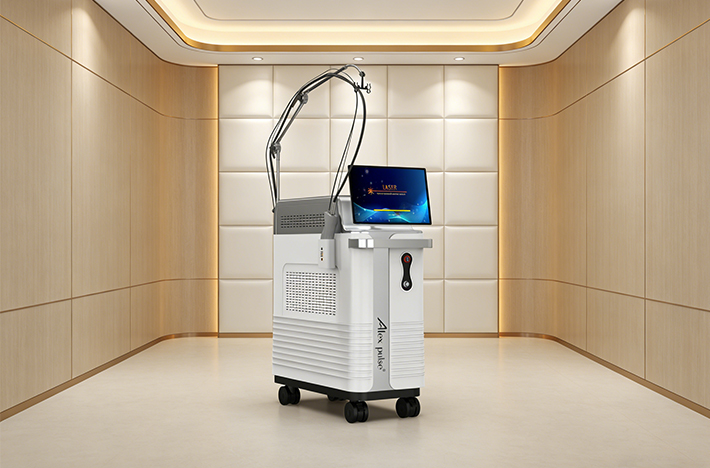
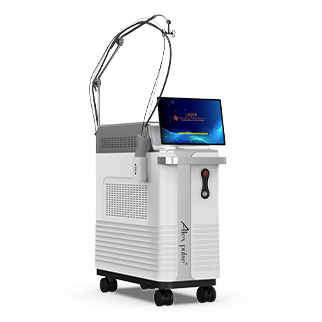
The machine itself looks much like any other laser: a console, a handpiece, and a cooling system. The difference is entirely in the light source. If you’ve ever watched an operator swap between hair removal handpieces, the alexandrite one is usually the one reserved for fair-to-medium skin and light hair.
3. Why 755nm Matters — The Science in Plain English
Melanin absorption follows a curve. Shorter wavelengths get absorbed more aggressively by melanin than longer ones. 755nm sits at the short end of the useful hair removal spectrum, which means it transfers more energy into the follicle per pulse than an 808nm diode or a 1064nm Nd:YAG.
Why that’s good: you need fewer sessions, and you can clear lighter hair — the fine, light-brown kind that other lasers leave behind.
Why that’s risky: the same aggressive absorption means 755nm is harsher on darker skin. More energy into melanin means more energy into skin pigment, too. That trade-off is the single most important thing to understand before you buy one.
4. What Alexandrite Treats Best
Alexandrite does three jobs well:
-
Hair removal. This is its main use, and the reference wavelength for light-to-medium skin types with fine, light-brown, or stubborn hair.
-
Pigmented lesions. Sun spots, freckles, and age spots respond well, because they’re concentrated melanin.
-
Tattoo removal. 755nm is one of the wavelengths used against black and certain colored inks, often run alongside 532nm and 1064nm in a pico or Q-switched system.
I’ve watched clinics lean on alexandrite as their hair removal workhorse. It clears fast, and speed matters when the schedule is full and the client list is long.
5. Alexandrite vs Diode vs Nd:YAG
Three wavelengths do most of the work in hair removal, and they split the market by skin type:
| Wavelength | Melanin absorption | Best for | Watch out for |
|---|---|---|---|
| 755nm (alexandrite) | Highest | Light-to-medium skin, light hair | Higher risk on dark skin |
| 808nm (diode) | Medium | Most skin types, coarse hair | Slower on fine hair |
| 1064nm (Nd:YAG) | Lowest | Dark skin (safe), deep follicles | Weak on light hair |
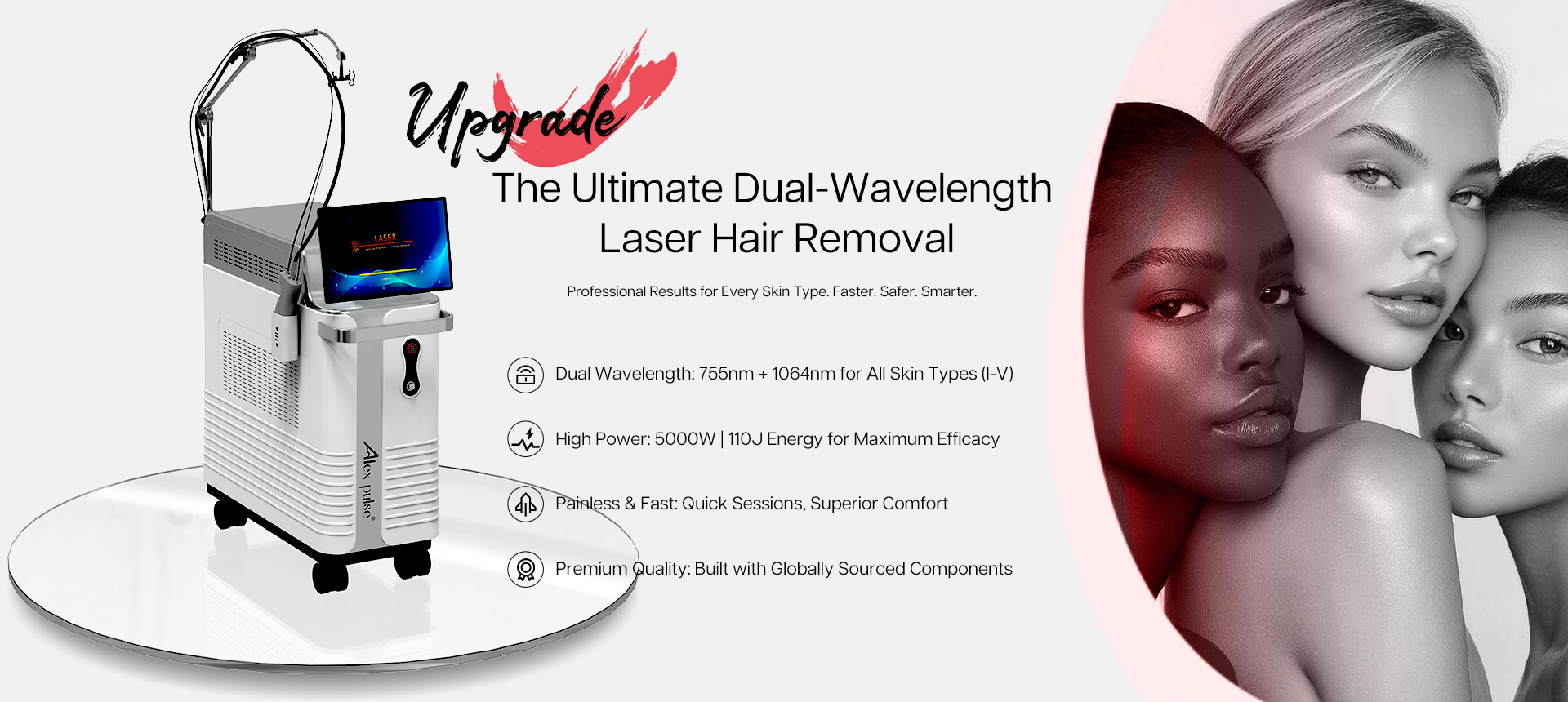
The short version: alexandrite is the specialist for light hair and stubborn pigment, diode is the generalist, and Nd:YAG is the safe option for darker skin. That’s why a 4-wavelength machine carrying 755nm, 808nm, 940nm, and 1064nm in one unit has taken over a lot of clinics — you stop choosing and get all three. We lay out the full comparison at Alexandrite vs other lasers.
6. Who It Works Best For
Alexandrite is at its strongest on Fitzpatrick skin types I through III — fair to medium — with dark or light hair. If your client base is largely fairer-skinned, alexandrite is a strong core treatment.
For Fitzpatrick type IV, it’s workable with proper cooling and a skilled operator. For types V and VI, the risk of hyperpigmentation or burns climbs to the point where it’s usually not the right tool. I have seen clinics push alexandrite onto skin it shouldn’t touch because the machine was fast, and the burn complaints that followed were predictable.
Match the wavelength to the skin. If most of your clients have deeper skin tones, a 1064nm-capable system is what you need — not a single-wavelength alexandrite.
7. How Much Does an Alexandrite Machine Cost?
Price comes down to three things: wavelength count, power, and brand. A single-wavelength alexandrite system costs less than a 4-wavelength platform, but it’s also far less flexible — you’d still need a separate machine for darker skin.
Our alexandrite machine line spans a few configurations, and the 4-wavelength diode systems that include 755nm land in a higher bracket because they replace three machines at once. Rather than quote a number that’ll be wrong for your market and order volume, ask for a current quote — pricing moves with configuration. Get one at https://www.winkonlaser.com/free-quote/.
8. Honest Limitations
Alexandrite is not a universal tool, and I’d rather tell you that up front than let you find out on a client. Three honest limitations:
-
Dark skin. This is the big one. 755nm is not recommended for Fitzpatrick V and VI skin because the burn and hyperpigmentation risk outweighs the benefit.
-
Cooling is non-negotiable. Because 755nm is aggressive, a cheap alexandrite machine without proper contact cooling will cause pain and patchy results.
-
Not the best for deep, coarse hair on dark skin. Nd:YAG handles that better, which is exactly why multi-wavelength systems exist.
If your client list skews darker, a single-wavelength alexandrite is the wrong buy. A 4-wavelength system with 1064nm is.

9. Where 755nm Fits in Winkonlaser’s Lineup
We build alexandrite into the lineup two ways:
-
A dedicated alexandrite hair removal machine for clinics that want the pure 755nm tool.
-
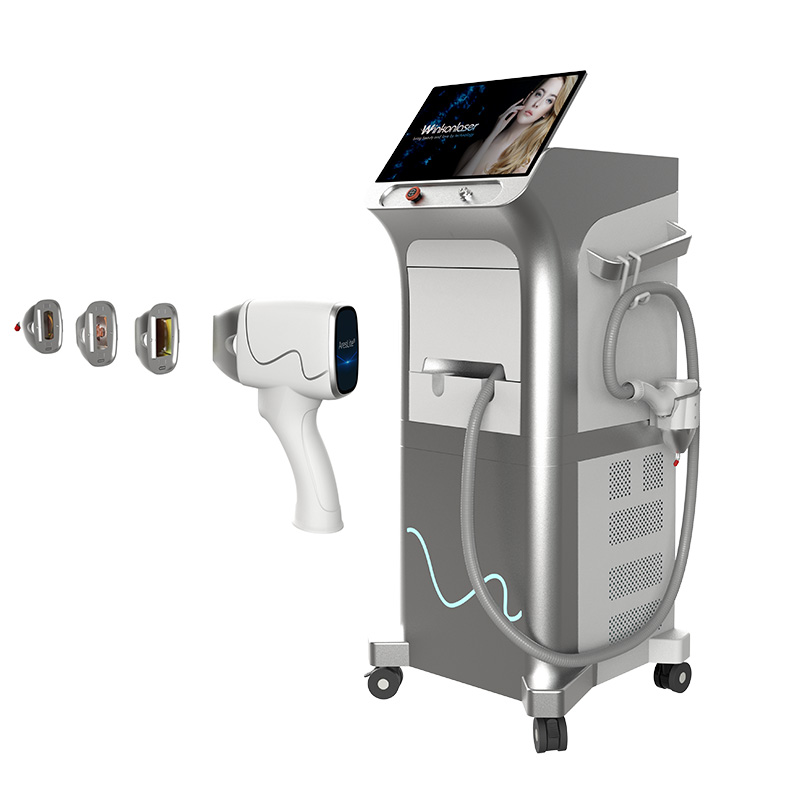
4-wavelength diode systems that include 755nm alongside 808nm, 940nm, and 1064nm — like the AresLite DM60, which puts alexandrite, diode, and Nd:YAG reach into one platform.
In the 12 years we’ve been building laser systems, the request we hear most is for one machine that covers every skin type. A 4-wavelength platform with a real 755nm channel is how you answer that.
10. Contraindications & Safety
-
Pregnancy and breastfeeding
-
Patients with pacemakers or implanted electronic devices
-
Active skin infections, open wounds, or recent sunburn in the treatment area
-
Photosensitizing medications (certain antibiotics and retinoids)
-
Fitzpatrick V and VI skin types
-
A history of keloid scarring or abnormal pigmentation
Operators should always run a patch test, and the cooling system should be checked before every session. These aren’t optional — they’re the difference between a clean result and a burn.
11. FAQ
Q: What does an alexandrite laser do?
A: It removes hair and targets pigment by firing 755nm light that melanin absorbs strongly, heating and disabling the follicle or pigment cell.
Q: Is alexandrite better than diode?
A: For light-to-medium skin with fine or light hair, alexandrite is more effective. For a broader range of skin types, diode is safer. A 4-wavelength machine with both is the flexible option.
Q: What is 755nm used for?
A: 755nm is used mainly for hair removal, plus pigmented lesions and certain tattoo inks.
Q: Is alexandrite laser safe for dark skin?
A: Generally not recommended for Fitzpatrick V and VI. The high melanin absorption that makes it effective also raises burn and hyperpigmentation risk on dark skin.
Q: How many sessions do you need with alexandrite?
A: Typically 6 to 8 sessions for hair removal, spaced 4 to 6 weeks apart, depending on hair color and area. Lighter hair may need more.
Q: How much does an alexandrite laser machine cost?
A: It varies by wavelength count, power, and brand. Single-wavelength units cost less; 4-wavelength platforms cost more but replace multiple machines. Request a current quote for accurate pricing.
Q: What’s the difference between alexandrite and diode laser?
A: Wavelength. Alexandrite fires 755nm (higher melanin absorption, better for light hair); diode fires 808nm (safer across more skin types). The full breakdown is at Alexandrite vs other lasers.
12. Final Word
Alexandrite earned its reputation honestly. For the right client — fair-to-medium skin with stubborn or light hair — 755nm is hard to beat, and it clears fast.
But it’s not a magic wand for every patient. Match the wavelength to the skin type, keep the cooling honest, and alexandrite becomes a reliable, high-throughput workhorse.
If you want to see how a 755nm machine fits your client mix and budget, get a quote here: https://www.winkonlaser.com/free-quote/