


Build Laser Hair Removal Packages That Sell Without Discounting
Table of Contents
Most clinics do not lose money on laser hair removal because their machine is too slow. They lose money because the package list treats every client like a one-time shopper. The first question is rarely “How much does the treatment cost?” It is usually “Why should I buy six sessions instead of one?”
I’ve seen clinics copy a nearby med spa’s price list without checking the cost of the sessions underneath it. The numbers look competitive on paper, but the package structure is wrong for the client mix, the room time, and the machine sitting in the treatment room.
That is why pricing is a business decision before it is a marketing decision. You can build a laser hair removal package that sells without being the cheapest option in your city, but you need to understand the economics first.
Why Package Pricing Is a Business Decision
A single laser hair removal session is not really a one-off purchase for most clients. The treatment is built around a series, usually several sessions spaced weeks apart. A package is the natural way to sell that series, but the structure matters more than the discount.
If you only offer one big bundle, you push undecided clients away. If you only sell single sessions, you make every appointment compete on price again. A clear ladder gives the client a reason to commit while leaving room for a smaller first step.
Think of the package as a way to reduce decision friction. A three-session starter, a six-session core package, and a maintenance or multi-area option can move more people into treatment without turning the whole service into a bargain.
Start With the Machine’s Real Cost per Session
Before you set a package price, calculate what a session actually costs you. Include the machine’s financed or depreciated cost, consumables, room time, technician time, marketing, and the portion of overhead that belongs to that treatment.
Many clinics stop at the price of the machine and ignore the labor. That is where a “cheap” package quietly becomes unprofitable. If a six-session area takes 45 minutes per visit and two staff members are in the room, that time is part of the package cost.
When you know the real cost per session, you can set a floor below which you will not sell. The package discount should come from predictable volume, not from pretending the treatment costs less than it does.
Build a Three-Step Package Ladder
A simple structure is easier to sell than a menu with twenty options. Start with a small test package for a client who is new to the treatment, a core series for the most common treatment area, and a higher-value option for clients who want multiple areas or long-term maintenance.
The starter package should feel like a low-risk first step. The core package should carry the strongest value message because it is the one most clients should choose. The top option should reward commitment without forcing a client to prepay for more than they can reasonably use.
For example, the ladder could be three sessions, six sessions, and a multi-area plan. Each step should show a clear benefit beyond the discount: priority scheduling, a follow-up check, or a more flexible maintenance window.
Price Results, Not Minutes
Clients do not usually compare machines by how many minutes the treatment takes. They compare the result, the comfort, and the total number of visits required. If you price only by time, you give away the value of a faster and more comfortable system.
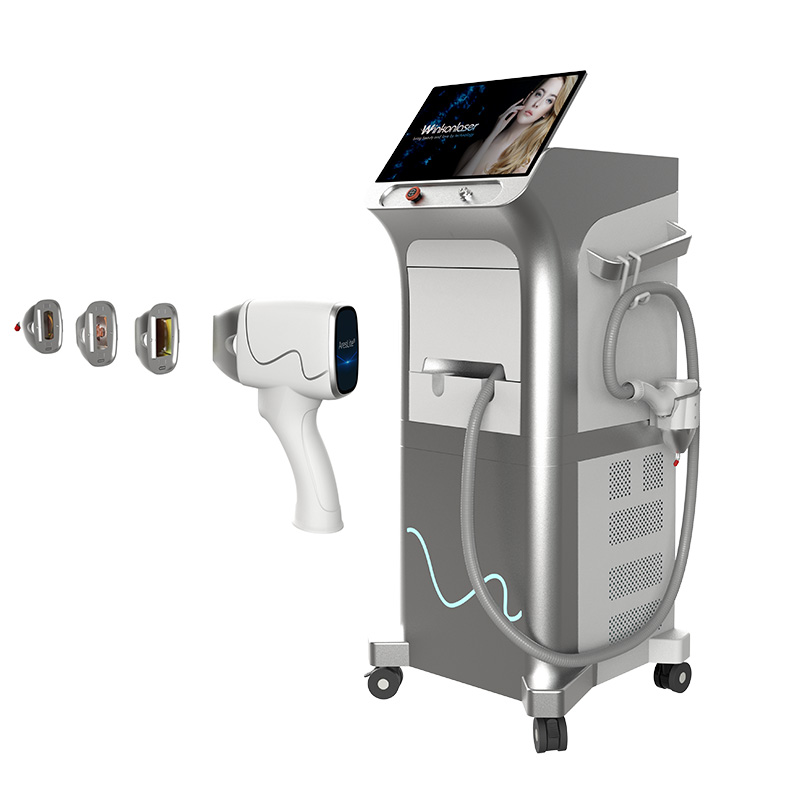
That is where the machine itself changes the math. A diode laser with mixed wavelengths can treat a wider range of skin and hair combinations in fewer trips. The AresLite range, for example, uses 755nm, 808nm, 940nm, and 1064nm wavelengths so the clinic is not limited to one narrow client profile.
A faster treatment can protect your margin even when the listed session price looks similar to a slower competitor. The saving shows up in room turnover, staff scheduling, and the number of clients a machine can handle in a day.
Use the Right Machine for the Package
If your packages are built around a high-volume clinic model, the machine needs to hold up to repeated sessions. Look for a non-crystal diode stack, a comfortable handpiece, and a maintenance story that is clear before you buy.
The Winkonlaser hair removal systems include the AresLite DM60, a four-wavelength diode platform, and the DM40P, a smaller two-handpiece option for clinics that want a more compact setup. Both are diode hair removal machines, which is the right category for a package-led laser business.
Keep the certification boundary clear. In the Winkonlaser range, the DM60 and DM40P can be described as FDA 510(k) cleared under K241860. Other categories, including picosecond, CO2, and fat-reduction machines, do not share that clearance. You can review how to verify a 510(k) clearance before comparing quotes.
Protect the Book With Fair Guardrails
A package is not an unlimited promise. Set an expiry window that is long enough for a real treatment series but short enough to keep the appointment book moving. Be clear about what is included: treatment area, number of passes, follow-up checks, and whether maintenance sessions are separate.
If a client has a reaction or needs a gap between sessions, do not punish them for following clinical advice. Build a small amount of scheduling flexibility into the policy. That protects the client relationship without turning the package into an open-ended credit.
Your written policy should also cover refunds, transfer of unused sessions, and what happens if the clinic changes location or equipment. These details are not exciting, but they prevent a discount from becoming a dispute.
Know Who Should Not Be Treated
Laser hair removal is not suitable for everyone, and no package structure changes that. Pregnant clients, people with active infection in the treatment area, people taking photosensitizing medication, and people with a history of abnormal scarring or keloids need a clinical review before treatment.
Skin type and hair color also matter. A mixed-wavelength diode platform gives the clinic more flexibility, but it does not make every client a good candidate. Light, fine hair can respond poorly, and certain medications or recent sun exposure can increase risk.
The best package starts with a proper consultation, not a price list. A client who is not suitable for treatment should be told that clearly, even if it means not selling the package that day.
Work With a Supplier That Matches Your Model
Your package math becomes easier when the equipment cost, warranty, and support are predictable. Winkonlaser was founded in Beijing in 2012, exports to 120+ countries, and has 15+ engineers supporting its systems. The hair removal machines carry a two-year warranty on the main unit and handpiece, with lifetime technical support.
Those facts matter when a machine is running a full package schedule. If the supplier cannot support rapid service questions or replacement parts, the clinic is the one absorbing the downtime in the middle of a booked series.
Compare the wider Winkonlaser product range with your treatment volume and target package structure. The right machine is the one that makes your core package reliable, not the one with the lowest sticker price.
FAQ
Q: How many sessions should a laser hair removal package include?
A: The answer depends on the area, hair type, and skin type, but a common starting structure is three sessions for a low-risk trial, six sessions for the core treatment, and a maintenance option after that. Use your own clinical results to set the exact number.
Q: Should I sell laser hair removal as a single session or a package?
A: Offer both. A single session gives a new client a low-commitment way to start, while the package protects your schedule and cash flow. The package should be the better value only when the client is a good candidate.
Q: What should I include in a package price?
A: Include the treatment sessions, any scheduled follow-up checks, and a clear definition of the treatment area. State separately what is not included, such as maintenance sessions or a different body area.
Q: Can a faster laser machine improve package profitability?
A: Yes. A faster and more comfortable machine can reduce room time, staff fatigue, and no-shows. The AresLite diode systems use mixed wavelengths and a 20Hz high-frequency output to support faster treatment over larger areas.
Q: Is laser hair removal suitable for every client?
A: No. Pregnant clients, people with active infection, photosensitizing medication use, abnormal scarring, or certain skin and hair types need clinical assessment before treatment.
Q: How do I compare laser hair removal machines before building a package?
A: Start with your expected client mix and package volume, then compare wavelengths, handpiece comfort, treatment speed, certification, warranty, and service support. Request a configured quote rather than comparing only the lowest listed price.
Build a Package Around a Machine That Can Deliver It
A strong laser hair removal package is a promise. It promises a result, a schedule, and a predictable experience. The machine behind that package has to be able to keep the promise during back-to-back sessions and busy maintenance months.
If you are planning a new laser hair removal service or replacing an older system, tell Winkonlaser your target areas, expected volume, and certification requirements. You can request a configured quote or reach the team through the contact page.