



What Changes Can Patients Expect From Facial EMS?
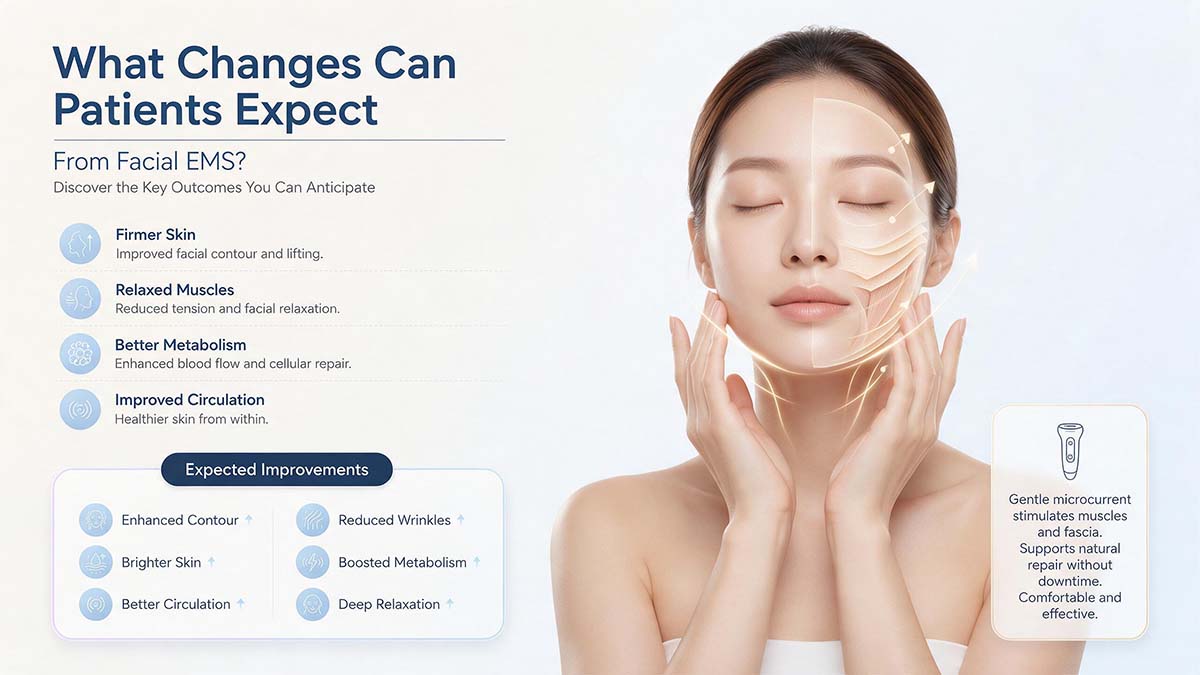
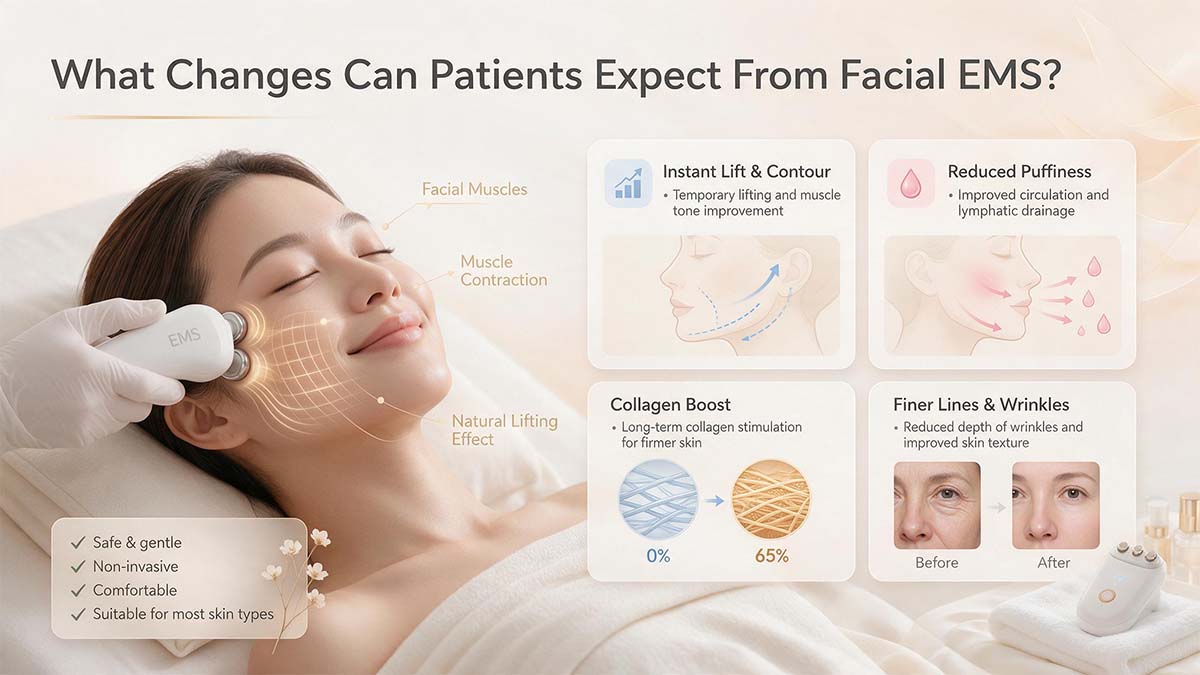
Quick answer: facial EMS can create temporary muscle contraction and improved contour, while RF may add mild skin tightening through controlled heating. Results are usually gradual and temporary, and they do not match surgical lifting.
Patients often search for facial EMS before and after photos because they want a clear answer before booking. The clinic should avoid promising a dramatic change from a single treatment or using manipulated photos to imply a surgical result.
I have seen clinics lose credibility when the consultation suggested a permanent lift and the patient saw only a subtle change. A better approach is to explain what the technology can do, how long it may last, and what maintenance may require.
This guide is for clinic owners and operators using professional EMS and RF facial systems. It does not replace medical assessment or device training.
What does facial EMS actually change?
Short answer: EMS contracts facial muscles, while RF adds controlled heating to the dermis and deeper tissue. The combination may improve temporary tone and contour, but it does not remove skin or reposition tissue like surgery.
EMS devices use electrical pulses to stimulate muscle contraction. Patients may feel tapping, tingling, or repeated contractions during treatment. The response depends on the device, electrode placement, intensity, and patient comfort.
RF-assisted systems use high-frequency energy, often in the 1MHz to 2MHz range depending on the device. Heating can produce collagen remodeling over time, but the clinic must follow the manufacturer’s settings and avoid excessive surface heat.
The RenaFace RF EMS facial platform combines professional treatment modes, but the operator still needs patient selection and a realistic plan.
Why are before and after photos difficult to compare?
Short answer: lighting, hydration, facial expression, angle, makeup, and time of day can change the appearance of the face. A fair comparison needs consistent conditions.
Before and after photos should use the same camera position, lighting, expression, and time after treatment. The clinic should avoid smiling in one image and relaxing in another.
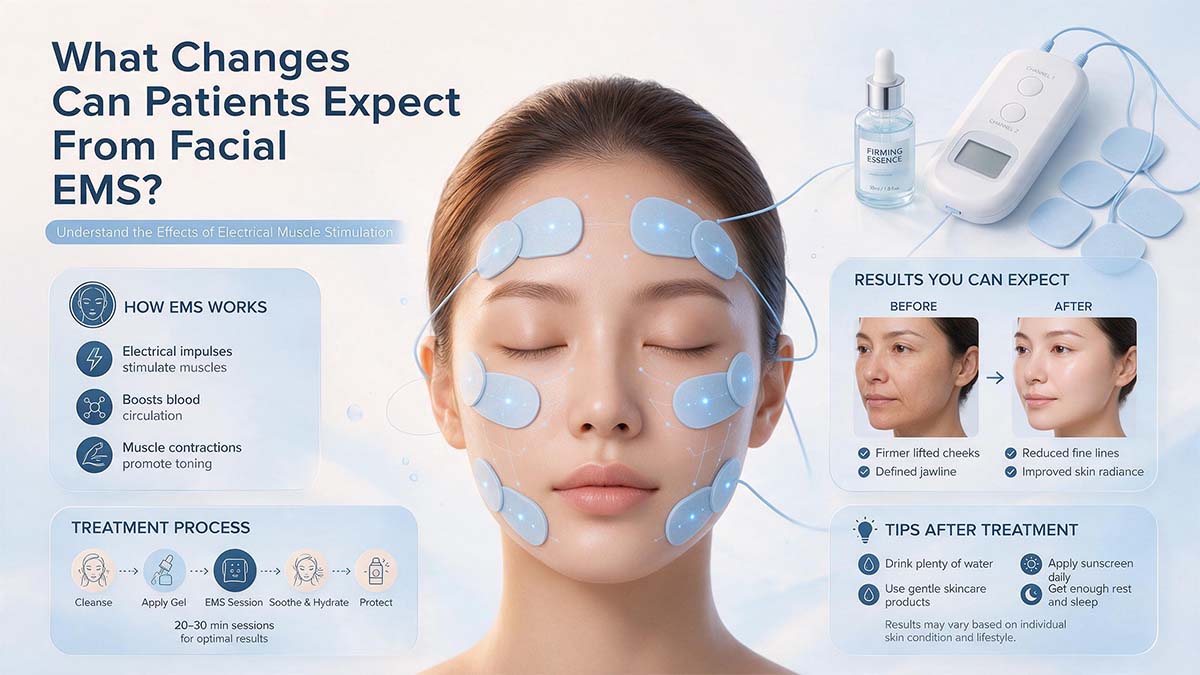
Patients should also know that immediate appearance may include mild fluid movement, muscle response, or warmth. A photo taken ten minutes after treatment does not show the same state as a photo taken two weeks later.
Clinics should use their own consented photos and avoid images from unrelated devices. It is also misleading to use a surgical result as a comparison for a noninvasive treatment.
What results are realistic after one session?
Short answer: one session may produce a temporary change in muscle tone or facial contour, but the result is not permanent and may be subtle.
Some patients notice a firmer feeling or a slight change in the jawline. Others see little difference after the first session. The clinic should not use the immediate response as proof of the final result.
The treatment plan may need several sessions to evaluate consistency. A patient with significant skin laxity, volume loss, or deep structural aging may need a different treatment strategy.
What results may develop over a treatment series?
Short answer: a series may improve the appearance of muscle tone and mild contour concerns, with a temporary effect that requires maintenance.
The response depends on:
-
Baseline muscle tone
-
Facial fat and bone structure
-
Skin laxity
-
Treatment frequency
-
Device settings
-
Electrode placement
-
Patient adherence to the plan
The clinic should define a review point after several treatments. If the patient sees no meaningful change, adding more sessions without reassessment may not help.
How should the clinic measure change?
A practical review should compare standardized photos, patient-reported change, skin tolerance, and the visible contour at rest. The clinic should avoid judging the result from a single selfie taken at a different angle or under different lighting.
The patient can also describe whether clothing fits differently, whether the jawline feels firmer, or whether the change is mainly visible in the morning. These observations help the clinician understand whether the response is meaningful, even when the photograph looks subtle.
How does RF add to facial EMS?
Short answer: RF adds controlled heating that may support collagen remodeling and skin quality. EMS focuses more on muscle contraction, so the two technologies address different tissue layers.
The combination should not be described as a surgical substitute. Heat-based treatment also has risks, including redness, swelling, burns, and pigment change if the settings or cooling are inappropriate.
The clinic should verify the device’s actual RF frequency, power control, cooling, and treatment limits. The RenaFace treatment overview provides a starting point, but device training and clinical judgment remain essential.
Winkonlaser was founded in 2012 and exports equipment to 120+ countries. That experience is relevant only when it supports operator training, service access, and honest communication about what the device does not do.
How often should patients be treated?
Short answer: the interval depends on the device, treatment intensity, and patient response. The clinic should recommend maintenance rather than promise a permanent series.
Facial EMS sessions are commonly planned as a series followed by periodic maintenance. The exact number and interval should be documented and revised after the review appointment.
Patients should not increase frequency because the first result faded. More treatment is not always better, especially when the skin is still recovering from RF heating.
Who is not a good candidate?
Short answer: patients with implanted electronic devices, pregnancy, active infection, open skin, uncontrolled medical conditions, metal implants near the treatment area, or significant skin disease may require exclusion or medical review.
Contraindications depend on the device. The clinic should review the manual and local medical policy before treating patients with electronic implants, seizure disorders, recent surgery, or altered skin sensation.
Patients with significant volume loss or deep tissue laxity may need a different treatment approach. EMS cannot restore lost facial volume or replace surgical lifting.
What should the clinic do when the patient is uncertain?
An uncertain candidate should not be pushed into a package. The clinic can offer a consultation, review the medical history, and explain the realistic limits before any payment. If the patient has an implanted electronic device, active skin disease, or a condition that the device instructions exclude, the answer should be clear rather than commercial.
For borderline cases, the clinician should document the question and the decision. A patient who wants a surgical result may be better served by a referral or a different treatment discussion. Patient selection protects trust and reduces refunds, complaints, and adverse events.
How should clinics explain maintenance?
Short answer: explain that the result is temporary and that maintenance may be required to preserve the response.
The patient should know the expected review schedule and the signs that the treatment is not producing the desired change. The clinic should avoid promising the same result for every patient.
Photography, consent, and treatment records should include the treatment area, device, settings, immediate response, and follow-up. If a patient reports prolonged pain, blistering, or pigment change, stop the series and arrange clinical review.
FAQ
Q: Does facial EMS replace a surgical face lift? A: No. It may create temporary muscle contraction and contour change, but it does not remove skin or reposition deeper tissue like surgery.
Q: When can patients see results?
A: Some notice a temporary change after one session. Others need several sessions and a review before deciding whether the treatment is useful.
Q: How long do facial EMS results last?
A: The effect is temporary and varies by patient. Maintenance is often needed, and the clinic should not promise a permanent result.
Q: Is RF necessary for facial EMS?
A: RF adds a heating component for skin quality and collagen remodeling. Whether it is appropriate depends on the device and the patient’s concern.
Q: Are before and after photos reliable?
A: They are useful only when lighting, angle, expression, and timing are consistent. Clinics should avoid unrelated or manipulated images.
Q: Who should not have facial EMS?
A: Patients with implanted electronic devices, pregnancy, active infection, open skin, metal near the treatment area, or significant medical risk may need exclusion or review.
Q: Can patients wear makeup after treatment?
A: The clinic should decide based on the treatment intensity and skin response. Open or irritated skin should not be covered with makeup.
A practical clinic standard
Use realistic images, document the device and settings, and schedule a review before recommending more sessions. If a patient expects surgical lifting, adjust expectations before payment.
For a noninvasive skin-tightening comparison, review the HIFU treatment page. To discuss a facial EMS and RF platform for your clinic, contact Winkonlaser.