


Which Diode Laser Specs Matter for Fitzpatrick IV to VI Skin?
Table of Contents
-
Which wavelength should a clinic prioritize for Fitzpatrick IV to VI?
-
Which machine specifications should you verify on the datasheet?
-
Why is a 755nm-only machine not enough for a diverse market?
Quick answer: a clinic treating Fitzpatrick skin types IV to VI should prioritize a machine with a 1064nm wavelength, adjustable spot sizes, strong contact cooling, and the ability to lower fluence and choose conservative settings for a test patch. The 755nm wavelength is not suitable for very dark skin, and a machine that only offers 755nm or 808nm limits who can be treated safely.
Many clinics choose a diode laser because it is the workhorse for hair removal, then discover that a single 808nm configuration does not cover the client base they actually see. In markets with a wide range of skin tones, the decision should start with the Fitzpatrick range the clinic needs to treat, not with the headline power number.
I have seen clinics buy on wattage because the number looks strong, then realize the real constraint is wavelength selection and operator control. A high-power machine without the right wavelengths and cooling does not make a treatment safe for darker skin. It only makes the settings more tempting to misuse.
This guide is for buyers and operators. It explains the specifications that matter for darker skin, but it is not a substitute for local clinical protocols, licensing, or manufacturer training. A qualified operator still has to assess every client.
Why does skin type matter when choosing a diode laser?
Short answer: darker skin contains more melanin in the epidermis, so a wavelength that is strongly absorbed by surface melanin creates a higher risk of epidermal heating and pigment change. The machine must offer a wavelength and controls that let the operator treat the hair follicle without concentrating energy in the surrounding skin.
Laser hair removal works by targeting melanin in the hair, but the surrounding skin also contains melanin. The Fitzpatrick scale classifies skin by its response to sun exposure, from type I through type VI. Types IV to VI have progressively more epidermal melanin. That changes the safety margin between the hair target and the skin background.
The practical buying question is therefore not just “which laser is strongest?” but “which wavelengths and settings can be adjusted to the client in front of me?” A machine with only one wavelength gives the operator fewer choices when the skin and hair contrast is low.
The hair color also matters. Dark, coarse hair is easier to treat than light or fine hair, but on darker skin the skin background reduces the contrast. The machine needs to be able to deliver enough energy to the follicle while protecting the epidermis. If the supplier cannot explain that balance, the operator is being asked to guess.
Which wavelength should a clinic prioritize for Fitzpatrick IV to VI?
Short answer: 1064nm is the priority for Fitzpatrick IV to VI because it penetrates deeper and is absorbed less strongly by epidermal melanin, which gives a wider safety margin. The 808nm wavelength can still be useful for intermediate skin types, while 755nm is not suitable for very dark skin.
The table below shows how each wavelength in the AresLite DM60 fits into a diverse clinic workflow.
| Wavelength | Main role | Fitzpatrick IV to VI note |
|---|---|---|
| 755nm | Lighter skin and fine or light hair | Not suitable for very dark skin |
| 808nm | General hair removal across many skin types | Can be used with conservative settings, but less margin than 1064nm |
| 940nm | Deeper penetration for varied hair and skin | Useful as an intermediate option when parameters are adjusted |
| 1064nm | Darker skin with a wider safety margin | Priority wavelength for Fitzpatrick IV to VI |
The goal is not to use one wavelength for every client. The goal is to have the option set that matches the clinic’s market. A clinic in a diverse urban area needs 1064nm as a standard option, not as a premium add-on that the operator has to fight to access.
What laser parameters reduce risk on darker skin?
Short answer: lower fluence, a conservative pulse approach, strong contact cooling, smaller or appropriate spot size, and a mandatory test patch are the main operating controls. The machine must expose those controls clearly and let the operator save a conservative protocol.
Fluence is the energy delivered per unit of area. On darker skin, the operator should start lower and increase only after the client tolerates the first patch and the skin response is assessed. A machine that only allows very high fluence or that hides the parameter screen makes this harder.
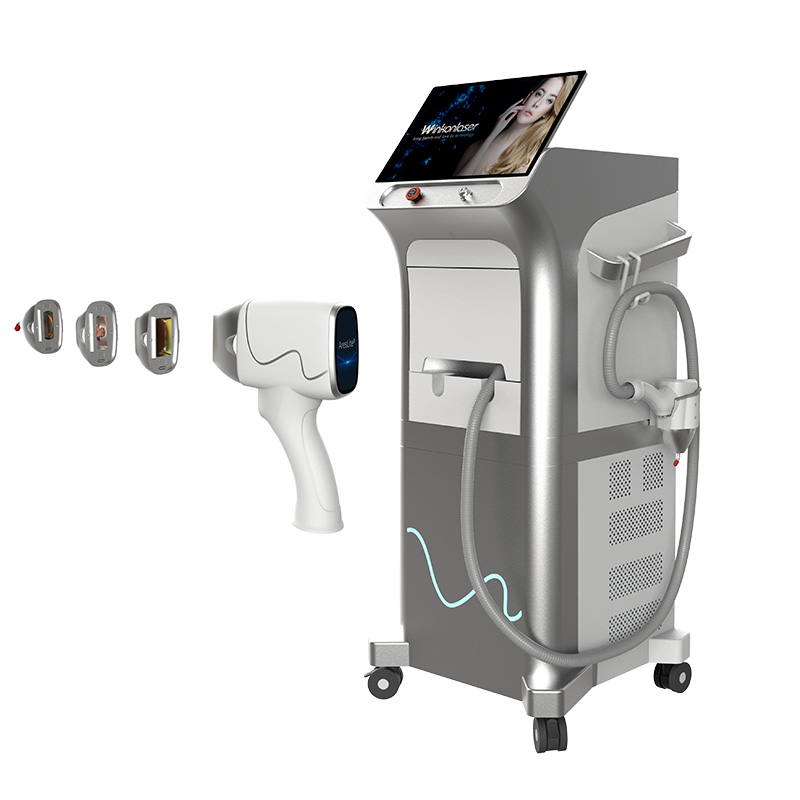
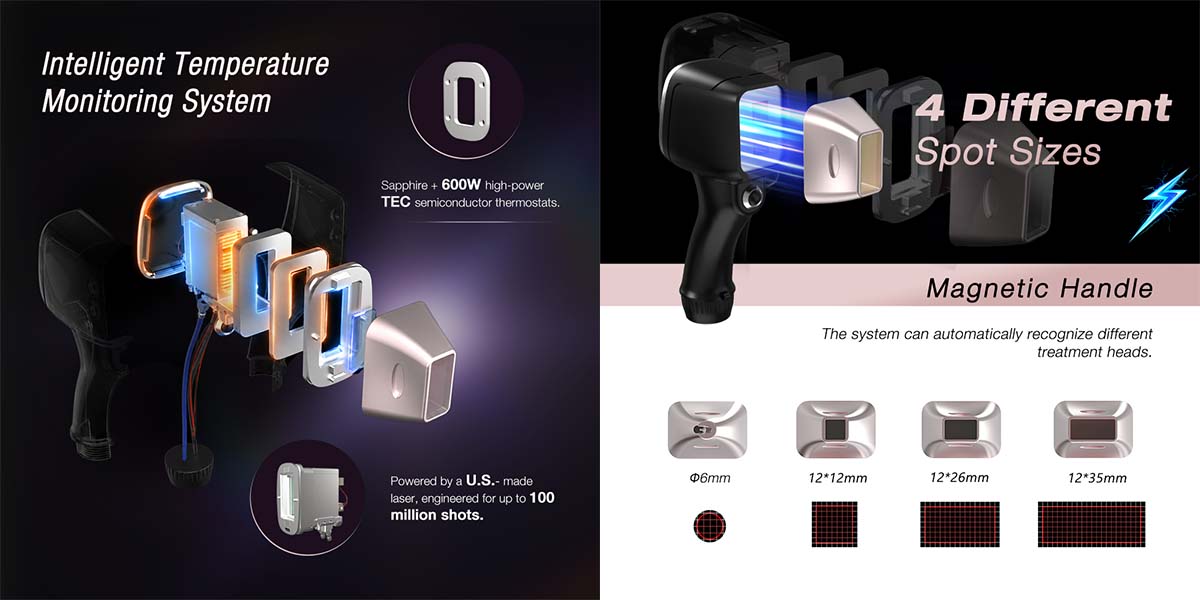
Spot size also matters. The DM60 offers spot sizes of 6x6mm, 12x12mm, 12x24mm, and 12x36mm. A larger spot can speed up large areas, but the operator still chooses the size for the area and skin type rather than always selecting the largest option.
Contact cooling is central because it protects the epidermis during treatment. The DM60 combines ICE semiconductor cooling with sapphire, air, and water cooling. That combination reduces discomfort and helps keep surface heat under control, but it does not remove the need for conservative settings and client screening.
The frequency range of 1 to 20Hz affects treatment speed, not safety by itself. A faster repetition rate can improve throughput, but on darker skin the protocol should be set by the client assessment first. Speed is not a substitute for a test patch.
Which machine specifications should you verify on the datasheet?
Short answer: check the full wavelength set, spot size range, cooling method, frequency range, energy density capability, power options, and whether the handpiece and controls are designed for repeat clinical use. Ask for those numbers in writing rather than accepting a marketing summary.
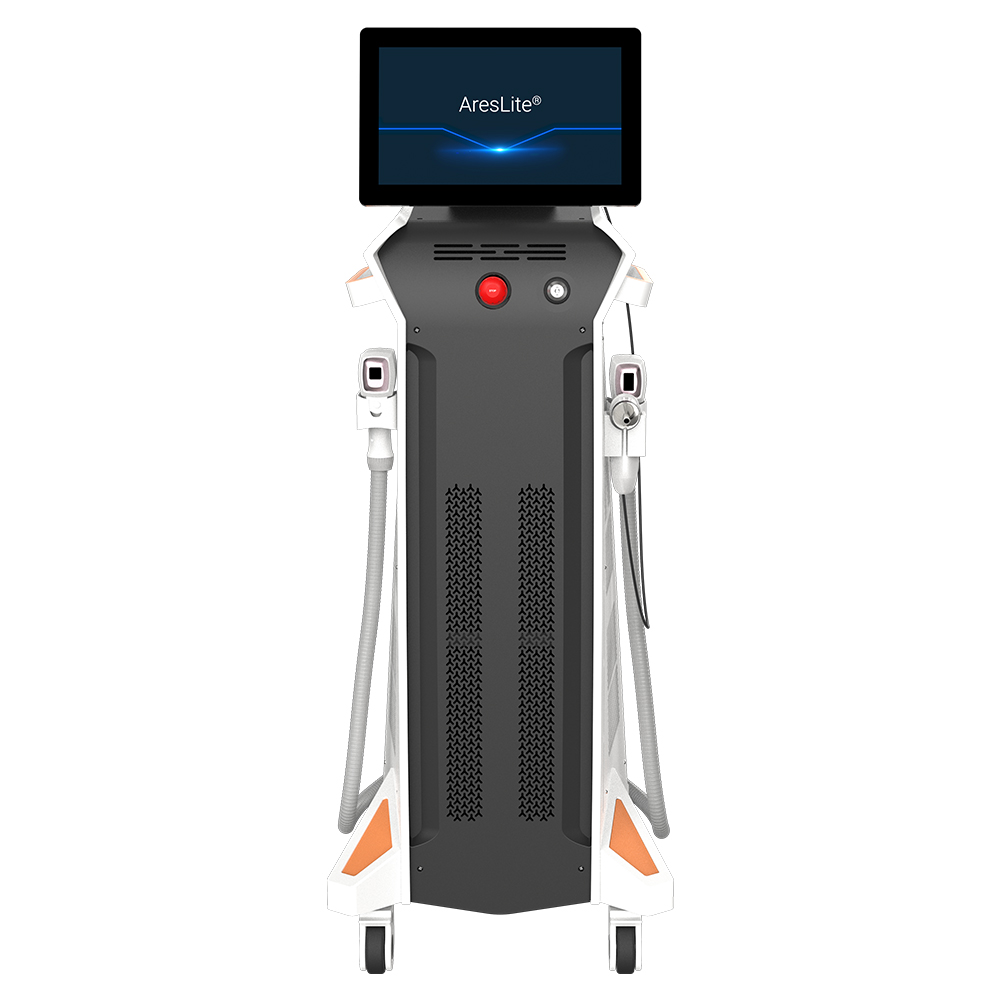
For the AresLite DM60, the verified configuration includes wavelengths at 755nm, 808nm, 940nm, and 1064nm, four spot sizes from 6x6mm to 12x36mm, a frequency range of 1 to 20Hz, coherent laser power options of 1200W, 1800W, and 3000W, and a combined ICE semiconductor, sapphire, air, and water cooling system. You can review the full list on the DM60 product page.
The DM40P offers the same 755nm, 808nm, 940nm, and 1064nm wavelength set with spot sizes of 12x12mm and 12x24mm, a frequency range of 1 to 20Hz, laser power options of 1200W, 2000W, and 3000W, and a 15.6 inch Android screen. Its two-handle design is aimed at clinics that want a second handle or a screen-linked workflow. The page is at AresLite DM40P.
Do not let one number carry the decision. A 3000W power option matters only if the operator can still set an appropriate fluence and spot size for the client. The wavelength set, spot size range, cooling, and control interface are the details that determine whether a machine can be used safely across skin types.
How should a clinic screen and treat clients safely?
Short answer: use a written screening step before every treatment, perform a test patch, choose conservative parameters for darker skin, document the settings and response, and stop or adjust when there is any sign of excess reaction. Follow the same sequence for every new client.
-
Record the client’s Fitzpatrick type, hair color, recent sun exposure, medication use, and any history of pigment change or keloids.
-
Exclude clients who are pregnant, have an active infection or open wound in the treatment area, or are taking photosensitizing medication.
-
Choose the wavelength and spot size for the area and skin type. For Fitzpatrick IV to VI, 1064nm is usually the safest starting point.
-
Set a conservative fluence and pulse approach, then perform a test patch in a small, less visible area.
-
Wait long enough to assess the skin response before treating the full area.
-
Keep the skin cool and dry, use the contact cooling correctly, and stop if the skin shows unusual pain, blistering, or pigment change.
-
Record the settings, response, and any adjustments in the client file so the next session starts from real data.
These steps protect the client and protect the clinic. A machine is only as safe as the protocol around it. If a supplier promises that a particular wavelength is completely risk free, that is a warning sign rather than a reassurance.
Why is a 755nm-only machine not enough for a diverse market?
Short answer: the 755nm wavelength is strongly absorbed by melanin, which makes it useful for lighter skin but unsuitable for very dark skin. A clinic that buys a 755nm-only machine gives away the darker-skin clients and risks treating someone with the wrong wavelength when the schedule is full.
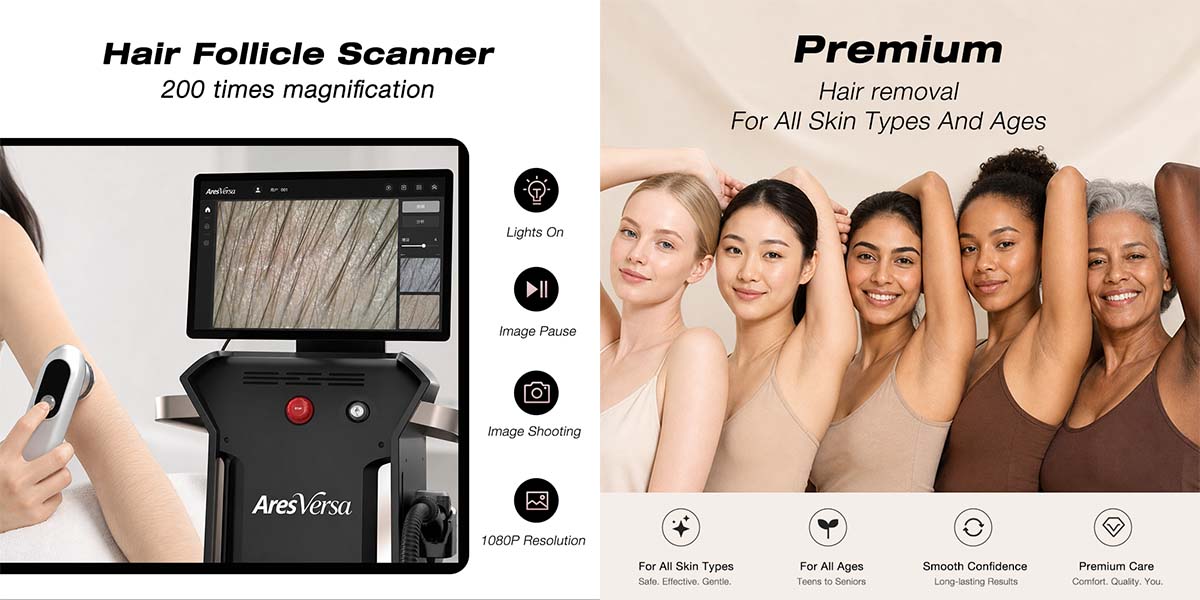
The 755nm wavelength is often associated with lighter skin and fine hair. It is not the right primary tool for Fitzpatrick V or VI. The clinic should still have access to it if it treats lighter clients, but it cannot be the only option in a market that includes a wide range of skin tones.
A four-wavelength machine changes the daily workflow because the operator can match the client rather than turning clients away. The key is training. Having 1064nm in the menu does not help if the operator does not know when and how to use it. The supplier should provide operation video, a trainer, and a manual, and the clinic should repeat that training as staff change.
How do the DM60 and DM40P compare for this use case?
Short answer: both offer the same four-wavelength set, so either can serve a diverse client base. The DM60 gives a wider spot size range, while the DM40P adds a two-handle workflow and a larger Android screen. The right choice depends on room throughput and operator preference, not on wavelength coverage.
| Feature | AresLite DM60 | AresLite DM40P |
|---|---|---|
| Wavelengths | 755nm, 808nm, 940nm, 1064nm | 755nm, 808nm, 940nm, 1064nm |
| Spot sizes | 6x6mm, 12x12mm, 12x24mm, 12x36mm | 12x12mm, 12x24mm |
| Frequency | 1 to 20Hz | 1 to 20Hz |
| Power options | 1200W, 1800W, 3000W | 1200W, 2000W, 3000W |
| Handle configuration | Replaceable diode design | Two handles |
| Screen | Treatment controls | 15.6 inch Android screen |
For a clinic that wants maximum spot size flexibility and a replaceable diode design, the DM60 is the closer fit. For a clinic that wants a second handle or screen-linked management, the DM40P is worth comparing. Both still require the same conservative operating discipline on darker skin.
How does certification affect this purchase?
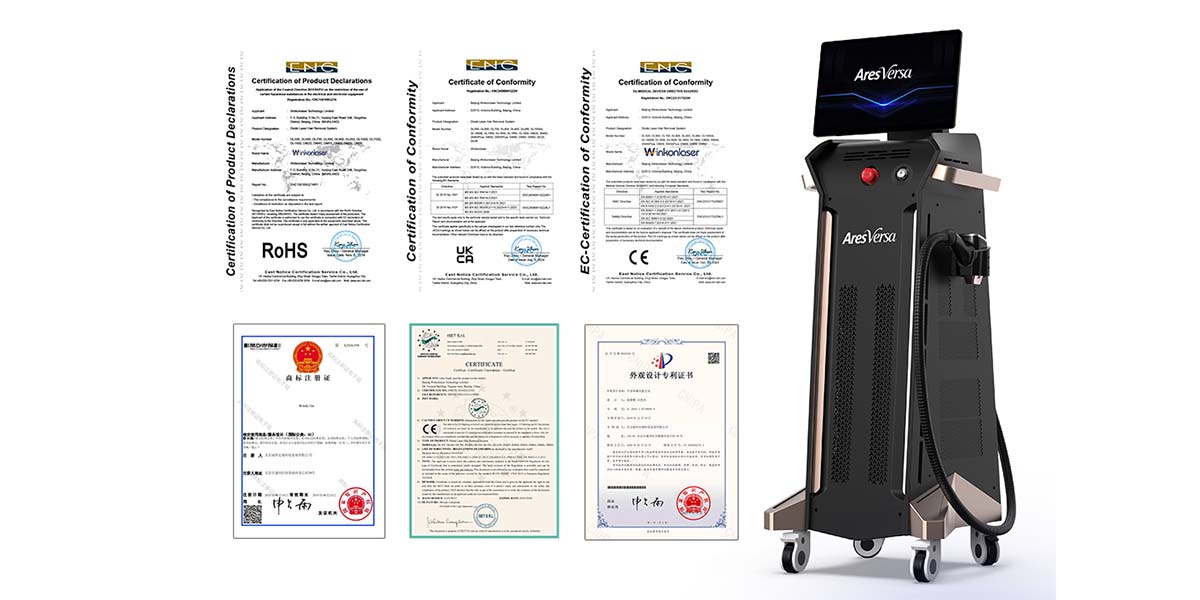
Short answer: certification tells you which model is cleared for the market, not which wavelength is safe for an individual client. Only the DM60 and DM40P carry FDA 510(k) clearance under K241860 in the Winkonlaser diode range.
Certification reduces the risk that the machine cannot be placed in your market, but it does not replace protocol. Picosecond, CO2, and fat-reduction machines in the Winkonlaser range do not automatically share that diode clearance. Confirm the exact model and the intended use before import.
The same caution applies to clinical claims. A machine may be cleared for hair removal, but that does not mean every skin type can be treated with the same settings. The operator still has to screen the client and choose conservative parameters. If a supplier says a wavelength works equally on every skin type, ask for the written protocol and the limitations.
The supplier record matters here as much as the model sheet. Winkonlaser was founded in Beijing in 2012, exports to 120+ countries, and has 15+ engineers. The main unit and handpiece carry a two-year warranty, with lifetime technical support. Those facts do not make a wavelength safe on their own, but they show the support structure behind the machine you are comparing.
FAQ
Q: Is 1064nm diode laser safe for darker skin?
A: 1064nm is generally the preferred wavelength for Fitzpatrick IV to VI because it penetrates deeper and is absorbed less strongly by epidermal melanin. It is not risk free. The clinic still needs conservative fluence, contact cooling, and a test patch.
Q: Can I use 755nm on dark skin?
A: No. The 755nm wavelength is not suitable for very dark skin. Use it for lighter skin and fine or light hair, and select 1064nm for Fitzpatrick IV to VI.
Q: Which Winkonlaser diode machines offer 1064nm?
A: The AresLite DM60 and DM40P both offer 755nm, 808nm, 940nm, and 1064nm. Only these two diode models are described as FDA 510(k) cleared under K241860.
Q: What parameters should I reduce for darker skin?
A: Start with a lower fluence and a conservative pulse approach, choose the appropriate spot size, use contact cooling, and perform a test patch. Increase settings only after assessing the skin response.
Q: Does higher laser power make dark-skin treatment safer?
A: No. Higher power alone does not improve safety. The wavelength, fluence, spot size, cooling, and operator protocol matter more. A high-power machine without proper control can increase risk.
Q: Who should not receive diode laser hair removal?
A: Laser hair removal is not suitable for pregnant clients, people with an active infection or open wound in the treatment area, or anyone taking photosensitizing medication. A qualified operator must screen every client.
Q: How do I choose between the DM60 and DM40P?
A: Both have the same four wavelengths. Choose the DM60 for a wider spot size range and replaceable diode design, or the DM40P for a two-handle workflow and 15.6 inch Android screen.
Q: Does FDA clearance guarantee safe treatment on all skin types?
A: No. FDA 510(k) clearance under K241860 applies to the DM60 and DM40P for their cleared use. It does not replace client screening, conservative settings, or operator training.
Get a datasheet matched to your client mix
The right diode laser for darker skin is a machine with 1064nm as a standard option, a wide enough spot size range, strong contact cooling, and controls that let the operator start conservatively. That combination protects the client and expands the clinic’s market. If you want the DM60 or DM40P datasheet with the wavelength and parameter details for your client mix, request a quote through the Winkonlaser contact page and ask for the written specifications before you decide.