


Skin Analyzer Machine Cost: What Each Price Tier Buys and When It Pays for Itself
Table of Contents
Skin analyzer is one of the few clinic purchases where the price tag says very little about what you are buying. Two devices can both be called an AI skin analyzer, and one can cost several times more than the other while the cheaper unit has the better camera. The difference is not brand magic. It lives in the sensor, the imaging modes, the software license, and the support behind the box.
That is why a skin analyzer price list is almost useless until you know which of those machines you are looking at. This guide breaks the market into three realistic tiers, shows what each tier buys, and runs the payback math a clinic owner actually needs. If you want the treatment side explained first, our complete guide to what a skin analyzer does covers the measurement science in more depth.
What Actually Moves the Price
No factory sits down and invents a skin analyzer price. The number is the sum of six engineering decisions, and each one changes the quote:
-
Camera and sensor. A high-resolution sensor with enough dynamic range to capture texture, redness, and oil levels costs real money. A low-end webcam sensor costs a fraction of that and produces the kind of flat image that cannot support a useful report.
-
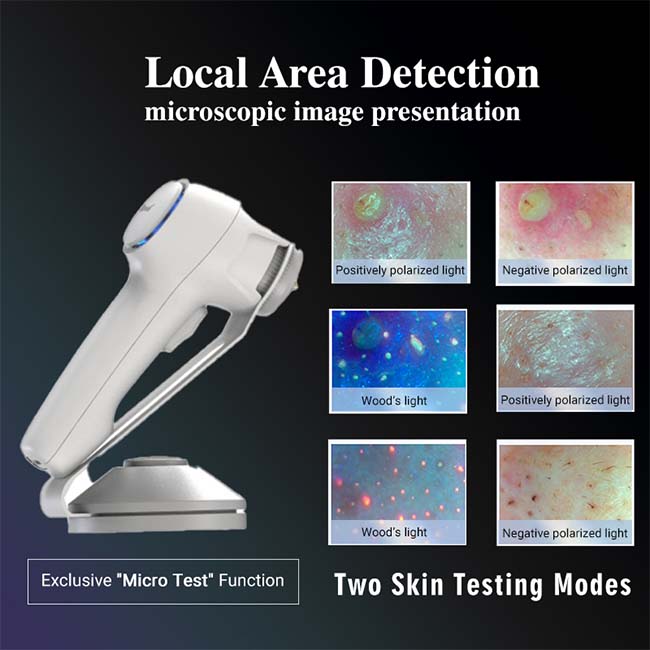
Imaging modes. A single white-light photo can show pores. Eight spectra can separate surface oil, dehydration, pigment, and UV-style damage. More spectra mean more filters, more calibration, and more price.
-
Three-dimensional capture. A system that takes front, left, and right images gives the operator a fuller view than one flat shot. The extra cameras or rotation hardware are part of the bill.
-
Software and updates. The license is a major hidden line item. A good analysis engine is updated regularly, and clinics often discover the true cost only when the supplier asks for a renewal fee.
-
Screen and storage. A machine with its own display and large built-in storage lets staff work without pairing a tablet. That hardware costs money and removes a daily workflow headache.
-
Certification and support. Real documentation, tested components, spare parts, and a manufacturer that answers the phone all add cost. A unit with no paperwork is cheap because the clinic carries the risk instead of the factory.
Three Pricing Tiers, Explained
These bands reflect what the market actually sells. They overlap at the edges, so use them as a map rather than a menu. The figures are market reference ranges, not a Winkonlaser price list.
| Tier | Price position | Typical profile |
|---|---|---|
| Entry portable scanners | Roughly $700 to $1,200 | One or two spectra, a basic camera, app-based software, limited storage, thin support |
| Mid clinical 3D AI systems | Roughly $1,500 to $2,500 | High-resolution sensor, multiple spectra, front/left/right capture, on-screen display, patient data storage |
| High medical multispectral workstations | Roughly $2,700 to $18,000 | Brand platforms, wide dermatology modules, large software ecosystems, local service networks |
The honest guidance is the same one we give every clinic that asks: for a working salon or clinic, the mid tier is where the value sits. Below it, you are usually buying a photo booth that looks like an analyzer. Above it, you are often paying for a brand name and modules a single room may never use.
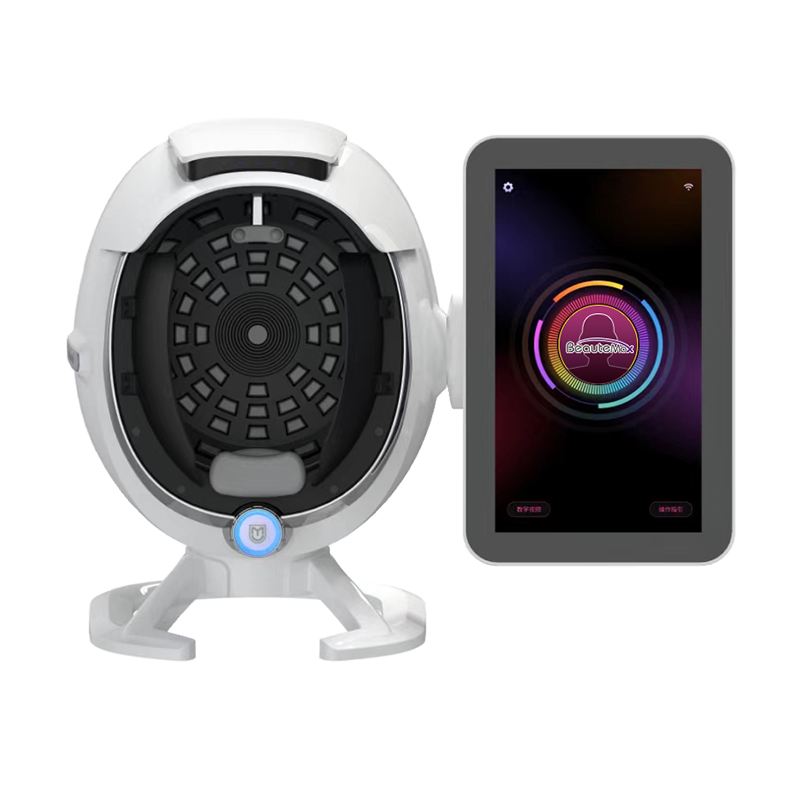
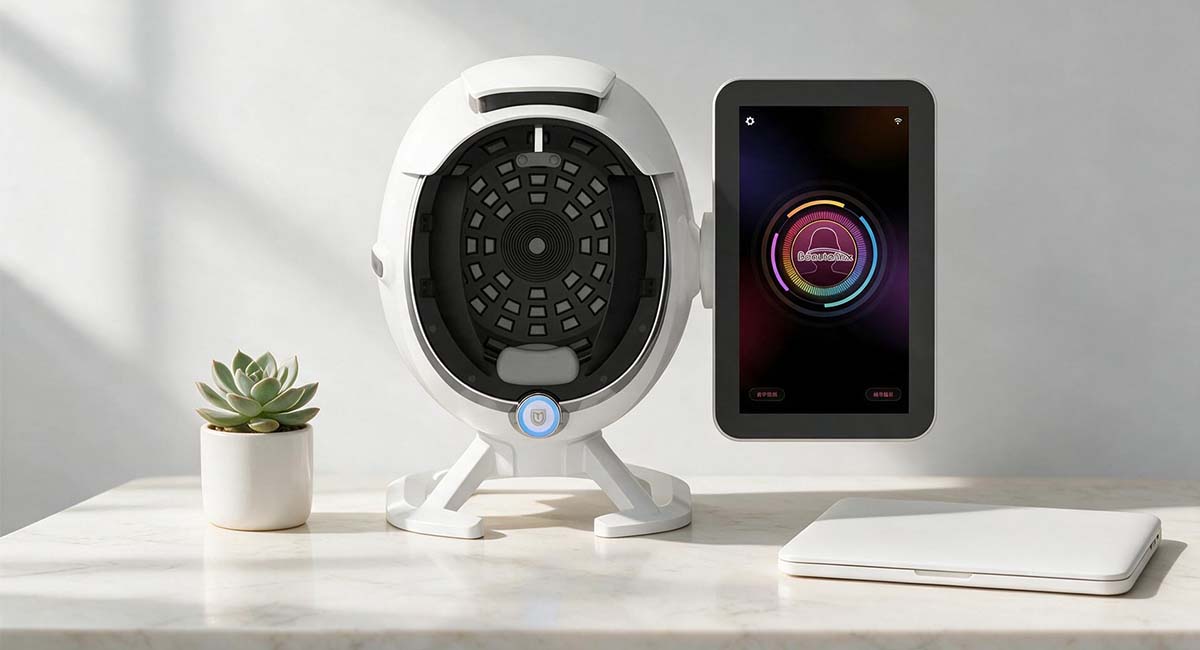
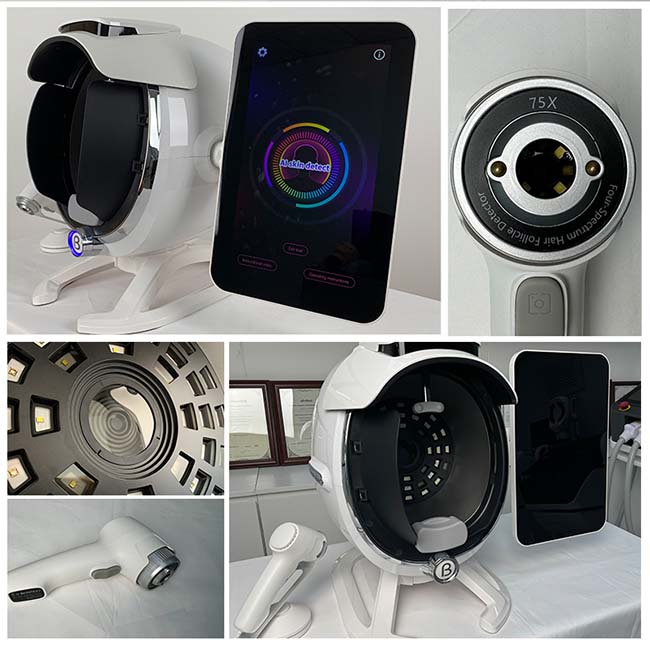
Winkonlaser’s K12 AI skin analysis machine sits in that practical mid tier with a high-resolution sensor, eight-spectrum imaging, and 180-degree capture. Because Winkonlaser manufactures factory-direct, the price is configuration-specific. Ask for a written quote rather than guessing from a marketplace number, and view the full skin analyzer range to compare configurations.
The Spec Sheet That Separates Tiers
A price means nothing until the spec sheet matches the claim. In my experience, the buyers who avoid regret are the ones who check the camera and the software before they check the discount. Here is what a serious clinical skin analyzer should list, using the K12 as the reference:
-
36 million pixels. This is the sensor resolution on the K12. It matters because fine texture, early pigmentation, and small pores only become visible when the image has enough detail to enlarge.
-
Eight-spectrum imaging. The eight spectra cover the visible light range, roughly 400 to 700nm, plus other calibrated modes used for surface damage and hydration. More spectra mean the report can separate issues that look identical under a single light.
-
180-degree surround capture. The K12 takes front, left, and right views, so the operator sees the face as a whole instead of one flat snapshot. This is the difference between a selfie camera and a consultation tool.
-
32G storage and on-screen display. A system that stores customer history and shows results on its own screen does not depend on a tablet that might be borrowed, updated, or full. The K12 includes both.
-
15 measurable skin concerns. The K12 analyzes fifteen concerns, including moisture, pores, blackheads, acne, acne marks, wrinkles, and roughness. A smaller count usually means the software cannot support the conversations that turn a scan into a sale.
The red flag to memorize: a brochure that says “AI” or “8-in-1” without stating the sensor resolution, the number of spectra, or the software renewal terms. That combination is how basic photo scanners get sold at clinical prices. Ask for the written spec sheet and read the license terms before you compare prices.
What Each Tier Buys a Clinic
An entry scanner is fine for a high-volume front desk that only needs a quick before-and-after photo. It is not a consultation engine. The image is flat, the report is thin, and the client often treats the result as a camera trick rather than a professional finding.
A mid-tier clinical system turns the scan into a selling conversation. The 3D views and multiple spectra let staff point at real evidence: oil congestion here, dehydration there, early pigmentation under this light. That evidence supports treatment recommendations, product sales, and a follow-up appointment.
A high-end workstation adds dermatology depth, wider integration, and a larger software ecosystem. It is a strong choice for a multi-room clinic that will actually use the modules. For most salons, it is more machine than the revenue needs.
The practical test is simple: does the machine give staff three concrete talking points in the first ninety seconds after a scan? If it does, it earns its place. If it only produces a pretty picture, no tier will make it pay.
How to Price the Consultation
The analyzer is a cost center until you attach it to a service. The pricing structure is consistent across most markets:
-
Complimentary quick scan. Many clinics use a one-minute scan as a free entry point, then charge for the full report. Keep the free version short enough to create interest without giving away the consultation.
-
Full skin analysis session. Priced per session, usually including the report, a treatment plan, and a product recommendation. This is the core revenue event.
-
Membership or quarterly check-ins. A repeat scan every eight to twelve weeks creates predictable income and makes treatment progress visible. This is where the analyzer earns its keep over time.
-
Treatment-bundled scan. Fold the scan into a facial, peel, or skin treatment package. The scan makes the treatment feel personalized, and the treatment gives the scan a reason to exist.
The insight that protects revenue: do not sell one scan. Sell the cycle. A client who returns for a quarterly skin check is worth more than a client who pays once and walks away.
ROI: When the Machine Pays for Itself
Run this framework with your own numbers before you buy:
Step 1, monthly capacity. A skin scan takes only a few minutes, so one machine can support a large number of scans per day. Multiply your realistic daily scans by your working days.
Step 2, realistic utilization. No clinic fills every slot in the first year. Assume a conservative fraction of capacity while you build the habit, then recalculate as bookings grow.
Step 3, revenue per scan. Add your paid consultation price, then add the higher-margin treatment or product revenue that the scan helps sell. The scan rarely earns its keep alone; it earns by lifting the ticket.
Step 4, payback. Divide the machine cost plus shipping, software, and training by monthly revenue. The lower your utilization, the longer the payback, which is exactly why the service design matters as much as the device choice.
Skin analyzers tend to pay back quickly for three reasons: the scan is fast, the evidence makes recommendations easier to accept, and the repeat cycle creates a built-in follow-up appointment.
Hidden Costs That Turn Cheap Into Expensive
The purchase price is the beginning, not the total. These are the costs clinics forget:
-
Software renewals. A supplier that sells hardware cheaply often makes its margin on the subscription. Ask what the license includes and what happens in year two.
-
Weak support. When the camera drifts out of calibration or the app stops working, a slow supplier means the machine sits idle. Check the warranty and response time before signing, not after.
-
Tablet dependency. Some scanners require the clinic to supply a compatible tablet or computer. That hidden cost disappears when the machine has its own screen.
-
Missing documentation. Local licensing or insurance may ask for paperwork. A machine without it can sit unused while a competitor treats.
Winkonlaser has been building equipment since 2012 and exports to more than 120 countries. I have been in this industry since 2012, and the clinic that asks for the license terms and support policy up front is usually the one that keeps the machine for years. The clinic that buys on sticker price alone is usually the one paying again in six months.
Safety, Contraindications and Limitations
A skin analyzer is an imaging and screening tool, not a medical device that treats the skin. Its report supports a consultation; it does not replace a dermatologist’s diagnosis.
The device uses controlled light imaging, so there is no significant recovery time and no treatment energy delivered to the skin. Keep the lens clean, follow the manufacturer’s positioning instructions, and store customer images in line with local privacy rules. Do not rely on the analyzer to detect skin cancer or other medical conditions.
FAQ
Q: How much does a skin analyzer machine cost?
A: Entry portable scanners sit roughly around $700 to $1,200. Mid clinical 3D AI systems sit roughly around $1,500 to $2,500, and high-end multispectral workstations run higher, sometimes well into five figures. These are market bands. For a Winkonlaser K12 quote, contact us because the price depends on configuration.
Q: Why do skin analyzer prices vary so much?
A: Because the machines are genuinely different. Sensor resolution, number of imaging spectra, 3D capture, software license, storage, screen, certification, and support each move the price. Two devices called the same thing can be different products.
Q: Which tier should a small salon buy?
A: Most salons and clinics get the best value from the mid tier. It has the resolution and multiple spectra that turn a scan into a consultation, without paying for dermatology modules a single room may not use.
Q: How does a skin analyzer make money?
A: It makes money by lifting the ticket, not usually by selling the scan alone. A paid consultation, a treatment recommendation, a product sale, and a quarterly follow-up cycle all come out of one scan.
Q: How fast does a skin analyzer pay for itself?
A: Payback depends on your scan volume, consultation price, and how well the team uses the report to sell treatments and repeat visits. Run the capacity and utilization math in this guide with your own numbers.
Q: Does the K12 need a separate tablet?
A: No. The K12 has its own on-screen display and 32G storage for customer data, so staff can run scans without pairing a tablet or computer.
The Bottom Line
A skin analyzer is one of the few purchases where the demand is already in the room: the client wants to know what is happening to their skin. The price range is wide because the machines are genuinely different, and the difference lives in the sensor, the spectra, the software, and the support.
Buy the tier your service model will actually use, check the license terms before you sign, and attach the machine to a repeat consultation cycle rather than a one-off scan. Done right, it becomes a fast-payback tool that improves every treatment conversation in the clinic.
Ready to see exact pricing for your clinic? Contact our team for a configured quote, or view the K12 AI skin analysis machine directly.

-1.jpg "710-468(马来西亚)-1")