


What Does a Skin Analyzer Do? A Complete Guide for Clinics in 2026
Table of Contents
- What Exactly Is a Skin Analyzer?
- How Does a Skin Analysis Machine Work?
- What Can a Skin Analyzer Detect? 15+ Skin Concerns
- Skin Analyzer vs the Human Eye: Why Tech Wins
- Who Needs a Skin Analyzer in Their Clinic?
- How to Choose the Right Skin Analyzer
- What a Skin Analyzer Cannot Do
- FAQ
- Final Verdict
What Exactly Is a Skin Analyzer?
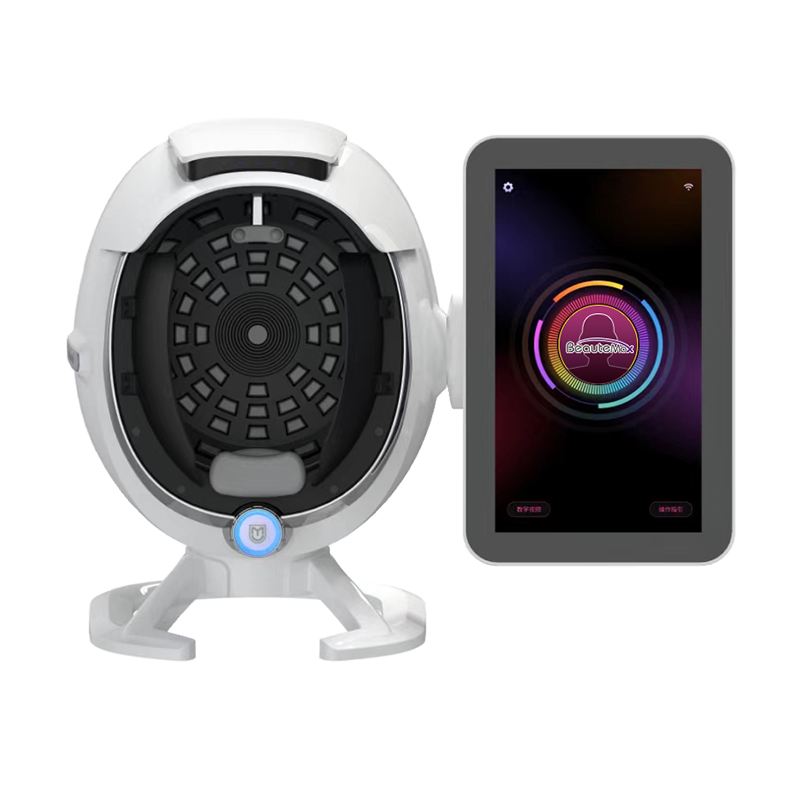
A skin analyzer is a diagnostic device that uses multiple imaging technologies to assess the condition of your skin. Think of it as an MRI for your face — non-invasive, painless, and dramatically more informative than looking in a mirror.
These machines have been around in dermatology clinics for years, but the 2024-2026 generation is different. The new wave uses AI-powered analysis, 3D facial scanning, and high-resolution spectral imaging that was previously only available in university research settings. Now you can put one in a small room in your clinic and get lab-grade skin data in under two minutes.
The K12 AI Skin Analyzer from Winkonlaser is a good example of where the technology sits today. It uses 36 million pixel imaging and eight-spectrum technology to capture what is happening across the full depth of the skin, from the surface stratum corneum down to the deeper dermal layers.
I would put it this way: if traditional skin assessment is reading the back cover of a book, a skin analyzer is reading every page, including the footnotes.
How Does a Skin Analysis Machine Work?
The basic principle is not complicated. Different wavelengths of light interact with different structures in the skin. By projecting specific wavelengths and measuring how they reflect, absorb, and scatter, the machine builds a picture of what is happening beneath the surface.
Here is how it breaks down in practice on a modern AI skin analyzer.
Big Spectrum Imaging Technology
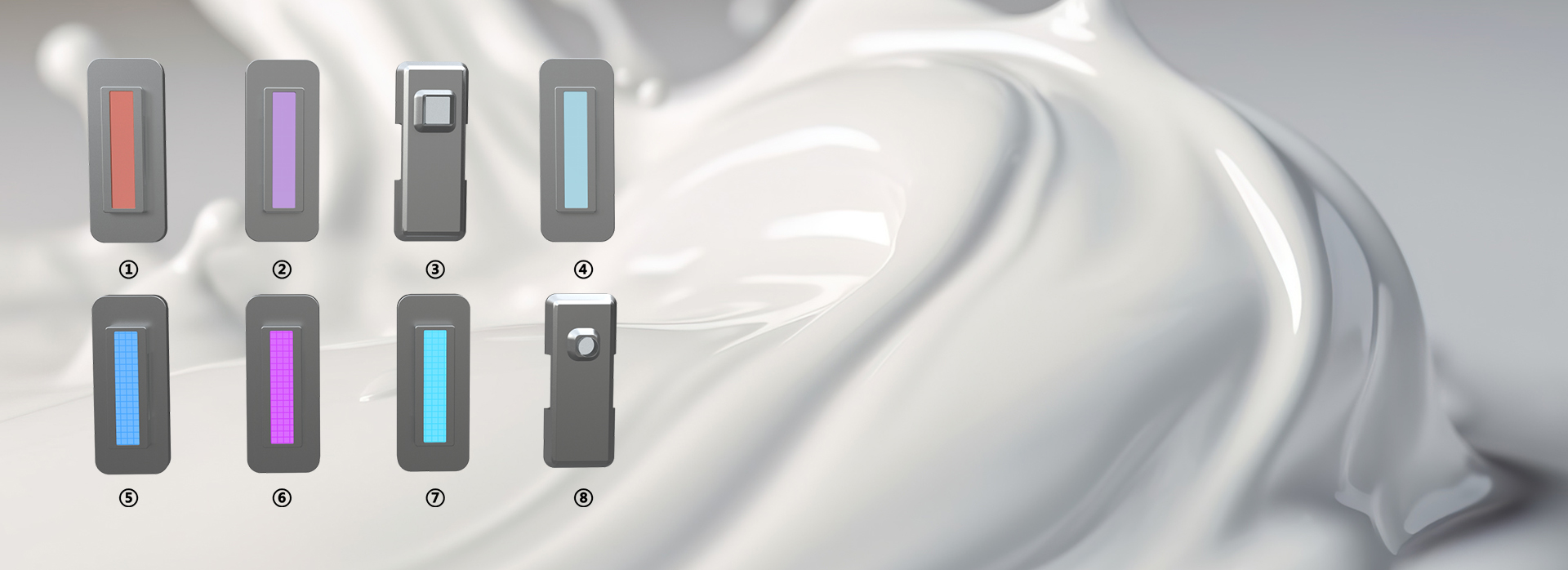
Most consumer skincare tools use one or two light sources. Professional skin analyzers use multiple — typically six to eight — distinct spectra. Each spectrum reveals a different layer or characteristic of the skin.
-
Standard white light shows surface issues: texture, pores, fine lines.
-
UV light reveals sun damage that is invisible to the naked eye.
-
Polarized light cuts through surface glare and shows deeper pigment and vascular patterns.
-
Cross-polarized light highlights red areas, inflammation, and broken capillaries.
When you combine all these spectra into one scan, you get a layered view of the skin that no single light source can provide. The K12 uses eight spectra, which puts it at the upper end of what is available in clinic-grade equipment today.
3D Facial Scanning
This part matters more than it sounds.
Older skin analyzers took a single flat image of the face. The problem: skin is not flat. A wrinkle that looks shallow from the front might be significantly deeper when viewed from the side. A congested pore might look fine from one angle and obvious from another.
Modern machines like the K12 capture three images — front, left, and right — and stitch them into a 3D model of the face. This gives a 180-degree surround view. You can rotate the model, zoom into specific areas, and compare the same spot on the left and right sides of the face to spot asymmetry.
For clinics offering anti-aging treatments, this 3D capability is the difference between saying “I think your nasolabial folds have improved” and showing the client a side-by-side 3D comparison with measurable depth reduction. Clients believe what they can see.
AI-Powered Analysis
Here is where the machine stops being a camera and becomes a diagnostic tool.
Once the images are captured, the built-in AI compares the data against a reference database of thousands of skin profiles. It identifies patterns that a human might miss — early signs of dehydration that have not yet produced visible flaking, subclinical inflammation that could develop into acne, or uneven pigmentation that is not yet visible under normal light.
The AI generates a report that scores each skin parameter on a scale, so both you and your client can see which areas are healthy and which need attention. The whole process, from scan to report, takes about 90 seconds.
The K12 stores up to 32GB of client data, so you can track changes over multiple visits. That longitudinal data — “your pore size has decreased 18% over three treatments” — is extremely powerful for client retention.
What Can a Skin Analyzer Detect? 15+ Skin Concerns
If you have never used one of these machines, the range of what it picks up might surprise you.
Here is a typical detection list on a modern AI skin analyzer:
-
Moisture content — hydration levels in the stratum corneum. This alone is worth the investment for many clinics because so many skin concerns trace back to a compromised moisture barrier.
-
Pores — size, distribution, and congestion level. The machine can distinguish between open pores and pores clogged with sebum.
-
Blackheads and whiteheads — counts and severity mapping across different facial zones.
-
Acne lesions — inflammatory vs non-inflammatory, active vs healing.
-
Acne marks and post-inflammatory hyperpigmentation — area coverage and pigment density.
-
Wrinkles — depth, count, and distribution. Tracks changes over time for anti-aging efficacy.
-
Skin roughness and texture — surface irregularity measured across the full face.
-
Pigmentation (melanin) — both epidermal and dermal pigment. Critical for planning laser and IPL treatments.
-
Redness and inflammation (hemoglobin) — vascular patterns and inflammatory markers.
-
Sun damage — UV spots invisible to the naked eye but visible under UV fluorescence.
-
Porphyrins — bacterial activity markers that indicate acne-prone conditions.
-
Collagen health score — a composite metric based on multiple optical signals.
-
Elasticity indicators — skin firmness and resilience.
-
Sensitivity index — how reactive the skin is, which guides product and device selection.
That is fifteen distinct parameters on a standard scan. You cannot get this information from asking questions and looking at the skin. You cannot get it from a magnifying lamp. You can only get it from a machine designed to see what is below the surface.
I have seen clinics that use their skin analyzer as a sales tool — and I do not mean that in a bad way. When a client can see their own UV damage on screen, they do not need to be sold on a sunscreen. When they can see the 3D comparison of their wrinkles before and after treatment, they rebook before you ask.
Skin Analyzer vs the Human Eye: Why Tech Wins
An experienced aesthetician can learn a lot from looking at skin. Fifteen years in the industry, thousands of faces — you develop a good eye. I respect that.
But the human eye has limits. You cannot see moisture content. You cannot see subsurface pigmentation. You cannot quantify pore density or track wrinkle depth in millimeters. And you certainly cannot remember what a client’s left cheek looked like in detail three months ago.
Here is a concrete example. Two clients walk in with what looks like similar redness on the cheeks. You might treat them the same way. But a skin analyzer reveals that Client A has a compromised moisture barrier with underlying inflammation, while Client B has early rosacea with visible vascular dilation. Same surface appearance, completely different treatments. Treat them the same way and one of them gets worse.
That is what a skin analyzer prevents. It removes the guesswork.
The machines are not replacing your expertise. They are augmenting it. You still decide what the data means and what treatment to recommend. But you make that decision with ten times more information than you had before.
The K12 uses 36 megapixel imaging with an eight-spectrum sensor array covering wavelengths from 365nm to 940nm. To put that in context: most smartphone cameras used in aesthetic before-and-after documentation are 12 megapixels. The K12 captures three times the detail, which is why it can resolve fine wrinkle depth and pore-level texture changes that a phone camera physically cannot see. The 180-degree 3D reconstruction is processed using a proprietary algorithm trained on over 10,000 skin profiles across all Fitzpatrick skin types.
Who Needs a Skin Analyzer in Their Clinic?
This is not a machine for everyone. Here is who gets the most value.
-
Medical spas and dermatology clinics — you are already doing diagnostic work. A skin analyzer gives you objective data to support your treatment plans and document outcomes. If you do laser, IPL, or chemical peels, you need before-and-after imaging, and a skin analyzer does this better than a standard camera.
-
Beauty salons moving into advanced skincare — if you are expanding from basic facials into treatments that cost $100+, a skin analyzer justifies the higher price point. Clients pay more when they see data, not just when they hear claims.
-
Acne clinics and skin health centers — the ability to track pore congestion, inflammation levels, and bacterial activity over time is directly useful for acne management. You can show clients that their skin is improving even when they feel discouraged.
-
Medi-spa startups — if you are opening a new clinic, a skin analyzer sets you apart from every other new clinic that just has a bed and a lamp. It signals professionalism and technology investment from day one.
-
Independent aestheticians — if you work solo and compete with larger clinics, a skin analyzer is one piece of equipment that levels the playing field. You can offer the same diagnostic depth as a big med spa because the machine does the heavy lifting.
Who does not need one? A waxing-only salon or a nail bar. If you are not doing skin treatments, you do not need to analyze skin. But if skin is your business, you are leaving money and accuracy on the table without one.
Winkonlaser has been manufacturing professional aesthetic equipment since 2012 and exports to over 90 countries. The K12 is used in clinics across Europe, North America, Southeast Asia, and the Middle East. It carries CE, RoHS, and other required certifications for international markets. Every unit comes with warranty support and remote technical assistance.
How to Choose the Right Skin Analyzer
Not all skin analyzers are the same. Here are the specifications that matter.
-
Camera resolution — this is the foundation. A 5-megapixel camera cannot capture the detail that a 36-megapixel camera can. Higher resolution means finer wrinkle detection and sharper pore mapping. The K12 uses 36 megapixels, which is on the higher end for this category.
-
Number of spectra — more spectra = more data. Entry-level machines use 3-4 spectra. Professional machines use 6-8. The sweet spot in 2026 is 8 spectra.
-
3D capability — this is the feature that separates modern machines from older ones. A single flat image tells you less than a 3D model.
-
AI analysis — the machine should come with built-in AI that scores each parameter automatically. The AI reference database size matters.
-
Storage — 32GB is the current standard for a busy clinic.
-
Ease of use — your staff should learn the machine in under an hour.
-
Brand and support — a manufacturer with a proven track record in aesthetic equipment is worth more than a cheaper unit from a no-name supplier.
The K12 checks all these boxes. That does not mean it is the only option, but it is a good benchmark for what a proper clinic-grade skin analyzer should deliver in 2026.
What a Skin Analyzer Cannot Do
No piece of technology is perfect, and honesty about limits builds trust.
A skin analyzer is a diagnostic imaging tool, not a medical diagnostic device. It cannot diagnose skin diseases, identify cancerous lesions, or replace a dermatologist’s clinical examination. If a client has suspicious moles, persistent rashes, or unexplained skin changes, the right move is to refer them to a medical professional, not scan them with the analyzer.
The AI analysis is based on pattern recognition from reference databases. It is highly accurate for common skin concerns like hydration, pore congestion, and pigmentation. But it can occasionally flag normal variations as issues — a freckle might be read as pigmentation, a natural flush as inflammation. This is why human interpretation of the data is still essential.
Clients with active infections, open wounds, or severe inflammatory conditions on the face are contraindicated for scanning until the condition is resolved. The imaging process itself is safe and non-contact, but the data will be misleading if the skin is in an acute state.
These limitations do not reduce the value of the machine. They define what it is: a powerful tool that works best when combined with professional judgment, not a replacement for it.
FAQ
Q: Is a skin analyzer the same as a skin scanner?
A: The terms are used interchangeably in the industry. Both refer to devices that use imaging technology to assess skin condition. “Skin analyzer” is more common in the aesthetics world, while “skin scanner” appears more in consumer-facing marketing.
Q: Does a skin analyzer hurt?
A: No. The process is completely non-invasive. The client sits in front of the machine, places their chin on a rest, and the machine takes images using different light sources. There is no contact with the skin during the imaging process.
Q: How long does a full skin analysis take?
A: From positioning the client to receiving the AI-generated report takes about 90 seconds to two minutes. The actual image capture takes less than 30 seconds.
Q: Can a skin analyzer help with acne treatment?
A: Yes, significantly. It can identify inflammatory vs non-inflammatory lesions, track bacterial activity (porphyrins), map congestion patterns, and monitor treatment progress over time. Many acne clinics use skin analyzers as their primary assessment tool.
Q: Do I need special training to use a skin analyzer?
A: Basic operation takes about 30-60 minutes to learn. The machine does most of the analytical work. What takes training is interpreting the results and building treatment plans around the data — but you already have that skill as a skincare professional.
Q: Can a skin analyzer be used for before-and-after photos?
A: This is one of its primary uses. The 3D imaging provides consistent, repeatable positioning, so before and after photos can be accurately compared. The AI can measure objective changes in wrinkle depth, pore size, pigmentation area, and other parameters.
Q: How much does a professional skin analyzer cost?
A: Prices vary significantly based on features. Entry-level units start around $2,000-$3,000. Professional-grade machines with 3D scanning and AI analysis typically range from $5,000-$12,000. Contact Winkonlaser for current pricing on the K12 AI Skin Analyzer.
Q: Is a skin analyzer worth it for a small salon?
A: If you offer any facial treatments or customized skincare, yes. A $5,000 investment that helps you recommend more accurate treatments, improve client trust, and increase average ticket size can pay for itself within a few months. The ROI is driven by higher conversion rates, not higher foot traffic.
Final Verdict
A skin analyzer is not a luxury add-on for a modern clinic. It is becoming a standard diagnostic tool, the same way blood pressure monitors became standard in general practice.
The technology has reached a point where the quality-to-price ratio makes sense for most skin-focused businesses. AI analysis removes the subjectivity. 3D imaging provides objective documentation. Multi-spectral capture reveals what the eye cannot see.
If you are treating skin without one, you are working with incomplete information. You can still do good work. But you could do better work, charge more for it, and retain more clients — with a machine that costs less than many of the lasers already sitting in your treatment rooms.
For more articles about professional aesthetic equipment and clinical best practices, visit the Winkonlaser Communication blog.
Interested in the K12 AI Skin Analyzer?
Contact Winkonlaser for pricing, specifications, and a live demo.