


How Much Does a Laser Hair Removal Machine Cost? Complete Pricing Guide for Clinics
1. The Real Investment Behind Laser Hair Removal
If you Google “laser hair removal machine cost,” you’ll see numbers ranging from $3,000 to well over $100,000. The high end comes from legacy brands that dominated the market for decades. The low end comes from unbranded Chinese imports with no FDA clearance and no service network.
Winkonlaser sits in a different spot. We manufacture our own machines, hold FDA K241860 clearance, and ship to 120+ countries. Our pricing reflects real engineering, not brand markup.
A laser hair removal machine is a capital investment. You’re not buying a gadget — you’re buying a revenue stream. A well-chosen machine pays for itself in 3-6 months. A poorly chosen one collects dust.
2. Laser Hair Removal Machine Price Range at a Glance
| Tier | Price Range | Example Models |
|---|---|---|
| Entry-Level Diode | $3,000 – $5,000 | AresMix DL1500 |
| Professional Non-Crystal Diode | $5,000 – $8,900 | AresLite DM40P / DM60 |
| High-End Alexandrite & Nd:YAG | $9,200 – $18,000 | Alexandrite CL300 |
Most clinics I work with land in the $5,000 – $8,900 range. Not because they can’t afford more, but because that’s where you get the best balance of speed, versatility, and reliability without paying for features you won’t use.
3. What Affects the Price?
3.1 Number of Wavelengths
A single-wavelength IPL device costs less to build than a multi-wavelength diode laser. That’s physics.
Entry-level machines often use 1-2 wavelengths. Professional units like the AresLite series use four — 755nm, 808nm, 940nm, and 1064nm. Why four? Because no single wavelength works well on every skin type and hair color. The 755nm handles light skin and fine hair. The 1064nm penetrates deeper for darker skin safely. The 808nm and 940nm fill the middle.
If your client base is diverse — and whose isn’t these days — a 4-wavelength machine is the practical choice. In my experience, most clinics that start with a 2-wavelength machine end up upgrading within a year.
3.2 Cooling Technology
This is one of the biggest cost drivers, and also one of the most important.
-
Air cooling: cheapest, least effective, uncomfortable for patients
-
Contact cooling (sapphire tip): better, standard on mid-range machines
-
DCS 5-in-1 cooling: found on the AresLite DM40P and DM60. Combines semiconductor cooling, compressor cooling, forced air, water circulation, and a sapphire contact tip reaching -45°C
I’d rather see a clinic buy a mid-range machine with excellent cooling than a premium machine with average cooling. Patient comfort drives retention, and retention drives revenue. The DCS system is what allows my customers to treat sensitive areas — upper lip, underarms, Brazilian — with minimal complaints.
3.3 Spot Size & Energy Output
Larger spot sizes mean faster treatments. A machine with a 12x36mm spot can cover a full leg in half the time of one with a 12x12mm spot.
The DM60 features a dynamic AI spot size system — it switches between 6x6mm, 12x12mm, 12x24mm, and 12x36mm automatically depending on the treatment area. This is a premium feature that pushes the price up but also pushes your per-treatment revenue up because you can book more clients per day.
Power output (1200W vs 3000W) also matters. Higher power means you can deliver effective energy in shorter pulses, which means less discomfort and faster sessions.
3.4 Shot Count & Lifespan
Every laser has a finite number of shots before the bar degrades. Entry-level machines might offer 500,000 to 1 million shots. Professional machines like the AresLite series deliver 200 million shots.
Do the math: at 20 treatments per day, 5 days a week, a 200-million-shot machine lasts over 15 years. A 1-million-shot machine would need replacing in under a year. The TCO difference is enormous, even though the upfront cost is lower.
4. Detailed Breakdown by Price Tier
4.1 Budget-Friendly: $3,000 – $5,000 — For Small Clinics & Startups
Best for: Single-treatment-room setups, low volume (under 50 treatments/month), tight budget
In this range, you’re looking at entry-level diode machines like the AresMix DL1500. They offer 4 wavelengths and dual handpieces, making them functional for basic hair removal. The cooling is adequate but not luxurious, and the spot sizes are smaller, so treatments take longer.
Who should buy this: A therapist adding laser to an existing service menu, or a startup clinic validating demand before scaling.
The honest limitation: if your volume picks up, you’ll outgrow this tier within 6-12 months. Plan for that upgrade.
4.2 Mid-Range Sweet Spot: $5,000 – $8,900 — For Growing Clinics
Best for: Established clinics, 50-200 treatments/month, diverse client skin types
This is where about 70% of my customers end up. Two main options:
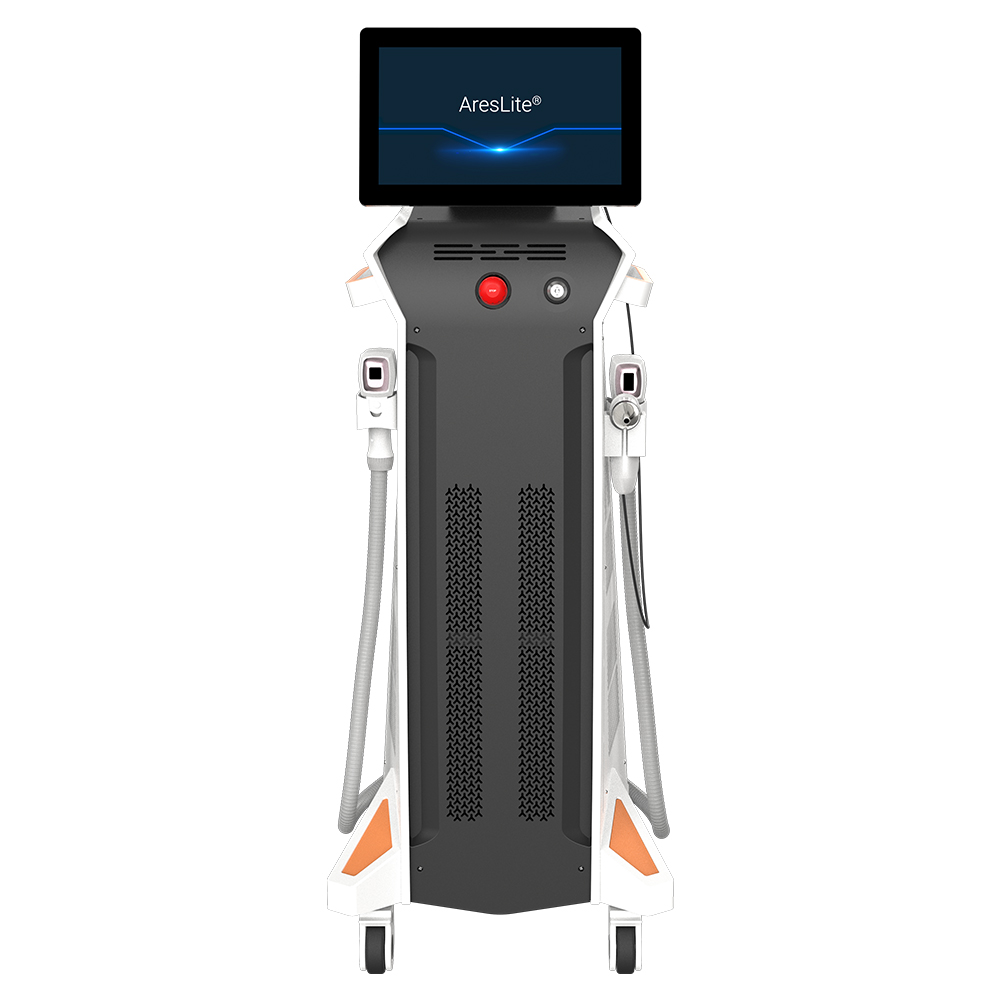
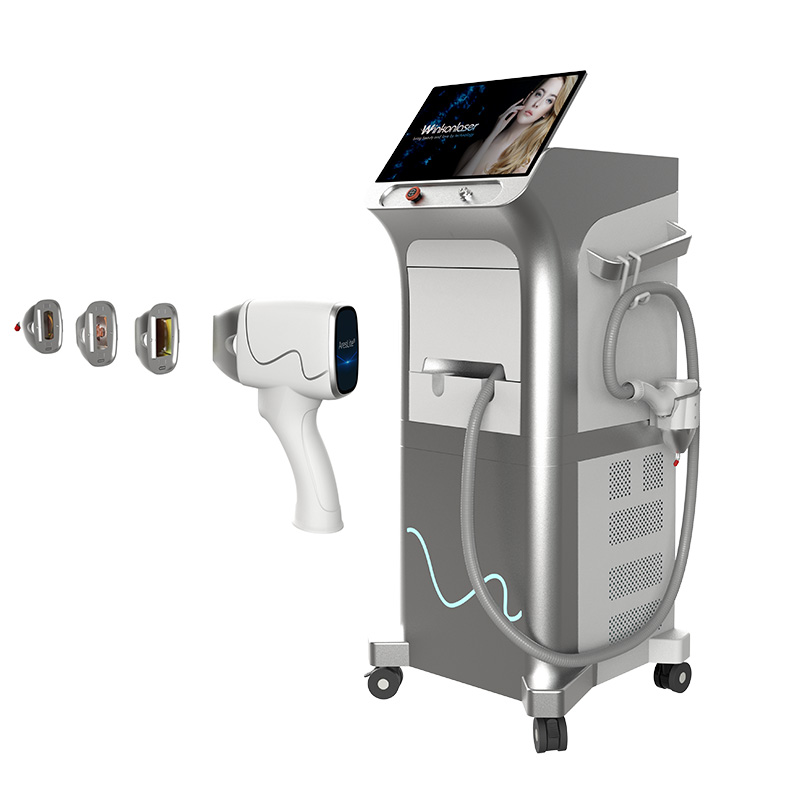
AresLite DM40P ($5,000 – $8,500) — A 4-wavelength non-crystal diode laser with DCS 5-in-1 cooling reaching -45°C. Standard spot sizes of 12x12mm and 12x24mm. Power options from 1200W to 3000W. This is a reliable workhorse that handles the majority of hair removal cases well.
AresLite DM60 ($6,500 – $8,900) — The flagship. Same 4-wavelength AresLite technology, but adds the dynamic AI spot size system (6x6mm up to 12x36mm), IP65 waterproof touchscreen handle, and advanced micro-light transmission. If speed and flexibility matter, the DM60 is the better investment.
I usually tell customers: if you’re planning to stay in this business for more than two years, go for the DM60. The difference in treatment speed alone can pay back the price gap within months.
Check out the full comparison: AresLite DM40P vs DM60 Comparison
Product page: AresLite DM60 Diode Laser Hair Removal Device
4.3 Premium All-in-One: $9,200 – $18,000 — For High-End & Multi-Skin Clinics
Best for: High-volume clinics (200+ treatments/month), multi-skin type practices, premium service positioning
The Professional Alexandrite Laser Hair Removal Machine CL300 combines 755nm Alexandrite with 1064nm Nd:YAG in a single system, delivering 5000W of peak power. It covers Fitzpatrick skin types I through VI with adjustable pulse widths from 0.25ms to 100ms.
The CL300 uses dynamic cooling spray, which some clinicians prefer for sensitive areas. Its adjustable spot sizes range from 3mm to 18mm (with optional 24mm), giving you flexibility for fine facial work and broad body treatments.
Who needs this: If your client base spans from fair-skinned redheads to dark-skinned clients in the same day, or if you’re positioning your clinic as a premium provider.
Who doesn’t: If 90% of your clients are Fitzpatrick III-IV (common in North America and Europe), a 4-wavelength diode like the DM60 already handles them beautifully. Save the $10k difference and invest it in marketing or a second machine.
5. Total Cost of Ownership — Beyond the Purchase Price
The purchase price is just the beginning. Here’s what else matters:
-
Training: Most Winkonlaser machines include operation videos and a trainer session.
-
Warranty: Always ask about terms before buying, especially for the laser bar and cooling system.
-
Consumables: The AresLite series uses non-crystal light processing — no crystal replacement costs.
-
FDA Compliance: K241860 clearance means you can operate with confidence.
-
Downtime: Our global service network across 120+ countries means help is usually a message away.
6. How to Choose the Right Machine for Your Clinic Budget
Here’s the framework I use when my customers ask me to help them decide:
Step 1 — Map your client skin types
If your area has mostly Fitzpatrick I-III: any 4-wavelength diode is excellent
If you serve Fitzpatrick IV-VI regularly: go for Alexandrite + YAG or the DM60’s 1064nm capability
If you serve all types daily: invest in the CL300
Step 2 — Estimate your monthly treatments
Under 50/month: entry-level is fine, but expect to upgrade
50-200/month: the DM40P or DM60 is your sweet spot
Over 200/month: the DM60 or CL300 justifies itself through speed alone
Step 3 — Calculate your payback period
Example: DM60 at $8,000. Charge $200 per full-leg treatment × 3 per week = $600/week. Machine pays for itself in about 13 weeks. Everything after is margin.
A simple rule: never buy a machine whose monthly payment exceeds what you can conservatively bill from it in the first month.
7. Frequently Asked Questions
Q: How much does a good laser hair removal machine cost for a clinic?
A: For professional use, expect $3,000 to $18,000 depending on the technology. Entry-level 4-wavelength diodes start around $3,000. Mid-range units with advanced cooling — like the AresLite DM60 at $6,500-$8,900 — cover most clinics’ needs. High-end Alexandrite systems run $9,200-$18,000.
Q: Is a more expensive machine always better?
A: Not necessarily. A premium CL300 offers the widest skin-type coverage and fastest treatment. But if your clients are mostly Fitzpatrick III-IV, a mid-range diode like the DM60 delivers excellent results at a lower TCO. The best machine matches your case mix, not the price tag.
Q: What hidden costs come with owning a laser hair removal machine?
A: Factor in maintenance, possible crystal replacement (not an issue with non-crystal diode systems), training if not included, and potential downtime. Winkonlaser machines ship with 200M shot lifespan and global support.
Q: Can a laser hair removal machine with FDA clearance cost under $5,000?
A: Yes. Entry-level devices like the AresMix DL1500 are priced $3,000-$5,000 and can be FDA-cleared (Winkonlaser holds K241860). However, lower-price units typically have smaller spot sizes and less powerful cooling.
Q: How do 4-wavelength diode lasers compare in price to Alexandrite machines?
A: 4-wavelength diode units cost $5,000-$8,900, while Alexandrite machines start around $9,200 and go up to $18,000. For most clinics, a 4-wave diode is the more budget-friendly versatile option.
8. Ready to Invest?
A laser hair removal machine is one of the highest-ROI investments a clinic can make. The key is matching the machine to your real needs — not buying more than you need, and not buying so little that you outgrow it in six months.
If you’re not sure which tier fits your clinic, I’d be happy to help. After 12 years of doing this, I’ve seen every combination of budget, case mix, and business model.
Learn more about getting started: How to Start a Laser Hair Removal Business
For a deeper look at the technology: How Does Laser Hair Removal Work? Science Explained
I’ll help you find the machine that actually fits your business — not the one with the biggest marketing budget.