


How Long Does EMS Take to Build Muscle? A Complete Timeline for Clinics and Clients
Table of Contents
A clinic owner in Dubai called me last week. She had just bought her first EMS unit — a Renasculpt FE60 — and her first client was booked for Monday.
“I’ve told her she’ll see results,” she said. “But I don’t actually know when. Help me not look stupid.”
That call is why I’m writing this. Every clinic, spa, and distributor I’ve worked with eventually fields the same question from their clients: “How long does EMS take to build muscle?” The person asking might want abs for a wedding, a better recovery tool for their athletes, or a non-surgical option after weight loss. But underneath all of that, what they’re really asking is simple: “When will I see it?”
Here’s the honest answer — broken down by weeks, sessions, and the science that makes it happen.
_07.jpg)
1. The Short Answer: What the Timeline Looks Like
Let me give you the headline first, then we’ll unpack it.
I’d break it into two distinct phases: the neurological phase (your brain learning to activate the muscle fully) and the structural phase (the muscle actually getting bigger and firmer). Most people quit right at the transition between these two — around week 3-4 — because they haven’t seen the visual payoff yet. That’s exactly when they should keep going.
This timeline assumes two sessions per week. At once a week, multiply everything by roughly 1.5x.
2. The Science Behind EMS Muscle Building
_02.jpg)
Traditional muscle growth works through voluntary effort — you lift, you push, you pull, and your brain sends signals to your muscles to contract. How hard those contractions are depends on how much weight you’re moving and how tired you are.
EMS bypasses that whole negotiation.
Here’s the mechanism: electrodes placed on the skin deliver electrical impulses that directly activate the motor neurons underneath. No waiting for the brain to decide to push harder. The device decides.
This matters because EMS can recruit close to 100% of muscle fibers in a treated area during a single contraction — including the high-threshold Type II fibers that are hardest to activate through voluntary exercise. Those Type II fibers are also the ones responsible for the biggest gains in muscle size and strength.
Compare that to voluntary training, where most people can only recruit 50-70% of their fibers even during maximum effort. EMS essentially bypasses your central nervous system’s safety limits.
EMS vs HIFEM: A Quick Distinction
If you’re a clinic owner shopping for equipment, you’ve seen both terms. Here’s the difference in plain language:
EMS (Electrical Muscle Stimulation) sends electrical current through surface electrodes directly into the muscle. It’s the older, more studied technology.
HIFEM (High-Intensity Focused Electromagnetic Energy) uses magnetic fields to induce muscle contractions. It penetrates deeper and can reach muscles EMS can’t easily access — like the pelvic floor — but it’s significantly more expensive and less portable.
From what I’ve seen in the market, EMS still dominates in affordability and versatility. You can treat abs, glutes, arms, thighs, and back with one EMS unit. HIFEM is typically locked into one or two body parts per machine. For a clinic building out a body contouring service, EMS gives you more flexibility for less investment.
3. Session-by-Session Timeline
I like to tell clients to think of EMS as compressing six months of gym work into four weeks of sessions. It’s not a perfect comparison, but it helps people understand the intensity difference.
Sessions 1-3: The Neurological Phase
Nothing visible yet. But something important is happening underneath.
During these first sessions, the nervous system is learning to respond to electrical stimulation. The muscles contract — sometimes uncomfortably at first — but the contractions get stronger as the nerve pathways become more efficient.
What clients actually feel: muscle soreness similar to a new workout, a sense of “working hard” during the 20-minute session, and improved mind-muscle connection in the treated area.
What they should know: this is the phase where most people quit because they don’t see changes. This is also the phase where having a clinician who sets expectations matters most.
Sessions 4-6: The Early Structural Phase
The first visible changes typically appear here — but they’re subtle. Muscle tone improves. The area looks firmer even at rest.
In clinical studies, this is where measurable muscle thickness starts to appear. A 2014 study in the Journal of Sports Science and Medicine found that participants who did 8 weeks of EMS training showed a 4.2% increase in muscle thickness of the quadriceps. Most of that growth happened between weeks 4 and 8.
What clients actually see: the “I think something’s happening” phase. They look in the mirror and tilt their head. They’re not sure. Partners notice before they do.
Sessions 7-10: The Visible Results Phase
This is where it clicks for most people. The muscle definition becomes obvious in photos. Clothing fits differently. Clients start sending you pictures.
For abdominal treatment, this is when the line of the rectus abdominis becomes more visible. For glutes, the lift and roundness improve. For arms, the triceps area firms up.
What I’ve noticed across hundreds of client reports: the psychological shift happens here too. Clients go from “I’m trying this out” to “I’m committed.” The visible results create buy-in that no amount of explanation can match.
Sessions 11-16: The Optimal Development Phase
This is peak territory for most standard treatment courses. Muscle thickness reaches its maximum for a typical 8-16 week program.
A 2016 study in the European Journal of Applied Physiology tracked 48 women over 12 weeks of abdominal EMS training. The average reduction in waist circumference at 12 weeks was 4.1 cm. But the more interesting data point was muscle endurance — participants could hold a plank 47% longer at the end of the program than at the start.
4. 6 Factors That Influence Results
Timelines are averages. I’ve seen someone get visible abdominal definition after 4 sessions and someone else go 12 sessions with barely perceptible change. Six factors determine which group you fall into:
Treatment frequency. Two sessions per week is the sweet spot in most clinical protocols. One session per week maintains but doesn’t build. Three sessions per week accelerates results but increases muscle fatigue.
Intensity settings. Low intensity activates superficial fibers only. High intensity recruits deep fibers and produces stronger contractions. Most clients need 3-4 sessions to build tolerance before they can handle therapeutic intensity.
Individual physiology. Muscle fiber type distribution, baseline fitness, age, and hormonal profile all affect response speed. Someone who already lifts weights will see results faster than someone sedentary. Younger clients generally respond faster than older ones.
Diet and lifestyle. EMS forces the muscle to contract, but it doesn’t provide the raw material for growth. Clients eating enough protein and sleeping 7 hours will grow measurably faster than clients who aren’t. This is the factor most clinics should mention upfront to manage expectations.
Muscle group targeted. Larger muscle groups (glutes, quads) respond faster than smaller ones (arms, calves). Abdominal muscles fall in the middle — good response, but the overlying fat layer can delay visible results.
Device quality. Not all EMS machines deliver the same stimulation profile. Clinical-grade devices — like those from manufacturers with medical certifications — produce stronger, more consistent contractions than consumer or low-cost units. Waveform type, pulse frequency, and duty cycle all vary between brands.
From a B2B perspective, this last point is your strongest selling argument. A clinic with a proper medical-grade EMS machine can offer better results than a competitor using a cheap device. That difference translates directly into retention and referrals.
5. What the Clinical Evidence Says
Let me put three studies on the table that I think tell the story best:
Study 1: Porcari et al. (2014) — Journal of Sports Science and Medicine
Twelve men and women completed 8 weeks of abdominal EMS training. Results: 4.2% increase in muscle thickness of the rectus abdominis, and a 2.5 cm reduction in waist circumference. The researchers noted that muscle activation during EMS exceeded what participants could achieve through voluntary contraction alone.
Study 2: Filipovic et al. (2016) — European Journal of Applied Physiology
This one tracked 48 women over 12 weeks of combined EMS and voluntary training for the core and glutes. Average reduction in waist circumference: 4.1 cm. Average increase in plank hold time: 47%. The combined approach outperformed voluntary training alone in every measured metric.
Study 3: Kemmler et al. (2018) — Journal of Strength and Conditioning Research
A meta-analysis of 16 EMS studies covering 340 participants. Conclusion: whole-body EMS training significantly increases muscle mass and strength compared to inactive controls. The effect was more pronounced in previously untrained individuals — meaning EMS is particularly effective for clients who struggle with or avoid traditional exercise.
None of this means EMS is magic. It means EMS is a legitimate tool for muscle activation when applied consistently and at appropriate intensities. The studies don’t claim EMS replaces exercise. They claim EMS adds something exercise alone cannot reliably deliver.
6. Who Should Not Use EMS
This section matters for two reasons. First, it protects your clients. Second, it protects you as a clinic from liability. Every reputable EMS provider I’ve worked with puts this information front and center.
Absolute contraindications:
- Pregnancy (current or suspected)
- Active cancer or chemotherapy
- Epilepsy or seizure disorders
- Cardiac pacemakers or implanted defibrillators
- Deep vein thrombosis or thrombophlebitis
- Active bleeding or recent surgery in the treatment area
Relative contraindications (consult a physician before use):
- Metal implants near the treatment area
- Diabetes with neuropathy
- Herniated discs or spinal injury
- Skin conditions or open wounds at electrode placement sites
- History of stroke or transient ischemic attack
Practical warning: EMS should never be applied across the carotid sinus (front of neck), eyes, mouth, or directly over the heart. Electrodes should never be placed on broken skin, and intensity should always start low and increase gradually.
I tell every clinic I talk to: screen before you treat. Take five minutes to go through a medical history form. The cost of that form is nothing. The cost of skipping it is everything.
7. How Clinics Can Use This Timeline
This section is for the clinic owners and distributors reading this — the B2B audience who needs to turn this information into a service offering.
Package your sessions. Don’t sell single sessions. Sell blocks of 8, 12, or 16 sessions with staged check-ins at weeks 4 and 8. Clients who buy a package commit to the timeline. Clients who buy one session at a time quit at week 3.
Use milestone marketing. Photograph clients at session 1, session 4, session 8, and session 12. The progression is a powerful marketing asset — especially the invisible-to-visible shift that happens between weeks 4 and 6.
Educate upfront about the two phases. If you tell a client in the first consultation that the first 3 weeks are neurological adaptation, they won’t panic when they don’t see changes yet. If you don’t tell them, they’ll assume the machine doesn’t work.
Price for commitment. In my experience, clinics that package 16 sessions at a per-session discount have 3x higher completion rates than clinics selling sessions individually. The timeline only works if the client stays on it.
Pair with nutrition guidance. Refer or partner with a dietitian to provide basic protein intake recommendations. This single addition can visibly accelerate the timeline for clients who aren’t already optimizing their nutrition.
8. FAQ
How many EMS sessions to build muscle?
Most people need 8-16 sessions over 4-8 weeks (2 sessions per week) for measurable muscle growth. The first 3 sessions build neurological adaptation. Visible muscle changes typically start around session 6-8.
Can EMS replace weight training?
No. EMS is a supplement to exercise, not a replacement. It excels at activating hard-to-reach muscle fibers and producing supramaximal contractions, but it does not provide cardiovascular conditioning, bone density benefits, or the full hormonal response of resistance training.
How long do EMS results last?
Without maintenance, muscle gains from EMS begin to diminish after 4-6 weeks. With one maintenance session per week, results are sustainable. Clients who combine EMS with regular exercise retain significantly more muscle than those who stop everything after finishing their sessions.
Is EMS safe for building muscle?
Yes, when used correctly and with proper contraindication screening. EMS has been studied clinically for over 50 years. The vast majority of adverse events are related to improper placement or use on contraindicated individuals, not to the technology itself.
How soon will I see EMS results?
Most clients see initial changes by week 4 and clear visible results by week 6-8. Some clients who are already lean and fit may notice improvement as early as week 2-3. Results vary by individual physiology, session frequency, and device quality.
9. Final Verdict
EMS can build muscle. It does it faster than voluntary exercise alone for most people — compressing what would take months of gym work into weeks of targeted sessions.
But the timeline depends on factors you control (frequency, intensity, nutrition) and factors you don’t (genetics, baseline fitness, age). Anyone who promises a specific result by a specific date without knowing the full picture is selling hope, not information.
For clinics, the opportunity is clear: EMS fills a gap in the market between people who want better muscle definition but can’t or won’t achieve it through exercise alone. Package the sessions. Set the expectations. Document the progress. The timeline works when you commit to it.
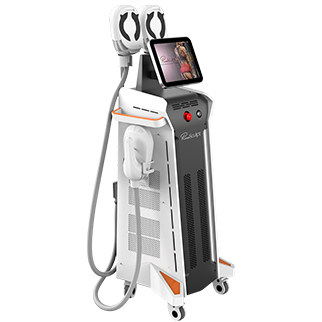
The Renasculpt FE60 from Winkonlaser is the unit I’ve seen deliver consistent results across dozens of clinics. Medical-grade, CE-certified, built for daily use.
Contact us for wholesale pricing, OEM options, or technical specifications.
More on EMS technology:
EMS sculpting machine category