



EMS vs CoolSculpting: Which Body Contouring Technology is Right for Your Clinic?
Table of Contents
- What is CoolSculpting? — Technology & Mechanism
- What is EMS Body Sculpting? — Technology & Mechanism
- EMS vs CoolSculpting: Side-by-Side Comparison Table
- Treatment Outcomes
- Cost & ROI for Clinic Owners
- Safety & Certifications (FDA, CE, ISO)
- Patient Candidacy
- Can You Use Both? The Combination Advantage
- How to Choose the Right Machine
- FAQ About EMS & CoolSculpting for Clinics
If you run a med spa or aesthetic clinic, you have probably had the conversation a dozen times. A patient walks in. They have done their research — or think they have. They ask: “Should I get CoolSculpting or that EMS thing I keep seeing on Instagram?”
The short answer is: it depends on what they want. But choosing which machine to buy for your clinic is a different question than choosing a treatment for a patient. It has more zeros on the price tag and a longer timeline. Get this wrong and you are sitting on a $60,000 paperweight.
I have watched clinics navigate this decision. Some made a lot of money. Some made expensive mistakes. Here is what I would want to know if I were buying my first body contouring machine today.
1. What is CoolSculpting?
CoolSculpting is the brand name for cryolipolysis — controlled cold that kills fat cells without damaging skin or surrounding tissue. It is the most well-known non-invasive fat reduction treatment in the world. Patients search for it by name. It has hundreds of published studies behind it.
How Cryolipolysis Works on Fat Cells
A cooling applicator pulls a fold of skin and fat between two panels. The device holds the temperature between -4°C and -6°C for 35 to 60 minutes. Fat cells freeze at a higher temperature than skin cells, so they die while the skin stays intact. Over the following weeks, the body clears those dead cells through the lymphatic system.
A 2014 study in Lasers in Surgery and Medicine reported 20-25% fat layer reduction after a single session. That is substantial. It is also why CoolSculpting remains popular despite its price tag.
Typical Treatment Protocol
One to three sessions per area. Each session runs 35-60 minutes. Results appear gradually over 8 to 12 weeks. If you have a patient who wants inches off their waist without surgery and can wait three months, CoolSculpting delivers.
CoolSculpting Device Requirements
These are Class II medical devices. They need dedicated applicator cartridges for each body area. Each applicator tip lasts 5-15 cycles and costs $200-500 to replace. A new machine from the original manufacturer runs $45,000-60,000. Used units on the secondary market sell for $15,000-30,000, but you inherit unknown wear and no warranty.
2. What is EMS Body Sculpting?
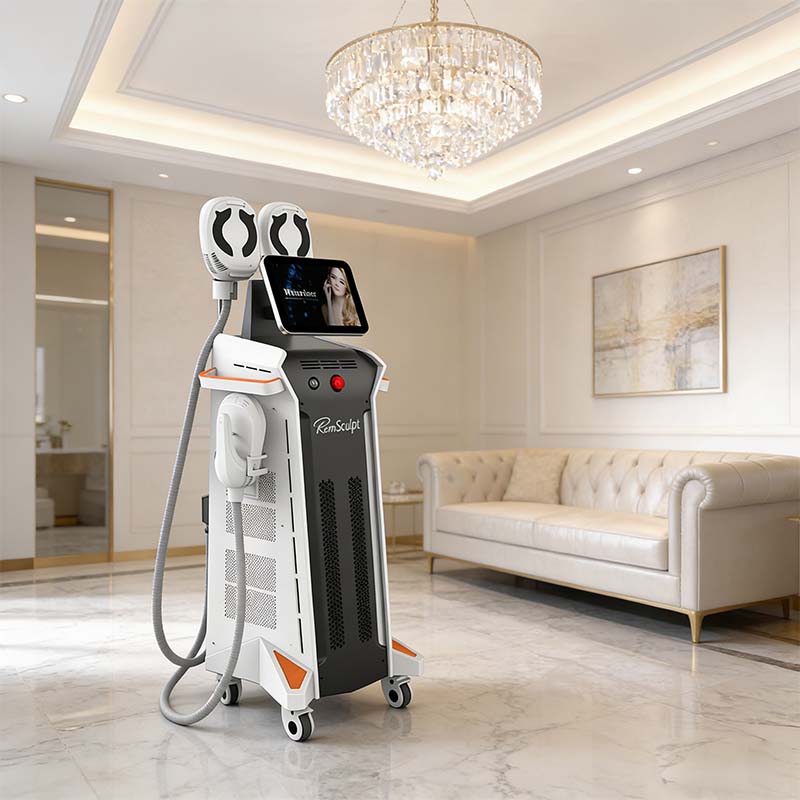
EMS — electrical muscle stimulation — has been around for decades in physical therapy. What changed is the intensity. Modern aesthetic-grade EMS uses High-Intensity Focused Electromagnetic (HIFEM) energy to force supramaximal muscle contractions. The Renasculpt FE60 is a good example of what this generation of devices looks like.
How HIFEM Technology Builds Muscle & Breaks Down Fat
A HIFEM coil generates a pulsed magnetic field that penetrates about 7 cm into tissue. It forces motor neurons to fire, making the muscle contract thousands of times in a single 30-minute session. Those contractions trigger two things: muscle hypertrophy (growth) and lipolysis (fat breakdown).
The Renasculpt FE60 uses high-intensity EMS to achieve up to 50% fat loss and 35% muscle gain per treatment protocol.
A 2019 study in the Journal of Drugs in Dermatology showed a 16% reduction in subcutaneous fat and a 19% increase in muscle thickness after four weekly sessions.
EMS vs Traditional Ab Stimulators
This is where people get confused. Those $50 ab belts you see on Amazon — those use low-frequency electrical pads that only twitch surface muscle. HIFEM is fundamentally different. It uses electromagnetic fields that penetrate deeper and recruit far more motor units. It is the difference between someone tapping your arm and someone grabbing it and forcing it to contract.
Typical EMS Treatment Protocol
Standard protocol: four sessions over two weeks, 48-72 hours apart. Each session is 30 minutes. Most patients see visible muscle definition after the second or third session. Maintenance every 4-8 weeks keeps the muscle tone.
3. EMS vs CoolSculpting — Side-by-Side Comparison
I get asked for this table constantly. Here it is.
| Aspect | CoolSculpting | EMS (HIFEM) |
|---|---|---|
| Primary Mechanism | Cryolipolysis (freeze fat cells) | Supramaximal contractions + fat lipolysis |
| Treatment Time (per session) | 35-60 minutes | 30 minutes |
| Sessions Needed (typical) | 1-3 (permanent fat reduction) | 4 initial + maintenance |
| Onset of Results | 8-12 weeks | 2-4 weeks (muscle) |
| Discomfort | Cold, pulling, then numbness | Intense workout feel; mild soreness |
| Consumer Price per Session | $600-$1,200 | $200-$500 |
| Device CAPEX | $25,000-$60,000 | $4,500-$5,000 |
| Consumables per Session | $200-$500 (applicator tip) | None (no consumables) |
| FDA Status | Cleared for fat reduction | Cleared for muscle stimulation + toning |
Treatment Areas
CoolSculpting targets pinchable fat: abdomen, flanks, inner/outer thighs, chin, upper arms, bra line, back fat. EMS treats larger muscle groups: abdomen, glutes, thighs, arms, chest. They cover different real estate.
Pain / Discomfort
CoolSculpting: cold and stinging for 5-10 minutes, then numbness. Redness and tenderness afterward. PAH (0.5-1%) requires surgical correction. EMS: intense workout feel. Post-soreness like a hard gym session for 1-2 days.
Number of Sessions Needed
CoolSculpting: 1-2 sessions, fat cells gone permanently. EMS: 4 initial sessions, maintenance every 4-8 weeks. EMS generates recurring revenue; CoolSculpting is often a one-time sale.
4. Treatment Outcomes
Fat Reduction Timeline
CoolSculpting: little visible change until 4-6 weeks, full results at 12 weeks. The reduction is permanent. EMS fat reduction is more modest (10-16%) and gradual.
In my experience, patients who combine both get the best outcome. The muscle frame makes the fat loss more visible.
Muscle Definition & Toning
A 2020 trial in Aesthetic Surgery Journal reported a 30% increase in abdominal muscle thickness after six EMS sessions. Visible within two weeks. CoolSculpting does nothing for muscle.
Longevity of Results
CoolSculpting fat cells are gone for good. EMS muscle gains fade without maintenance after 6-12 weeks. This shapes your business model: CoolSculpting = higher per-session but lower return rate. EMS = lower per-session but built-in recurring visits.
5. Cost & ROI for Clinic Owners
Average Device Price
CoolSculpting (new): $45,000-60,000. Used: $15,000-30,000 but no warranty. EMS device (Renasculpt FE60): $4,500-5,000 direct from manufacturer.
Consumables & Maintenance Costs
CoolSculpting applicator tips: $200-500 each. Two tips per love handle session = $400-1,000 per session. EMS: zero consumables. The Renasculpt FE60 requires no gel pads, no filters, nothing to replace per session.
Break-Even Comparison
EMS (Renasculpt FE60):
Device: $4,500 | Consumables: $0/session | Retail: $350
Break-even: 13 sessions (~1 week at 2-3/day)
CoolSculpting (used):
Device: $30,000 | Applicator: $400/session | Retail: $850
Break-even: 67 sessions (~2-3 months)
Lower Entry Barrier
EMS. Less than half the upfront cost. Cheaper consumables. Faster break-even. For a new clinic, this is the lower-risk play.
6. Safety & Certifications
FDA K241860
The Renasculpt FE60 has FDA 510(k) clearance under K241860. Many EMS machines on the market lack this — imported as “fitness” devices with no medical clearance.
Medical CE (MDR) & ISO 13485
Winkonlaser holds Medical CE under EU MDR 2017/745 and ISO 13485. Essential for European distributors. Covers traceability, biocompatibility, post-market surveillance.
Known Side Effects
CoolSculpting: numbness, redness, swelling, PAH (<1%). EMS: muscle soreness, mild fatigue, rare cramps. No permanent adverse effects reported.
Contraindications
CoolSculpting: cryoglobulinemia, cold urticaria, Raynaud’s disease, pregnancy, hernia, severe skin laxity.
EMS: pacemakers/ICDs, epilepsy, metal implants, pregnancy, recent surgery, thrombophlebitis, severe varicose veins.
Screen every patient. A form is not enough — verify implant status and medication lists.
7. Patient Candidacy
Ideal for CoolSculpting
Pinchable fat, BMI under 30, wants permanent inches off without surgery. Understands the 12-week wait. Happy to pay $1,000-2,000 per area.
Ideal for EMS
Reasonable body fat, BMI under 28, wants athletic look. Already exercises but cannot build visible definition. Likes fast results (2-4 weeks). Accepts maintenance every 4-8 weeks.
When Neither Works
BMI over 30 or significant skin laxity → surgical options or RF for skin tightening. Do not oversell — you will get refund requests and bad reviews.
8. The Combination Advantage
EMS builds the frame. CoolSculpting removes the fat so the frame is visible. They are partners, not competitors.
Session Sequencing
Approach A: CoolSculpting first → wait 4 weeks → start EMS.
Approach B: Both simultaneously — CoolSculpting one area, EMS another.
Package Pricing
1 CoolSculpting ($800) + 4 EMS sessions ($1,200) = $2,000 package. Higher perceived value and conversion than offering each separately.
Case Study
One clinic I consulted with added EMS to their CoolSculpting menu. Average ticket rose from $1,100 to $1,850. Combo conversion: 34% vs 18% standalone. EMS device paid off in six weeks.
9. How to Choose the Right Machine
Budget over $40,000?
→ Yes: Buy both. Cryo + EMS.
→ No: Start with EMS ($4.5k-5k). Add cryo later.
↓
Targeting fat reduction only?
→ Yes: Cryolipolysis.
→ No: EMS does both — fat reduction AND muscle building in one treatment.
↓
Minimize per-patient consumable costs? → EMS.
Need fast results to retain patients? → EMS (2 weeks vs 12).
Regulatory-heavy market (US, EU)? → Only buy FDA/CE cleared.
Questions to Ask Suppliers
- FDA 510(k) or CE MDR certification? Ask for the certificate number.
- Warranty on coil and electronics?
- Gel pad lifespan per unit?
- Training and support included?
- Voltage / plug compatibility?
- Real before/after data from clinics?
Recommendation: Renasculpt FE60
FDA K241860 | Medical CE (MDR) | ISO 13485 | $4,500-5,000 factory-direct | Zero consumables | 2-3 day shipping
10. FAQ
Read our firsthand EMS review: Do EMS Body Sculpting Machines Work?
Questions about equipment? Contact us directly.
_07.jpg "聚磁代理详情(25-2)_07")
.jpg "Comfort MIXSLIM® Cryotherapy Fat Freezing Slimming Machine")