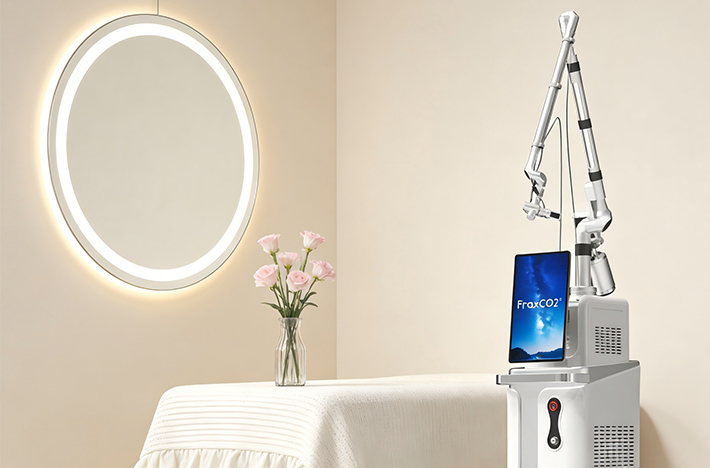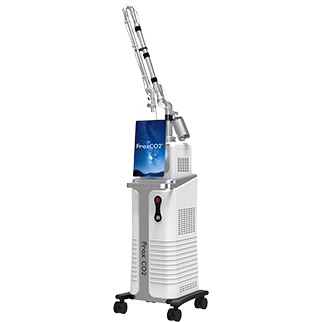



100W CO2 Laser Deep Dive: Why Beijing Engineering Beats “Marketplace Junk”
Forget the Sales Pitch: The Real Trouble with Building a 100W CO2 Laser in Beijing
I’m writing this at 11:30 PM in our workshop in the Shunyi district. My lead engineer, Lao Chen, just left because we had a minor explosion on a test bench—a cheap Chinese high-voltage power supply (PSU) we were evaluating for a “budget” project decided to arc and blow its capacitors. This is the reality of laser manufacturing that doesn’t make it into the glossy PDF brochures.
When people ask me why our CO2 Fractional Laser is rated at 70W or 100W, and why we don’t just sell the 30W “toy” units that flood Alibaba and DHgate, it’s not because I want to charge more. It’s because I’m tired of getting WhatsApp calls at 3 AM from angry distributors in Italy or the States because their “30W” laser lost half its power after six months of clinical use.
The Glass Tube Scandal: Why “100W” is often a lie
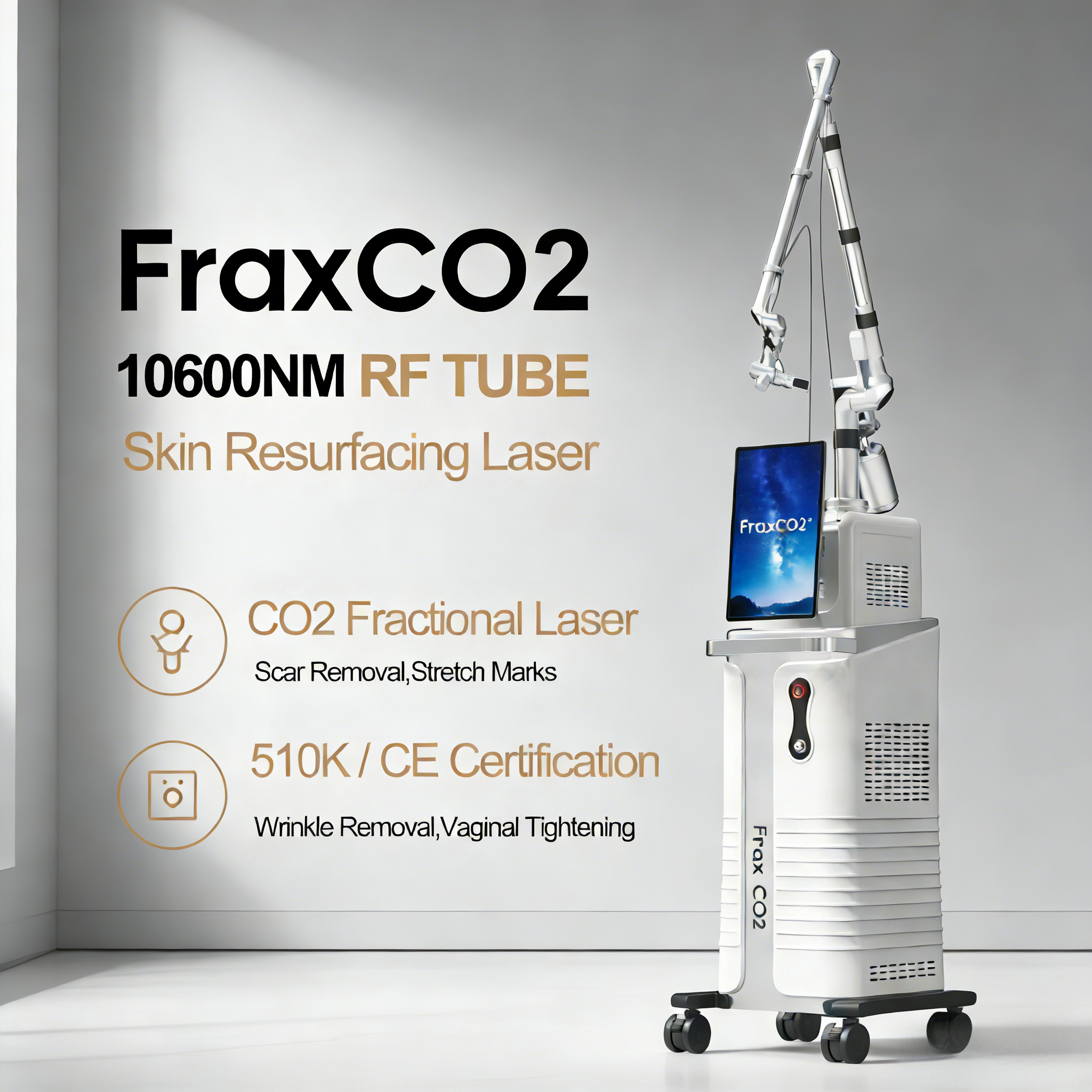
Let’s talk about the heart of the machine—the tube. In China, there are hundreds of glass tube factories. Most of them produce tubes for laser cutters—you know, for cutting plywood or acrylic. These are “industrial” tubes, not “medical” tubes. When a trading company in Guangzhou tells you they have a “100W CO2 Medical Laser” for $3,000, they are stuffing a $200 industrial cutting tube into a plastic shell.
Here is the problem: Those tubes aren’t stabilized for clinical waveforms. A medical laser needs to fire in precise, repeatable micro-pulses. Industrial tubes “drift.” You set it to 15mJ, but as the gas inside heats up, it starts firing at 12mJ, then 18mJ. In a clinic, that drift means the difference between “no result” and “scarring the patient.”
At Winkonlaser, we use reinforced glass tubes or American RF tubes (Coherent/Lumibird) specifically gassed for medical wavelengths (10.6μm). A real 100W medical-grade tube is nearly 1.2 meters long. If the machine you are looking at is small enough to sit on a desk, it is not 100W. It’s physically impossible. We had to design the EL950 chassis to be a floor-standing unit just to accommodate the resonance cavity and the power supply needed to ignite that gas properly.
The Korean Arm: My $1,500 Headache
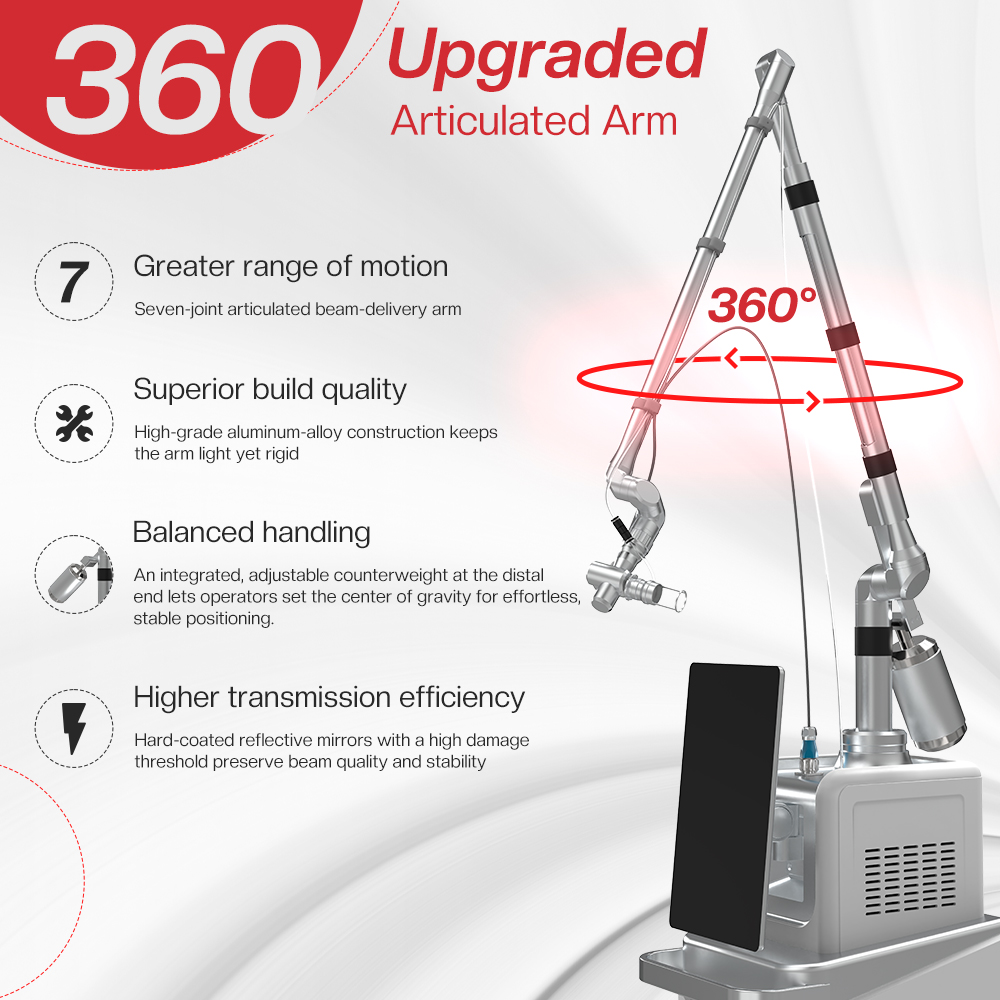
South Korean 7-section light guide arm
I mentioned the Korean 7-joint arm before, but let me tell you why it’s a headache for my production costs. A domestic Chinese arm costs me about $300. The Korean arm costs me almost $1,500 after import taxes and shipping to Beijing. Why do I bother?
Last year, we tried a batch of domestic arms for a “Lite” version of the EL950. Out of 50 units, 12 had “optical drift” within the first month. The mirrors inside were held by cheap spring tensions. As the laser fired—especially at 100W—the heat caused the metal to expand, and the beam would shift just enough to hit the internal wall of the arm. The arm would get hot, and the beam at the handpiece would lose its circular shape. It became an oval.
An oval beam in fractional mode is a disaster. It means the energy density is uneven. One side of the dot is vaporizing skin, the other side is just burning it. I had to recall that entire batch. It cost me a fortune. So now, we only use the Korean optics. Their dielectric coatings are so thick you can’t even scratch them with a screwdriver. They handle the 100W peak power without reflecting heat back into the tube. If you want to see the difference, just check our technical page—I’ve posted photos of what happens when a beam hits a cheap mirror vs. a Korean one.
Why the “Random Scan” is actually about Physics, not just Marketing
Everyone talks about “Random Mode,” but let’s look at the actual TRT (Thermal Relaxation Time). The TRT of the epidermis is roughly 1 millisecond. If you fire a laser dot and then fire another dot right next to it within 0.5ms, the heat from the first dot hasn’t dissipated. It adds up. 1+1 doesn’t equal 2 in laser physics; it equals 5 when it comes to tissue damage.
Most cheap software is written by guys who code for CNC machines. They fire in a straight line because it’s easy to program. We had to hire a specialist from the Beijing Institute of Technology to rewrite our scanning algorithm. Our “Random Mode” isn’t just “not in a line”—it’s calculated to ensure that no two adjacent dots are fired within 5ms of each other. This is the only way we can safely treat Fitzpatrick Type IV skin without causing PIH. I’ve seen some of our competitors’ “Random Mode” where it just skips every other dot but stays in the same row. That’s not random; that’s just a slower burn.
The 15L DCS: Why I hate “Portable” CO2 Lasers
I saw a machine last week at a show in Dubai that was labeled “Portable 100W CO2.” It weighed 22kg. I laughed. My EL950 weighs nearly 60kg. Why? Because I have a 15-liter water tank and a copper radiator inside.
A 100W CO2 laser tube is about 15% efficient. That means 85% of that energy is turned into heat. If you are firing 100W, you are basically running an 800W heater inside the machine. If you don’t have enough water volume to absorb that heat, the water temperature climbs from 20°C to 30°C in ten minutes. When the water gets hot, the laser output drops.
I’ve had clinics call me saying their “other” machine works great for the first five minutes of a treatment, but by the time they get to the second cheek, the results are weak. That’s thermal drop-off. Our DCS (Double Cooling System) keeps the water at a constant 24°C regardless of how many patients you see. If the machine is light, it’s a toy. If you want to do a 30-minute full-face resurfacing plus a vaginal treatment back-to-back, you need the weight.
The Logistics Mess in 2026
Let’s be real about shipping right now. It’s April 2026, and the Red Sea is still a mess, and port strikes in Europe are a weekly occurrence. I’m tired of telling my agents in Dubai and Paris to “wait another two weeks.”
This is why we started moving inventory last year. We aren’t a trading company that waits for your payment before buying a machine from a different factory. We own the factory. We moved 200 units of the FC300 series into our warehouses in Los Angeles, Paris, Dubai, and Istanbul before the shipping rates spiked again.
When you order from Winkonlaser, you aren’t waiting for a boat. You’re waiting for a local truck. I’d rather pay for the warehouse space in LA than deal with one more customer asking why their machine is stuck in a container in the middle of the Atlantic.
3-in-1 Versatility: The Profit Reality
I see a lot of B2B buyers get excited about the “3-in-1” (Fractional, Surgical, Vaginal). But let’s talk about the actual money.
-
Fractional is for your high-end, $1,000+ acne scar cases. It’s slow, it requires skill, and you have to manage the patient’s expectations.
-
Surgical (Ultra-Pulse) is for the daily bread. Vaporizing a mole takes 30 seconds. You can charge $50 for that. You can do 10 of those in a morning.
-
Vaginal is the secret weapon. In markets like Dubai and Turkey, this is huge. Our gold-plated 360° cone isn’t just for show—gold doesn’t tarnish from the plume (the smoke/vapor) like silver does. Since there are zero consumables, every vaginal treatment is pure margin. If you aren’t marketing this to post-partum mothers, you are failing as a business owner.
B2B FAQ: The Questions You’re Actually Afraid to Ask
Q: Devin, your price is $2,000 higher than the other Beijing factory. Why?
Devin: Because I use the Korean arm ($1,200 difference), the DCS cooling system ($400 in copper and pumps), and I actually pay my engineers to do a 72-hour burn-in test. The other guys? They finish the machine, turn it on for 5 minutes to see if it fires, and put it in a box. When your PSU blows up on day 30, they’ll stop answering your WhatsApp. My price includes the fact that I have a warehouse in LA with spare parts ready to ship.
Q: I have a lot of dark-skinned patients (Fitzpatrick IV/V). Can I really use 100W?
Devin: Yes, but don’t be an idiot. You use the 100W “capacity” to get a very short pulse (less than 1ms), but you turn the density down. You want to create fewer holes but make them very clean. If you use a weak 30W laser, you have to use a long pulse, which will almost certainly cause PIH on dark skin. I will send you my personal clinical settings for Type IV skin once you get the machine.
Q: Is the vaginal mode “gimmicky”? Does it actually work?
Devin: It works for laxity and mild SUI (Stress Urinary Incontinence). It’s not surgery, so don’t tell your patients it’s a “Vaginal Reconstructive Surgery.” It’s a collagen induction treatment. For 80% of women, the results are life-changing. For the other 20%, they might need a second round or actual surgery. Be honest with them and they will trust you.
Q: What happens if the laser tube breaks in two years?
Devin: If it’s our glass tube, they are rated for 20,000 hours. In reality, that’s about 5-8 years of heavy use. If it breaks, we ship you a new one from our local warehouse. If you went for the RF tube (Coherent), those can actually be refilled with gas. But honestly, by the time the tube dies, the machine will have made you $500,000. Just buy a new machine then.
Q: Why don’t you offer “Portable” versions of the 100W?
Devin: Because I’m not a liar. As I said, a real 100W PSU and a 1.2m tube don’t fit in a portable box. Anyone selling a “100W Portable” is selling you a 30W machine with a fake sticker and a software-hacked display.
Q: Can I really do a “Lunchtime Facial” with this?
Devin: Yes, use the “Light Peeling” mode. It just grazes the epidermis. The patient will be slightly pink for 24 hours, but their skin will glow by Monday. It’s a great “intro” treatment to get people comfortable with the laser before you sell them a $1,500 deep resurfacing.
Q: What is the most common part that fails?
Devin: The handpiece lens. And it’s always the user’s fault. They forget to clean the smoke off the lens, the laser hits the smoke particles, they heat up, and the lens cracks. We include five spare lenses in the box. After that, you have to buy them. Keep them clean and you won’t have a problem.
Q: Do you offer training?
Devin: We have a full video suite and we do Zoom training for your staff. But I also suggest you hire a local clinical trainer for the first week. A factory can teach you the buttons; a nurse can teach you the “feel” of the skin.
Q: How do I become an agent for Winkonlaser?
Devin: We are looking for people who actually understand the technology, not just “box movers.” If you can provide local technical support, we can talk about exclusive territory. Contact my export team and tell them Devin sent you.
Maintenance Truths: How to keep your machine alive for 10 years
If you want this CO2 system to outlast your clinic’s lease, follow these three rules. I tell this to every B2B buyer, but only about 20% actually listen.
-
Distilled Water is Non-Negotiable. I’ve seen machines come back for repair with green algae and white calcium deposits inside the cooling lines. The owner used tap water. Tap water has minerals. Minerals conduct electricity. If your cooling water becomes conductive, it can arc from the tube to the chassis. That’s how you fry a $2,000 motherboard. Use distilled water. Change it every 90 days.
-
The Environment Matters. Don’t put this laser in a room with no ventilation. A 100W laser creates heat. If the room is 30°C, the machine’s cooling system has to work twice as hard. Keep the room at 22°C.
-
Vacuum the Plume. CO2 laser treatments produce “plume” (smoke). This smoke is bio-hazardous and it’s acidic. If you don’t use a strong smoke evacuator, that smoke settles on the articulated arm’s joints and the handpiece optics. It will corrode the mirrors over time. Buy a good smoke evacuator. It’s for your health and the machine’s health.
The Engineering Verdict
We are living in an era where everyone is trying to “optimize” costs by cutting corners on the things you can’t see. They use thinner wires, cheaper capacitors, and recycled mirrors. At Winkonlaser, we’re doing the opposite. We’re building “overbuilt” machines.
The fc300 is heavy, it’s powerful, and it’s expensive to build. But it’s the only machine I’m willing to put my name on in 2026. If you want a partner in Beijing who actually understands the difference between a “watt” and a “sticker,” then let’s talk.