


DPL vs SHR vs IPL: Which Skin Rejuvenation Technology Is Right for Your Clinic?
ou are comparing quotes from three different suppliers. Supplier A swears by IPL – it is the industry standard, used in thousands of clinics worldwide. Supplier B pitches SHR – pain-free, fast, no downtime. Supplier C hands you a brochure for DPL – next-generation dynamic pulsed light, faster results, deeper penetration.
Same client base. Same goal – younger-looking skin for their patients. Three completely different technologies.
I have been in this industry for over 11 years, working in R&D and manufacturing across 60+ countries. I have watched IPL dominate the 2000s, seen SHR carve its niche in the 2010s, and now DPL quietly overtake both in clinics that know what they are doing. If you are trying to figure out which one to invest in, the answer is not as simple as “the newest one.”
This guide breaks down the real differences – not marketing claims.
Table of Contents
1. Introduction: Three Technologies, One Goal
Three light-based technologies. One patient asking the same question: “Can you make my skin look younger?”
The confusion is understandable. IPL dominated clinic floors for two decades. SHR came along and made the experience far more comfortable for hair removal clients. Now DPL is showing up in product catalogs and trade show booths, claiming faster, deeper results.
But here is what the brochures will not tell you: each technology was designed for a different primary application. Each has blind spots. And each serves a different type of clinic.
I have watched clinics buy IPL machines because they were cheap, then upgrade to SHR because clients complained about pain, then eventually switch to DPL because they wanted to offer real skin tightening alongside their existing treatments. The upgrade path is expensive. Getting it right the first time is cheaper.
This comparison covers wavelength science, clinical outcomes, pain levels, session requirements, and business fit – so you can make a decision you won’t reverse in 18 months.
2. Technology Deep Dive: How DPL, SHR, and IPL Work
To understand why these three produce different results, you need to look at what is happening under the handpiece.
IPL – The Broad-Spectrum Pioneer
IPL stands for Intense Pulsed Light. It is not a laser – it is a flashlamp that emits a broad spectrum of light from 500nm to 1200nm. Think of it like shining a floodlight at a target. It hits everything: melanin, hemoglobin, water. It scatters energy across multiple chromophores because the spectrum is so wide.
This broad spectrum is why IPL is versatile. It can treat pigmentation, vascular lesions, and hair reduction with the right filter. It is also why IPL hurts more than the others – more energy lands on the epidermis, not just the target.
IPL requires 6 to 10 sessions for most applications, with 3-4 week intervals. The discomfort is real. Many clinics apply topical anesthetic before treatment, which adds cost and chair time.
SHR – The Pain-Free Evolution for Hair Reduction
SHR, or Super Hair Removal, is a diode-based technology typically using 755nm, 808nm, and 1064nm wavelengths. The key innovation is low fluence plus repetitive pulsing delivered in motion.
Instead of a single strong pulse like IPL (which hurts), SHR delivers many small pulses that gradually heat the target. The handpiece glides over the skin continuously. Most clients describe it as a warm massage.
SHR was designed specifically for hair reduction. That is what it excels at. The longer wavelengths (808nm and 1064nm) penetrate deeply enough to reach the hair bulb, and the in-motion technique covers large areas quickly.
But here is the catch: SHR lacks the wavelength profile for significant collagen remodeling. If skin tightening or wrinkle reduction is your goal, SHR is not the right tool. I have seen clinics try to position it as a rejuvenation device, and the results fall short.
DPL (NIR) – Precision Meets Power
DPL stands for Dynamic Pulsed Light. It is the evolution of IPL, not a replacement. The critical difference is the narrowed spectrum – DPL delivers a tighter wavelength range (500-600nm for visible light + 800-900nm for near-infrared), which means energy lands where it is supposed to, not everywhere.
The NIR (near-infrared) component is what sets DPL apart. These longer wavelengths penetrate 2 to 4 millimeters into the dermis, reaching fibroblasts and stimulating collagen production. That is where real skin tightening comes from – not from surface heating.
DPL achieves visible results in 4 to 6 sessions, compared to 6-10 for IPL. The pulses are more efficient because less energy is wasted on non-target tissue. Combined with contact cooling, the experience is far more comfortable.
I have observed clinics adding DPL and seeing two things consistently: clients return for fewer sessions, and the tightening results generate more word-of-mouth referrals than any IPL package they used to run.
3. DPL vs SHR vs IPL: Comparison Table
| Feature | IPL (Traditional) | SHR (Diode-Based) | DPL/NIR (Winkonlaser) |
|---|---|---|---|
| Wavelength Range | 500-1200nm broad | 755/808/1064nm | 500-600nm + 800-900nm |
| Pulse Mechanism | Single high-energy flash | Low-fluence repetitive | Dynamic pulsed, selective |
| Pain Level | Moderate to high | Virtually none | Low (contact cooling) |
| Skin Rejuvenation | Mild improvement | Not recommended | Excellent (NIR driven) |
| Skin Tightening | Minimal | None | Strong (2-4mm dermal) |
| Pigmentation | Works, slow | Unsuitable | Precise targeting |
| Vascular Lesions | Works, slow | Unsuitable | Good |
| Hair Reduction | Moderate | Excellent | Good |
| Typical Sessions | 6-10 | 4-6 (hair only) | 4-6 |
| Downtime | 1-3 days redness | None | Minimal redness |
| Best For | Budget entry, general use | Hair removal focus | Anti-aging, comprehensive |
| Upfront Investment | Lowest | Mid-range | Higher, better ROI |
4. Real-World Performance
Treatment Speed and Sessions
IPL: 6-10 sessions, each lasting 20-40 minutes for a full face. Visible improvement around session 4.
SHR: 4-6 sessions for hair reduction. Full face takes 10-15 minutes per session because of the in-motion glide technique.
DPL: 4-6 sessions for rejuvenation with visible tightening. NIR collagen remodeling continues for 3-6 months after the final session, meaning results keep improving even after treatment stops.
From a business perspective, DPL frees up chair time faster. Fewer sessions per client means more capacity for new clients. The math works in favor of DPL for any clinic running near capacity.
Pain Level and Client Comfort
Pain is the number one reason clients do not complete their treatment package. I have watched clinics lose 30-40% of IPL clients before session 6. The ones who finish refer friends. The ones who drop out tell people it hurt.
SHR: virtually painless. Most clients fall asleep during treatment.
DPL: low pain with contact cooling. The NIR component creates a warm sensation, but clients consistently rate it 2-3 out of 10 on pain scales.
IPL: the most painful. Clients often request breaks mid-session. Topical anesthetic is common.
If client retention and referrals matter to your business, pain level should be a primary factor in your technology decision.
Versatility
DPL is the most versatile for skin treatments. It handles rejuvenation, tightening, pigmentation, vascular lesions, and hair reduction in one device.
SHR is optimized for hair removal. You can push it for other applications, but results will be underwhelming.
IPL can technically treat multiple conditions, but at lower efficacy per session. It is a jack of all trades, master of none – and that is fine for a startup on a tight budget, but frustrating for an established clinic competing on results.
5. Honest Limitations and Where Each Fits
Where IPL Still Makes Sense
If you are opening a small salon on a limited budget, IPL is the most accessible starting point. The machines cost less, consumables are available, and clients know the term “IPL” from home devices. You can offer basic photo-rejuvenation packages and upgrade later.
But know the trade-off: your clients will experience more discomfort, need more sessions, and see slower results than what a DPL-equipped competitor can deliver. IPL works. It is not optimal.
When SHR Is the Better Choice
If seventy percent or more of your revenue comes from hair removal, SHR is the right primary investment. It delivers pain-free treatments, high client satisfaction, and fast session times that let you scale volume. Combine it with a DPL unit for comprehensive services.
What SHR will not do: tighten skin, reduce wrinkles meaningfully, or treat pigmentation effectively. Do not let the marketing convince you otherwise.
Why Clinics Upgrade to DPL
I have seen the pattern across dozens of clinics. They start with IPL. They add SHR for hair removal. Then they realize their skin rejuvenation offerings are still mediocre. That is when DPL enters the conversation.
DPL closes the gap between what clients want (younger, tighter skin) and what the technology delivers. The NIR component reaching 2-4mm into the dermis is not a marketing gimmick – it is physics. Collagen stimulation at that depth produces visible tightening that neither IPL nor SHR can match.
For mid-size clinics and med spas, DPL is the most ROI-positive single investment in the light-based category.
6. Clinical Applications by Technology
Skin Rejuvenation (Wrinkles, Texture, Tone)
DPL is the optimal choice. The NIR wavelength (800-900nm) targets water in the dermis, heating it enough to stimulate fibroblast activity and collagen production without damaging the surface. Clinics report visible skin texture improvement after 3 sessions, with continued collagen remodeling for months.
IPL provides mild improvement by targeting surface pigmentation and redness, but lacks depth for real texture change.
SHR is not recommended for skin rejuvenation. The diode wavelengths are optimized for melanin in hair follicles, not dermal collagen.
Pigmentation and Vascular Lesions
DPL: precise wavelength targeting locks onto melanin and hemoglobin without scattering energy to surrounding tissue. Faster clearance than IPL, less discomfort.
IPL: works but requires more sessions. The broad spectrum causes more heat dispersion, which translates to more discomfort for the same melanin absorption.
SHR: unsuitable. The wavelength profile is not designed for chromophore targeting in pigmented lesions.
Hair Reduction
SHR is the clear winner here. Low fluence, in-motion, pain-free. Large area coverage in minimal time. DPL and IPL can reduce hair, but SHR does it better with higher client comfort.
If hair removal is your primary service, lead with SHR. If you offer comprehensive skin treatments, DPL handles hair reduction as a secondary capability.
7. How to Choose the Right Machine for Your Business
Decision Matrix by Business Type
| Business Type | Recommendation | Why |
|---|---|---|
| Small startup salon (limited budget) | IPL or entry-level DPL (DR10) | Lowest upfront cost, build client base first |
| Mid-size clinic expanding services | DPL (DRT10 flagship) | Best ROI, replaces need for separate IPL + tightening devices |
| Large med spa with dedicated rooms | DPL + SHR | Comprehensive coverage: DPL for rejuvenation, SHR for volume hair removal |
| Hair removal studio | SHR + DPL for upgrade | Lead with SHR for volume, add DPL for tightening services |
Winkonlaser DPL Machines
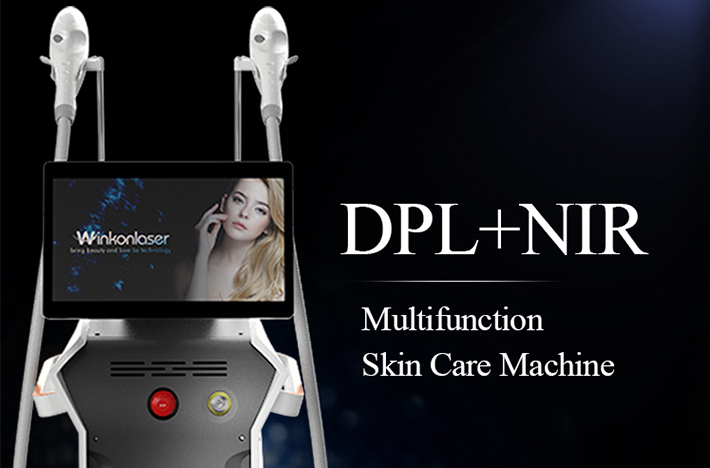
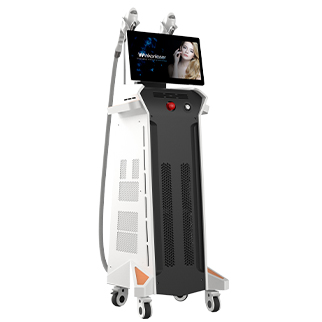
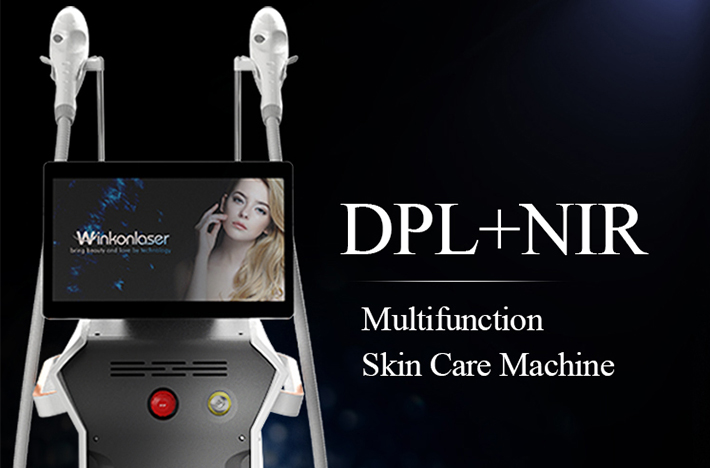
DRT10 – Our flagship NIR DPL skin rejuvenation machine. Dual-wavelength capability with dynamic pulsed light and near-infrared. 4-6 session protocols, contact cooling, clinical results. View DRT10 specs →
DR10 – Cost-effective entry into DPL technology. Handles skin rejuvenation and basic hair reduction. Ideal for smaller clinics expanding their service menu. View DR10 specs →
We offer global shipping, OEM support, and certification documentation for FDA, CE, and TGA markets. Explore the full NIR DPL product range →
8. Frequently Asked Questions
Q: What is the main difference between DPL and IPL?
A: The wavelength spectrum. IPL uses 500-1200nm broad spectrum, scattering energy across multiple tissue types. DPL uses a narrowed 500-600nm + 800-900nm spectrum for precise targeting. This means DPL delivers more therapeutic energy per pulse, less discomfort, and the NIR component reaches deep dermis for collagen remodeling – something IPL cannot do.
Q: Is DPL better than SHR for skin rejuvenation?
A: Yes. SHR was designed for pain-free hair reduction using low-fluency repetitive pulses. It lacks the wavelength profile for dermal collagen stimulation. DPL combines visible light for superficial concerns with NIR reaching 2-4mm into the dermis. For comprehensive facial rejuvenation, DPL is the clear winner.
Q: Which is less painful – DPL, SHR, or IPL?
A: SHR is least painful – warm massage sensation. DPL is a close second with contact cooling – most clients rate it 2-3 out of 10. IPL is the most painful, often requiring topical anesthetic.
Q: How many sessions does DPL need vs IPL for skin rejuvenation?
A: DPL typically requires 4-6 sessions. IPL needs 6-10 sessions. The NIR component in DPL stimulates deeper collagen remodeling, so visible results appear 8-16 weeks sooner.
Q: Can one machine do both hair removal and skin rejuvenation?
A: DPL machines like the DRT10 offer dual-wavelength capability for both. IPL can technically do both but at lower efficacy. SHR machines are optimized for hair removal only. For a single versatile device, DPL is the most ROI-positive choice.
9. Final Verdict
If you asked me five years ago which light-based technology to buy, I would have said IPL for versatility or SHR for hair removal. That has changed.
DPL is not just an upgrade to IPL. It is a different category – one that bridges the gap between surface-level photo-rejuvenation and deep dermal remodeling. For any clinic that wants to offer real skin tightening alongside traditional light treatments, DPL is the best single investment.
Know your primary service, know your budget, and pick the technology that aligns with both. If that is DPL, we build machines that deliver.
Ready to find the right DPL machine for your clinic?
Contact us for pricing, specifications, or a consultation: