


FraxCO2: Why is professional fractional CO2 laser becoming the preferred choice of clinics in 2026?
What is a fractional CO2 laser?
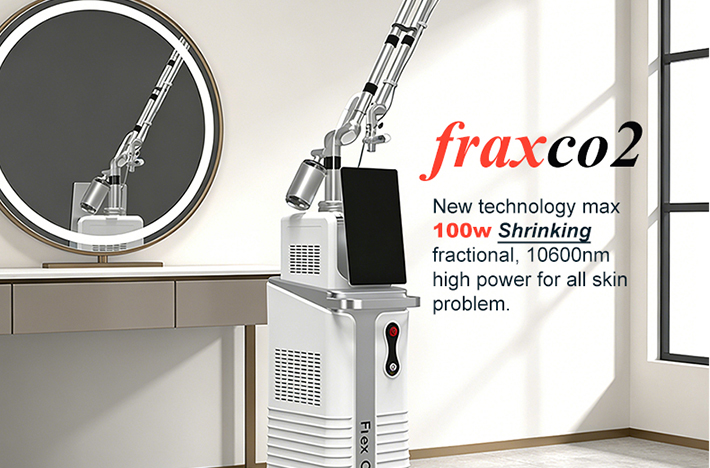
The fractional CO2 laser is a cutting-edge device in dermatology and cosmetology that combines laser precision with minimal invasiveness. This device generates a laser beam with a wavelength of 10,600 nm, penetrating deep into the skin and stimulating natural regeneration processes. Unlike traditional ablative lasers, the fractional approach creates micro-zones of damage while leaving surrounding tissue intact, accelerating healing and reducing the risk of complications.
This laser is ideal for clinics focused on high-quality services. It allows doctors to adjust parameters such as penetration depth and pulse density to meet individual patient needs. For example, in skin resurfacing procedures, a fractional CO2 laser removes the top layer of the epidermis, stimulating collagen and elastin production. The result? Patients see improvements after the first session, and clinics report increased loyalty due to the visible results.
How a fractional CO2 laser works
Fractional CO2 lasers operate by fractionating energy: the laser beam is split into thousands of microbeams, which create controlled microtraumas in the skin. This activates fibroblasts, which are responsible for collagen synthesis, and promotes tissue remodeling. Professional models, such as those currently available, have integrated cooling systems that minimize discomfort and prevent burns.
For clinics, this means the ability to perform procedures on an outpatient basis, without the need for hospitalization. The depth of treatment can vary from 0.5 mm for superficial problems to 2 mm for deep defects, making the device a versatile tool in the arsenal of aesthetic medicine.
Benefits of Fractional CO2 Laser Skin Resurfacing
Fractional CO2 laser skin resurfacing is superior to chemical peels in terms of effectiveness and safety. Here are the key benefits:
- Minimal recovery time: Patients return to daily activities in 3-7 days, compared to weeks with traditional methods.
- High precision: The laser focuses on problem areas, avoiding damage to healthy skin.
- Long-term results: Collagen stimulation provides effects for up to 2-3 years.
Clinics implementing this type of laser for skin resurfacing report a 20-30% increase in patient volume, according to industry data.
.jpg)
Why Fractional CO2 Laser Is Ideal for Scar and Wrinkle Removal
In 2026, patients are increasingly seeking solutions for age-related changes and post-traumatic defects. Fractional CO2 lasers stand out for their ability to penetrate deep into the dermis, breaking down scar tissue and smoothing wrinkles. This isn’t just a superficial treatment—it’s targeted regeneration that restores the skin’s natural structure.
For clinic owners, this opens up a niche for highly profitable procedures. A session can cost between 15,000 and 50,000 rubles, depending on the region, with a profit margin of up to 70%. Furthermore, combining it with other therapies enhances results, making your practice a leader in comprehensive care.
Scar removal with fractional CO2 laser
Scar removal is one of the most sought-after procedures in aesthetic medicine. Fractional CO2 lasers effectively destroy fibrous tissue, stimulating the growth of new, healthy skin. For atrophic scars (such as acne scars), a course of 3-5 sessions, spaced 4-6 weeks apart, is recommended. Clinical studies show a 50-80% reduction in scar depth after a full cycle.
The table below compares key aspects:
|
Aspect |
Fractional CO2 laser |
Traditional methods (dermabrasion) |
|
Procedure time |
30–60 minutes |
1–2 hours |
|
Recovery |
3–7 days |
2–4 weeks |
|
Efficiency |
High (up to 80%) |
Average (40–60%) |
|
Risks of complications |
Low |
Tall |
This makes the fractional CO2 laser the preferred choice for clinics focusing on patient safety.
Wrinkle Treatment: The Effectiveness of Fractional CO2 Laser
Fractional CO2 laser wrinkle removal is achieved through tissue ablation and coagulation, resulting in dermal thickening. Patients aged 40+ report smoothing of fine lines around the eyes and mouth after just 2-3 treatments. Deeper wrinkles require more intensive treatments, but the results last for years thanks to enhanced collagen formation.
Clinics can use this for marketing: offer “Anti-aging” packages, integrating wrinkle removal with other services to increase the average bill.
Comparison of fractional CO2 laser with other technologies
In the competitive environment of 2026, the choice of equipment determines a clinic’s success. Fractional CO2 lasers outperform erbium lasers in depth of action and IPL systems in precision. For example, when it comes to pigmentation removal, CO2 provides better results on darker skin types, minimizing hyperpigmentation.
- Against Erbium Laser: CO2 offers a more pronounced resurfacing effect, but with a slightly longer recovery time.
- Cons of IPL: The CO2 laser focuses on structural changes, while IPL is better for superficial issues.
- Cons of HIFU: The fractional approach combines ablation with non-invasiveness, making it more versatile.
By investing in a professional fractional CO2 laser , clinics achieve an ROI of 12-18 months due to high demand.
2026 Trends in Aesthetic Medicine and the Role of Fractional CO2 Laser
By 2026, analysts predict that the aesthetic medicine market in Russia will grow by 15–20%, with an emphasis on personalized treatments. Fractional CO2 lasers fit this trend, offering customization based on skin type and concerns. Clinics using them for combination therapies (such as injections) will see patient satisfaction rise to 90%.
In US’s cold climate, where skin is prone to dryness and premature aging, these lasers are becoming a must-have. They address seasonal concerns, such as post-acne scars in winter, increasing clinic occupancy year-round.
About Winkonlaser
Beijing Winkonlaser Technology Limited, founded in 2012, is a leading Chinese manufacturer of cosmetic and medical equipment with 12 years of experience in laser technology. The company boasts independent research, development, and manufacturing capabilities, exporting to over 120 countries. Its product line includes the AresLite, Renasculpt, FraxCO2, and other series, with a focus on innovative aesthetic solutions.
Winkonlaser participates in international exhibitions and holds CE, FDA, and ISO certifications, as well as patents. With strategic warehouses in China, the USA, France, and Turkey, the company ensures fast delivery and support. Learn more about us on our about us page .
Frequently Asked Questions
What is a fractional CO2 laser and how does it work?
A fractional CO2 laser is a device that uses a laser beam to create micro-damage zones in the skin, stimulating regeneration. It penetrates the dermis, activating collagen, and is suitable for resurfacing, scar removal, and wrinkle removal.
How many fractional CO2 laser sessions does it take to remove scars?
Typically, 3-5 fractional CO2 laser sessions, spaced 4-6 weeks apart, are required for noticeable scar reduction. Results depend on the depth of the scar and skin type.
Can fractional CO2 laser be used to remove wrinkles on sensitive skin?
Yes, the fractional CO2 laser is suitable for sensitive skin and has adjustable intensity. It is effective for wrinkle removal while minimizing risks, but requires a specialist consultation.
What are the side effects after fractional CO2 laser treatment?
Redness, swelling, and peeling are possible after fractional CO2 laser treatment, but these subside within 3–7 days. Proper aftercare reduces these risks.
Is fractional CO2 laser suitable for all skin types?
Fractional CO2 laser is suitable for most skin types, but darker skin types require careful settings to avoid hyperpigmentation.
Ready to transform your clinic with cutting-edge technology? Contact us today to learn more about fractional CO2 laser implementation and improve the effectiveness of your services. Don’t miss your chance to become a leader in aesthetic medicine in 2026!