



How Fractional CO2 Lasers Remove Acne Scars Without Any Surgery
Understanding Fractional CO2 Laser Scar Removal
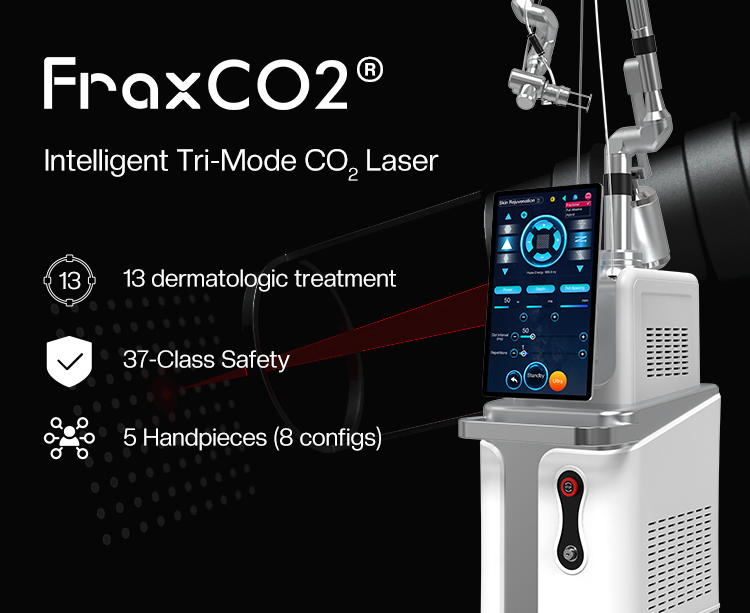
A fractional CO2 laser is a sophisticated medical tool designed for scar reduction. It delivers focused light energy at a wavelength of 10,600 nm to precisely treat the skin. Unlike conventional techniques, it emits microscopic beams that reach deep into the dermal layers while sparing the surrounding healthy tissue. This action kickstarts the body’s natural healing and regeneration mechanisms, improving skin evenness and elasticity.
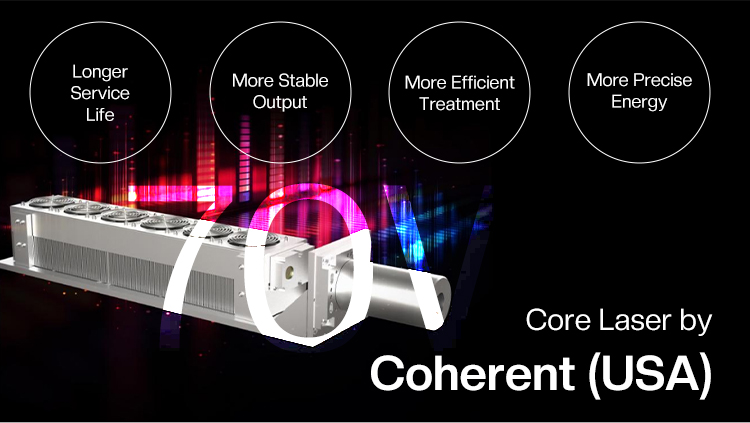
The technology is based on the principle of fractionation. The laser creates numerous microscopic thermal treatment zones—often described as tiny “islands” of heat—within the skin. These zones activate fibroblasts, the cells that generate new collagen and elastin. Consequently, skin texture gradually refines, with a visible reduction in the appearance of acne scars often noted after the initial treatment. Research on systems such as Winkonlaser’s FraxCO2 indicates up to 70% improvement in scar depth within just three to five sessions.
The Challenge of Acne Scars and the Laser Solution
Acne scars develop when inflammation damages the skin’s foundational collagen network. Persistent atrophic scars, such as “ice pick” or “boxcar” varieties, can remain for years, affecting both appearance and self-esteem. Topical creams and superficial peels frequently yield limited results because they cannot address these deeper structural issues.
Fractional CO2 laser treatment offers a transformative solution. Modern devices typically feature three operational modes: fractional, fully ablative, and hybrid. In fractional mode, the laser produces arrays of minute channels, known as microperforations, which are surrounded by intact skin to facilitate swift healing. Hybrid mode allows practitioners to tailor energy delivery for different scar subtypes, while the fully ablative mode is optimized for addressing superficial skin concerns.
A Closer Look at the Treatment Process
The procedure works through a controlled healing response:
-
Precision Application: The laser systematically treats a predefined skin area. Advanced scanning systems ensure uniform, rapid coverage while minimizing thermal stress.
-
Creating Micro-Treatment Zones: The laser energy gently vaporizes tissue moisture in targeted columns, creating precise micro-injuries. A significant portion of the surrounding skin remains unaffected, acting as a natural reservoir for rapid recovery.
-
Stimulating Skin Renewal: These microscopic injuries signal the body to initiate repair. This boosts the activity of fibroblasts, leading to renewed collagen production. Over the following 7–10 days, the skin remodels itself, gradually filling in and softening scars.
The treatment is non-invasive, typically taking 20–30 minutes with topical numbing cream. Most individuals can return to regular activities within 2–3 days. Advanced features like ultra-pulse mode can provide immediate tightening effects.
Key Advantages of Choosing Fractional CO2 Laser Therapy
This method stands out for several reasons:
-
Non-Surgical with Minimal Recovery: It requires no cutting or stitching. Post-treatment, the skin heals within about a week, with temporary redness akin to a sunburn
-
Personalized Treatments: Settings can be adjusted for sensitive skin and tailored to treat various scar types simultaneously using hybrid technologies.
-
Lasting Improvements: The stimulation of collagen continues for months after treatment, promoting sustained skin quality improvement. Studies report 50–80% scar reduction following a complete treatment series.
-
Multifunctional Use: Beyond acne scars, these lasers effectively treat fine lines, sun spots, uneven pigmentation, and stretch marks. With multiple specialized handpieces, a single system can perform a wide range of aesthetic procedures.
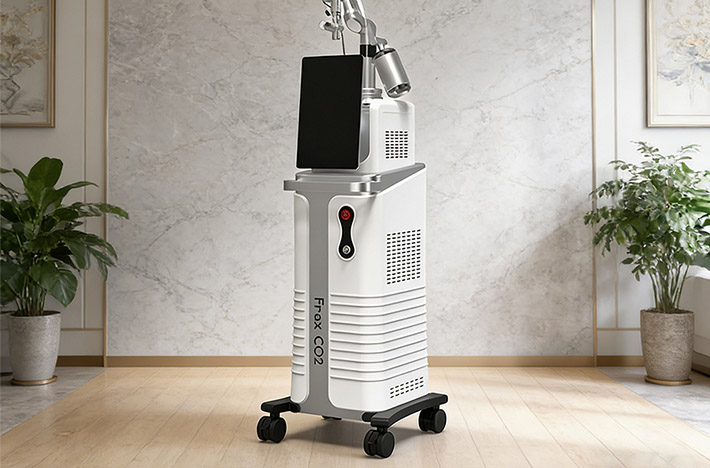
Ergonomic designs with articulated arms allow treatment of contoured areas like the neck, while intuitive multi-language interfaces simplify operation for clinicians.

How It Compares to Other Scar Treatments
When evaluated against other common procedures, fractional CO2 laser therapy presents a compelling balance. It demonstrates high effectiveness (70-80% improvement) for deeper scars, with a moderate recovery period of 5-7 days and a typical course of 3-5 sessions at a medium price point. In contrast, chemical peels offer lower efficacy (20-40%) for deep scars with 3-5 days of downtime, requiring more sessions (6-10) at a lower cost. Microneedling provides moderate efficacy (40-60%) with shorter downtime (1-2 days) and 4-6 sessions at low cost. Surgical resurfacing, while highly effective (60-70%), involves a significant recovery period (10-14 days), usually 1-2 sessions, and comes at a high cost. This positions fractional CO2 laser as an optimal choice for those seeking significant results with reasonable downtime and cost efficiency.
Documented Outcomes and Patient Experiences
The visual evidence speaks volumes. Before-and-after photographs consistently show dramatic improvements. For instance, one 28-year-old patient with “boxcar” scars achieved a 65% reduction in scar depth after four sessions, noting her skin looked “smooth and fresh again.” Another case involved a 35-year-old male with atrophic scars who observed 75% improvement after three treatments without pigmentation issues. Clinical measurements support these observations, showing that the treatment can reduce scar visibility by approximately 50% within one month by promoting rapid skin resurfacing.
The transformation typically follows a clear path: starting with deep pits and uneven texture, moving to initial smoothing and redness after the first session, and culminating in a significantly smoother, more even-toned, and elastic complexion after a full course.
About Winkonlaser
Winkonlaser Technology Limited, established in 2012 in Beijing, is a prominent designer and manufacturer of professional aesthetic laser systems with over a decade of industry expertise. The company’s data-driven devices are trusted in over 60 countries and carry international certifications including CE, FDA, ISO 13485, and TUV, assuring quality and safety.
Their portfolio extends beyond fractional CO2 lasers to include HIFU and diode laser systems. With dedicated in-house R&D and strategic logistics hubs, Winkonlaser supports global partners with reliable equipment and comprehensive service solutions, aiming to empower clinics with effective tools for skin rejuvenation and body contouring. More details are available on their official site.
Frequently Asked Questions
What does the procedure involve?
The laser creates microscopic treatment zones in the skin to trigger a natural healing response that rebuilds collagen, softening and reducing the appearance of scars without surgery.
How many treatments are usually needed?
A series of 3 to 5 sessions, spaced 4 to 6 weeks apart, is standard. Initial changes are often seen quickly, with optimal results developing over 3 to 6 months.
What are the potential side effects?
Temporary redness, swelling, and slight flaking are common and usually resolve within a week. Proper technique and post-care minimize any risks.
Is it suitable for all skin tones?
While effective for most skin types, treatment parameters must be carefully adjusted for darker skin tones to minimize the risk of pigmentary changes. A specialist consultation is vital.
How can results be maintained?
Protecting skin with high-SPF sunscreen, using quality moisturizers, and avoiding excessive sun exposure are crucial. Periodic maintenance sessions can help prolong the effects.
Take the Next Step





Leave a Reply
You must be logged in to post a comment.